Ribuspir
Poland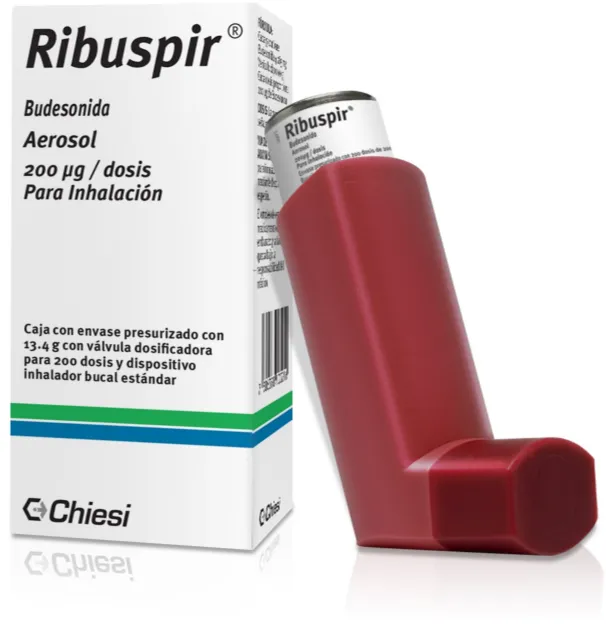
Table of Contents
- Package leaflet: Information for the user
- 1. What Ribuspir is and what it is used for
- 2. Important information before using Ribuspir
- 3. How to use Ribuspir
- 4. Possible adverse reactions
- 5. How to store Ribuspir
- 6. Package contents and other information
- Patient Information Leaflet
- 1. What Ribuspir is and what it is used for
- 2. What you need to know before using Ribuspir
- 3. How to use Ribuspir
- 4. Possible side effects
- 5. How to store Ribuspir
- 6. Contents of the pack and other information
Package leaflet: Information for the user
Ribuspir, 200 micrograms/dose, inhalation aerosol, solution
Pack with Jet spacer inhaler
Budesonide
Please read all of this leaflet carefully before you start using this medicine because it contains important information for you.
- Keep this leaflet. You may need to read it again.
- If you have any further questions, ask your doctor, pharmacist, or nurse.
- This medicine has been prescribed for you personally. Do not pass it on to others. It may harm them even if their symptoms are the same as yours.
- If you get any side effects, talk to your doctor, pharmacist, or nurse. This includes any side effects not listed in this leaflet. See section 4.
Contents of the leaflet:
- What Ribuspir is and what it is used for
- What you need to know before you use Ribuspir
- How to use Ribuspir
- Possible side effects
- How to store Ribuspir
- Contents of the pack and other information
1. What Ribuspir is and what it is used for
Ribuspir is available as a solution in an inhalation aerosol for oral inhalation directly into the lungs. The active substance in Ribuspir is budesonide, which belongs to a group of medicines called corticosteroids, commonly referred to as steroids. These medicines have an anti-inflammatory effect, reducing swelling and irritation of the lining of the airways.
Ribuspir is a preventive medicine: it treats inflammation and is used to prevent asthma symptoms. Ribuspir does not relieve acute asthma attacks. In such cases, a fast-acting inhaled bronchodilator should be used, which should always be kept at hand.
Ribuspir is indicated for:
The treatment of mild, moderate, and severe chronic bronchial asthma.
2. Important information before using Ribuspir
When not to use Ribuspir
- if the patient is allergic to budesonide or any of the other ingredients of this medicine (listed in section 6).
Consult your physician.
Warnings and precautions
Before starting treatment with Ribuspir, discuss the following with your doctor:
- if the patient has severe liver disease,
- if the patient has peptic ulcer,
- if the patient is being treated or has ever been treated for pulmonary tuberculosis or other
IT/H/0124/001/IB/026 1
respiratory tract infections,
- if the patient is pregnant, planning to become pregnant, or breastfeeding.
During treatment, if oral candidiasis occurs, inform your doctor,
as antifungal treatment may be necessary or therapy may need to be discontinued. To
reduce the risk of oral candidiasis, see section 3. How to use Ribuspir.
In case of paradoxical bronchospasm with increased wheezing immediately after inhalation of
the medicine, treatment must be stopped immediately.
If the patient experiences blurred vision or other visual disturbances, contact the
doctor.
Children and adolescents
It is important to monitor growth in children receiving long-term treatment and to inform the doctor about it.
Ribuspir with other medicines
Tell your doctor about all medicines the patient is currently taking or has recently taken, as well as any medicines the patient plans to take, including those available without a prescription.
It is especially important to inform the doctor about the use of medicines such as:
- medicines containing corticosteroids,
- antifungal medicines such as ketoconazole and itraconazole,
- medicines containing disulfiram or metronidazole (see "Ribuspir contains glycerol and ethanol"),
- HIV protease inhibitors or other strong CYP3A4 inhibitors,
- Estrogens and steroid contraceptives.
Some medicines may enhance the effect of Ribuspir, and the doctor may wish to closely monitor the patient taking such medicines (including certain HIV medicines: ritonavir, cobicistat).
If the patient is taking any of the above-mentioned medicines, the doctor may recommend
taking a different medicine or adjusting the dose of Ribuspir or of other concomitantly used
medicines.
If an ACTH stimulation test is performed to diagnose pituitary insufficiency,
the results may be falsely low.
The doctor may recommend using other medicines to treat breathing problems. It is very
important to use them regularly and NOT INTERRUPT their use, nor change the dosage, once
treatment with Ribuspir has been initiated.
Pregnancy, breastfeeding and effects on fertility
If the patient is pregnant or breastfeeding, suspects she may be pregnant, or plans to have a
child, she should consult her doctor or pharmacist before using this medicine.
If the patient becomes pregnant during treatment with Ribuspir, she should immediately inform
her physician.
Worldwide experience with inhaled budesonide has not demonstrated an increased risk
of adverse effects in the fetus or newborn related to the use of budesonide during
pregnancy.
Budesonide may be used during breastfeeding.
Driving and operating machinery
No effects of Ribuspir on the ability to drive or operate machinery have been observed.
IT/H/0124/001/IB/026 2
Ribuspir contains glycerol and ethanol.
This medicine contains 8.4 mg of alcohol (ethanol) per spray, equivalent to 0.12 mg/kg body weight per spray in adults and 0.42 mg/kg body weight in children. The amount of alcohol in one spray of this medicine is equivalent to less than 1 ml of beer or wine. The small amount of alcohol in this medicine will not cause noticeable effects.
Ethanol may interact with disulfiram or metronidazole in particularly sensitive patients taking this medicine.
This medicine contains glycerol: it may cause headache, stomach discomfort, and diarrhoea.
3. How to use Ribuspir
Ribuspir is intended for inhalation use.
This medicine should always be used as prescribed by the doctor. If in doubt, consult the doctor or pharmacist.
The doctor will recommend regular monitoring of asthma symptoms to ensure that the prescribed dose of Ribuspir is optimal.
The doctor will individually adjust the dosage for each patient depending on the severity of asthma symptoms. The doctor will determine the lowest possible dose (maintenance dose) that provides the best control of asthma symptoms. Under no circumstances should the prescribed dosage be changed without prior consultation with the doctor.
It is important to continue using Ribuspir for as long as the doctor decides. The effect of Ribuspir usually occurs within a few days of starting treatment. For this reason, regular use of the medicine is very important.
Adults and adolescents
The recommended dose is 200 micrograms (one puff) 2 to 4 times daily. The usual maintenance dose is 200 micrograms (one puff) per day.
The maximum daily dose of the medicine is 1600 micrograms.
Use in children
Children aged 6 to 12 years
The recommended dose is 200 micrograms (one puff) per day. The maximum daily dose is 400 micrograms.
If Ribuspir is prescribed for a child, ensure that the child uses the medicine correctly. Inhalation in children should always be performed under adult supervision.
Use of corticosteroids
If the patient has recently switched to using Ribuspir instead of taking oral corticosteroid tablets, or if the patient has been using high doses of inhaled corticosteroids for a prolonged period, higher steroid doses may be needed during periods of stress. Stress situations may include hospitalization after an accident, serious injury, or planned surgery. In such cases, the treating doctor may decide to administer an additional dose of corticosteroid in tablet form or by injection.
How to use Ribuspir
See “Instructions for using the inhaler” at the end of this leaflet.
Rinsing the mouth with water after each inhalation is recommended to reduce the risk of developing fungal infection of the mouth and throat.
IT/H/0124/001/IB/026 3
Use of a higher than recommended dose of Ribuspir
It is important to use the medicine exactly as indicated on the label provided by the pharmacist or as prescribed by the doctor. Do not increase or decrease the dose without consulting the doctor. If a higher than recommended dose of Ribuspir has been used, contact a doctor as soon as possible.
Missed dose of Ribuspir
If a dose is missed, take the next dose at the usual scheduled time. Do not use a double dose to make up for a missed dose.
Stopping use of Ribuspir
Do not stop using the medicine, even if the patient feels better, unless otherwise advised by the doctor. Abruptly stopping treatment with Ribuspir may cause worsening of asthma symptoms.
In case of worsening asthma symptoms
If symptoms worsen or become difficult to control (e.g. more frequent use of a reliever inhaled bronchodilator), or if there is no improvement after using a fast-acting inhaled bronchodilator, contact the doctor immediately. This may indicate an asthma exacerbation, and the doctor may decide that a change in the dosage of Ribuspir or a different treatment is necessary.
When switching from oral steroid therapy to Ribuspir, despite improved breathing, a decline in general well-being may be observed. Inform the treating doctor about this, but DO NOT STOP treatment unless otherwise advised by the doctor.
If you have any further questions about the use of this medicine, consult your doctor or pharmacist.
4. Possible adverse reactions
Like all medicines, this medicine can cause adverse reactions, although not everyone will experience them.
The adverse reactions that occur are usually mild and transient. However, some of them may be severe and require medical intervention.
Possible adverse reactions are listed below:
Common (may occur in 1 out of 10 patients):
Hoarseness, cough, throat irritation, oral and pharyngeal candidiasis (fungal infection), difficulty in swallowing.
Uncommon (may occur in 1 out of 100 patients):
Anxiety, depression, tremor, cataract, blurred vision, and muscle spasms.
Rare (may occur in 1 out of 1000 patients):
Easy bruising, skin thinning, rash or urticaria, dermatitis, itching, skin redness (erythema), anaphylactic reaction, angioedema, excess or deficiency of cortisol in the blood (adrenal cortex hyperfunction or hypofunction), narrowing of the airways (bronchospasm).
Restlessness, nervousness, irritability, psychiatric disorders (psychosis), and behavioural changes. These effects are more likely in children.
Very rare (may occur in 1 out of 10,000 patients):
Disturbances in taste sensation (dysgeusia), nausea, tongue pain, inflammation of the oral mucosa, dryness of the oral mucous membrane, back pain.
IT/H/0124/001/IB/026 4
Frequency not known (frequency cannot be estimated from the available data):
Sleep disturbances, aggressive reactions, increased motor activity (mainly in children). Increased intraocular pressure (glaucoma).
Rare but severe allergic reactions:
If itching or an allergic reaction occurs shortly after taking the medicine, with symptoms such as: skin redness, facial swelling, very low blood pressure, and irregular heartbeat (anaphylactic reaction), swelling of the face, eyes, lips, tongue, and throat, or difficulty breathing (angioedema), or early- and late-type hypersensitivity reactions:
- discontinue use of Ribuspir immediately,
- contact your doctor immediately.
Breathing difficulties immediately after administration of Ribuspir:
Rarely, with inhaled medicines, shortly after administration, worsening of wheezing and breathing difficulties (bronchospasm) may occur. In such a case:
- discontinue administration of Ribuspir immediately,
- use a fast-acting inhaled bronchodilator to relieve breathlessness and wheezing,
- contact your doctor immediately.
Long-term use of inhaled corticosteroids at high doses may lead to systemic effects:
In rare cases, growth retardation in children and adolescents, adrenal suppression (suppression of adrenal function), and very rarely, decreased bone mineral density (osteoporosis).
Sleep disturbances are more likely in children, but the frequency of occurrence is unknown.
Reporting of adverse reactions
If any adverse symptoms occur, including any adverse symptoms not listed in this leaflet, inform your doctor, pharmacist, or nurse.
Adverse reactions can be reported directly to the Department of Monitoring Adverse Drug Reactions of the Office for Registration of Medicinal Products, Medical Devices and Biocidal Products:
Al. Jerozolimskie 181C, 02-222 Warsaw
Tel.: +48 22 49 21 301
Fax: +48 22 49 21 309
Website: https://smz.ezdrowie.gov.pl
Adverse reactions may also be reported to the marketing authorization holder.
Reporting adverse reactions helps to provide more information on the safety of this medicine.
5. How to store Ribuspir
- Keep this medicine out of sight and reach of children.
- Do not use this medicine after the expiry date stated on the label and the cardboard box. The expiry date refers to the last day of the stated month.
- Store below 25 °C.
- The container holds a pressurised solution. Do not pierce the container, expose it to heat, freeze it, or expose it to direct sunlight, even after it has been emptied.
- Medicines should not be disposed of via the sewage system or household waste. Ask your pharmacist how to dispose of medicines no longer required. This will help protect the environment.
IT/H/0124/001/IB/026 5
6. Package contents and other information
What Ribuspir contains:
The active substance is budesonide. One metered dose contains 200 micrograms of budesonide.
Other components of the medicine are: 1,1,1,2-tetrafluoroethane (HFA-134a), anhydrous ethanol, and glycerol.
What Ribuspir looks like and contents of the pack:
Ribuspir is available as a solution for inhalation contained in a pressurized aluminium container equipped with a plastic spray device.
Each pack contains one inhaler delivering 200 metered doses.
Marketing Authorisation Holder and Manufacturer
Marketing Authorisation Holder
Chiesi Farmaceutici S.p.A., Via Palermo 26/A, 43122 Parma, Italy
Manufacturer
Chiesi Farmaceutici S.p.A., Via Palermo 26/A, 43122 Parma, Italy
Chiesi Pharmaceuticals GmbH, Gonzagagasse 16/16, 1010 Vienna, Austria
All-Gen Pharmaceuticals &Generics BV, Rouboslaan 32, 2252 TR Voorschoten, Netherlands
For detailed information about this medicine and its names in the European Economic Area member states, please contact the local representative of the Marketing Authorisation Holder:
Chiesi Poland Sp. z o.o., Al. Jerozolimskie 134, 02-305 Warsaw
Tel.: (22) 620 14 21, Fax: (22) 652 37 79, E-mail: [email protected]
This medicinal product is authorised in the member states of the European Economic Area under the following names:
Italy Deso
Poland Ribuspir
INHALER INSTRUCTIONS:
Ribuspir is easy to use. To ensure correct use of the inhaler, please read the instructions below carefully.
The effectiveness of treatment depends on proper use of the inhaler.
Test of correct inhaler function: Before first use or if the inhaler has not been used for 3 days or more, remove the protective cap from the mouthpiece by gently pressing its sides, then spray once into the air to confirm that the inhaler is working properly.
Unpacking
After opening the cardboard box, the mouthpiece of the inhaler should be covered with the protective cap.
Taking a dose of Ribuspir
Figure 1-2 Hold the inhaler between your thumb and index finger with the mouthpiece pointing downwards. Remove the protective cap from the mouthpiece.
Figure 3a-b Perform a slow exhalation (3a), then place the mouthpiece firmly between your lips (3b).
Figure 4a-b-c Take a deep and slow breath in through your mouth while pressing the canister once (4a). After inhaling, hold your breath as long as possible (4b). After taking the number of doses prescribed by your doctor, replace the protective cap on the mouthpiece (4c).
When administering to a child, gently closing the child’s nostrils may be helpful.

1-2 3a 3b 4a 4b 4c
Cleaning the inhaler:
The mouthpiece should always be kept clean. To do this, remove the metal canister from the plastic housing and rinse the mouthpiece with lukewarm water. Leave to dry in a warm place. Avoid excessive heating.
IT/H/0124/001/IB/026 7
Patient Information Leaflet
Ribuspir, 200 micrograms/dose, inhalation aerosol, solution
Pack with standard inhaler
Budesonidum
Please read all of this leaflet carefully before using this medicine, as it contains important information for you.
- Keep this leaflet. You may need to read it again.
- If you have any further questions, ask your doctor, pharmacist, or nurse.
- This medicine has been prescribed for you personally. Do not pass it on to others. It may harm them, even if their symptoms are the same as yours.
- If you experience any side effects, including any not listed in this leaflet, tell your doctor, pharmacist, or nurse. See section 4.
Contents of the leaflet:
- What Ribuspir is and what it is used for
- What you need to know before using Ribuspir
- How to use Ribuspir
- Possible side effects
- How to store Ribuspir
- Contents of the pack and other information
1. What Ribuspir is and what it is used for
Ribuspir is available as a solution in an inhalation aerosol intended for oral inhalation directly into the lungs. The active substance is budesonide, which belongs to a group of medicines called corticosteroids, commonly referred to as steroids. These medicines have anti-inflammatory effects, reducing swelling and irritation of the airway lining.
Ribuspir is a preventive medicine: it treats inflammation and is used to prevent asthma symptoms. Ribuspir does not relieve asthma attacks. In such cases, a fast-acting inhaled bronchodilator should be used, which should always be kept at hand.
Ribuspir is indicated for:
Treatment of mild, moderate, and severe chronic bronchial asthma.
2. What you need to know before using Ribuspir
Do not use Ribuspir if:
- you are allergic to budesonide or any of the other ingredients of this medicine (listed in section 6).
Consult your doctor before using Ribuspir:
- if you have severe liver disease,
- if you have peptic ulcer disease,
- if you are being treated or have previously been treated for tuberculosis or other respiratory tract infections,
- if you are pregnant, planning to become pregnant, or breastfeeding.
During treatment, if you develop oral candidiasis (fungal infection), inform your doctor, as antifungal treatment or discontinuation of therapy may be necessary. To reduce the risk of oral candidiasis, see section 3. How to use Ribuspir.
If paradoxical bronchospasm with increased wheezing occurs immediately after taking the medicine, stop treatment immediately.
If you experience blurred vision or other visual disturbances, contact your doctor.
Children and adolescents
It is important to monitor the growth of children on long-term treatment and to inform the doctor about it.
Ribuspir with other medicines
Tell your doctor about all medicines you are currently taking or have recently taken, including those obtained without a prescription, and any you plan to take.
It is especially important to inform your doctor if you are taking:
- medicines containing corticosteroids,
- antifungal medicines such as ketoconazole and itraconazole,
- medicines containing disulfiram or metronidazole (see “Ribuspir contains glycerol and ethanol”),
- HIV protease inhibitors or other strong CYP3A4 inhibitors,
- estrogens and steroid contraceptives.
Some medicines may increase the effect of Ribuspir, and your doctor may wish to monitor you closely if you are taking such medicines (including certain HIV medicines: ritonavir, cobicistat).
If you are undergoing an ACTH stimulation test to diagnose pituitary insufficiency, the results may be falsely low.
Your doctor may prescribe other medicines to treat breathing problems. It is very important to use them regularly and NOT to stop or change the dose when starting Ribuspir.
Pregnancy, breastfeeding, and fertility
If you are pregnant, breastfeeding, think you may be pregnant, or are planning to have a baby, consult your doctor or pharmacist before using this medicine.
If you become pregnant while using Ribuspir, inform your doctor immediately.
Worldwide experience with inhaled budesonide has not shown an increased risk of adverse effects on the fetus or newborn related to budesonide use during pregnancy.
Budesonide may be used during breastfeeding.
Driving and using machines
Ribuspir has no known effect on the ability to drive or operate machinery.
Ribuspir contains glycerol and ethanol.
This medicine contains 8.4 mg of alcohol (ethanol) per spray, equivalent to 0.12 mg/kg body weight per spray in adults and 0.42 mg/kg body weight in children. The amount of alcohol in each spray is less than that in 1 ml of beer or wine. The small amount of alcohol in this medicine will not cause noticeable effects.
Ethanol may interact with disulfiram or metronidazole in particularly sensitive patients taking this medicine.
This medicine contains glycerol: it may cause headache, stomach upset, and diarrhoea.
3. How to use Ribuspir
Ribuspir is intended for inhalation use only.
Always use this medicine exactly as your doctor has told you. If in doubt, consult your doctor or pharmacist.
Your doctor will regularly monitor your asthma symptoms to ensure the dose of Ribuspir is optimal.
Your doctor will individually adjust the dose depending on the severity of your asthma symptoms. Your doctor will prescribe the lowest possible dose (maintenance dose) that provides the best control of asthma symptoms. Under no circumstances should you change the prescribed dose without first consulting your doctor.
It is important to continue using Ribuspir for as long as your doctor decides. The effect of Ribuspir usually begins within a few days of starting treatment. Therefore, it is very important to use the medicine regularly.
Adults and adolescents
Recommended dose: 200 micrograms (one spray) 2 to 4 times daily. The usual maintenance dose is 200 micrograms (one spray) daily.
Maximum daily dose: 1600 micrograms.
Use in children
Children aged 6 to 12 years
Recommended dose: 200 micrograms (one spray) daily. Maximum daily dose: 400 micrograms.
If Ribuspir is prescribed for a child, ensure the child uses it correctly. Inhalation in children should always be supervised by an adult. Gently closing the child’s nostrils may help during inhalation.
Use of corticosteroids
If you have just started using Ribuspir instead of oral corticosteroid tablets, or if you have been using high doses of inhaled corticosteroids for a long time, you may need higher steroid doses during periods of stress. Stress situations include hospitalization after an accident, serious injury, or planned surgery. In such cases, your doctor may decide to prescribe additional corticosteroid doses in tablet or injectable form.
How to use Ribuspir
See “Inhaler Instructions” at the end of this leaflet.
It is recommended to rinse your mouth with water after each inhalation to reduce the risk of fungal infection of the mouth and throat.
IT/H/0124/001/IB/026 3
If you use more Ribuspir than you should
It is important to use the doses as indicated on the label from the pharmacist or as prescribed by your doctor. Do not increase or decrease the dose without consulting your doctor. If you use more Ribuspir than recommended, contact your doctor as soon as possible.
If you forget to use Ribuspir
If you miss a dose, take the next dose at your usual scheduled time. Do not take a double dose to make up for a missed dose.
Stopping Ribuspir
Do not stop using Ribuspir, even if you feel better, unless your doctor tells you to. Stopping treatment suddenly may worsen your asthma symptoms.
If asthma symptoms worsen
If your symptoms worsen or become difficult to control (e.g. more frequent use of your fast-acting inhaled bronchodilator), or if there is no improvement after using your fast-acting inhaled bronchodilator, contact your doctor immediately. This may indicate worsening asthma, and your doctor may decide to change your Ribuspir dose or prescribe different treatment.
When switching from oral steroids to Ribuspir, you may experience worsening well-being despite improved breathing. Inform your doctor, but DO NOT stop treatment unless instructed by your doctor.
If you have any further questions about using this medicine, ask your doctor or pharmacist.
4. Possible side effects
Like all medicines, this medicine can cause side effects, although not everybody gets them.
Side effects are usually mild and temporary. However, some may be serious and require medical attention.
Possible side effects are listed below:
Common (may affect up to 1 in 10 people):
Hoarseness, cough, sore throat, candidiasis (fungal infection) of the mouth and throat, difficulty swallowing.
Uncommon (may affect up to 1 in 100 people):
Anxiety, depression, tremor, cataract, blurred vision, muscle cramps.
Rare (may affect up to 1 in 1,000 people):
Easy bruising, skin thinning, rash or hives, skin inflammation, itching, facial redness (flushing), anaphylactic reaction, angioedema, excess or deficiency of cortisol in the blood (adrenal cortex hyperfunction or insufficiency), narrowing of the airways (bronchospasm).
Restlessness, nervousness, irritability, psychiatric disorders (psychosis), and behavioural changes.
These effects are more likely in children.
Very rare (may affect up to 1 in 10,000 people):
Disturbances in taste sensation (taste disorders), nausea, tongue pain, inflammation of the oral mucosa, dryness of the oral mucosa, back pain.
IT/H/0124/001/IB/026 4
Frequency not known (frequency cannot be estimated from available data):
Sleep problems, aggressive reactions, increased motor activity (mainly in children), increased intraocular pressure (glaucoma).
Rare serious allergic reactions:
If, immediately after taking the medicine, you experience itching, an allergic reaction with symptoms such as skin redness, facial swelling, very low blood pressure, and irregular heartbeat (anaphylactic reaction), swelling of the face, eyes, lips, tongue, or throat, or breathing difficulties (angioedema), or early or late hypersensitivity reactions:
- stop using Ribuspir immediately,
- contact your doctor immediately.
Breathing difficulties immediately after using Ribuspir:
Rarely, with inhaled medicines, immediately after use, worsening of wheezing and breathing difficulties (bronchospasm) may occur. In such cases:
- stop using Ribuspir immediately,
- use a fast-acting inhaled bronchodilator to relieve breathlessness and wheezing,
- contact your doctor immediately.
Long-term use of high-dose inhaled corticosteroids may cause systemic effects: In rare cases, delayed growth in children and adolescents, adrenal function disorders (suppression of adrenal function), and very rarely, decreased bone mineral density (osteoporosis).
Sleep disturbances are more likely in children, but the frequency is unknown.
Reporting of side effects
If you experience any side effects, including those not listed in this leaflet, tell your doctor, pharmacist, or nurse.
Side effects can be reported directly to the Department of Monitoring Adverse Drug Reactions of the Office for Registration of Medicinal Products, Medical Devices and Biocidal Products:
Al. Jerozolimskie 181C, 02-222 Warsaw
Tel.: +48 22 49 21 301
Fax: +48 22 49 21 309
Website: https://smz.ezdrowie.gov.pl
Side effects can also be reported to the Marketing Authorisation Holder.
Reporting side effects helps provide more information on the safety of this medicine.
5. How to store Ribuspir
- Keep this medicine out of sight and reach of children.
- Do not use this medicine after the expiry date stated on the label and cardboard box. The expiry date refers to the last day of the stated month.
- Store below 25°C.
- The container holds a pressurized solution. Do not pierce, expose to heat (even after emptying), freeze, or expose to direct sunlight.
- Do not dispose of medicines via wastewater or household waste. Ask your pharmacist how to dispose of medicines you no longer use. These measures help protect the environment.
IT/H/0124/001/IB/026 5
6. Contents of the pack and other information
What Ribuspir contains:
The active substance is budesonide. One metered dose contains 200 micrograms of budesonide.
Other components of the medicine are: 1,1,1,2-tetrafluoroethane (HFA-134a), anhydrous ethanol, and glycerol.
What Ribuspir looks like and contents of the pack:
Ribuspir is available as a solution for inhalation contained in a pressurized aluminium container equipped with a plastic spray device.
Each pack contains one inhaler delivering 200 metered doses.
Marketing Authorisation Holder and Manufacturer
Marketing Authorisation Holder
Chiesi Farmaceutici S.p.A., Via Palermo 26/A, 43122 Parma, Italy
Manufacturer
Chiesi Farmaceutici S.p.A., Via Palermo 26/A, 43122 Parma, Italy
Chiesi Pharmaceuticals GmbH, Gonzagagasse 16/16, 1010 Vienna, Austria
All-Gen Pharmaceuticals &Generics BV, Rouboslaan 32, 2252 TR Voorschoten, Netherlands
For detailed information about this medicine and its names in the European Economic Area member states, please contact the local representative of the Marketing Authorisation Holder:
Chiesi Poland Sp. z o.o., Al. Jerozolimskie 134, 02-305 Warsaw
Tel.: (22) 620 14 21, Fax: (22) 652 37 79, E-mail: [email protected]
This medicinal product is authorised in the member states of the European Economic Area under the following names:
Italy Deso
Poland Ribuspir
INHALER INSTRUCTIONS:
Ribuspir is easy to use. To ensure correct use of the inhaler, please read the instructions below carefully.
The effectiveness of treatment depends on proper use of the inhaler.
Test of correct inhaler function: Before first use or if the inhaler has not been used for 3 days or more, remove the protective cap from the mouthpiece by gently pressing its sides, then spray once into the air to confirm that the inhaler is working properly.
Unpacking
After opening the cardboard box, the mouthpiece of the inhaler should be covered with the protective cap.
Taking a dose of Ribuspir
Figure 1-2 Hold the inhaler between your thumb and index finger with the mouthpiece pointing downwards. Remove the protective cap from the mouthpiece.
Figure 3a-b Perform a slow exhalation (3a), then place the mouthpiece firmly between your lips (3b).
Figure 4a-b-c Take a deep and slow breath in through your mouth while pressing the canister once (4a). After inhaling, hold your breath as long as possible (4b). After taking the number of doses prescribed by your doctor, replace the protective cap on the mouthpiece (4c).
When administering to a child, gently closing the child’s nostrils may be helpful.
1-2 3a 3b 4a 4b 4c
Cleaning the inhaler:
The mouthpiece should always be kept clean. To do this, remove the metal canister from the plastic housing and rinse the mouthpiece with lukewarm water. Leave to dry in a warm place.
IT/H/0124/001/IB/026 7