Rhophylac 300
Poland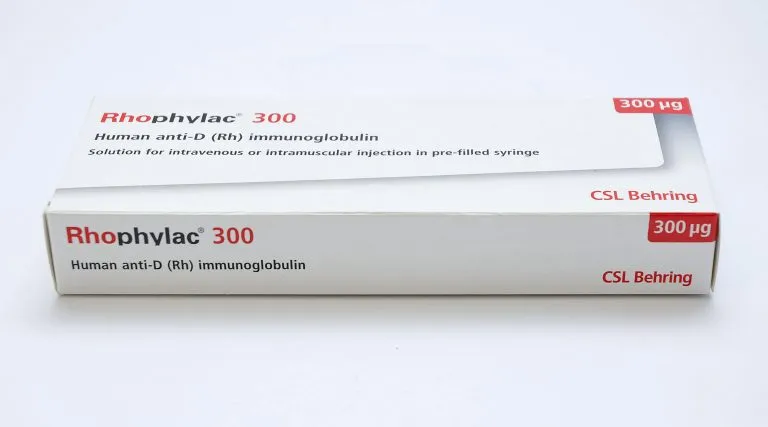
Table of Contents
Rhophylac 300, 300 micrograms / 2 ml
Solution for injection in pre-filled syringe
Human anti-D immunoglobulin
Read this leaflet carefully before using the medicine.
- Keep this leaflet for future reference.
- Consult your doctor or pharmacist if you need advice or further information.
- If the patient experiences any adverse reactions, including those not listed in this leaflet, inform a doctor or pharmacist immediately. See section 4.
Contents of the leaflet:
- What Rhophylac 300 is and what it is used for
- Important information before using Rhophylac 300
- How to use Rhophylac 300
- Possible side effects
- How to store Rhophylac 300
- Contents of the pack and other information
1. WHAT RHOPHYLAC 300 IS AND WHAT IT IS USED FOR
What is Rhophylac 300
This medicine is a ready-to-use solution for injection in a pre-filled syringe. The solution contains
special proteins isolated from human blood plasma.
These proteins belong to the class of "immunoglobulins", also known as antibodies. The active
component of Rhophylac 300 is a specific antibody called "anti-D(Rh) immunoglobulin".
These antibodies neutralize the Rhesus factor D.
What is the Rhesus factor D
Rhesus factors are specific characteristics of human red blood cells. The so-called Rhesus factor D
(shortened to "Rh(D)") is present in approximately 85% of the population. These individuals are referred to as Rh(D)-positive.
People who do not have the Rhesus factor D are referred to as Rh(D)-negative.
What is anti-D(Rh) immunoglobulin
Anti-D(Rh) immunoglobulin is an antibody directed against the Rhesus factor D antigen, produced by the human immune system. When an Rh(D)-negative person receives Rh(D)-positive blood, their immune system recognizes the Rh-positive red blood cells as "foreign" and attempts to destroy them. To achieve this, the immune system produces specific antibodies against the Rhesus factor D. This process is called "immunization" and usually takes some time (2–3 weeks). Therefore, destruction of red blood cells does not occur upon first exposure, and no symptoms are typically observed at that time. However, if the same Rh(D)-negative individual receives Rh(D)-positive blood a second time, the antibodies will be "ready for immediate action", and their immune system will immediately destroy the foreign Rh(D)-positive red blood cells.
How Rhophylac 300 works
If an Rh(D)-negative person receives an adequate dose of human anti-D(Rh) immunoglobulin, it may prevent Rh(D) isoimmunization. To achieve this effect, treatment with Rhophylac 300 should be initiated before or shortly after the first exposure to Rh(D)-positive red blood cells. The anti-D(Rh) immunoglobulins contained in this medicine immediately destroy the foreign Rh(D)-positive red blood cells. As a result, the patient's immune system is not stimulated to produce its own antibodies.
When Rhophylac 300 is used
This medicine is used in two different situations:
A) In Rh(D)-negative pregnant women carrying an Rh(D)-positive fetus
In this special situation, immunization may occur due to Rh(D)-positive fetal red blood cells crossing into the maternal bloodstream. If this occurs during the first pregnancy, it usually does not harm the fetus, and the baby is born healthy. However, during a subsequent pregnancy with an Rh(D)-positive fetus, the antibodies may damage the Rh(D)-positive red blood cells of the fetus during gestation. This may lead to serious complications in the newborn, or even fetal death.
Rhophylac 300 may be administered in the following cases:
- During pregnancy or immediately after delivery of an Rh(D)-positive baby;
- After miscarriage of an Rh(D)-positive fetus (intrauterine fetal death, spontaneous abortion, threatened abortion, or induced abortion);
- In case of severe pregnancy complications (ectopic pregnancy or molar pregnancy);
- When there is suspicion that Rh(D)-positive fetal red blood cells have entered the maternal circulation (placental haemorrhage due to antepartum haemorrhage), for example, when vaginal bleeding occurs during pregnancy;
- When the attending physician considers it necessary to perform diagnostic procedures related to fetal abnormalities (amniocentesis, chorionic villus sampling, cordocentesis);
- When the physician or midwife needs to perform an obstetric procedure during delivery (e.g. external cephalic version or other invasive obstetric procedures);
- Following trauma causing maternal abdominal or intestinal injury (abdominal trauma).
This medicine may also be used if the pregnant woman is Rh(D)-negative and it is not possible to determine whether her fetus is Rh(D)-positive.
B) In Rh(D)-negative adults, children, and adolescents (0–18 years) who have accidentally received infusions (transfusions) of Rh-positive blood or other blood products containing Rh(D)-positive red blood cells, such as "platelet concentrate" (transfusion of incorrectly matched blood).
2. IMPORTANT INFORMATION BEFORE USING RHOPHYLAC 300
Please read this section carefully. The information provided should be taken into account by
the patient and the physician before using this medicine.
When not to use Rhophylac 300
- if the patient is allergic (hypersensitive) to human immunoglobulins or to any of the other components of this medicine (listed in section 6 of this leaflet). Before administration, inform your doctor or nurse about any previous adverse reactions to other medications.
- This medicine must not be administered by intramuscular injection in patients with severe thrombocytopenia (low platelet count) or other serious coagulation disorders.
Before using the medicine, inform your doctor or nurse if any of the above conditions apply.
In such cases, this medicine may only be administered by intravenous injection.
Warnings and precautions
Before starting treatment with Rhophylac 300, discuss it with your doctor or healthcare professional.
- To protect Rh(D)-negative women after delivery of an Rh(D)-positive baby, this medicine is always given to the mother, not to the newborn. This medicine is not intended for use in Rh(D)-positive individuals, nor for patients already immunized against Rh(D) antigen.
When treatment interruption may be necessary
- Rhophylac 300 may cause hypersensitivity reactions (allergic-type reactions). In rare cases, severe allergic reactions such as sudden drop in blood pressure or shock may occur (see also section 4, "Possible side effects"), even if previously administered human immunoglobulins were well tolerated. If any of these symptoms occur, inform your doctor or nurse immediately. Administration of the medicine will be stopped and appropriate treatment will be initiated depending on the type and severity of the adverse reaction.
The doctor and healthcare staff should pay special attention to:
- patients with low levels of immunoglobulin A (IgA), who may be at higher risk of hypersensitivity reactions. Inform your doctor or healthcare staff if you have low IgA levels. The doctor should then carefully weigh the benefits of treatment against the increased risk of hypersensitivity reactions.
- During treatment with this medicine following an incompatible blood transfusion, large doses of the product are administered (up to 3,000 micrograms, equivalent to 20 ml or 10 syringes). This may lead to a so-called hemolytic reaction, resulting from the destruction of foreign Rh(D)-positive red blood cells. Close monitoring by a physician or nurse is therefore required, and special blood tests may be necessary.
- If the patient's body mass index (BMI) is greater than or equal to 30 (calculated as body weight divided by the square of height), intramuscular injection of Rhophylac may not be fully effective. In such cases, the doctor or healthcare staff should consider administering this medicine intravenously.
Safety information regarding the potential transmission of infectious agents
This medicine is derived from human plasma (the liquid component of blood). When medicines are prepared from human blood or plasma, certain measures are taken to prevent transmission of infectious agents to patients. These include:
- careful selection of blood and plasma donors to exclude individuals who may be carriers of infectious agents,
- testing of each individual donation and plasma pool for the presence of viruses/infectious agents,
- inclusion of manufacturing steps capable of inactivating or removing viruses.
Despite these precautions, the use of medicines derived from human blood or plasma cannot completely eliminate the risk of transmitting infectious agents, including unknown or newly emerging viruses or other infectious agents.
The methods used are considered effective against enveloped viruses such as human immunodeficiency virus (HIV, the virus causing AIDS), hepatitis B virus, and hepatitis C virus.
The methods may have limited effectiveness against non-enveloped viruses such as hepatitis A virus and parvovirus B19.
Transmission of hepatitis A or parvovirus B19 via immunoglobulins has not been reported. The protective effect is likely due to the presence of antibodies against these infections in the product.
It is strongly recommended that after each administration of Rhophylac 300, the name of the medicine and the batch number be recorded for identification purposes.
Blood tests
Inform your doctor or healthcare staff if you have been treated with Rhophylac 300 and if you or your newborn baby have undergone any blood tests (serological tests).
After treatment with this medicine, results of certain blood tests may be altered for some time. If you received this medicine before delivery, some blood test results in the newborn may also be affected.
Rhophylac 300 and other medicines
Always inform your doctor or nurse about any medicines you are currently taking, have recently taken, or plan to take, including over-the-counter medicines.
Vaccinations
Inform your doctor or healthcare staff about any vaccinations received within the last 2–4 weeks before treatment.
After treatment, inform the doctor performing vaccinations. The doctor may plan to check the effectiveness of previous vaccinations.
This medicine may reduce the effectiveness of vaccines containing live viruses, such as those against measles, mumps, rubella (German measles), or varicella (chickenpox). Therefore, vaccination should be avoided within 3 months after the last dose of Rhophylac 300.
Pregnancy and breastfeeding
This medicinal product is used during pregnancy or shortly after delivery. Immunoglobulins are excreted in breast milk. In clinical studies, 432 mothers received 300 micrograms of this medicine before delivery and 256 of them received it again after delivery, with no adverse effects observed in their infants.
Driving and operating machinery
No influence of Rhophylac 300 treatment on the ability to drive or operate machinery has been observed.
Rhophylac contains sodium
This medicine contains less than 1 mmol of sodium (23 mg) per pre-filled syringe; therefore, it is considered essentially "sodium-free."
3. HOW TO USE RHOPHYLAC 300
This medicine is injected by a doctor or nurse into the muscle or directly into a vein.
The dose of Rhophylac 300 and the appropriate route of administration are determined by
the physician. For example, if the patient's body mass index (BMI) is greater than or equal to 30,
this medicine should preferably be administered intravenously (see also section 2).
Before use, the syringe should be warmed to room temperature or body temperature (25°C).
One syringe must be used for one patient only (even if part of the medicine remains unused after administration).
After receiving Rhophylac, the patient should be observed for at least 20 minutes.
Use of a higher than recommended dose of Rhophylac 300
The consequences of overdose are unknown.
4. POSSIBLE ADVERSE REACTIONS
Like any medicine, this medicine can cause adverse reactions, although they do not occur in everyone.
Adverse reactions may occur even if the patient has previously taken immunoglobulins and tolerated them well.
Allergic reactions (hypersensitivity reactions) which have been observed rarely (affecting 1 to 10 people
per 10,000 treated)
Early symptoms may appear as small, itchy blisters on the skin (urticaria) or over the entire body surface
(generalized rash). These may progress to severe hypersensitivity / anaphylactic reactions such as sudden
drop in blood pressure or shock (e.g. one may experience improved mood, dizziness, fainting in upright
position, cold feet or hands, sensation of abnormal heart rhythm, chest pain, chest tightness, wheezing or
double vision), even if the patient did not show hypersensitivity during previous administrations.
If such symptoms occur during treatment with Rhophylac, inform the doctor or medical staff immediately.
They will decide whether to discontinue administration and initiate appropriate treatment.
When this medicine is administered intramuscularly, pain and tenderness at the injection site may occur.
The following adverse reactions occurred uncommonly (affecting 1 to 10 people per 1,000 treated):
- fever and chills (shivering),
- malaise (feeling unwell),
- headache,
- skin reactions, skin redness (erythema), itching (pruritus).
The following adverse reactions occurred rarely (affecting 1 to 10 people per 10,000 treated):
- allergic reactions, anaphylactic shock,
- nausea and/or vomiting,
- low blood pressure (hypotension),
- increased heart rate or pulse (tachycardia),
- joint pain (arthralgia),
- breathing difficulties (dyspnoea),
- injection site reactions.
Reporting of adverse reactions
If any adverse reactions occur, including any adverse reactions not listed in this leaflet, inform your doctor or nurse. Adverse reactions can be reported directly to the Department of Monitoring Adverse Drug Reactions of the Office for Registration of Medicinal Products, Medical Devices and Biocidal Products
Al. Jerozolimskie 181C
02-222 Warszawa
Tel.: + 48 22 49 21 301
Faks: + 48 22 49 21 309
Website: https://smz.ezdrowie.gov.pl
Adverse reactions can also be reported to the marketing authorization holder.
Reporting adverse reactions helps to provide more information on the safety of the medicine.
5. HOW TO STORE RHOPHYLAC 300
Keep out of the sight and reach of children.
Store in a refrigerator (+2°C to +8°C).
Do not freeze.
The syringe should be stored in its plastic, tightly closed packaging and in the outer carton
to protect from light.
Do not use this medicine if the solution is cloudy or contains particles.
Do not use this medicine after the expiry date. The expiry date is stated on the outer packaging
and on the label of the pre-filled syringe after EXP. The expiry date refers to the last day
of the month indicated.
Medicines must not be disposed of via the sewage system or household waste. Ask your pharmacist
how to dispose of medicines no longer required. This will help protect the environment.
6. CONTENTS OF THE PACKAGE AND OTHER INFORMATION
What this medicine contains
- The active substance is human anti-D(Rh) immunoglobulin (IgG antibodies against Rhesus factor D).
- Other ingredients are human albumin, glycine, sodium chloride, and water for injections.
- The product contains up to 30 mg/ml of human plasma proteins, of which 10 mg/ml is human albumin used as a stabilizer. At least 95% of the other plasma proteins are immunoglobulins (antibodies) of the IgG type. Rhophylac 300 contains no more than 5 micrograms/ml of human immunoglobulin A (IgA).
- Rhophylac does not contain any preservatives.
What Rhophylac 300 looks like and contents of the pack
This medicine is a clear or slightly opalescent, colourless or pale yellow solution for injection. Rhophylac 300 is supplied in a glass pre-filled syringe containing 2 ml of sterile ready-to-use solution with 300 micrograms (1,500 IU) of anti-D immunoglobulin.
Rhophylac 300 is available in single packs containing 1 pre-filled syringe and 1 injection needle, packed in a blister (a transparent plastic pack sealed with a paper foil), or in multipacks containing 5 single packs.
Not all pack sizes may be marketed.
Marketing Authorisation Holder and Manufacturer
CSL Behring GmbH
Emil-von-Behring-Strasse 76
35041 Marburg
Germany
This medicinal product is authorised in the Member States of the European Economic Area under the following names:
Rhophylac 300 Mikrogramm / 2 ml
Injektionslösung in einer Fertigspritze _______________ Austria
Rhophylac 300 microgram / 2 ml
Oplossing voor injectie in een voorgevulde spuit ______ Belgium
Rhophylac 300 μικρογραμμάρια/2 ml
ενέσιμο διάλυμα σε προγεμισμένη σύριγγα ___________ Cyprus, Greece
Rhophylac 300 mikrogramů / 2 ml
Injekční roztok v předplněné injekční stříkačce ________ Czech Republic
Rhophylac 1500 IE (300 mikrogram) / 2 ml
injektionsvæske, opløsning fyldt injektionssprøjte _____ Denmark
Rhophylac 1500 IU (300 mikrog) / 2 ml
injektioneste, liuos esitäytetyssä ruiskussa ____________ Finland
Rhophylac 300 microgrammes/2 ml,
solution injectable en seringue préremplie ____________ France
Rhophylac 300 Mikrogramm/2 ml,
Injektionslösung in Fertigspritze ____________________ Germany, Luxembourg
Rhophylac 300 mikrogramm/2 ml oldatos
injekció előretöltött fecskendőben ___________________ Hungary
Rhophylac 300 míkrógrömm / 2 ml
stungulyf, lausn, í áfylltri sprautu ___________________ Iceland
Rhophylac 300 microgrammi/2 ml
Soluzione iniettabile in siringa pre-riempita ___________ Italy
Rhophylac 300 microgram / 2 ml
Oplossing voor injectie in voorgevulde spuit __________ Netherlands
Rhophylac 1500 IU (300 mikrogram) / 2 ml
injeksjonsvæske, oppløsning, i ferdigfylt sprøyte _______ Norway
Rhophylac 300, 300 mikrogramów / 2 ml
Roztwór do wstrzykiwań w ampułko-strzykawce _______ Poland
Rhophylac 300 microgramas /2 ml
solução injetável em seringa pré-cheia _______________ Portugal
Rhophylac 300 micrograme/2 ml
soluţie injectabilă în seringă preumplută ______________ Romania
Rhophylac 300 mikrogramov / 2 ml
Injekčný roztok naplnený v injekčnej striekačke _______ Slovakia
Rhophylac 300 mikrogramov/2 ml raztopina
za injiciranje v napolnjeni injekcijski brizgi ___________ Slovenia
Rhophylac 300 microgramos /2 ml de
solución inyectable en jeringa precargada _____________ Spain
Rhophylac 1500 IE (300 mikrogram) / 2 ml
injektionsvätska, lösning i förfylld spruta _____________ Sweden
Rhophylac 300 micrograms / 2 ml,
solution for injection in pre-filled syringe _____________ United Kingdom, Ireland, Malta