Resbud
PolandTable of Contents
Package leaflet: Information for the patient
Resbud, 0.25 mg/mL, suspension for nebulization
Resbud, 0.50 mg/mL, suspension for nebulization
Budesonide
Please read all of this leaflet carefully before using this medicine because it contains important information for you.
- Keep this leaflet, as you may need to read it again.
- If you have any questions, ask your doctor or pharmacist.
- This medicine has been prescribed for a specific individual. Do not pass it on to others. This medicine may harm others, even if their symptoms are similar.
- If you experience any adverse reactions, including any not listed in this leaflet, tell your doctor or pharmacist. See section 4.
Table of contents
- What Resbud is and what it is used for
- What you need to know before using Resbud
- How to use Resbud
- Possible side effects
- How to store Resbud
- Contents of the pack and other information
1. What Resbud is and what it is used for
Budesonide, the active substance in Resbud, belongs to a group of medicines called glucocorticosteroids. Medicines in this group have local anti-inflammatory action. Resbud is used:
- in patients with bronchial asthma who require long-term glucocorticosteroid therapy to control inflammation in the respiratory tract. Asthma is caused by inflammation of the respiratory system. Nebulizers are recommended when pressurized metered-dose inhalers (pMDI) or dry powder inhalers (DPI) are unsatisfactory or inappropriate.
- in patients with croup syndrome—acute inflammation of the larynx, trachea, and bronchi—regardless of etiology, associated with significant narrowing of the upper airways, dyspnea, or "barking" cough, leading to breathing difficulties.
- in the treatment of exacerbations of chronic obstructive pulmonary disease (COPD), when the use of budesonide as a nebulized suspension is justified. COPD is a chronic lung disease causing breathlessness and cough.
2. Important information before using Resbud
When not to use Resbud
- if the patient is allergic (hypersensitive) to budesonide or any of the other components of Resbud (listed in section 6).
Page 1 of 9
You should inform your doctor about any concerning reactions that occurred after taking a medicine containing budesonide or any other ingredient of this medicine.
Warnings and precautions
Resbud is intended for long-term treatment and does not provide rapid relief of symptoms during acute asthma attacks, which require administration of short-acting bronchodilators.
If there is no noticeable improvement after using short-acting bronchodilators, or if there is a need to use them more frequently than usual, you should consult your doctor.
In such cases, the doctor may consider intensifying anti-inflammatory treatment, for example by increasing the inhaled dose of budesonide or initiating treatment with oral glucocorticosteroids.
Special caution is required when switching treatment from oral glucocorticosteroids to inhaled products. During this period, transient adrenal insufficiency may occur.
Patients who have recently required high-dose oral glucocorticosteroid treatment or long-term treatment with the highest recommended doses of inhaled glucocorticosteroids also belong to the group at increased risk of adrenal insufficiency when exposed to severe stress situations. You should inform your doctor about anticipated stressful situations (e.g. exams) or planned surgical procedures.
The doctor may consider increasing the dose of oral glucocorticosteroids.
NOTE: When switching from treatment with oral glucocorticosteroid-containing medicines to Resbud suspension for nebulization, the following transient symptoms may occur: watery nasal discharge, rash, muscle and joint pain. In case of allergic reactions such as runny nose or rash, the doctor may recommend treatment with antihistamines and/or locally acting medicines. If any of these symptoms are severe and disturbing, or if symptoms such as headache, fatigue, nausea, or vomiting occur, you should contact your doctor. The doctor may recommend temporary increases in the dose of oral glucocorticosteroids.
Regular monitoring of growth in children and adolescents receiving glucocorticosteroids, regardless of route of administration, is recommended due to the risk of growth retardation. If growth is slowed, the doctor may reassess the treatment regimen by reducing the dose of glucocorticosteroids.
Before starting treatment, you should inform your doctor about any conditions other than asthma, and especially about:
- active or recent infections,
- impaired liver function. You should also consult your doctor if the above warnings apply to past medical history.
As with other inhaled medicines, paradoxical bronchospasm may occur immediately after administration of Resbud. If a severe reaction occurs, the medicine should be discontinued immediately and you should seek medical advice without delay.
Fungal infections in the oral cavity may occur during treatment with inhaled glucocorticosteroids. Such infections may require appropriate antifungal therapy, and in some patients, discontinuation of inhaled glucocorticosteroids.
You should also consult your doctor if symptoms of the disease do not improve despite regular use of the recommended doses of the medicine.
If the patient experiences blurred vision or other visual disturbances, medical advice should be sought.
Page 2 of 9
Children
Resbud may be used in the treatment of asthma in children from 6 months of age. The treating doctor determines the dose individually for each patient.
Resbud and other medicines
You should tell your doctor about all medicines you are currently taking or have recently taken, including those available without a prescription, as well as any medicines you plan to take.
You should inform your doctor about any concerning reactions that occurred after taking other medicines.
Particular attention should be paid to informing your doctor about currently used antifungal medicines such as ketoconazole or itraconazole (strong inhibitors of CYP3A4 isoenzyme) and HIV protease inhibitors such as ritonavir and atazanavir, which may increase budesonide plasma concentrations. If concomitant use of such medicines with Resbud is necessary, the interval between doses of each medicine should be as long as possible, and the doctor may recommend reducing the dose of budesonide.
No interactions between budesonide and other medicines used in asthma treatment have been observed.
Pregnancy and breastfeeding
Pregnancy
If a woman is pregnant or planning to become pregnant, she should consult her doctor before using this medicine – do not use the medicine unless advised by a doctor.
If a woman treated with Resbud becomes pregnant, she should not discontinue treatment on her own but must inform her doctor as soon as possible.
Breastfeeding
If a woman is breastfeeding, she should consult her doctor before using this medicine.
Driving and operating machinery
Resbud does not affect the ability to drive or operate machinery.
3. How to use Resbud
This medicine should always be used according to the doctor's instructions.
The dosage of Resbud suspension for nebulization is individually determined.
If in doubt, consult your doctor again.
Resbud suspension for nebulization may only be used with a jet nebulizer (PARI LC PLUS) equipped with a mouthpiece or appropriate face mask and a compressor (PARI BOY SX). The medicine is delivered into the lungs during breathing through the mouthpiece or face mask. Before starting treatment, carefully read the "Instructions for use of Resbud suspension for nebulization" provided below and follow the instructions given.
Remember to rinse your mouth with water after each inhalation. If a face mask was used, wash the face after each inhalation as well.
WARNING: Do not use an ultrasonic nebulizer to administer budesonide suspension for nebulization.
Asthma
Initial dose
Page 3 of 9
Recommended initial dose for children from 6 months of age: daily dose ranges from 0.25 mg to 0.5 mg. If the child is taking an oral glucocorticosteroid, the doctor may increase the daily dose up to 1 mg if necessary.
Recommended initial dose for adults and elderly patients: 1 mg to 2 mg per day.
The treating physician may adjust the dosage after some time.
Maintenance dose
The lowest effective maintenance dose should be used.
Children from 6 months of age: total daily dose of 0.25 mg to 2 mg.
Adults, including elderly patients: total daily dose of 0.5 mg to 4 mg.
If symptoms are very severe, the doctor may increase the dose.
If the daily dose is up to 1 mg, the medicine may be administered once daily, either in the morning or evening.
If the effect of the medicine seems too strong or too weak, consult your doctor.
If the patient's condition improves, the treating physician may decide to reduce the dose.
Improvement after starting Resbud treatment may occur within a few hours. Full therapeutic effect is achieved after several weeks of treatment.
Resbud should be used even when no symptoms are present.
Patients treated with oral glucocorticosteroids
Resbud suspension for nebulization may be prescribed to patients who are taking oral glucocorticosteroids.
Resbud suspension for nebulization can partially or completely replace oral glucocorticosteroids while maintaining the same or increased treatment efficacy.
The doctor should advise gradual reduction of the oral medication dose.
Changing from oral glucocorticosteroids to inhaled therapy should only be done when the patient is clinically stable.
For the first 10 days, high doses of Resbud are recommended in combination with the previously used oral glucocorticosteroid at the unchanged dose. Then, the dose of the oral glucocorticosteroid should be gradually reduced by approximately 2.5 mg of prednisolone or an equivalent dose of another glucocorticosteroid per month, down to the lowest dose that maintains control of symptoms. Often, oral glucocorticosteroid treatment can be completely discontinued.
Budesonide administered as a nebulized suspension reaches the lungs during inhalation. It is very important that the patient inhales calmly and evenly through the nebulizer mouthpiece or face mask during treatment.
Croup syndrome
The usual dose for infants and children with croup syndrome is 2 mg of budesonide administered via nebulization. This dose may be given as a single dose or divided into two doses of 1 mg each, administered 30 minutes apart. This dosing regimen may be repeated every 12 hours, for up to 36 hours or until improvement occurs.
Exacerbations of COPD
Based on limited clinical trial data, the recommended dose of Resbud suspension for nebulization is 4 to 8 mg per day, divided into 2 to 4 doses. Treatment should continue until clinical improvement is achieved, but treatment longer than 10 days is not recommended.
Instructions for use of Resbud suspension for nebulization
- Separate the required number of ampoules from the strip. Keep the remaining ampoules in the medicinal pouch.
Page 4 of 9
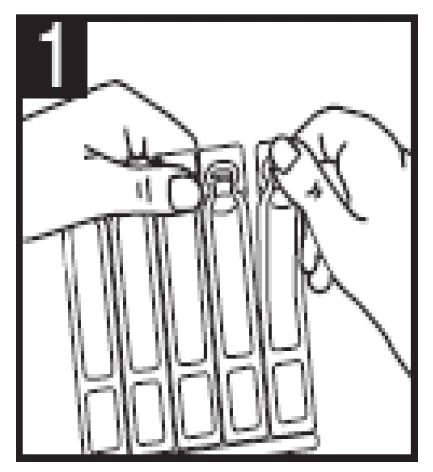
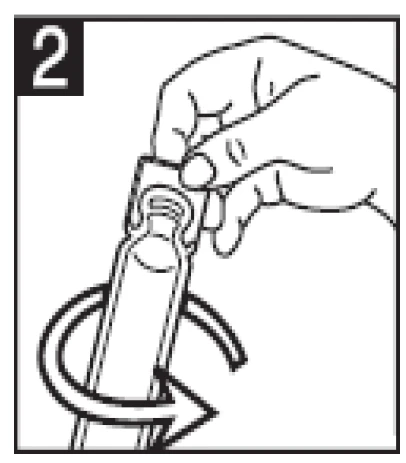
- Gently swirl the ampoule to mix the contents before use. Figure 2
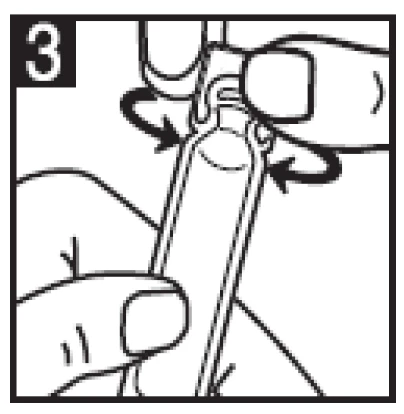
- Hold the ampoule upright without pressing (see Figure 3), and open it by twisting off the top part – the "wings".
- Insert the open end of the ampoule into the nebulizer chamber and slowly squeeze the entire contents into the chamber, as shown in Figure 4.
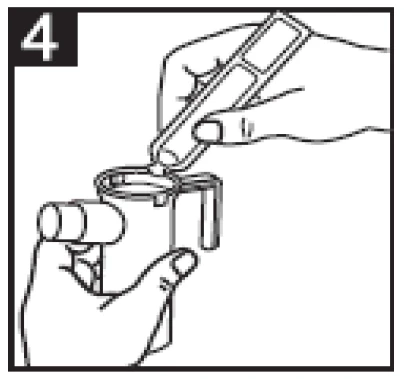
- Discard the empty ampoule. Close the nebulizer cover.
- Attach the face mask or mouthpiece to the nebulizer according to the device's instructions.
- Connect the nebulizer tubing to the compressor.
Page 5 of 9
- Turn on the compressor. Breathe calmly and deeply through the mouthpiece or face mask, while sitting or standing in an upright position. If using a face mask, ensure it fits properly.
- The patient will notice the end of inhalation when no more "mist" appears in the mouthpiece or face mask.
- Nebulization time depends on the type of equipment used and the volume of suspension administered.
- After inhalation, a few drops of medicine will remain in the nebulizer.
- After inhalation, rinse the mouth with water. Spit out the water. Do not swallow. If a face mask was used, wash the face with water as well.
- After each use, wash the nebulizer medicine chamber, mouthpiece (or face mask) with warm running water, using a mild detergent recommended by the nebulizer manufacturer. Then thoroughly rinse the nebulizer chamber and dry it by connecting the compressor to the outlet port.
Use of a higher than recommended dose of Resbud
It is important that the patient uses the medicine exactly as instructed in the leaflet or by the doctor. Do not increase or decrease the dose without consulting a doctor.
If more than the recommended dose is taken, contact a doctor or pharmacist immediately.
If a single excessive dose of Resbud is taken, it is unlikely to cause harmful effects.
However, if doses higher than recommended are taken for a prolonged period, side effects similar to those of oral glucocorticosteroids may occur, such as increased blood levels of adrenal cortex hormones and suppression of adrenal function. In such cases, the doctor should recommend continuing Resbud treatment at a dose sufficient to maintain control of asthma symptoms.
Missed dose of Resbud
If a prescribed dose of Resbud suspension for nebulization is missed, there is no need to make up for the missed dose. Take the next dose as directed by the doctor. Do not take a double dose to compensate for a missed dose.
If you have any further doubts about using this medicine, consult your doctor or pharmacist.
4. Possible adverse effects
Like all medicines, this medicine can cause adverse effects, although not everyone will experience them.
If any of the symptoms listed below occur, stop using Resbud immediately
and contact your doctor without delay:
- swelling of the face, particularly around the mouth, tongue, eyes and ears, rash, itching, contact dermatitis, urticaria and bronchospasm (constriction of the muscles in the airways causing wheezing). These may indicate an allergic reaction. This adverse effect is rare (occurs in fewer than 1 in 1,000 people).
- sudden onset of wheezing after inhaling Resbud. This adverse effect is rare (occurs in fewer than 1 in 1,000 people).
Other possible adverse effects:
Common (occur in fewer than 1 in 10 people)
- Oral fungal infections (thrush). To reduce the risk of developing these, rinse your mouth with water after using Resbud;
Page 6 of 9
- Sore throat, cough and hoarseness, loss of voice;
- Pneumonia (lung infection) in patients with COPD. Inform your doctor if any of the following symptoms occur during treatment with budesonide; they may be signs of a lung infection:
- fever or chills,
- increased mucus production or change in mucus colour,
- worsening cough or increased breathing difficulties.
Uncommon (occur in fewer than 1 in 100 people)
- Cataracts (clouding of the eye's lens);
- Blurred vision;
- Muscle spasms;
- Muscle tremors;
- Depression;
- Anxiety.
Rare (occur in fewer than 1 in 1,000 people)
- Skin rash on the face after using a face mask. This can be prevented by washing the face with water after using the face mask;
- Nervousness, behavioural changes (mainly in children);
- Easy bruising;
- Hoarseness and loss of voice (in children).
Adverse effects for which frequency is unknown (frequency cannot be estimated from available data)
- Sleep disorders, anxiety, excessive excitability, aggression.
Inhaled glucocorticosteroids may affect the normal production of steroid hormones in the body, particularly when used long-term at high doses. Such effects may include:
- glaucoma (increased intraocular pressure), frequency unknown;
- growth retardation in children and adolescents (rare);
- effects on the adrenal glands (a small gland near the kidneys) (rare). These effects are less likely to occur with inhaled glucocorticosteroids than with oral glucocorticosteroid tablets.
Reporting of adverse effects
If any adverse effects occur, including any not listed in this leaflet, inform your doctor or pharmacist. Adverse effects can be reported directly to the Department of Monitoring Adverse Drug Reactions of the Office for Registration of Medicinal Products, Medical Devices and Biocidal Products.
Al. Jerozolimskie 181C
02-222 Warsaw
Phone: +48 22 49 21 301
Fax: +48 22 49 21 309
Website: https://smz.ezdrowie.gov.pl
Adverse effects can also be reported to the marketing authorisation holder.
Reporting adverse effects helps provide more information on the safety of this medicine.
5. How to store Resbud
Page 7 of 9
Keep this medicine out of the sight and reach of children.
Do not use this medicine after the expiry date stated on the packaging after EXP:.
The expiry date refers to the last day of the stated month.
Do not store in the refrigerator or freeze. Store ampoules in the medicine pouch to protect from light.
Shelf life of the medicine after opening the medicine pouch: 3 months. WARNING: Record the date of opening on the pouch foil.
After opening an ampoule: if the contents of the ampoule are not used immediately, any remaining medicine must be discarded.
Medicines must not be disposed of via wastewater or household waste. Ask your pharmacist how to dispose of medicines no longer required. This will help protect the environment.
6. Contents of the pack and other information
What Resbud contains
- The active substance is budesonide. 1 mL of nebuliser suspension contains 0.25 mg or 0.50 mg of budesonide. Each ampoule contains 0.5 mg or 1 mg of budesonide in 2 mL of nebuliser suspension.
- Other ingredients are: polysorbate 80, sodium chloride, disodium edetate, sodium citrate, citric acid monohydrate, water for injections.
What Resbud looks like and contents of the pack
Sterile suspension, white to almost white in colour, in an LDPE ampoule.
Each ampoule contains 2 millilitres (mL) of sterile nebuliser suspension.
LDPE ampoule in a medicinal pouch made of PET/Aluminium/PE foil, packed in a cardboard box.
1 pouch contains 5 ampoules.
Pack sizes: 20, 40 or 60 ampoules.
Marketing Authorisation Holder:
Przedsiębiorstwo Farmaceutyczne LEK-AM Sp. z o.o.
ul. Ostrzykowizna 14A
05-170 Zakroczym
Tel.: +48 22 785 27 60
Fax: +48 22 785 27 60 ext. 106
Importer:
Przedsiębiorstwo Farmaceutyczne LEK-AM Sp. z o.o.
ul. Ostrzykowizna 14A
05-170 Zakroczym
Tel.: +48 22 785 27 60
Fax: +48 22 785 27 60 ext. 106
Cipla Europe NV
De Keyserlei 58-60 bus 19,
Antwerpen,
2018, Belgium
Page 8 of 9
07.2024
Page 9 of 9