Remurel
Poland
Table of Contents
Package leaflet: Information for the patient
Remurel, 20 mg/ml, solution for injection in pre-filled syringe
Glatiramer acetate
Please read all of this leaflet carefully before using this medicine because it contains
important information for you.
- Keep this leaflet. You may need to read it again.
- If you have any further questions, ask your doctor or pharmacist.
- This medicine has been prescribed for you personally. Do not pass it on to others. It may harm them, even if their symptoms are the same as yours.
- If you experience any side effects, including any not listed in this leaflet, tell your doctor or pharmacist. See section 4.
Contents of the leaflet
- What Remurel is and what it is used for
- What you need to know before using Remurel
- How to use Remurel
- Possible side effects
- How to store Remurel
- Contents of the pack and other information
1. What Remurel is and what it is used for
Remurel is used to treat relapsing-remitting multiple sclerosis. This medicine affects the way the immune system works and belongs to a group of medicines called immunomodulators. Multiple sclerosis symptoms are thought to be caused by the body's immune system acting abnormally, leading to inflammatory lesions in the brain and spinal cord.
Remurel is used to reduce the frequency of relapses (flare-ups) in multiple sclerosis. The beneficial effect of this medicine has not been demonstrated in other forms of multiple sclerosis where relapses are absent or very rare.
Remurel may not affect the duration or severity of individual relapses.
Remurel is used in patients who are able to walk without assistance.
Remurel may also be used in patients who have experienced a first episode of symptoms suggesting a high risk of developing multiple sclerosis. Before starting treatment, your doctor will rule out other possible causes of these symptoms.
2. Important information before using Remurel
When not to use Remurel:
- if the patient is allergic to glatiramer acetate or any of the other ingredients of this medicine (listed in section 6).
Warnings and precautions
Before starting treatment with Remurel, discuss this with your doctor or pharmacist.
- if the patient has kidney or heart diseases, regular examinations or follow-up visits may be necessary.
- if the patient has or has had any liver problems (including those related to alcohol consumption).
Remurel may cause severe allergic reactions, some of which may be life-threatening. These reactions may occur shortly after injection, several months, or even several years after starting treatment, even if no allergic reactions occurred after previous doses. The symptoms of allergic reactions may overlap with injection-related reactions. Your doctor will inform you about the symptoms of an allergic reaction.
Children
Remurel must not be used in children under 12 years of age.
Elderly patients
Studies on the use of Remurel in elderly patients have not been conducted.
Consult your doctor before using this medicine.
Remurel and other medicines
Tell your doctor or pharmacist about any medicines the patient is currently taking, has recently taken, or plans to take.
Pregnancy and breastfeeding
If the patient is pregnant, suspects she may be pregnant, or is planning to become pregnant, she should consult her doctor to consider the use of Remurel during pregnancy. Remurel may be used during pregnancy after consultation with a doctor.
Limited human data have not shown a negative effect of glatiramer acetate on breastfed newborns and/or infants. Remurel may be used during breastfeeding.
Driving and operating machinery
There are no data on the effect of Remurel on the ability to drive or operate machinery.
3. How to use Remurel
This medicine should always be used exactly as prescribed by the treating physician. If in doubt,
consult your doctor or pharmacist.
The recommended daily dose of Remurel for adults and adolescents aged 12 years and older is one
pre-filled syringe (20 mg glatiramer acetate), administered by subcutaneous injection.
It is very important to administer Remurel correctly:
- Remurel must only be given by subcutaneous injection (see "Instructions for use" below).
- Use the dose prescribed by your doctor. Only use the dose prescribed by your doctor.
- A single pre-filled syringe must never be used more than once. Unused product or waste must be discarded.
- Remurel must not be mixed or administered together with other medicines.
- If the solution contains visible particles, it must not be used. Use a new pre-filled syringe.
Your doctor or nurse will provide you with detailed instructions and supervise your first
self-administration of Remurel. Your doctor or nurse will remain with you while you perform the
injection yourself and for the following half hour to ensure that no adverse reactions occur.
Instructions for use
Before using Remurel, carefully read these instructions.
Before injecting the medicine, ensure that all necessary items are prepared:
- One blister containing one pre-filled syringe of Remurel.
- A sharps container for used needles and syringes.
- Only remove one blister containing one pre-filled syringe from the packaging for each injection. Store all other syringes in the carton.
- If the syringes have been stored in the refrigerator, place the blister containing the syringe at room temperature for at least 20 minutes before injection to allow the solution to warm to room temperature.
Wash your hands thoroughly with soap and water.
If you wish to use a special device (injector) for administering Remurel injections, an autoinjector called Autoxon is available. The Autoxon autoinjector is designed for use with Remurel and has not been tested for use with other medicines.
Refer to the instructions for use provided with the autoinjector.
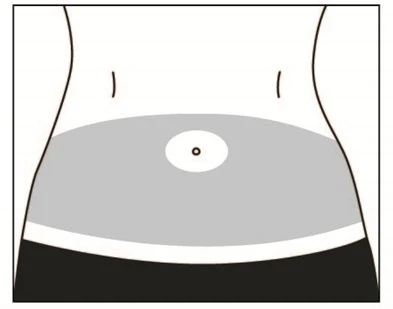
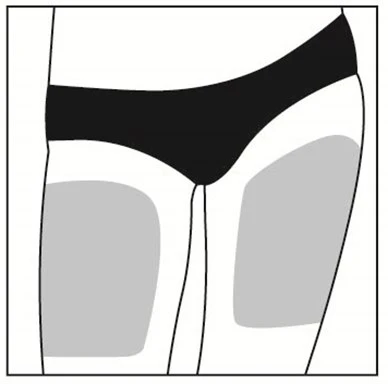
Select an injection site according to the diagrams. There are seven body areas where injections can be given:
Area 1. Abdominal area around the navel. Avoid injecting within 5 cm of the navel.
Areas 2 and 3: Thighs (above the knees),
Areas 4, 5, 6 and 7: Upper arms and upper buttocks (below the waist),
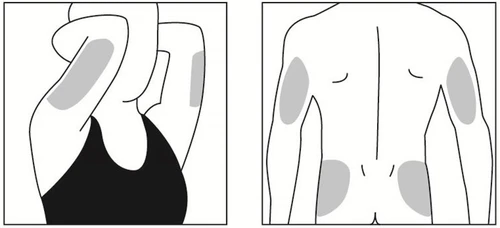
Each area has several injection sites. Choose a different site every day, as this reduces the risk of irritation or pain at the injection site. Rotate both the injection areas and the specific injection sites within each area.
Do not inject the medicine into the same site every time.
Note: Do not inject the medicine into areas that are painful or have discolored skin, or where lumps or thickened areas can be felt. Consider developing a rotational schedule for selecting injection sites and record it in a diary. Some body areas may be difficult to inject without assistance (e.g., the back of the upper arm). If you wish to use these areas, you may need help from another person.
How to inject the medicine:
- Remove the syringe from its protective tray by peeling off the foil.
- Remove the needle cap. Do not remove the cap with your mouth or teeth.
- Gently pinch a fold of skin between your thumb and index finger (Figure 1).
- Insert the needle into the skin as shown in Figure 2.
- Inject the medicine by steadily pressing down the plunger until the syringe is empty.
- Remove the syringe and needle straight upward.
- Dispose of the syringe in a special sharps container. Used syringes must not be thrown into household waste. Carefully place them in a special sharps container, as recommended by your doctor or nurse.
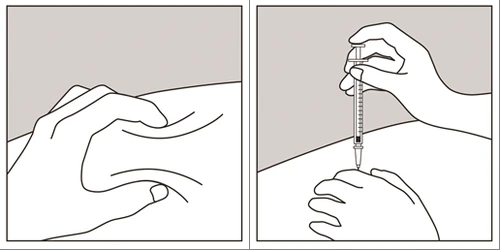
Figure 1. Figure 2.
If you feel that the effect of Remurel is too strong or too weak, consult your doctor.
Use of more than the recommended dose of Remurel
Contact your doctor immediately.
Missed dose of Remurel
Take the missed dose as soon as possible, but do not use a double dose to make up for a missed dose. The next dose should be administered after 24 hours.
Stopping treatment with Remurel
Do not stop using Remurel without consulting your doctor.
If you have any further questions about the use of this medicine, consult your doctor or pharmacist.
4. Possible adverse reactions
Like any medicine, this medicine can cause adverse reactions, although not everyone will experience them.
Allergic reactions (hypersensitivity, anaphylactic reactions)
A severe allergic reaction to the medicine may occur shortly after administration.
This is an uncommon adverse reaction. These reactions may occur several months or years
after starting treatment with Remurel, even if no allergic reactions occurred after previous doses.
You must stop using Remurel and immediately contact your doctor or go to the emergency department of the nearest hospital
if any of the following symptoms occur suddenly:
- widespread rash (red spots or hives),
- swelling of the eyelids, face, lips, mouth, throat or tongue,
- sudden shortness of breath, difficulty breathing or wheezing,
- seizures (convulsions),
- difficulty swallowing or speaking,
- fainting, dizziness or feeling faint,
- collapse.
Other reactions after administration (reaction immediately after injection)
In rare cases, some people may experience one or more of the following symptoms within minutes after injection of Remurel.
These symptoms usually do not cause complications and resolve spontaneously within half an hour.
However, if any of the following symptoms persist for longer than 30 minutes, you should immediately contact your doctor or go to the emergency department of the nearest hospital:
- skin redness (with a feeling of warmth) on the chest or face (vasodilation),
- shallow breathing (shortness of breath),
- chest pain,
- palpitations and rapid heartbeat (tachycardia).
Liver problems
During treatment with Remurel, liver problems or worsening of existing liver problems may rarely occur, including liver failure ( in some cases requiring liver transplantation ).
You should contact your doctor immediately if you experience any of the following symptoms:
- nausea,
- loss of appetite,
- dark-colored urine and pale stools,
- yellowing of the skin or the whites of the eyes,
- bleeding more easily than usual.
The following adverse reactions have been reported after administration of Remurel:
Very common (may affect more than 1 in 10 people):
- infection, influenza,
- anxiety, depression,
- headache,
- nausea,
- skin rash,
- joint or back pain,
- weakness, injection site reactions including: skin redness, pain, blistering, itching, swelling, inflammation and hypersensitivity (these injection site reactions are common and usually diminish over time), non-specific pain.
Common (may affect up to 1 in 10 people):
- respiratory tract infection, gastroenteritis, herpes, ear infection, watery nasal discharge, dental abscess, vaginal candidiasis,
- benign skin proliferation (benign skin tumor), tissue overgrowth (neoplasm),
- enlarged lymph nodes,
- allergic reactions,
- loss of appetite, weight gain,
- nervousness,
- taste disturbances, increased muscle tone, migraine, speech disorders, fainting, tremor,
- double vision, eye disorders,
- ear disorders,
- cough, allergic rhinitis,
- anorectal disorders, constipation, dental caries, indigestion, difficulty swallowing, fecal incontinence, vomiting,
- abnormal liver function test results,
- bruising, excessive sweating, itching, skin disorders, urticaria,
- neck pain,
- sudden urge to urinate, frequent urination, inability to adequately empty the bladder,
- chills, facial swelling, atrophy of subcutaneous tissue at injection site, local reaction, peripheral edema due to fluid accumulation, fever.
Uncommon (may affect up to 1 in 100 people):
- abscess, skin and soft tissue infection, boils, shingles, nephritis,
- skin cancer,
- increased white blood cell count, decreased white blood cell count, splenomegaly, decreased platelet count, changes in white blood cell morphology,
- enlarged thyroid, hyperthyroidism,
- reduced alcohol tolerance, gout, increased blood lipid levels, increased blood sodium levels, decreased plasma ferritin levels,
- unusual dreams, confusion, euphoric mood, seeing, hearing, smelling, tasting or feeling something that does not exist (hallucinations), hostility, abnormally elevated mood, personality disorders, suicidal attempts,
- numbness and pain in hands (carpal tunnel syndrome), psychiatric disorders, seizures, problems with writing and reading, muscle disorders, movement disorders, muscle spasms, nerve inflammation, neuromuscular junction disorders leading to muscle dysfunction, involuntary rapid eye movements, paralysis, foot drop (peroneal nerve palsy), stupor, partial visual field loss,
- cataract, corneal damage, dry eye, ocular hemorrhage, ptosis, pupil dilation, optic nerve atrophy leading to visual disturbances.
| |
| |
| |
| (hyperventilation), sensation of throat constriction, lung disorders, inability to breathe due to | |
| pressure in the throat (feeling of suffocation) | |
| |
| anus, enlargement of salivary glands | |
| |
| |
| skin, skin nodules, | |
| |
| decrease in muscle mass | |
| |
| |
| penile erection, prostate disorders, abnormal cervical cytology smear, testicular diseases, vaginal bleeding, vaginal disorders | |
| |
| (hypothermia), nonspecific inflammation, tissue necrosis at injection site, mucous membrane disorders | |
- Post-vaccination disorders.
Reporting of adverse reactions
If any adverse reactions occur, including any adverse reactions not listed
in this leaflet, you should inform your doctor, pharmacist, or nurse. Adverse reactions
can be reported directly to the Department of Monitoring Adverse Drug Reactions at the Office for Registration of Medicinal Products, Medical Devices and Biocidal Products
Al. Jerozolimskie 181C
02-222 Warsaw
Tel.: + 48 22 49 21 301
Fax: + 48 22 49 21 309
Website: https://smz.ezdrowie.gov.pl
Adverse reactions can also be reported to the marketing authorization holder.
Reporting adverse reactions helps to provide more information on the safety of the medicine.
5. How to store Remurel
Keep this medicine out of sight and reach of children.
Store in a refrigerator (2°C – 8°C).
Remurel pre-filled syringes may be stored once outside the refrigerator at a temperature between 15°C and 25°C for a period of 1 month. After this 1-month period, if the pre-filled syringes have not been used and are still in their original packaging, they must be returned to the refrigerator.
Do not freeze.
Pre-filled syringes should be kept in the outer packaging to protect from light.
Do not use this medicine after the expiry date stated on the label and carton after: EXP (abbreviation used to indicate expiry date). The first two digits indicate the month and the last four digits indicate the year. The expiry date refers to the last day of the specified month.
If the solution contains visible particles, discard the syringe.
Medicines should not be disposed of via wastewater or household waste. Ask your pharmacist how to dispose of medicines no longer required. This will help protect the environment.
6. Contents of the pack and other information
What Remurel contains
- The active substance is glatiramer acetate. 1 ml of injection solution (the contents of the pre-filled syringe) contains 20 mg of glatiramer acetate.
- The other components are mannitol and water for injections.
What Remurel looks like and contents of the pack
Remurel solution for injection in pre-filled syringes is a sterile, clear solution, colourless or with a pale yellow to brownish tint.
If the solution contains visible particles, it should be discarded and a new pre-filled syringe used.
7 pre-filled syringes
28 pre-filled syringes
30 pre-filled syringes
90 (3x30) pre-filled syringes
Marketing Authorisation Holder and Manufacturer
Marketing Authorisation Holder
Zentiva k.s.
U kabelovny 130
Dolní Měcholupy
102 37 Prague 10
Czech Republic
Manufacturer/Importer
Synthon Hispania SL
C/ Castelló no1, Pol. Las Salinas, Sant Boi de Llobregat
08830 Barcelona
Spain
Synthon BV
Microweg 22
6545 CM Nijmegen
The Netherlands
For further information about this medicinal product and its trade names in the countries of the European Economic Area, please contact:
Zentiva Polska Sp. z o.o.
ul. Bonifraterska 17
00-203 Warsaw
tel: + 48 22 375 92 00
[Zentiva (logo)]
The reusable auto-injector is called Autoxon.