Rantudil forte
Poland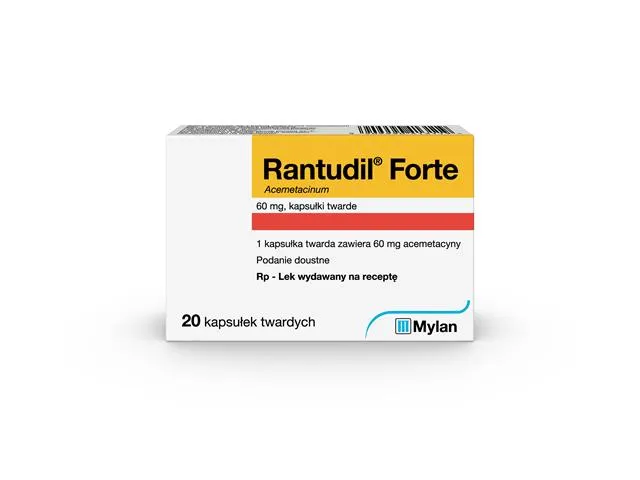
Table of Contents
Package leaflet: Information for the patient
Rantudil Forte, 60 mg, hard capsules
Acemetacinum
Please read the entire leaflet carefully before using this medicine, as it contains
important information for the patient.
- Keep this leaflet, as you may need to read it again.
- If you have any questions, please consult your doctor or pharmacist.
- This medicine has been prescribed for a specific individual. Do not pass it on to others. It may harm other people, even if their symptoms are the same.
- If you experience any adverse reactions, including any not listed in this leaflet, inform your doctor or pharmacist. See section 4.
Table of contents
- What is Rantudil Forte and what is it used for
- Important information before taking Rantudil Forte
- How to take Rantudil Forte
- Possible side effects
- How to store Rantudil Forte
- Contents of the pack and other information
1. What is Rantudil Forte and what is it used for
The active substance in Rantudil Forte is acemetacin, which has anti-inflammatory, analgesic, antipyretic properties and inhibits platelet aggregation. After oral administration, acemetacin accumulates at sites of inflammation, where it reaches higher concentrations than in the blood.
Indications
As an analgesic and anti-inflammatory agent in:
- degenerative joint diseases,
- lumbosacral pain,
- rheumatoid arthritis,
- ankylosing spondylitis,
- postoperative pain,
- acute attacks of gouty arthritis.
2. Important information before using Rantudil Forte
When not to use Rantudil Forte
- if the patient is allergic to acemetacin, indometacin, or any of the other components of this medicine (listed in section 6),
- if the patient has blood disorders of unknown origin,
- if the patient has previously experienced gastrointestinal bleeding or perforation after taking non-steroidal anti-inflammatory drugs (NSAIDs),
- if the patient has active or recurrent peptic ulcer disease of the stomach and/or duodenum or bleeding,
- in patients who have experienced bronchospasm, asthma attack, urticaria, or acute inflammation of the nasal mucosa following treatment with acetylsalicylic acid or other NSAIDs,
- if the patient has severe heart failure,
- if the patient is in the third trimester of pregnancy,
- in children and adolescents.
Warnings and precautions
Before starting treatment with Rantudil Forte, discuss this with your doctor or pharmacist.
- if the patient is taking other non-steroidal anti-inflammatory drugs (NSAIDs) simultaneously. Concomitant use of Rantudil Forte with other NSAIDs, including selective cyclooxygenase-2 inhibitors, should be avoided.
- if the patient is elderly. Elderly patients are more likely to experience adverse effects during NSAID treatment, particularly gastrointestinal bleeding and perforation, which may even lead to death. Rantudil Forte should be used in elderly patients only under strict medical supervision.
- if the patient (especially if elderly) has previously experienced adverse gastrointestinal effects. The patient should report any concerning abdominal symptoms (particularly gastrointestinal bleeding) to the doctor, especially at the beginning of treatment.
- if the patient has a tendency to bleeding. Bleeding may increase during treatment with Rantudil Forte.
- if the patient is taking other medicines that may increase the risk of ulcers or bleeding, such as oral glucocorticosteroids, anticoagulants (e.g. warfarin, acenocoumarol), selective serotonin reuptake inhibitors (SSRIs), or antiplatelet agents.
- if the patient has gastrointestinal diseases (e.g. ulcerative colitis, Crohn's disease).
- if the patient has liver or kidney dysfunction.
- if the patient has previously experienced hypersensitivity reactions to NSAIDs (e.g. asthma attack, skin reactions, or acute inflammation of the nasal mucosa).
- if the patient has bronchial asthma, hay fever, nasal mucosal swelling, or chronic respiratory diseases, as such patients are more susceptible to hypersensitivity reactions.
- if the patient has epilepsy, Parkinson's disease, or psychiatric disorders, as treatment with Rantudil Forte may exacerbate symptoms of these conditions.
- in patients infected with the varicella-zoster virus, due to the risk of severe skin-related adverse effects.
- if the patient has systemic lupus erythematosus (a systemic inflammatory condition) and/or mixed connective tissue disease.
- if the patient is taking potassium-sparing diuretics. Increased blood potassium levels have been observed during treatment with Rantudil Forte.
When to exercise special caution when using Rantudil Forte:
- if a skin rash, mucosal changes, or any other sign of hypersensitivity occurs after taking Rantudil Forte. In such cases, contact your doctor, who may decide to discontinue therapy.
- during long-term treatment with Rantudil Forte. Regular blood tests and coagulation parameters should be monitored. Ophthalmological examinations and tests to assess liver and kidney function are also recommended.
- if Rantudil Forte is administered immediately before or after surgical procedures.
The use of medicines such as Rantudil Forte may be associated with a small increased risk of arterial thrombotic events (e.g. heart attack (myocardial infarction) or stroke). Long-term use of high doses increases this risk. Do not use higher doses or longer treatment duration than recommended. If you have heart problems, have had a stroke, or suspect you are at risk of such conditions (e.g. high blood pressure, diabetes, elevated cholesterol, smoking), discuss the treatment approach with your doctor or pharmacist.
Rantudil Forte and other medicines
Inform your doctor about all medicines currently or recently taken, as well as any medicines you plan to take.
The following medicines may interact with Rantudil Forte; therefore, inform your doctor if you are taking any of the following:
- digoxin – serum digoxin levels may increase,
- phenytoin – serum phenytoin levels may increase,
- lithium – serum lithium levels may increase,
- anticoagulant medicines, e.g. warfarin, acenocoumarol – risk of bleeding may increase,
- glucocorticosteroids – risk of gastric and/or duodenal ulcers or bleeding may increase,
- acetylsalicylic acid or other NSAIDs (non-steroidal anti-inflammatory drugs) – risk of bleeding or peptic ulcer disease of the stomach and/or duodenum may increase. Concomitant use of Rantudil Forte with other NSAIDs should be avoided.
- probenecid – may delay elimination of Rantudil Forte,
- penicillin antibiotics – excretion of penicillins may be delayed,
- diuretics and antihypertensive medicines – their effects may be reduced. In patients with impaired kidney function (e.g. dehydrated patients or elderly), concomitant use of Rantudil Forte with antihypertensive medicines (ACE inhibitors and/or angiotensin II receptor antagonists) may lead to further deterioration of kidney function (including severe kidney failure), which is usually reversible. Therefore, caution is advised when using such combinations, especially in elderly patients. Patients should maintain adequate fluid intake. After initiating such treatment, the treating physician should consider regular monitoring of kidney function laboratory tests in these patients.
- potassium-sparing diuretics – may lead to increased serum potassium levels; therefore, patients taking these medicines should undergo periodic monitoring of serum potassium levels,
- antiplatelet agents and selective serotonin reuptake inhibitors (used in depression treatment) – risk of gastrointestinal bleeding may increase. Rantudil Forte may reduce the effectiveness of selective serotonin reuptake inhibitors.
- antacids (used for indigestion and treatment of gastric hyperacidity) – may reduce absorption of Rantudil Forte.
Taking Rantudil Forte with food, drink, and alcohol
Rantudil Forte capsules should be taken with food and a drink.
Concomitant alcohol consumption may worsen adverse effects such as occult gastrointestinal blood loss.
Pregnancy, breastfeeding, and effects on fertility
If the patient is pregnant or breastfeeding, suspects she may be pregnant, or is planning to become pregnant, she should consult a doctor or pharmacist before using this medicine.
Do not take Rantudil Forte during the last 3 months of pregnancy (third trimester), as this may increase the risk of serious complications during childbirth, dangerous for both mother and unborn child. In the unborn child, kidney and heart problems may occur. Bleeding tendencies may develop in both mother and child, and childbirth may be delayed or prolonged.
Do not take Rantudil Forte during the first 6 months of pregnancy (first or second trimester), unless absolutely necessary and prescribed by a doctor. If treatment is required during this period or when trying to conceive, the lowest effective dose should be used for the shortest possible duration. Rantudil Forte taken for longer than a few days starting from week 20 of pregnancy may cause kidney function disturbances in the unborn child, leading to low amniotic fluid levels (oligohydramnios) or narrowing of the fetal ductus arteriosus. If treatment lasts longer than a few days, the doctor may recommend additional monitoring.
Small amounts of the active substance (acemetacin) and its metabolites pass into breast milk; therefore, Rantudil Forte should not be used during breastfeeding.
Rantudil Forte may impair fertility. If the patient is planning to conceive or has difficulty conceiving, she should inform her doctor.
Driving and operating machinery
Do not drive, as fatigue and dizziness may occur after taking Rantudil Forte. Exercise particular caution at the beginning of treatment, after dose increase, when switching from Rantudil Forte to another medicine, and when consuming alcohol.
Do not operate machinery or use tools.
Rantudil Forte contains lactose and sodium
This medicine contains lactose. If the patient has previously been diagnosed with intolerance to certain sugars, the patient should consult a doctor before taking this medicine.
This medicine contains less than 1 mmol (23 mg) of sodium per capsule, meaning the medicine is considered "sodium-free".
3. How to use Rantudil Forte
This medicine should always be used according to the doctor's instructions. If in doubt, consult a
doctor or pharmacist.
The usual recommended dose of Rantudil Forte in adults is 1 capsule 1 to 3 times daily.
Instructions for use
Rantudil Forte capsules should be taken with meals. Swallow the capsules whole,
with a large amount of fluid.
Overdose of Rantudil Forte
In case of overdose, inform the doctor immediately. The doctor may perform gastric lavage or forced diuresis while maintaining fluid balance.
The following symptoms may occur: headache and dizziness, confusion, disorientation, lethargy, loss of
consciousness, nausea, vomiting, abdominal pain, gastrointestinal bleeding, sweating,
increased electrolyte concentration, elevated blood pressure, ankle edema,
oliguria, hematuria, respiratory center depression, seizures, coma.
Missed dose of Rantudil Forte
Do not take a double dose to make up for a missed capsule.
Stopping Rantudil Forte
If you have any further doubts regarding the use of this medicine, consult your
doctor or pharmacist.
4. Possible adverse effects
Like all medicines, this medicine can cause adverse effects, although not everyone will experience them.
Very common adverse effects (may affect more than 1 in 10 people)
Gastrointestinal disorders: nausea, vomiting, abdominal pain, diarrhoea, and minor gastrointestinal bleeding, which may exceptionally lead to anaemia. In any case of sudden abdominal pain and/or tarry stools or bloody vomit, treatment must be discontinued immediately and medical advice sought without delay.
Common adverse effects (may affect up to 1 in 10 people)
Immune system disorders: hypersensitivity reactions (rash, itching)
Psychiatric disorders: restlessness
Nervous system disorders: headache, drowsiness, dizziness
Gastrointestinal disorders: dyspepsia, bloating, abdominal pain, loss of appetite, gastric and intestinal ulcers (sometimes accompanied by bleeding and perforation)
Hepatobiliary disorders: increased liver enzyme activity
General disorders and administration site conditions: feeling of fatigue.
Uncommon adverse effects (may affect up to 1 in 100 people)
Immune system disorders: urticaria
Eye disorders: eye disorders (pigmentary retinopathy and corneal opacity) manifesting as blurred or double vision
Gastrointestinal disorders: blood in gastric contents (during vomiting), blood in stool, bloody diarrhoea
Skin and subcutaneous tissue disorders: hair loss
Renal and urinary disorders: development of oedema (e.g. peripheral oedema), particularly in patients with hypertension and/or impaired renal function
Hepatobiliary disorders: liver damage (toxic hepatitis with or without jaundice; very rarely occurring in a fulminant form, sometimes without preceding symptoms).
Rare adverse effects (may affect up to 1 in 1,000 people)
Metabolism and nutrition disorders: increased blood potassium levels (hyperkalaemia)
Psychiatric disorders: confusion
General disorders and administration site conditions: irritability.
Very rare adverse effects (may affect up to 1 in 10,000 people)
Infections and infestations: exacerbation of inflammatory symptoms due to infection (e.g. development of necrotizing fasciitis). If a patient experiences recurrence or worsening of any infection symptoms during treatment, medical advice should be sought, and the physician may recommend appropriate anti-infective treatment.
Blood and lymphatic system disorders: various types of anaemia (e.g. due to occult gastrointestinal bleeding, haemolytic anaemia, pancytopenia). Early symptoms may include: fever, sore throat, superficial mucosal lesions in the mouth, influenza-like symptoms, severe fatigue, nosebleeds, and subcutaneous petechiae. The medicine may affect platelet aggregation and increase the tendency to bleeding. If symptoms of anaemia occur, treatment must be stopped immediately and medical advice sought. Do not self-medicate with any analgesics and/or antipyretics.
Immune system disorders: severe generalized hypersensitivity reactions, which may manifest as facial and eyelid swelling, tongue swelling, internal laryngeal oedema with airway narrowing (angioedema), respiratory insufficiency possibly triggering an asthma attack, tachycardia, decreased blood pressure leading to life-threatening shock. In the event of any of these symptoms (which may even occur after first-time use of this medicine), immediate medical assistance is required.
Metabolism and nutrition disorders: increased blood glucose levels (hyperglycaemia), presence of glucose in urine
Psychiatric disorders: mental disturbances, disorientation, anxiety disorders, nightmares, psychosis, hallucinations, depression, sleep disorders, worsening of pre-existing psychiatric conditions
Nervous system disorders: loss of consciousness potentially leading to coma, taste disturbances, memory impairment, seizures, tremor, worsening of symptoms of epilepsy and Parkinson's disease
Ear and labyrinth disorders: tinnitus, hearing disturbances
Cardiac disorders: palpitations, angina pectoris, heart failure
Vascular disorders: hypertension
Respiratory, thoracic and mediastinal disorders: allergic pneumonia
Gastrointestinal disorders: inflammation of the oral mucosa and tongue, oesophageal lesions, lower abdominal discomfort (e.g. non-specific colitis with bleeding), exacerbation of symptoms of Crohn's disease or ulcerative colitis, constipation, intestinal pseudomembranous stricture, pancreatitis
Skin and subcutaneous tissue disorders: vasculitis, rash, excessive sweating, erythema, photosensitivity, small and extensive subcutaneous petechiae, exfoliative dermatitis, and blistering rash, which may also be severe, such as Stevens-Johnson syndrome or toxic epidermal necrolysis (Lyell's syndrome)
Musculoskeletal and connective tissue disorders: muscle weakness
Renal and urinary disorders: disturbances in urination, increased blood urea levels, acute renal failure, proteinuria, haematuria, kidney damage (interstitial nephritis, nephrotic syndrome, renal papillary necrosis)
Reproductive system and breast disorders: vaginal bleeding
General disorders and administration site conditions: internal body rash.
Adverse effects with unknown frequency
Vascular disorders: circulatory collapse.
Reporting of adverse effects
If any adverse effects occur, including those not listed in this leaflet, inform your doctor or pharmacist. Adverse effects can be reported directly to the Department of Monitoring Adverse Drug Reactions at the Office for Registration of Medicinal Products, Medical Devices and Biocidal Products, Al. Jerozolimskie 181C, 02-222 Warsaw, phone: +48 22 49 21 301, fax: +48 22 49 21 309, website: https://smz.ezdrowie.gov.pl
Adverse effects can also be reported to the marketing authorisation holder.
Reporting adverse effects helps to provide more information on the safety of the medicine.
5. How to store Rantudil Forte
Keep this medicine out of sight and reach of children.
Store at a temperature below 25°C.
Do not use this medicine after the expiry date stated on the packaging. The expiry date refers to the last day of the stated month.
Medicines must not be disposed of via wastewater or household waste. Ask your pharmacist how to dispose of medicines no longer in use. This will help protect the environment.
6. Contents of the pack and other information
What Rantudil Forte contains
- The active substance is acemetacin (Acemetacinum).
- The other ingredients are: monohydrate lactose (powder D80), monohydrate lactose (crystalline D20) (see section 2 "Rantudil Forte contains lactose and sodium"), magnesium stearate, colloidal anhydrous silica, talc, iron oxide yellow (E 172), iron oxide red (E 172), gelatin, titanium dioxide (E 171), sodium lauryl sulfate (see section 2 "Rantudil Forte contains lactose and sodium").
What Rantudil Forte looks like and contents of the pack
PP/Al or PVC/PVDC/Al blisters in a cardboard box.
Each pack contains 7, 10, 20, 21 or 50 hard capsules.
Marketing Authorisation Holder
Viatris Healthcare Sp. z o.o.
ul. Postępu 21B
02-676 Warsaw
Poland
Manufacturer
Madaus GmbH
51101 Cologne
Germany
For further information, please contact the Marketing Authorisation Holder:
Viatris Healthcare Sp. z o.o.
tel.: 22 546 64 00