Ranisan 150 mg
Poland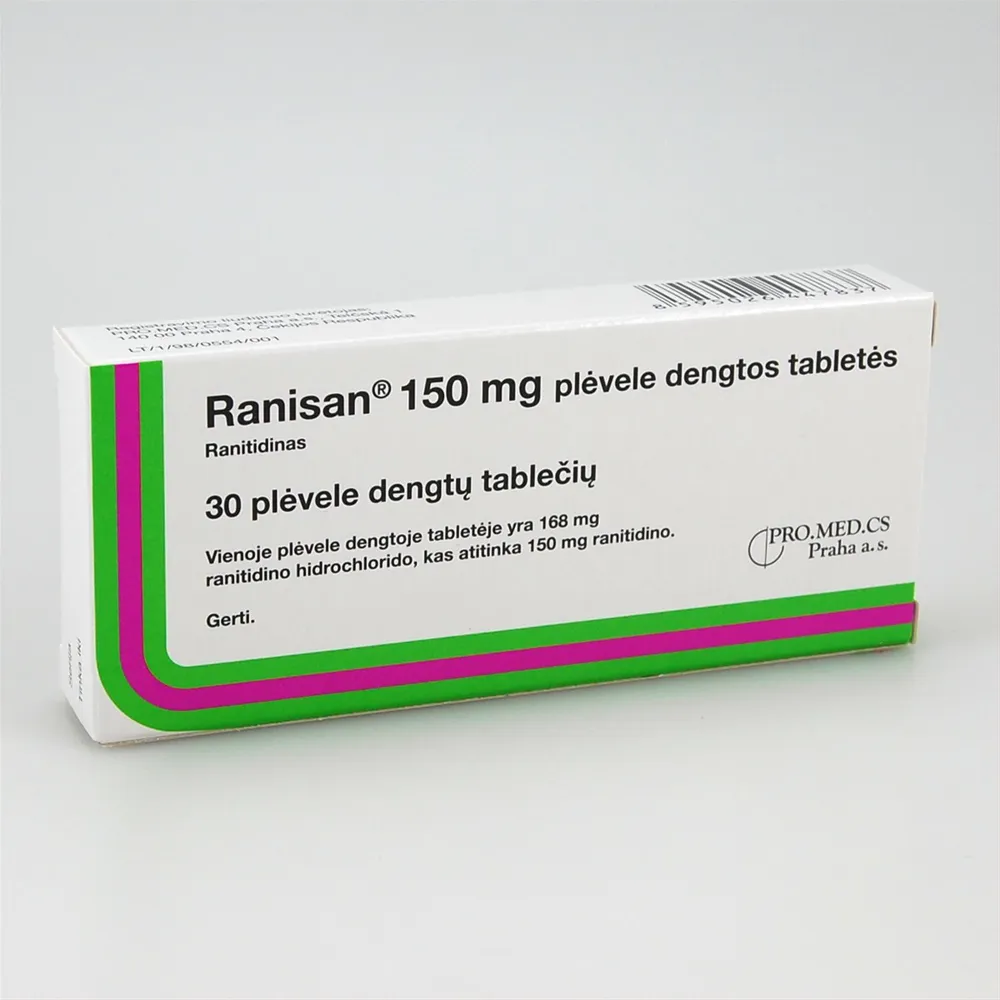
Table of Contents
Package leaflet: Information for the patient
RANISAN 150 mg
(Ranitidini hydrochloridum)
150 mg, coated tablets
Please read this leaflet carefully before taking the medicine, as it contains
important information for the patient.
- Keep this leaflet, so that you can read it again if necessary.
- If you have any questions, please consult your doctor or pharmacist.
- This medicine has been prescribed for a specific person only. Do not give it to others. The medicine may harm another person, even if their symptoms are the same.
- If you experience any adverse reactions, including any not listed in this leaflet, tell your doctor or pharmacist. See section 4.
Table of contents of the leaflet:
- What RANISAN 150 mg is and what it is used for
- Important information before taking RANISAN 150 mg
- How to take RANISAN 150 mg
- Possible side effects
- How to store RANISAN 150 mg
- Contents of the pack and other information
1. What RANISAN 150 mg is and what it is used for
RANISAN contains ranitidine, which is a specific, rapidly-acting histamine H\ receptor antagonist. It inhibits both basal and postprandial secretion of hydrochloric acid and reduces pepsin secretion in gastric juice.
Ranitidine has a relatively long half-life, allowing a single 150 mg dose to suppress gastric acid secretion for 12 hours.
The indications for using RANISAN 150 mg in adults are:
- Treatment of duodenal ulcer and mild forms of gastric ulcer, including ulcers induced by nonsteroidal anti-inflammatory drugs (NSAIDs).
- Prevention of duodenal ulcers occurring during treatment with nonsteroidal anti-inflammatory drugs (including acetylsalicylic acid), particularly in patients with a history of peptic ulcer disease.
- Duodenal ulcer associated with Helicobacter pylori infection.
- Treatment of postoperative ulceration.
- Treatment of reflux esophagitis.
- Zollinger-Ellison syndrome.
- Relief of gastroesophageal reflux symptoms.
- Recurrent dyspeptic discomfort characterized by pain (in the epigastrium or epigastric region), related to meals or disturbing sleep, but not resulting from the above-mentioned conditions.
- Prevention of Mendelson's syndrome (before general anesthesia in patients at risk of acid aspiration, particularly in women during childbirth).
- Prevention of bleeding from stress ulcers in severely ill patients.
- Prevention of recurrent gastrointestinal ulcer bleeding.
In children (aged 3 to 18 years), RANISAN 150 mg is indicated for:
- Short-term treatment of gastrointestinal ulcers.
- Treatment of gastroesophageal reflux, including reflux esophagitis and symptomatic relief of gastroesophageal reflux.
2. Important information before taking RANISAN 150 mg
When not to take RANISAN 150 mg:
- if the patient is allergic to the active substance or to any of the other ingredients of this medicine (listed in section 6).
Warnings and precautions
Before starting treatment with RANISAN 150 mg, discuss this with your doctor or pharmacist.
Treatment with an H(_2)-receptor antagonist may mask symptoms associated with stomach cancer and thus delay diagnosis of this disease. Therefore, in patients with gastric ulcer or when treatment is indicated for dyspeptic symptoms, malignancy must always be ruled out prior to initiating ranitidine therapy (this particularly applies to middle-aged and elderly individuals, or patients in whom new symptoms have appeared or existing symptoms have changed).
Ranitidine is eliminated by the kidneys, and therefore in patients with impaired renal function, plasma concentrations of the drug are increased. In such patients, the dosage should be individually adjusted according to the degree of renal impairment (see also Dosage in renal impairment).
Patients receiving concomitant non-steroidal anti-inflammatory drugs (NSAIDs) and ranitidine should be monitored regularly. This especially applies to elderly patients and those with a history of peptic ulcer disease.
There have been rare reports suggesting that ranitidine may provoke acute attacks of porphyria. Therefore, the use of this medicine should be avoided in patients with a history of acute porphyria.
Smoking promotes recurrence of duodenal ulcer disease; therefore, patients should be advised to stop smoking.
It has been observed that in certain patient groups receiving ranitidine—such as elderly individuals, patients with diabetes, chronic lung disease, or immunodeficiency—there may be an increased risk of developing community-acquired pneumonia.
RANISAN 150 mg and other medicines
Inform your doctor or pharmacist about all medicines you are currently taking or have recently taken, as well as any medicines you plan to take.
Ranitidine may affect the absorption, metabolism, and renal excretion of certain other medicines. Therefore, dosage adjustments or discontinuation of treatment may be required. This may concern the following medicines:
- non-steroidal anti-inflammatory drugs (analgesic and anti-inflammatory agents),
- coumarin derivatives, e.g. warfarin (anticoagulants),
- triazolam, midazolam (sedatives, hypnotics),
- ketoconazole (antifungal agent),
- atazanavir and delavirdine (medicines used in the treatment of HIV infection),
- gefitinib (oncology medicine),
- glipizide (antidiabetic agent),
- in case of high-dose ranitidine therapy, also procainamide and N-acetylprocainamide (medicines used in cardiac arrhythmias).
Other medicines and RANISAN 150 mg
If you are taking a medicine containing erlotinib, used in the treatment of certain types of cancer, you should talk to your doctor before taking RANISAN 150 mg. Ranitidine contained in RANISAN 150 mg may reduce erlotinib blood levels. Therefore, when erlotinib is administered concomitantly, your doctor may need to adjust your treatment accordingly.
No interactions have been observed between ranitidine and either amoxicillin or metronidazole.
If high doses of sucralfate (2 g) are administered concomitantly with RANISAN 150 mg, absorption of ranitidine may be reduced. Therefore, sucralfate should be taken at least two hours after ranitidine.
Inform your doctor about all medicines you are currently taking or have recently taken, including those available without a prescription.
Pregnancy, breastfeeding, and fertility
If you are pregnant, breastfeeding, think you may be pregnant, or are planning to have a baby, you should consult your doctor or pharmacist before using this medicine.
This medicine may be used during pregnancy only if clearly necessary.
Ranitidine passes into breast milk; therefore, it should be administered during breastfeeding only if clearly necessary.
There are no data on the effect of ranitidine on fertility in humans. Animal studies have not shown any effect on fertility in either sex.
Driving and operating machinery
If adverse effects such as dizziness or blurred vision occur, psycho-motor performance may be impaired.
3. How to take RANISAN 150 mg
This medicine should always be taken according to the recommendations of your doctor or pharmacist. If in
doubt, consult your doctor or pharmacist.
Recommended dosage:
Duodenal ulcer and mild gastric ulcer disease
Treatment:
Usually one ranitidine 150 mg tablet twice daily or a single dose of 300 mg at bedtime is administered. In most cases of duodenal ulcer or mild gastric ulcer, healing occurs within four weeks. In patients whose ulcer has not completely healed at this stage of treatment, healing usually occurs during the subsequent four weeks of continued therapy.
Ulcers caused by non-steroidal anti-inflammatory drugs (NSAIDs)
Treatment:
Patients with ulcers caused by non-steroidal anti-inflammatory drugs may require ranitidine treatment for 8 to 12 weeks at a dose of 150 mg twice daily or 300 mg at bedtime.
Treatment outcomes for duodenal ulcer with ranitidine 300 mg twice daily for four weeks were better than with 150 mg twice daily or a single dose of 300 mg at bedtime. Increasing the dose did not result in a higher incidence of adverse effects.
Prevention:
To prevent duodenal ulcers during treatment with non-steroidal anti-inflammatory drugs, it is recommended to administer ranitidine at a dose of 150 mg twice daily.
Duodenal ulcer associated with Helicobacter pylori infection
Ranitidine at a dose of 300 mg at bedtime or 150 mg twice daily may be used in combination with amoxicillin 750 mg three times daily and metronidazole 500 mg three times daily for a period of two weeks. This should be followed by ranitidine treatment for an additional two weeks. This regimen effectively reduces the frequency of duodenal ulcer recurrence.
Maintenance therapy:
For maintenance treatment in patients who responded well to short-term therapy, especially those with a history of peptic ulcer disease, a dose of 150 mg ranitidine at bedtime is usually used.
Postoperative ulcer
For treatment of postoperative ulcer, a dose of ranitidine 150 mg twice daily is used. Healing occurs in most cases within 4 weeks. If healing is incomplete, continuation of treatment for an additional four weeks is recommended.
Gastroesophageal reflux
To relieve symptoms of gastroesophageal reflux, a dose of ranitidine 150 mg twice daily for two weeks is recommended. If symptoms persist, this dosing may be continued for an additional two weeks.
Reflux esophagitis
Patients with reflux esophagitis should take ranitidine 150 mg twice daily or 300 mg as a single dose at bedtime for up to eight weeks or, if necessary, for 12 weeks. In patients with moderate or severe esophagitis, the ranitidine dose may be increased to 150 mg four times daily for 12 weeks.
Zollinger-Ellison syndrome
In patients with Zollinger-Ellison syndrome, the initial dose is 150 mg three times daily and may be increased if needed. Doses up to 6 g daily have been well tolerated.
Recurrent dyspeptic symptoms
In patients with recurrent dyspeptic symptoms, ranitidine is administered at a dose of 150 mg twice daily for 6 weeks. If treatment fails, diagnostic reassessment is recommended.
Prevention of Mendelson's syndrome
Patients at risk of developing Mendelson's syndrome may be given 150 mg ranitidine two hours before the start of general anesthesia, and preferably also one 150 mg tablet the previous evening. Alternatively, ranitidine injections may be used in such cases. In obstetrics, from the onset of labor, ranitidine may be administered orally at 150 mg every 6 hours. If general anesthesia is required, administration of an antacid before induction of anesthesia is recommended.
Prevention of stress ulcer bleeding in critically ill patients and prevention of recurrent bleeding in patients with peptic ulcer disease
To prevent stress ulcer bleeding and prevent recurrent bleeding in patients with peptic ulcer disease, ranitidine should be administered parenterally. An oral dose of 150 mg twice daily may be given as an alternative to intravenous treatment after initiation of enteral feeding.
Dosing in renal impairment
In patients with creatinine clearance less than 50 ml/min, accumulation of ranitidine and increased plasma concentrations may occur. In these patients, the recommended daily dose of ranitidine is 150 mg.
Dosing in children aged 12 years and older
In children aged 12 years and older, dosing is the same as in adults.
Dosing in children aged 3 to 11 years and with body weight above 30 kg
Treatment of gastrointestinal ulcers
The recommended oral dose for treatment of gastrointestinal ulcers in children is 4 mg/kg/day to 8 mg/kg/day in two divided doses up to a maximum dose of 300 mg ranitidine per day for 4 weeks. In patients whose ulcer has not completely healed, an additional 4 weeks of therapy is recommended, as complete healing usually occurs within 8 weeks.
Gastroesophageal reflux
The recommended oral dose for treatment of gastroesophageal reflux in children is 5 mg/kg/day to 10 mg/kg/day in two divided doses up to a maximum dose of 600 mg (the maximum dose is intended for children with higher body weight and adolescents with severe symptoms).
Dosing in newborns
The safety and efficacy of use in newborns have not been established.
If you feel the medicine's effect is too strong or too weak, consult your doctor.
Taking more RANISAN 150 mg than recommended
In case of ranitidine overdose, symptomatic and supportive treatment is indicated.
If you take more medicine than recommended, contact your doctor or pharmacist immediately.
Missing a dose of RANISAN 150 mg
Do not take a double dose to make up for a missed dose.
If you have any further questions about the use of this medicine, consult your doctor or pharmacist.
4. Possible adverse effects
Like any medicine, this medicine can cause adverse effects, although not everyone will experience them.
Below are the adverse effects observed in people treated with ranitidine. In many
cases, a definite causal relationship with the use of ranitidine has not been established.
- Allergic reactions, which may include:
- skin rash (urticaria) or redness,
- swelling, mainly of the face, lips, tongue or throat (angioedema),
- worsening of wheezing, cough or breathing difficulties, chest pain,
- sudden feeling of weakness or dizziness (which may lead to falling or loss of consciousness).
- Kidney problems, which may manifest as back pain, fever, pain during urination, abnormal blood or urine test results (acute interstitial nephritis).
- Severe abdominal pain, which may indicate pancreatitis.
- Slow or irregular heartbeat.
If any of the above symptoms occur, contact a doctor immediately.
Discontinue use of RANISAN 150 mg.
Adverse effect occurring not very often (means occurring in fewer than 1 in 100 patients, but more frequently than 1 in 1,000 patients taking the medicine):
- Abdominal pain.
- Constipation.
- Nausea. These symptoms usually resolve during continued treatment.
Adverse effect occurring rarely (means occurring in fewer than 1 in 1,000 patients, but more frequently than 1 in 10,000 patients taking the medicine):
- Skin rash.
Rare adverse effects that may appear in blood test results:
- Increased plasma creatinine concentration (usually slight; returns to normal during continued therapy).
- Transient changes in liver enzyme activity.
Adverse effect occurring very rarely (means occurring in fewer than 1 in 10,000 patients taking the medicine):
- Usually transient changes in blood cell counts. The patient may experience fatigue, shortness of breath, increased susceptibility to infections, or easier bruising.
- Transient states of confusion, depression, and hallucinations, mainly in severely ill patients, elderly patients, and patients with nephropathy (kidney disease).
- Headache, sometimes severe, dizziness, joint and muscle pain, transient involuntary movements.
- Transient blurred vision, probably due to accommodation disorder.
- Rapid heartbeat.
- Vasculitis.
- Diarrhea.
- Usually transient hepatitis, with or without jaundice.
- Erythema multiforme, alopecia.
- Transient impotence, symptoms and conditions affecting breasts in men (such as gynecomastia and galactorrhea).
Adverse effect occurring with unknown frequency (means frequency cannot be determined from available data):
- Dyspnea (shortness of breath).
If any adverse effect worsens or if any adverse effects not listed in this leaflet occur, inform your doctor or pharmacist.
Reporting of adverse effects
If any adverse effects occur, including those not listed in this leaflet, inform your doctor, pharmacist, or nurse. Adverse effects can be reported directly to the Department of Monitoring Adverse Drug Reactions at the Office for Registration of Medicinal Products, Medical Devices and Biocidal Products:
Al. Jerozolimskie 181C, 02-222 Warsaw,
tel.: 22 49-21-301,
fax: 22 49-21-309,
e-mail: [email protected].
Adverse effects can also be reported to the marketing authorization holder.
Reporting adverse effects helps provide more information on the safety of this medicine.
5. How to store RANISAN 150 mg
Keep this medicine out of sight and reach of children.
No special precautions regarding storage temperature are required.
Store in a dry place. Protect from light.
Do not use this medicine after the expiry date stated on the carton after: Exp.
The expiry date refers to the last day of the stated month.
Medicines must not be disposed of via the sewage system or household waste. Ask your pharmacist how to dispose of medicines no longer required. These measures will help protect the environment.
6. Contents of the package and other information
What Ranisan 150 mg contains
- The active substance is ranitidine in the form of ranitidine hydrochloride.
- Other ingredients are: corn starch, microcrystalline cellulose, polyvinylpyrrolidone VA-64, polyvinylpyrrolidone 25, magnesium stearate; coating ingredients: hypromellose 5, hypromellose 15, macrogol 6000, titanium dioxide, magnesium stearate, simethicone emulsion.
What Ranisan 150 mg looks like and contents of the pack
Ranisan 150 mg is a white to off-white coated tablet, biconvex lens-shaped, 9.6 mm in diameter, with a break line on one side.
Ranisan 150 mg coated tablets are packed in aluminum/aluminum blisters. Packs contain 2, 3 or 6 blisters with 10 tablets each, in a cardboard box.
Marketing Authorisation Holder and Manufacturer:
PRO.MED.CS.
Praha a.s., Telčská 1
140 00 Praha 4
Czech Republic
For further information, please contact the local representative of the Marketing Authorisation Holder.