Rabipur
Poland
Table of Contents
Package leaflet: Information for the user
Rabipur
Powder and solvent for solution for injection in a pre-filled syringe
Rabies virus, Flury LEP strain, (inactivated)
Please read all of this leaflet carefully before using Rabipur vaccine,
because it contains important information for you.
- Keep this leaflet as you may need to read it again.
- If you have any further questions, please ask your doctor, pharmacist or nurse.
- This vaccine has been prescribed for a specific individual. Do not pass it on to others.
- If you experience any side effects, including any not listed in this leaflet, tell your doctor, pharmacist or nurse. See section 4.
Contents of the leaflet
- What Rabipur vaccine is and what it is used for
- Important information before using Rabipur vaccine
- How to use Rabipur vaccine
- Possible side effects
- How to store Rabipur vaccine
- Contents of the pack and other information
1. What Rabipur vaccine is and what it is used for
What Rabipur vaccine is
Rabipur is a vaccine containing inactivated rabies virus. After vaccination, the immune system (the body's natural defence system) produces antibodies against the rabies virus. These antibodies protect against infections or diseases caused by the rabies virus. None of the components of the vaccine can cause rabies.
What Rabipur vaccine is used for
Rabipur vaccine can be used in individuals of all ages.
Rabipur vaccine can be used to prevent rabies:
- before potential exposure to the rabies virus (pre-exposure prophylaxis), or
- after probable or confirmed exposure to the rabies virus (post-exposure prophylaxis). Rabies is an infection that can be transmitted by being bitten or scratched, or even licked by an infected animal, especially if the skin is broken. Even contact with animal traps that have been licked or gnawed by infected animals may lead to human infection.
2. Important information before using Rabipur vaccine
Rabipur vaccine must not be administered before potential exposure to the
rabies virus:
- if the patient has previously experienced a serious allergic reaction to the active substance or to any of the vaccine components listed in section 6;
- if the patient currently suffers from an acute illness requiring treatment. However, since rabies is a particularly dangerous disease, Rabipur vaccine may be given to any person after exposure to the rabies virus, even to pregnant women.
Serious allergic reactions (hypersensitivity)
If the patient is at risk of a serious allergic reaction to the vaccine or to any of its components, another rabies vaccine not containing these components may be administered. If an alternative vaccine is not available, the doctor or nurse will assess the risks associated with vaccination versus the risk of rabies infection before administering the vaccine.
Warnings and precautions
In case of an acute illness requiring treatment, vaccination is usually postponed until at least 2 weeks after recovery. A mild infection should not be a reason to delay vaccination, but this should be discussed with a doctor or nurse beforehand.
Before receiving Rabipur vaccine as post-exposure prophylaxis, inform your doctor or nurse if:
- the patient has a severe allergy to chicken eggs or egg-containing products (symptoms are listed in section 4 of this leaflet). Rabipur vaccine contains trace amounts of chicken egg protein remaining from the manufacturing process.
- the patient has a severe allergy to antibiotics such as neomycin, chlorotetracycline, or amphotericin B. These antibiotics may be present in the vaccine in trace amounts.
- the patient has a severe allergy to polygeline. Fainting may occur during or even before any injection procedure; therefore, inform the doctor or nurse if the patient has previously fainted during an injection.
Very rare but serious neurological disorders have been reported after administration of Rabipur vaccine. See section 4. Anti-inflammatory medicines (steroids), commonly used to treat such disorders, may affect the effectiveness of the vaccine (see below, Rabipur and other medicines). The doctor or nurse will decide on further management in such cases.
As with all vaccines, Rabipur may not fully protect all vaccinated individuals. Vaccines must not be administered into the buttock, subcutaneously, or intravascularly.
Rabipur and other medicines
Inform your doctor or nurse about all medicines the patient is currently taking or has recently taken, as well as any medicines the patient plans to take, including over-the-counter medicines. Unless otherwise advised by the doctor, all prescribed medicines should be continued as usual.
If the patient's immune system is weakened or if the patient is taking medicines that reduce the body's resistance to infections, Rabipur vaccine may still be administered, but the level of protection achieved may not be as high as in others. In such cases, the doctor may recommend a blood test after vaccination to check whether the level of antiviral antibodies produced is sufficient. Additional vaccine doses may be required if necessary (see section 3 of this leaflet).
Rabipur vaccine may be given simultaneously with other inactivated vaccines. For each type of vaccine, a different injection site should be used.
It may also be necessary to administer rabies antibodies by injection (called "rabies immunoglobulin"), if the patient has not been fully vaccinated against rabies and there is a very high likelihood of virus exposure. In such a case, rabies immunoglobulin (administered only once, usually with the first vaccine dose) and the vaccine should be injected at different sites on the body.
Pregnancy and breastfeeding
If the patient is pregnant or breastfeeding, suspects she may be pregnant, or is planning to become pregnant, the rabies vaccine should be administered if exposure to the virus has occurred or is likely to have occurred.
Rabipur vaccine may also be administered to a pregnant or breastfeeding woman before potential exposure to the virus if the risk of exposure is considered substantial. In such cases, the doctor will assess the risks associated with vaccination and the risk of rabies infection, and determine the most appropriate timing for administering Rabipur.
Driving and using machines
Some of the adverse reactions described in section 4 of this leaflet may affect the ability to drive or operate machinery.
Rabipur contains:
Less than 23 mg of sodium per dose, which essentially means "sodium-free".
3. How to use the Rabipur vaccine
The Rabipur vaccine will be administered by a doctor or a nurse trained in vaccine administration.
Measures necessary for the treatment of very serious allergic reactions, which may occur after vaccination, should be readily available (see section 4 of this leaflet). The vaccine should be administered in a clinic or treatment room where such emergency measures are accessible.
Instructions for doctors and healthcare professionals on vaccine reconstitution can be found at the end of this leaflet.
The recommended dose for adults and children of all ages is one millilitre (1 ml) per injection.
The doctor will decide how many doses should be given. The number of doses depends on whether the Rabipur vaccine is administered before or after potential exposure to the virus.
The vaccine is administered by intramuscular injection (usually into the muscle of the upper arm, or into the thigh muscle in young children).
VACCINATION BEFORE POTENTIAL EXPOSURE TO THE VIRUS
For individuals who have never been vaccinated against rabies:
- Initially, three doses of the vaccine should be given. The first dose is administered during the first visit, the second dose seven days later, and the third dose 21 or 28 days after the first dose.
- In adults aged between 18 and 65 years who require a more rapid development of protection, the Rabipur vaccine may alternatively be administered in three doses within 7 days. The first dose is given during the first visit, the second dose three days later, and the third dose four days after the second dose.
- Alternatively, in individuals with a normal immune response, the Rabipur vaccine may be given in two doses within 7 days. The first dose is administered during the first visit, and the second dose seven days later. If a vaccination appointment is missed, the vaccine should be administered as soon as possible after the recommended date.
The need for booster doses depends on the risk of exposure to the rabies virus.
The doctor, after reviewing official recommendations on rabies vaccination, will assess whether a booster dose is necessary.
For individuals at continuous high risk of infection, the doctor may also recommend regular testing to measure the level of rabies virus antibodies in the blood, so that a booster dose can be administered as soon as necessary.
Experience indicates that booster doses are usually required every 2 to 5 years.
VACCINATION AFTER POTENTIAL OR CONFIRMED EXPOSURE TO THE VIRUS
Previously vaccinated individuals
For individuals who have been fully vaccinated against rabies and/or have received booster doses, two additional doses of vaccine (each 1.0 ml) are usually required after contact with an animal known or suspected to be infected with rabies. The first dose should be given as soon as possible after exposure, and the second dose three days later.
Unvaccinated individuals
For individuals who have not been previously vaccinated or who have received inadequate primary vaccination, four or five doses (each 1.0 ml) should be administered according to one of the following schedules:
- In the four-dose regimen, the first two doses are administered as soon as possible after exposure on day 0, and subsequent single doses are given on day 7 and day 21 after the first dose.
- An alternative four-dose regimen may be used in healthy individuals with a known good immune response: the first dose is administered as soon as possible after exposure on day 0, and the remaining doses are given on day 3, 7, and 14 after the first dose.
- In the five-dose regimen, the first dose is administered as soon as possible after exposure on day 0, and the remaining doses are given on day 3, 7, 14, and 28 after the first dose.
After potential exposure to the rabies virus, the doctor will assess the risk of infection based on the type of contact that occurred. For example, individuals who have been bitten or scratched by an animal that may be infected, or who have had contact with bats, are at much greater risk of rabies infection than those who have been licked by an animal without skin injury.
Individuals with impaired immune systems (with weakened immunity against infections)
For individuals at increased risk of rabies infection due to impaired immune function, five or six doses (each 1.0 ml) of rabies vaccine are required after contact with an animal known or suspected to be infected with rabies. In addition to vaccination, local wound treatment and administration of rabies immunoglobulin are necessary.
When six doses are used, the first two doses are administered as soon as possible after exposure, and subsequent single doses are given on day 3, 7, 14, and 28 after the first dose.
When five doses are used, the first dose is administered as soon as possible after exposure, and the remaining doses are given on day 3, 7, 14, and 28 after the first dose.
Blood tests may also be necessary to evaluate the level of antibodies against the rabies virus and to determine whether additional vaccine doses are needed. The doctor will inform the patient what actions to take and when to return for additional tests or further vaccination.
4. Possible adverse reactions
Like any medicine, this vaccine may cause adverse reactions, although not everyone will experience them.
Severe systemic reactions, sometimes accompanied by shock (dangerously low blood pressure)*, may occur after administration of Rabipur vaccine. Appropriate treatment and supervision should always be readily available in case of rare, severe allergic reactions to the vaccine. If such reactions occur, inform a doctor immediately.
The most frequently reported adverse reactions associated with Rabipur vaccination were pain at the injection site, mainly pain related to the injection procedure, or skin induration at the injection site. These reactions occurred very commonly (in more than 1 in 10 people). Most injection site reactions were mild or moderate in severity and resolved within 24 to 48 hours after vaccination.
Other adverse reactions include:
Very common ( may affect more than 1 in 10 people )
Headache
Dizziness
Rash
General malaise
Fatigue
Weakness
Fever
Common ( may affect up to 1 in 10 people )
Swollen lymph nodes
Decreased appetite
Nausea
Vomiting
Diarrhea
Abdominal pain / stomach discomfort
Urticaria
Muscle pain
Joint pain
Rare ( may affect up to 1 in 1,000 people )
Allergic reactions
Tingling or numbness
Sweating
Chills
Very rare ( may affect up to 1 in 10,000 people )
Encephalitis, nerve damage which may cause weakness, inability to move, or loss of sensation in certain parts of the body*
Fainting, unsteadiness with dizziness*
Severe allergic reactions which may cause swelling of the face or throat*
*Description of adverse reactions reported spontaneously
Additional adverse reactions occurring in children
The frequency, type, and severity of adverse reactions in children are expected to be the same as in adults.
Reporting of adverse reactions
If any adverse reactions occur, including any not listed in this leaflet, inform a doctor or nurse. Adverse reactions can be reported directly to the Department of Monitoring Adverse Drug Reactions, Office for Registration of Medicinal Products, Medical Devices and Biocidal Products, Al. Jerozolimskie 181C, 02-222 Warsaw, phone: +48 22 49 21 301, fax: +48 22 49 21 309. Website: https://smz.ezdrowie.gov.pl.
Adverse reactions can also be reported to the marketing authorization holder.
Reporting adverse reactions helps to provide more information on the safety of the vaccine.
5. How to store the Rabipur vaccine
Keep the vaccine out of sight and reach of children.
Protect from light. Store in a refrigerator (2°C – 8°C). Do not freeze.
Keep the vial and the prefilled syringe in the outer packaging to protect from light.
Do not use this vaccine after the expiry date stated on the outer carton.
The expiry date refers to the last day of the stated month.
Medicines should not be disposed of via wastewater. Ask your pharmacist how to dispose of medicines no longer required. Such measures help protect the environment.
6. Contents of the package and other information
What Rabipur vaccine contains
The active substance in the vaccine is inactivated rabies virus (Flury LEP strain),
containing not less than 2.5 I.U., propagated on purified chick embryo cells (PCEC).
Other components are: tromethamine, sodium chloride, disodium edetate, potassium L-glutamate,
polygeline, sucrose and water for injections. Egg proteins (e.g. chicken egg albumin), human serum
albumin, neomycin, chlorotetracycline and amphotericin B are present in the vaccine as trace
residues.
What Rabipur vaccine looks like and contents of the pack
Rabipur is a white lyophilized powder for reconstitution with a clear, colourless solvent. After
reconstitution, the vaccine is clear to slightly opalescent and colourless to slightly pinkish.
Rabipur vaccine is supplied in packs containing:
- 1 vial of powder,
- 1 single-use prefilled syringe either with a white cap with a tamper-evident seal or with a transparent cap, containing sterile solvent,
- and 2 identical needles (25 G, 25 mm) – one for reconstitution and one for injection.
Marketing Authorisation Holder and Manufacturer
Marketing Authorisation Holder
Bavarian Nordic A/S
Philip Heymans Alle 3
2900 Hellerup, Denmark
Manufacturer
GSK Vaccines GmbH
Emil-von-Behring-Str. 76
35041 Marburg, Germany
Bavarian Nordic A/S
Hejreskovvej 10A
3490 Kvistgaard, Denmark
This medicinal product is authorised for marketing in the European Economic Area countries
under the following names:
Austria, Belgium, Croatia, Denmark, France, Spain, the Netherlands, Luxembourg, Germany, Norway,
Poland, Portugal, Sweden, Hungary, Italy: Rabipur
Other sources of information
Information intended exclusively for healthcare professionals:
There are two types of prefilled syringes, which differ in the type of closure.
Both types of syringes are equipped with a safety lock that facilitates preparation and administration
of the injection. In addition, the lock reduces the diameter of the opening in the syringe barrel and
simultaneously enlarges the finger flange through ergonomically shaped wings. This prevents
accidental disengagement of the plunger from the syringe.
Before preparing Rabipur vaccine for administration, identify the prefilled syringe in the package
(either with a white cap with tamper-evident seal or with a transparent cap) and follow the
instructions provided for the appropriate prefilled syringe included in the package.
Instructions for use of the single-use prefilled syringe with Rabipur vaccine:
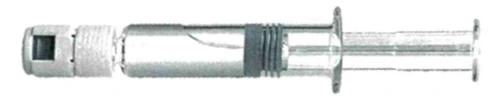
Prefilled syringe with white cap
with tamper-evident seal:
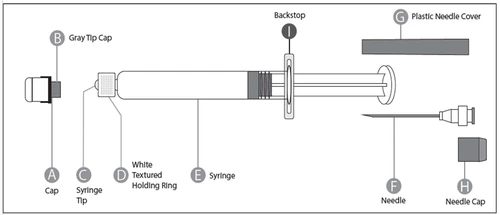
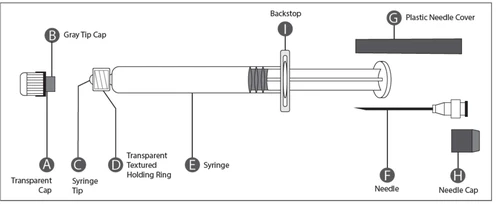
| Step 1: Hold the syringe (E) with one hand, with the cap facing upwards. Hold the syringe by the white textured ring (D). | 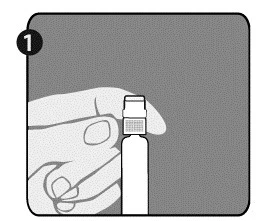 |
| Step 2: With the other hand, grasp the cap (A) and move it firmly back and forth to detach it from the ring (D). Do not rotate or unscrew the cap. | 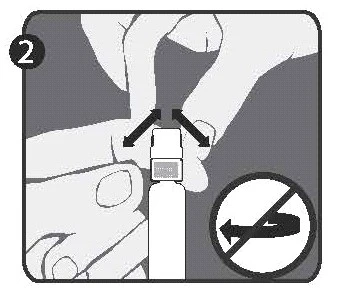 |
| Step 3: Lift off the cap (A) and remove the grey tip (B). Be careful not to touch the sterile end of the syringe (C). | 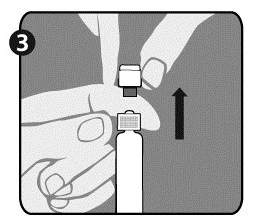 |
Needle attachment (instructions apply to both needles provided):
| Step 1: Twist the cap (H) to remove it from one of the two identical needles. This will be the needle used for reconstitution. Do not remove the plastic shield (G). | 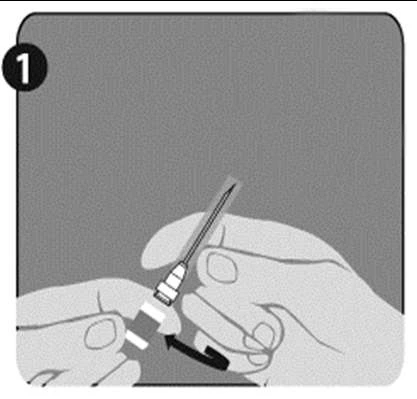 |
| Step 2: Firmly hold the syringe (E) by the textured white ring (D) with one hand. With the other hand, attach this needle (F) and twist it clockwise until it locks in place. After attaching the needle, remove the plastic shield (G). The syringe is now ready for use. | 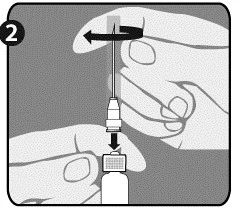 |

Vial-syringe with transparent cap:
| Transparent cap | Syringe tip |
| Step 1: With one hand, hold the syringe (E) with the cap pointing upwards. Hold the syringe by the transparent textured ring (D). Unscrew the cap (A) by turning it counterclockwise. | 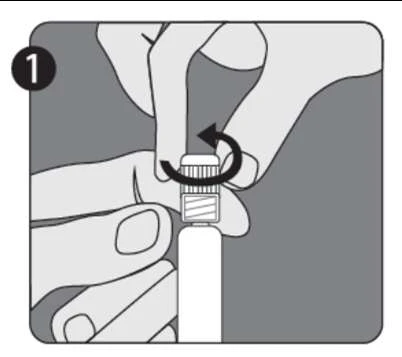 |
Needle attachment (instructions apply to both needles provided):
| Step 1: Rotate the cap (H) to remove it from one of the two identical needles. This will be the needle used for reconstitution. Do not remove the plastic shield (G). | 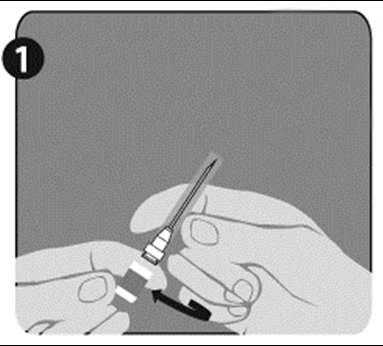 |
| Step 2: With one hand, firmly hold the syringe (E) at the transparent textured ring (D). With the other hand, attach this needle (F) and rotate it clockwise until slight resistance is felt. Once the needle is secured, remove the plastic shield (G). The syringe is ready for use. | 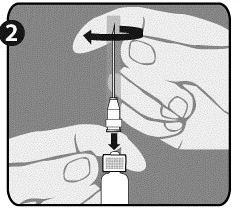 |
Instructions for reconstitution of the Rabipur vaccine using the vial-syringe:
The vaccine should be visually inspected for foreign particles and changes in appearance both before and after reconstitution. The vaccine must not be used if its appearance has changed. After reconstitution, the vaccine is clear to slightly opalescent and colorless to slightly pinkish.
The powder should be dissolved using the solvent provided, to prepare the solution. The solution should be gently shaken before injection. The vaccine should be administered immediately after reconstitution.
There is a vacuum present in the vial. After reconstitution, it is recommended to unscrew the syringe from the needle to release the vacuum. Performing this step will allow easy withdrawal of the vaccine from the vial. Creating excessive pressure is not recommended, as it may cause difficulties in withdrawing the appropriate amount of vaccine.
The needle length does not allow reaching the bottom of the vial; therefore, the vial should be inverted and the needle withdrawn slightly towards the stopper. This will enable withdrawal of the entire volume of the vaccine solution from the vial.
After reconstitution, remove the cap from the second needle (as described in step 1 for needles), then replace the needle used for reconstitution with the second needle intended for injection.
Do not use the same needle for both reconstitution and injection.