Pyralgin
Poland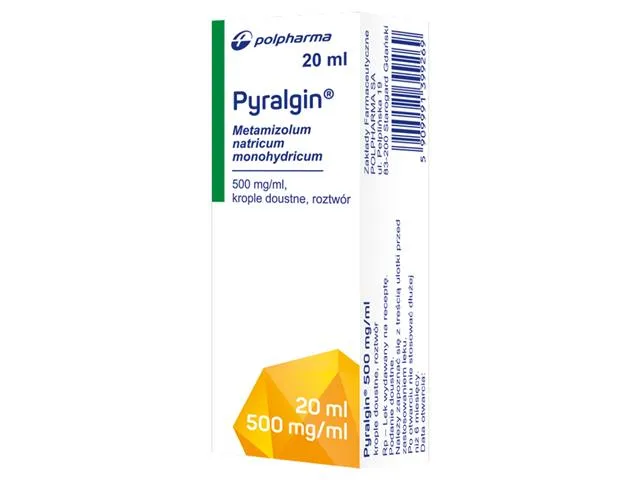
Table of Contents
Package leaflet: Information for the patient
Pyralgin, 500 mg/ml, oral drops, solution
Metamizolum natricum monohydricum
Pyralgin may cause an abnormally low number of white blood cells (agranulocytosis), which
can lead to severe and life-threatening infections (see section 4).
Treatment with this medicine should be discontinued and immediate medical advice sought if any of the following symptoms occur: fever, chills, sore throat, painful ulcers in the nose, mouth or throat, or in the genital or anal area.
If the patient has ever experienced agranulocytosis while taking metamizole or similar medicines, this medicine must never be taken again in the future (see section 2).
Please read the entire leaflet carefully before using the medicine, as it contains
important information for the patient.
- Keep this leaflet for future reference.
- If you have any questions, consult your doctor or pharmacist.
- This medicine has been prescribed for a specific individual. Do not pass it on to others. It may harm someone else, even if their symptoms are similar.
- If the patient experiences any adverse reactions, including any not listed in this leaflet, inform a doctor or pharmacist. See section 4.
Table of contents of the leaflet
- What Pyralgin is and what it is used for
- Important information before taking Pyralgin
- How to take Pyralgin
- Possible side effects
- How to store Pyralgin
- Contents of the pack and other information
1. What Pyralgin is and what it is used for
Pyralgin contains the active substance metamizole sodium monohydrate and is an analgesic and antipyretic medicine belonging to the pyrazolone group.
Pyralgin is indicated in adults and children for:
acute severe pain following trauma or surgery;
spasmodic abdominal pain (colic);
cancer pain;
other acute or chronic severe pain when the use of other medicinal products is contraindicated;
high fever unresponsive to other treatments.
2. Important information before using Pyralgin
When not to use Pyralgin:
- if the patient has previously experienced a significant decrease in the number of white blood cells called granulocytes, caused by metamizole or other similar drugs known as pyrazolones or pyrazolidines;
- if the patient has impaired bone marrow function or a condition affecting the production or function of blood cells;
- if the patient is allergic to metamizole or other pyrazolones (e.g. phenazone, propyphenazone) or pyrazolidines (e.g. phenylbutazone, oxyphenbutazone), or to any of the other
components of this medicine (listed in section 6),
- if the patient has a known intolerance to painkillers (analgesic-induced asthma syndrome or analgesic intolerance manifesting as urticaria and/or angioedema). This applies to patients who, after exposure to analgesics such as salicylates, paracetamol, diclofenac, ibuprofen, indometacin or naproxen, experience bronchospasm (sudden narrowing of the lower airways) or other hypersensitivity reactions such as itching, rhinitis and swelling (urticaria, rhinitis, angioedema);
- if the patient has genetically determined glucose-6-phosphate dehydrogenase deficiency (a congenital disorder associated with the risk of red blood cell breakdown);
- if the patient has acute hepatic porphyria (a hereditary disease associated with disturbances in haemoglobin synthesis);
- if the patient is in the last three months of pregnancy.
Warnings and precautions
Before starting treatment with Pyralgin, discuss this with your doctor or pharmacist.
Pyralgin contains a pyrazolone derivative, metamizole, whose use is associated with life-threatening risks:
- sudden circulatory arrest;
- agranulocytosis.
Low white blood cell count (agranulocytosis)
Pyralgin may cause agranulocytosis, i.e. a very low number of a certain type of white blood cells called granulocytes, which play an important role in fighting infections (see section 4).
You should stop taking metamizole and contact your doctor immediately if any of the following symptoms occur, as they may indicate possible agranulocytosis: chills, fever, sore throat and painful mucosal ulcers, especially in the oral cavity, nose and throat or in the genital or anal area.
Your doctor will order laboratory tests to check your blood cell count.
If metamizole is used for fever, some symptoms of developing agranulocytosis may remain unnoticed. Similarly, symptoms may also be masked if the patient is receiving antibiotics.
Agranulocytosis may develop at any time during treatment with Pyralgin, and even shortly after stopping metamizole.
Agranulocytosis may occur even if metamizole was previously administered without complications.
Pyralgin should be discontinued and you should seek immediate medical attention if symptoms of pancytopenia (such as general malaise, signs of infection, persistent fever, bruising, bleeding and pallor) or thrombocytopenia (such as increased tendency to bleed and small red spots on the skin and mucous membranes due to bleeding) occur (see section
- "Possible side effects").
Your doctor may regularly monitor your blood count and may discontinue treatment if certain changes occur.
Patients experiencing hypersensitivity reactions (anaphylactic reactions) to Pyralgin are also at risk of a similar reaction to other painkillers.
Patients experiencing an allergic reaction or another immunological reaction to Pyralgin are also at risk of a similar reaction to other pyrazolones and pyrazolidines (chemically similar substances), such as the painkillers: phenazone, propyphenazone, phenylbutazone and oxyphenbutazone.
If a patient has experienced an allergic reaction or another immune system reaction to other pyrazolones, pyrazolidines or other painkillers, there is also a high risk of a similar reaction to Pyralgin.
Severe hypersensitivity reactions
If the patient has any of the following disorders or intolerances, the risk of severe hypersensitivity reactions to Pyralgin may be significantly increased:
- allergy to drugs used to treat pain and rheumatism, with symptoms such as itching and swelling (urticaria, angioedema). In such cases, Pyralgin must not be used. For more information, see section 2. "When not to use Pyralgin";
- asthma attacks caused by bronchiolar constriction (bronchial asthma), particularly if associated with inflammation of the nasal and sinus mucosa (sinusitis) and nasal polyps;
- chronic urticaria;
- hypersensitivity to dyes (e.g. tartrazine) or preservatives (e.g. benzoates);
- alcohol intolerance, manifesting as sneezing, tearing eyes and severe facial flushing even after small amounts of alcohol; this may indicate previously unrecognized analgesic intolerance (see section 2. "When not to use Pyralgin").
In patients at increased risk of hypersensitivity reactions, Pyralgin may be administered only after careful consideration of the benefit-risk ratio (see also section 2. "When not to use Pyralgin").
If Pyralgin is administered in such cases, the patient must be under strict medical supervision with immediate access to emergency equipment.
Anaphylactic reactions may occur in patients with allergies (see section 4. "Possible side effects"). Therefore, patients with asthma or a tendency towards hypersensitivity (atopy) should exercise particular caution.
Severe skin reactions
Severe skin reactions, including Stevens-Johnson syndrome, toxic epidermal necrolysis, and drug reaction with eosinophilia and systemic symptoms (DRESS syndrome), have been reported with metamizole treatment. If any of these symptoms associated with severe skin reactions listed in section 4 occur, metamizole treatment should be discontinued and immediate medical help sought.
If the patient has ever experienced severe skin reactions during treatment with metamizole, Pyralgin or other drugs containing metamizole should never be taken again in the future (see section 4. "Possible side effects").
Liver-related disorders
Cases of hepatitis have occurred in patients taking metamizole, with symptoms appearing from several days to several months after starting treatment.
Pyralgin should be discontinued and medical advice sought if the patient experiences liver-related symptoms such as: malaise (nausea or vomiting), fever, fatigue, loss of appetite, dark urine, pale stools, jaundice of the skin or whites of the eyes, itching, rash or upper abdominal pain. The doctor will check the patient's liver function.
The patient should not take Pyralgin if they have previously taken any drugs containing metamizole and experienced liver-related problems.
Low blood pressure
Low blood pressure may occur during treatment with Pyralgin (see section 4. "Possible side effects"). The risk of such reactions is increased:
- if the patient has low blood pressure (pre-existing hypotension), severe dehydration or poor circulation, or in the early stages of circulatory failure (e.g. in case of heart attack or severe trauma);
- if the patient has high fever.
For this reason, to reduce the risk of any drop in blood pressure, the doctor will consider and closely monitor preventive measures (correction of circulatory disturbances).
In patients in whom a drop in blood pressure must absolutely be avoided (e.g. in case of severe ischemic heart disease or significant cerebral vessel stenosis), Pyralgin may be used only under strict circulatory monitoring.
Patients with impaired kidney or liver function
In cases of impaired kidney or liver function, Pyralgin should be used only after careful consideration of benefits and risks, and with appropriate precautions (see section 3. subsection "Patients with impaired kidney or liver function").
Pyralgin and other medicines
Inform your doctor about all medicines currently or recently taken, as well as any medicines the patient plans to take.
Inform your doctor if you are taking any of the following medicines, as they may reduce the concentration of the drug in the blood and decrease its effectiveness:
- bupropion (a medicine used to treat depression or as an aid in smoking cessation),
- efavirenz (a medicine used to treat HIV infection (AIDS)),
- methadone (a medicine used to treat addiction to illegal narcotics (so-called opioids)),
- valproate (a medicine used to treat epilepsy or bipolar affective disorder),
- cyclosporine (a medicine used to suppress the immune system),
- tacrolimus (a medicine used to prevent organ rejection in transplant patients),
- sertraline (a medicine used to treat depression). The doctor should monitor the effectiveness and/or blood concentration of the drug.
Inform your doctor if you are taking any of the following medicines in particular, as they may interact with Pyralgin:
- methotrexate (a medicine used to treat cancer or rheumatic diseases). Concurrent use may increase the potential risk of blood cell damage by methotrexate, especially in elderly patients. Therefore, concurrent use of both drugs should be avoided.
- acetylsalicylic acid, used in low doses to prevent heart disease. Concurrent use may reduce the effect of acetylsalicylic acid on blood platelets.
- chlorpromazine (a medicine used to treat mental illnesses). Concurrent use may cause a significant drop in body temperature.
With pyrazolone derivatives, including Pyralgin, interactions may occur with:
- anticoagulant drugs (oral anticoagulants),
- captopril (a medicine used to reduce high blood pressure and in certain heart diseases),
- lithium (a medicine used to treat mental illnesses),
- diuretics (diuretic drugs, e.g. triamterene),
- drugs used to reduce high blood pressure (antihypertensive drugs). The potential effect of Pyralgin on these interactions is not known.
Effect on diagnostic tests
Before undergoing laboratory tests, inform your doctor about the use of Pyralgin, as metamizole may affect the results of certain tests (e.g. measurement of creatinine, lipid, HDL cholesterol or uric acid levels).
Pyralgin and alcohol
If possible, do not drink alcohol while taking Pyralgin.
Pregnancy and breastfeeding
If the patient is pregnant or breastfeeding, suspects she may be pregnant, or is planning to have a child, she should consult a doctor or pharmacist before using this medicine.
Pregnancy
Available data on the use of metamizole during the first 3 months of pregnancy are limited, but do not indicate harmful effects on the embryo. In selected cases, if no other treatment options are available, after consultation with a doctor or pharmacist, the patient may take single doses of metamizole during the first and second trimesters, provided that the benefits and risks of taking the drug are carefully considered. In principle, the use of metamizole during the first and second trimesters is not recommended.
Pyralgin must not be taken during the last three months of pregnancy due to the increased risk of complications for mother and child (bleeding, premature closure of an important blood vessel in the fetus, the so-called ductus arteriosus Botalli, which naturally closes only after birth).
Breastfeeding
Metamizole metabolites pass into the breast milk of nursing women in significant amounts, and the risk to the breastfed infant cannot be excluded. Therefore, repeated use of metamizole during breastfeeding should be particularly avoided.
After a single dose of metamizole, mothers should be advised to collect and discard breast milk for 48 hours after administration of the drug.
Driving and operating machinery
At the recommended dosage range, Pyralgin has no effect or a negligible effect on the ability to drive and operate machinery. However, as a precaution, especially when higher doses are used, particularly in combination with alcohol, the possibility of impaired ability should be considered, and refraining from operating machinery, driving vehicles or performing tasks involving risk is advised.
Pyralgin contains sodium
The medicine contains 1.67 mg of sodium (main component of table salt) per drop. This corresponds to 0.084% of the maximum recommended daily sodium intake in the diet of adults.
3. How to use Pyralgin
This medicine should always be used according to the doctor's instructions. If in doubt, consult
your doctor. This will help achieve the best treatment results and reduce the risk of adverse
effects.
The dose depends on the severity of pain or fever and the individual's response to Pyralgin.
The lowest effective dose required to control pain and (or) fever should always be used. Your
doctor will advise you on how to take Pyralgin.
The table below provides recommended single doses and maximum daily doses based on
body weight or age:
| Body weight | Age | Single dose | Maximum daily dose | ||
| kg | months/years | drops | mg | drops | mg |
| <9 | <12 months | 1–5 | 25–125 | 4–20 | 100–500 |
| 9–15 | 1–3 years | 3–10 | 75–250 | 12–40 | 300–1000 |
| 16–23 | 4–6 years | 5–15 | 125–375 | 20–60 | 500–1500 |
| 24–30 | 7–9 years | 8–20 | 200–500 | 32–80 | 800–2000 |
| 31–45 | 10–12 years | 10–30 | 250–750 | 40–120 | 1000–3000 |
| 46–53 | 13–14 years | 15–35 | 375–875 | 60–140 | 1500–3500 |
| >53 | ≥15 years | 20–40 | 500–1000 | 80–160 | 2000–4000 |
Single doses may be administered no more frequently than four times a day, depending on the maximum daily dose.
A clear effect can be expected within 30 to 60 minutes after oral administration.
Use in children and adolescents
For pain treatment in children and adolescents up to 14 years of age, Pyralgin may be administered at a single dose of 8 to 16 mg per kilogram of body weight (see table above).
In cases of fever in children, a dose of Pyralgin of 10 mg per kilogram of body weight is usually sufficient:
| Body weight | Age | Single dose | |
| kg | months/years | drops | mg |
| <9 | <12 months | 1–3 | 25–75 |
| 9–15 | 1–3 years | 4–6 | 100–150 |
| 16–23 | 4–6 years | 6–9 | 150–225 |
| 24–30 | 7–9 years | 10–12 | 250–300 |
| 31–45 | 10–12 years | 13–18 | 325–450 |
| 46–53 | 13–14 years | 18–21 | 450–525 |
Elderly individuals and patients in poor general health or with renal impairment
In elderly individuals, debilitated patients, and patients with impaired renal function, the dose should be reduced due to the possibility of prolonged elimination of metamizole metabolites.
Patients with impaired renal or hepatic function
Due to reduced elimination rate in patients with impaired renal or hepatic function, repeated administration of high doses should be avoided. For short-term use, dose adjustment is not required. There is no experience regarding long-term use.
Method of administration
Oral administration.
It is recommended to take the drops with water (approximately half a glass of water).
To open the bottle, press down the cap and turn it in the direction indicated by the arrow. After use, close the bottle tightly by screwing the cap to prevent access by children.
Hold the bottle upright and, if necessary, gently tap the bottom of the bottle to release the drops.
Duration of treatment
The duration of treatment depends on the type and severity of symptoms and should be determined by a physician.
Unless otherwise directed by a physician (or dentist), the medication should not be used for longer than 3–5 days.
Use of a higher than recommended dose of Pyralgin
In case of overdose, seek immediate medical advice. Appropriate countermeasures may be necessary.
Symptoms of overdose:
- nausea,
- vomiting,
- abdominal pain,
- renal dysfunction, and even acute renal failure (e.g., with symptoms of interstitial nephritis),
- dizziness,
- drowsiness,
- disturbances of consciousness,
- seizures,
- decreased blood pressure, up to circulatory collapse (shock),
- cardiac arrhythmias (tachycardia).
Note: After ingestion of very high doses, excretion of a harmless metabolite (rubazonic acid) may cause red discoloration of urine.
Missed dose of Pyralgin
Do not take a double dose to make up for a missed dose.
If you have any further doubts concerning the use of this medication, consult your physician or pharmacist.
4. Possible adverse reactions
Like all medicines, this medicine can cause adverse reactions, although not everyone will experience them.
The medicine should be discontinued and medical advice sought if any of the following adverse reactions occur; they may have serious consequences.
If any of these adverse reactions occur suddenly or worsen rapidly, you should immediately inform your doctor, as some reactions to the medicine (e.g. severe hypersensitivity reactions, agranulocytosis, pancytopenia) may be life-threatening.
In such cases, do not take Pyralgin without medical supervision. Immediate discontinuation of treatment is crucial for recovery.
If symptoms of agranulocytosis, pancytopenia or thrombocytopenia (see below) occur, Pyralgin should be discontinued immediately and your doctor will recommend a blood count test (including blood smear). Do not delay discontinuation of treatment until laboratory results are obtained.
You should stop taking Pyralgin and seek immediate medical help if any of the following symptoms occur:
- Malaise (nausea or vomiting), fever, feeling of fatigue, loss of appetite, dark urine, pale stools, yellowing of the skin or whites of the eyes, itching, rash or pain in the upper abdomen. These may be symptoms of liver damage. See also section 2 "Warnings and precautions".
Severe skin reactions
The use of metamizole should be discontinued and immediate medical help sought if the patient experiences any of the following severe adverse reactions:
- Red, flat target-shaped or circular spots on the trunk, often with blisters in the center, skin peeling, ulceration in the mouth, throat, nose, genital organs and around the eyes. Such serious skin rashes may be preceded by fever and flu-like symptoms (Stevens-Johnson syndrome, toxic epidermal necrolysis);
- Extensive rash, high body temperature and enlarged lymph nodes (DRESS syndrome or drug hypersensitivity syndrome).
Possible adverse reactions
Uncommon adverse reactions (occur in fewer than 1 in 100 people)
- Purple to dark red skin rash, sometimes with blisters (drug eruption),
- Excessive reduction in blood pressure (isolated hypotensive reaction), probably due to the direct effect of the medicine and not accompanied by other hypersensitivity symptoms.
Such a reaction causes a serious drop in blood pressure only in rare cases. The risk of reduced blood pressure may be increased in patients with very high fever (hyperpyrexia).
Typical symptoms of a serious drop in blood pressure include: increased heart rate, pallor, tremor, dizziness, nausea and loss of consciousness.
Rare (occur in fewer than 1 in 1,000 people)
- Allergic reactions (anaphylactoid or anaphylactic reactions). Typical symptoms of mild reactions may include: burning eyes, cough, nasal symptoms, nasal congestion, chest pain, skin redness (especially of the face and head), urticaria and facial swelling, and rarely nausea and stomach cramps. Particularly characteristic symptoms are a feeling of warmth in and under the tongue and, especially, on the palms and soles. Such milder reactions may progress to more severe forms, with generalized urticaria, severe angioedema (including in the larynx), severe bronchospasm (spastic narrowing of the lower airways), increased heart rate (sometimes decreased), cardiac arrhythmias, reduced blood pressure (sometimes preceded by an increase), loss of consciousness and circulatory shock. These reactions may occur even after previous use of the medicine without complications and may be life-threatening, sometimes even leading to death. In patients with analgesic-induced asthma syndrome, allergic reactions manifest as asthma attacks (see section 2 "When not to use Pyralgin").
- Decrease in the number of white blood cells (leukopenia),
- Skin rash (e.g. maculopapular rash).
Very rare (occur in fewer than 1 in 10,000 people)
Significant reduction in the number of certain white blood cells (agranulocytosis), including cases with fatal outcome (see section 2 "Warnings and precautions"), or reduction in platelet count (thrombocytopenia). These reactions are probably immunological. They may also occur even if metamizole was previously administered without complications. Symptoms of agranulocytosis: fever, chills, sore throat, difficulty swallowing, and inflammatory conditions of the oral cavity, nose, throat, genital area or anus. However, in patients receiving antibiotics (medicines used for bacterial infections), these symptoms may be less pronounced. Erythrocyte sedimentation rate is markedly increased, while lymph nodes are usually only slightly or not enlarged at all.
Symptoms of thrombocytopenia include, for example, increased tendency to bleeding and petechiae (pinpoint bleeding in the skin and mucous membranes).
- Asthma attacks (shortness of breath caused by narrowing of the bronchioles),
- Development of extensive blisters and skin lesions (bullous erythema multiforme (Stevens-Johnson syndrome, SJS) and toxic epidermal necrolysis (Lyell's syndrome, TEN)),
- Worsening of kidney function, in some cases with absence or very low volume of urine output (oliguria or anuria), excretion of blood proteins in the urine (proteinuria) or acute kidney failure; kidney inflammation (acute interstitial nephritis).
Frequency unknown (frequency cannot be determined from available data)
- Anaphylactic shock,
- Myocardial infarction during an allergic reaction (Kounis syndrome),
- Reduction in blood volume with accompanying bone marrow dysfunction (aplastic anemia), reduction in the number of white and red blood cells and platelets (pancytopenia), including cases with fatal outcome. Symptoms of pancytopenia and aplastic anemia include: general malaise, infections, persistent fever, bruising, bleeding and pallor of the skin.
- Cases of gastrointestinal bleeding have been reported,
- Hepatitis, yellowing of the skin and whites of the eyes, increased liver enzyme activity in the blood,
- Extensive rash, high body temperature and enlarged lymph nodes (DRESS syndrome or drug hypersensitivity syndrome).
Excretion of a harmless metabolite (rubazonic acid) may cause red discoloration of urine.
Reporting of adverse reactions
If any adverse symptoms occur, including any adverse symptoms not listed in this leaflet, you should inform your doctor, pharmacist or nurse. Adverse reactions can be reported directly to the Department of Monitoring Adverse Drug Reactions, Office for Registration of Medicinal Products, Medical Devices and Biocidal Products
Al. Jerozolimskie 181C
02-222 Warsaw
Tel.: + 48 22 49 21 301
Fax: + 48 22 49 21 309
Website: https://smz.ezdrowie.gov.pl
Adverse reactions can also be reported to the marketing authorization holder.
By reporting adverse reactions, more information on the safety of the medicine can be collected.
5. How to store Pyralgin
Keep this medicine out of sight and reach of children.
Do not use this medicine after the expiry date stated on the packaging after "EXP".
The expiry date refers to the last day of the stated month.
The marking on the packaging following the abbreviation EXP indicates the expiry date, and following the abbreviation Lot indicates the batch number.
Do not store in a refrigerator or freeze.
After first opening the bottle, do not use for longer than 6 months.
Medicines must not be disposed of via wastewater or household waste. Ask your pharmacist how to dispose of medicines no longer required. Such measures help protect the environment.
6. Contents of the pack and other information
What Pyralgin contains
- The active substance is metamizole sodium monohydrate. Each ml (20 drops) contains 500 mg of metamizole sodium monohydrate. 1 drop contains 25 mg of metamizole sodium monohydrate.
- Other components: disodium dihydrogen phosphate dihydrate, disodium phosphate, sucralose, sodium saccharin, raspberry flavour (natural flavouring substances, flavouring substances, flavouring preparations; propylene glycol (E 1520), glyceryl triacetate (E 1518), maltol), purified water.
Pyralgin, oral drops, solution is a clear, yellow solution with a raspberry taste,
in a bottle with a dropper (with a child-resistant closure), in a cardboard
box.
Pyralgin is available in pack sizes of 10 ml, 20 ml, 50 ml and 100 ml.
Not all pack sizes may be marketed.
Marketing Authorisation Holder and Manufacturer
Marketing Authorisation Holder
POLPHARMA Pharmaceuticals S.A.
Pelplińska Street 19, 83-200 Starogard Gdanski
tel. + 48 22 364 61 01
Manufacturer
SOFARIMEX Indústria Química e Farmacêutica, S.A.
Avenida das Indústrias, Alto do Colaride, Agualva
2735–213 Cacém
Portugal