Pulsaren 20
Poland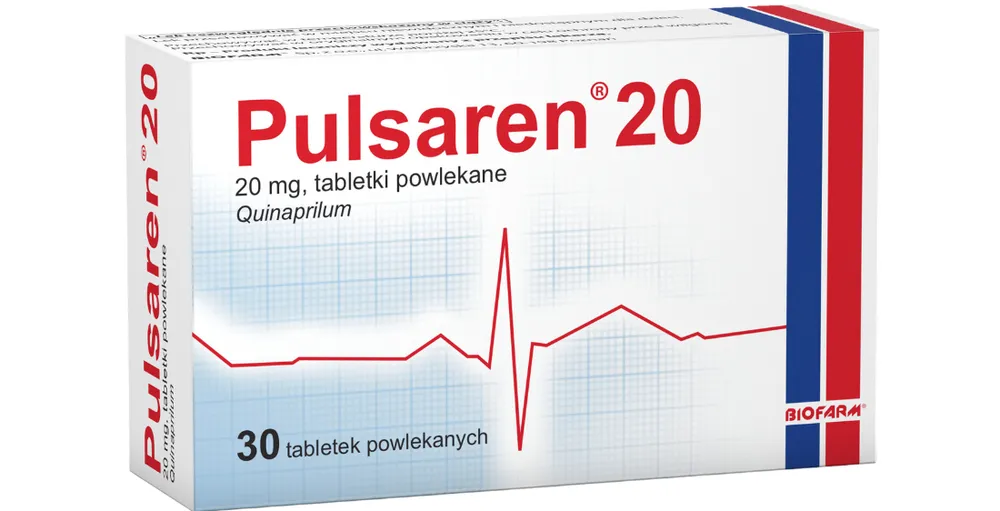
Table of Contents
Patient Information Leaflet
PULSAREN 20, 20 mg, coated tablets
Quinaprilum
Please read all of this leaflet carefully before taking this medicine, as it contains
important information for you.
- Keep this leaflet, as you may need to read it again.
- If you have any further questions, please ask your doctor or pharmacist.
- This medicine has been prescribed for a specific individual. Do not pass it on to others. It may harm them even if their symptoms are the same.
- If you experience any adverse reactions, including any not listed in this leaflet, tell your doctor or pharmacist. See section 4.
“This medicine is absolutely contraindicated during pregnancy.”
Contents of the leaflet
- What Pulsaren is and what it is used for
- Important information before taking Pulsaren
- How to take Pulsaren
- Possible side effects
- How to store Pulsaren
- Contents of the package and other information
1. What Pulsaren is and what it is used for
Pulsaren belongs to a group of medicines called angiotensin-converting enzyme (ACE) inhibitors.
Pulsaren is indicated for the treatment of:
- Arterial hypertension (may be used alone or in combination with thiazide diuretics or beta-adrenolytic agents).
- Congestive heart failure (used in combination with diuretics and (or) digitalis glycosides).
2. Important information before using Pulsaren
When not to use Pulsaren:
- if the patient is allergic to chinapryl or any of the other ingredients of this medicine (listed in section 6);
- if the patient has previously experienced swelling of any part of the body (angioedema) while being treated with other medicines from the class of ACE inhibitors;
- if the patient or someone in their family has ever had angioedema (hereditary angioedema or angioedema of unknown cause);
- if the patient has aortic stenosis or obstruction of the outflow tract from the heart ventricle;
- after the 3rd month of pregnancy (use of Pulsaren is also advised to be avoided during early pregnancy - see section on pregnancy);
- if the patient has diabetes or kidney function impairment and is being treated with a blood pressure-lowering medicine containing aliskiren.
Warnings and precautions
Special caution is required when using Pulsaren:
- if symptoms such as wheezing, shortness of breath, or swelling of the face, tongue, or larynx occur, Pulsaren must be discontinued immediately and the doctor contacted without delay;
- if symptoms such as abdominal pain (with or without nausea or vomiting), which may be related to intestinal angioedema, occur - the doctor should be informed (symptoms resolve after discontinuation of the drug);
- before desensitization procedures or low-density lipoprotein apheresis (mechanical removal of cholesterol from blood vessels), inform the doctor about taking Pulsaren due to increased risk of allergic reactions;
- before hemodialysis, inform the doctor about taking Pulsaren due to increased risk of allergic reactions. The doctor will then either choose another antihypertensive drug or use a different dialysis membrane;
- in dehydrated patients or those with salt depletion (e.g., due to diarrhea, vomiting, or renin-dependent hypertension), there is an increased risk of excessive drop in blood pressure;
- in patients with congestive heart failure, there is a risk of hypotension. Close monitoring of dosing is recommended in these patients;
- in patients with connective tissue disease affecting blood vessels and/or impaired kidney function, there is an increased risk of agranulocytosis or neutropenia (excessive reduction in white blood cell count);
- in patients with impaired kidney function, the doctor usually recommends a lower dose (see below);
- in patients with unilateral or bilateral renal artery stenosis. The doctor will recommend regular monitoring of kidney function in these patients;
- in patients with impaired liver function, especially if they are also taking diuretics, as even minor disturbances in fluid and electrolyte balance may trigger hepatic encephalopathy;
- in patients taking potassium-sparing diuretics;
- in patients with diabetes, due to possible occurrence of hypoglycemia (excessive decrease in blood glucose concentration);
- in patients undergoing major surgery and/or anesthesia;
- if the patient is taking any of the following medicines used to treat high blood pressure:
- an angiotensin II receptor antagonist (ARB) (also known as sartans - e.g., valsartan, telmisartan, irbesartan), especially if the patient has kidney impairment related to diabetes;
- aliskiren.
The treating physician may need to monitor kidney function, blood pressure, and blood electrolyte levels (e.g., potassium) at regular intervals.
See also information under the heading "When not to use Pulsaren".
Inform the doctor:
- about pregnancy, suspected pregnancy, or plans to become pregnant. Use of Pulsaren is not recommended during early pregnancy and must not be used after the 3rd month of pregnancy, as it may seriously harm the unborn child (see section on pregnancy);
- if symptoms such as swelling of the face, limbs, eyelids, lips, tongue, difficulty swallowing or breathing, abdominal pain (which may indicate angioedema), sore throat or fever (as these may be signs of infection associated with reduced white blood cell count), dizziness or fainting occur. If such symptoms appear, the patient should consult a doctor immediately;
- about planned surgery and/or anesthesia.
Children
Pulsaren is not indicated for use in children.
Pulsaren and other medicines
Tell your doctor or pharmacist about all medicines currently used, recently used, or planned to be used.
Especially inform the doctor about use of:
- tetracyclines (antibiotics);
- diuretics;
- dietary supplements containing potassium, potassium-containing salt substitutes, potassium-containing medicines, or potassium-sparing diuretics;
- anesthetic agents;
- lithium used in the treatment of certain psychiatric disorders;
- anti-inflammatory medicines;
- gold preparations (e.g., aurothiomalate);
- other antihypertensive medicines;
- antidiabetic medicines;
- acid-neutralizing medicines used for heartburn or indigestion;
- barbiturates;
- opioids;
- cytostatic and immunosuppressive medicines;
- systemic corticosteroids;
- procainamide.
The treating physician may need to adjust the dose and/or take additional precautions if the patient is taking an angiotensin II receptor antagonist (ARB) or aliskiren (see also information under the headings "When not to use Pulsaren" and "Warnings and precautions").
Pulsaren with food and drink
Absorption of Pulsaren may be moderately reduced (approximately 25–30%) if taken with a high-fat meal.
Pregnancy and breastfeeding
Pregnancy
Inform the doctor about pregnancy, suspected pregnancy, or plans to become pregnant.
The doctor will usually advise stopping Pulsaren before becoming pregnant or as soon as pregnancy is confirmed, and will recommend an alternative treatment.
Pulsaren is not recommended during early pregnancy and must not be used after the 3rd month of pregnancy, as it may seriously harm the unborn child if used beyond the third month of pregnancy.
Breastfeeding
Inform the doctor if the patient is breastfeeding or planning to breastfeed.
Breastfeeding is not recommended during treatment with Pulsaren, especially in newborns (first few weeks after birth) and particularly in preterm infants. For older infants, the doctor will inform the patient about the potential benefits and risks of using Pulsaren during breastfeeding compared to other treatment options.
Driving and operating machinery
Ability to drive and operate machinery may be impaired, especially during the initial period of treatment.
Pulsaren contains lactose monohydrate
One tablet contains 145.5 mg of lactose monohydrate.
If the patient has previously been diagnosed with intolerance to certain sugars, they should consult their doctor before taking this medicine.
3. How to use Pulsaren
This medicine should always be used as directed by the physician. If in doubt, consult your
physician or pharmacist.
Your physician will determine the appropriate dosage of Pulsaren based on the condition being treated and the individual patient's response to therapy.
Hypertension
Monotherapy:
The recommended initial dose of Pulsaren in patients not taking diuretics is 10 mg or 20 mg once daily. Depending on the effectiveness of treatment, the dose may be increased (by doubling) up to a maintenance dose of 20 mg or 40 mg daily, usually administered once daily or in two divided doses. Your physician may recommend gradual dose escalation every four weeks.
Pulsaren effectively lowers blood pressure in most patients. Maximum doses of up to 80 mg of Pulsaren daily have been used in patients.
Concomitant use of Pulsaren with diuretics:
In patients who are simultaneously taking diuretics, the physician usually recommends a lower initial dose of Pulsaren, which is 5 mg. This dose may be increased (as described above) until effective blood pressure control is achieved.
Congestive heart failure
Pulsaren is used concomitantly with diuretics and (or) digitalis glycosides.
The recommended initial dose in patients with heart failure is 5 mg once or twice daily. After initiating Pulsaren, the physician usually recommends monitoring of cardiovascular function, particularly blood pressure. If the initial dose is well tolerated, the physician will typically recommend gradually increasing the dose until the desired therapeutic effect is achieved, usually 10 mg to 40 mg daily, administered in two divided doses, along with the currently used medications.
Use of Pulsaren in children
Pulsaren should not be given to children.
Use of Pulsaren in elderly patients
Age does not appear to influence the efficacy and safety of Pulsaren. Therefore, physicians most commonly recommend the same doses as in younger patients. The initial dose of Pulsaren is 10 mg once daily and may be increased until effective blood pressure control is achieved.
Use of Pulsaren in patients with renal impairment
The recommended initial dose in patients with creatinine clearance below 60 ml/min and above 30 ml/min is 5 mg, and in patients with creatinine clearance below 30 ml/min is 2.5 mg.
If the initial dose is well tolerated, Pulsaren may be administered starting the next day according to a regimen of two doses per day. If no symptoms of hypotension or significant renal dysfunction occur, the dose may be increased at weekly intervals according to the patient's response to treatment.
The following dosing regimen is recommended for patients with renal impairment:
| CrCl (ml/min) | Maximum recommended starting dose (mg) |
| > 60 | 10 |
| 30 – 60 | 5 |
| 10 – 30 | 2.5 |
| < 10 | * |
*
Use of Pulsaren in patients with hepatic impairment
Pulsaren should be used with caution in patients with hepatic impairment or progressive liver disease, particularly when used concomitantly with diuretics.
Method and route of administration
The medicine should be taken orally. Try to take the medicine at the same time(s) each day, regardless of meals.
The tablet should be swallowed with water.
The tablet may be divided into two equal doses.
Use of a higher than recommended dose of Pulsaren
If a higher than recommended dose of Pulsaren is taken and symptoms indicating a significant drop in blood pressure occur (dizziness, fainting), seek immediate medical advice. If necessary, the doctor will recommend appropriate symptomatic treatment.
Missed dose of Pulsaren
Take the missed dose as soon as possible, except when it is almost time for the next dose. Do not take a double dose or take doses in quick succession in order to make up for a missed dose.
Discontinuation of Pulsaren treatment
Do not stop treatment without consulting your doctor.
If you have any further questions regarding the use of this medicine, consult your doctor or pharmacist.
4. Possible adverse reactions
Like all medicines, this medicine can cause adverse reactions, although not everyone will experience them.
Common adverse reactions (may occur in up to 1 in 10 patients):
- increased serum potassium concentration
- insomnia
- dizziness, headache, paraesthesia
- hypotension
- cough, sore throat, dyspnoea, nasal congestion
- nausea, vomiting, diarrhoea, dyspepsia, abdominal pain
- back pain, muscle pain
- chest pain, fatigue, asthenia
- increased serum creatinine concentration, increased blood urea nitrogen concentration
- decreased blood sodium concentration
Uncommon adverse reactions (may occur in up to 1 in 100 patients):
- nervousness, depression, disorientation
- somnolence, transient ischaemic attack (TIA)
- impaired vision
- tinnitus, vertigo of labyrinthine origin
- palpitations, angina pectoris, tachycardia, myocardial infarction
- vasodilatation
- sinusitis, upper respiratory tract infection, bronchitis
- dry mouth or throat, flatulence
- pruritus, rash, increased sweating, angioedema
- renal function disorders, urinary tract infection, proteinuria
- impotence
- fever, generalized oedema, peripheral oedema
Rare adverse reactions (may occur in up to 1 in 1,000 patients):
- disturbances of equilibrium
- fainting
- eosinophilic pneumonia
- taste disturbances, constipation, glossitis
- urticaria, erythema multiforme, bullous eruption
Very rare adverse reactions (may occur in up to 1 in 10,000 patients):
- visual disturbances
- intestinal obstruction, intestinal angioedema
- psoriasiform eruption
Additionally, the following adverse reactions have been reported at an unknown frequency (frequency cannot be estimated from the available data):
- decreased neutrophil count in blood, decreased granulocyte count, haemolytic anaemia, thrombocytopenia
- anaphylactic reactions
- fainting, intracerebral haemorrhage
- orthostatic hypotension
- bronchospasm
- pancreatitis
- jaundice, hepatitis
- Stevens-Johnson syndrome, exfoliative dermatitis, alopecia, necrolysis, photosensitivity (skin reactions may be accompanied by fever, muscle pain and joint pain (arthritis), vasculitis, serositis, and certain changes in laboratory test results (eosinophilia, leucocytosis and/or increased titre of antinuclear antibodies, increased ESR))
- decreased haemoglobin concentration, decreased haematocrit and white blood cell count, increased liver enzyme activity and bilirubin concentration, isolated cases of haemolytic anaemia in patients with congenital G-6-PDH deficiency
- dark urine, nausea, vomiting, muscle cramps, confusion and convulsions; these may be symptoms of a disorder called syndrome of inappropriate antidiuretic hormone secretion (SIADH)
- occurrence or worsening of symptoms of psoriasis (a skin disease characterised by red patches covered with silvery scales)
Reporting of adverse reactions
If any adverse reactions occur, including any adverse reactions not listed in this leaflet, inform your doctor or pharmacist. Adverse reactions can be reported directly to the Department of Monitoring Adverse Drug Reactions of the Office for Registration of Medicinal Products, Medical Devices and Biocidal Products
Al. Jerozolimskie 181C
02-222 Warsaw
Tel.: + 48 22 49 21 301
Fax: + 48 22 49 21 309
Website: https://smz.ezdrowie.gov.pl
Adverse reactions can also be reported to the marketing authorisation holder.
Reporting adverse reactions helps provide more information on the safety of the medicine.
5. How to store Pulsaren
Keep the medicine out of the sight and reach of children.
Store below 25°C.
Store in the original packaging to protect from moisture.
Do not use this medicine after the expiry date stated on the carton and blister.
The expiry date refers to the last day of the stated month.
Medicines must not be disposed of via wastewater or household waste. Ask your pharmacist how to
dispose of medicines no longer required. Such measures will help protect the environment.
6. Contents of the pack and other information
What Pulsaren contains
- The active substance is chinapryl (Quinaprilum) in the form of quinapril hydrochloride. One Pulsaren 20 tablet contains 20 mg of quinapril (as quinapril hydrochloride).
- Other ingredients: monohydrate lactose, magnesium carbonate, crospovidone type A, hypromellose, hydroxypropylcellulose, magnesium stearate; tablet coating: hypromellose, hydroxypropylcellulose, talc, titanium dioxide (E 171), macrogol 6000.
What Pulsaren looks like and contents of the pack
Pulsaren 20: white, elongated, biconvex coated tablets, with a division line on one side, without spots or chipping.
The tablet can be divided into two equal doses.
Pulsaren coated tablets are packed in aluminium/aluminium blisters, placed together with the patient leaflet in a cardboard box.
Pack size:
30 coated tablets (3 blisters of 10 tablets each)
Marketing Authorisation Holder and Manufacturer
Biofarm Sp. z o.o.
Wałbrzyska Street 13
60-198 Poznań
Tel.: +48 61 66 51 500