Pulmoterol
Poland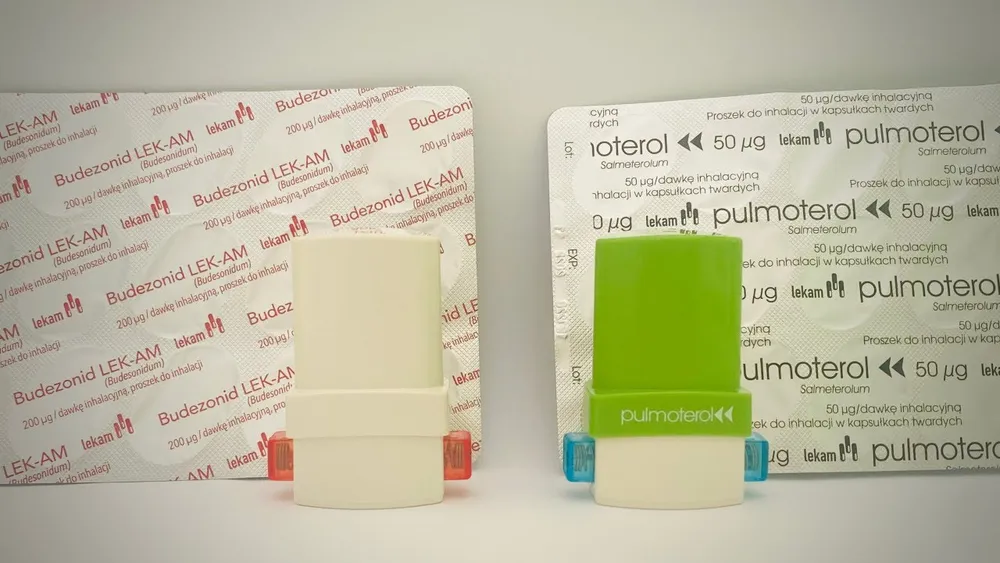
Table of Contents
Package leaflet: Information for the patient
Pulmoterol
50 µg/inhalation dose, inhalation powder in hard capsules
Salmeterolum
Please read all of this leaflet carefully before taking this medicine, because it contains
important information for the patient.
- Keep this leaflet, as you may need to read it again.
- If you have any further questions, ask your doctor or pharmacist.
- This medicine has been prescribed for a specific individual. Do not pass it on to others. It may harm other people, even if their symptoms are the same.
- If you experience any adverse effects, including any not listed in this leaflet, tell your doctor or pharmacist. See section 4.
Leaflet contents:
- What Pulmoterol is and what it is used for
- Important information before taking Pulmoterol
- How to take Pulmoterol
- Possible side effects
- How to store Pulmoterol
- Contents of the pack and other information
1. What Pulmoterol is and what it is used for
- Pulmoterol contains the active substance salmeterol. It is a long-acting bronchodilator. It helps to widen the airways in the lungs, making it easier for air to flow into and out of the lungs. The effect usually begins within 10 to 20 minutes after taking the medicine and lasts for 12 hours or longer.
- Your doctor has prescribed this medicine to prevent breathing difficulties, which may be caused by asthma. Regular use of Pulmoterol helps prevent asthma attacks, including those triggered by exercise or occurring only at night.
- Regular use of Pulmoterol also helps prevent breathing difficulties caused by other chest conditions, such as chronic obstructive pulmonary disease (COPD).
- Pulmoterol helps relieve episodes of breathlessness or wheezing in the airways. However, it does not work immediately during an acute attack of breathlessness or wheezing. In such cases, a fast-acting bronchodilator, such as salbutamol, should be used.
- Pulmoterol is delivered as an inhalation powder in hard capsules. The medicine is inhaled directly into the lungs.
- In patients with asthma, Pulmoterol must always be used in combination with an inhaled corticosteroid.
2. Important information before using Pulmoterol
When not to use Pulmoterol:
- if the patient is allergic (hypersensitive) to salmeterol xinafoate or to any of the other ingredients of the medicine (listed in section 6).
Warnings and precautions
Before starting Pulmoterol, discuss this with your doctor.
- If asthma or breathing difficulties worsen, contact your doctor immediately. This may be indicated by increased wheezing, a feeling of tightness in the chest, or increased use of fast-acting bronchodilators. If such symptoms occur, do not increase the number of Pulmoterol inhalations. The condition may seriously worsen. Contact your doctor, as a change in asthma treatment may be necessary.
- If your doctor has prescribed Pulmoterol for asthma, continue taking other asthma medications previously used. These may include inhaled steroids or oral steroids. Continue treatment with the previously prescribed dose, even if you feel better, unless your doctor advises otherwise. Do not stop using inhaled steroids (or oral steroids) after starting Pulmoterol.
- Your doctor will regularly monitor your health if you have hyperthyroidism, diabetes (Pulmoterol may increase blood sugar levels), or heart disease, including irregular or rapid heartbeat.
- Your doctor may recommend gradually reducing the dose of Pulmoterol if asthma is well controlled.
Pulmoterol and other medicines
- Inform your doctor about all medicines you are currently taking or have recently taken, including those obtained without a prescription, and about any medicines you plan to take. It may not be appropriate to use Pulmoterol together with other medicines.
- Inform your doctor if you are currently being treated with antifungal medicines containing ketoconazole or itraconazole for fungal infections, or if you are being treated with ritonavir for HIV infection. These medicines may increase the risk of adverse effects associated with Pulmoterol, including irregular heartbeat, or may worsen existing adverse effects.
- While using Pulmoterol, avoid taking beta-adrenergic receptor blockers unless your doctor specifically advises their use. Beta-blockers such as atenolol, propranolol, and sotalol are mainly used to treat high blood pressure or other heart conditions. Inform your doctor about any beta-blockers you are currently or recently taking, as these medicines may reduce or block the effect of salmeterol.
- Pulmoterol may decrease potassium levels in the blood. If this occurs, the patient may experience irregular heartbeat, muscle weakness, or muscle cramps. This is more likely if the patient is taking Pulmoterol together with certain medicines used to treat high blood pressure (diuretics) and other medicines used for breathing difficulties, such as theophylline or steroids. Your doctor may recommend blood tests to check potassium levels. If in doubt, contact your doctor.
Pregnancy and breastfeeding
If the patient is pregnant or breastfeeding, suspects she may be pregnant, or is planning to have a child, she should consult her doctor or pharmacist before using this medicine. The doctor will assess whether the patient can take Pulmoterol in such circumstances.
Driving and operating machinery
It is unlikely that adverse effects associated with the use of Pulmoterol will affect the ability to drive or operate machinery.
Pulmoterol contains lactose.
Each dose of Pulmoterol contains 15 mg of lactose. In individuals with lactose intolerance, this amount of lactose usually does not cause problems.
However, if the patient has been diagnosed with intolerance to certain sugars, e.g. lactose, the patient should contact the doctor before using Pulmoterol.
3. How to use Pulmoterol
This medicine should always be used exactly as directed by your doctor. If in doubt, consult your doctor.
In patients with asthma, Pulmoterol must always be used in combination with an inhaled corticosteroid.
The patient may notice the effect of the medicine already on the first day of treatment.
Pulmoterol should be used daily until your doctor advises stopping treatment.
Pulmoterol is intended for inhalation only, using an inhaler. Do not swallow the capsules.
Do not exceed the recommended dose.
Adults and adolescents aged 12 years and older with asthma
- The usual dose is inhalation of the contents of 1 capsule (1 x 50 micrograms) twice daily.
- In patients with severe asthma, the doctor may increase the dose to inhalation of the contents of 2 capsules (2 x 50 micrograms) twice daily.
Children with asthma
- In children aged 4 to 12 years, the usual dose is inhalation of the contents of 1 capsule (1 x 50 micrograms) twice daily.
- Pulmoterol is not recommended for use in children under 4 years of age.
- The medicine should only be used in children who are able to use the inhaler correctly. Children should use the inhaler under adult supervision.
Adults with chronic obstructive pulmonary disease (COPD)
- The usual dose is inhalation of the contents of 1 capsule (1 x 50 micrograms) twice daily.
- Not applicable to children and adolescents.
Before using the medicine, read the “Inhaler User Instructions” carefully.
Inhaler User Instructions
The powder in the capsule is for inhalation only. Do not swallow the capsules.
The inhaler is designed to deliver powder from the number of capsules contained in a given package. Do not use the same inhaler for a different medicine package.
- Remove the inhaler cap.
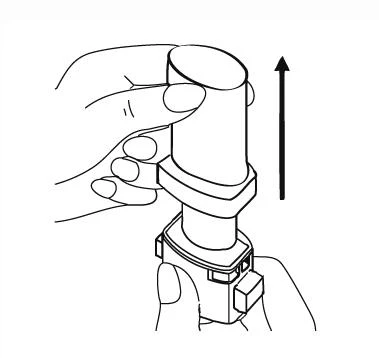
- Hold the inhaler base and open the inhaler by twisting the mouthpiece in the direction of the arrow.
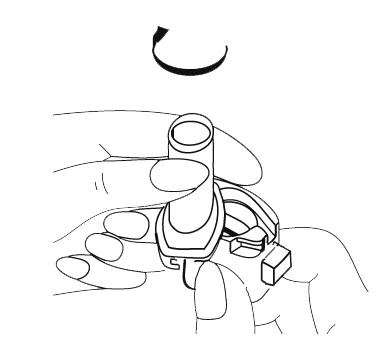
- Place the powder capsule into the chamber of the inhaler base. Remove the capsule from the foil blister immediately before use.
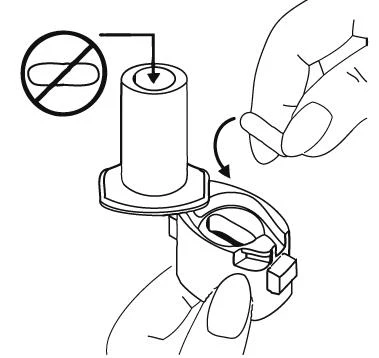
- Close the inhaler by twisting the mouthpiece back in the opposite direction of the arrow until it returns to the original closed position.
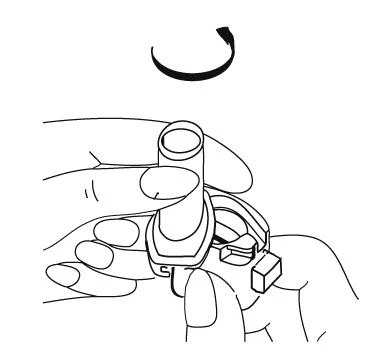
- Holding the inhaler in an upright position, press the inhaler buttons fully down once.
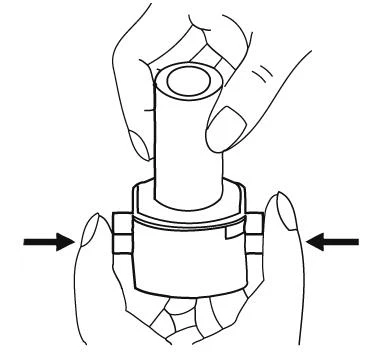
- Release the inhaler buttons. WARNING: At this point, the capsule may break, and small pieces of gelatin may enter the mouth or throat. Since gelatin is edible, ingestion is not harmful. The likelihood of this occurring is minimal if the capsule is not punctured more than once, storage conditions are maintained, and the capsule is removed from the foil blister immediately before use (see step 3).
- Holding the inhaler with the outlet directed towards the mouth, breathe out slowly and fully.
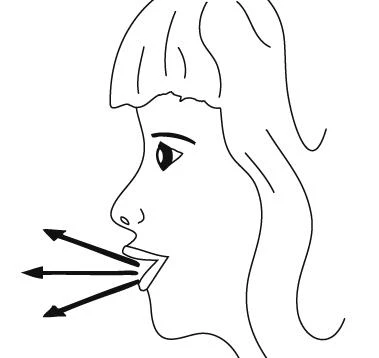
- Tilt the head slightly backward, place the inhaler mouthpiece into the mouth, and seal lips tightly around it.
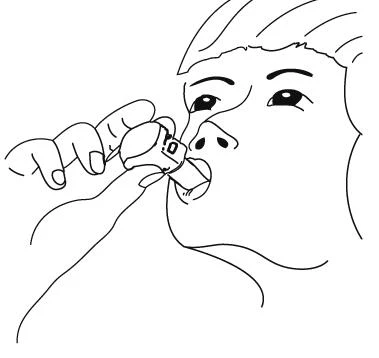
- Take a fast, deep, and steady breath in. During inhalation, a characteristic sound should be heard. If no sound is heard, this may indicate that the capsule is stuck in the base chamber. In this case, open the inhaler and gently dislodge the capsule. Do not dislodge the capsule by repeatedly pressing the buttons. Then repeat steps 7 to 9.
- After hearing the characteristic sound, hold your breath as long as possible without discomfort, then remove the inhaler from the mouth and breathe out through the nose.
- Open the inhaler and check whether any powder remains in the capsule. If powder remains, repeat steps 7 to 10.
- After use, open the inhaler, remove the empty capsule, close the mouthpiece, and replace the cap.
Cleaning the inhaler:
The powder inhaler requires cleaning. To remove any powder residue or capsule fragments, wipe the mouthpiece and baffle with a dry cloth or soft brush. Do not use water to clean the inhaler.
Accidental overdose of Pulmoterol
It is important to use Pulmoterol exactly as prescribed by your doctor. If you accidentally take more Pulmoterol than recommended, consult your doctor or pharmacist immediately. Symptoms may include increased heart rate or tremors. Headache, muscle weakness, and joint pain may also occur.
Missed dose of Pulmoterol
If you miss a dose of Pulmoterol, take the next dose at your usual time. Do not take a double dose to make up for a missed dose.
If you have any questions about how to use this medicine, consult your doctor or pharmacist.
4. Possible adverse reactions
Like all medicines, this medicine can cause adverse reactions, although not everyone will experience them.
To reduce the risk of adverse reactions, the doctor will prescribe the lowest dose of Pulmoterol that provides control of asthma or COPD.
The adverse reactions listed below have been observed in patients using salmeterol.
Allergic reactions: after administration of Pulmoterol, sudden breathing difficulties may occur.
Wheezing and coughing may worsen. Other symptoms such as itching and swelling (usually of the face, lips, tongue or throat) may also occur. If such symptoms appear, or occur suddenly shortly after using Pulmoterol, medical advice must be sought immediately. Allergic reactions following administration of Pulmoterol are very rare (occurring in fewer than 1 in 10,000 people).
Other adverse reactions are listed below:
Common (occur in fewer than 1 in 10 people):
- Muscle cramps;
- Tremor; rapid or irregular heartbeat (palpitations), headache, tremors (e.g. hand tremors). Tremors may occur more frequently if the patient uses more than one inhalation capsule twice daily. These adverse reactions do not usually last long and typically diminish during continued treatment with Pulmoterol.
Uncommon (occur in fewer than 1 in 100 people):
- Rash;
- Very fast heartbeat (tachycardia). This may occur more frequently if the patient uses more than two inhalation capsules twice daily;
- Nervousness.
Rare (occur in fewer than 1 in 1,000 people):
- Dizziness;
- Insomnia or difficulty falling asleep;
- Decreased potassium levels in the blood (may lead to irregular heartbeat, muscle weakness, cramps).
Very rare (occur in fewer than 1 in 10,000 people):
- Breathing difficulties or worsening of wheezing immediately after taking Pulmoterol. If such symptoms occur, treatment with Pulmoterol must be stopped immediately. A fast-acting inhaled medicine should be used to relieve breathing difficulties, and medical advice must be sought without delay.
- Irregular heartbeat or extrasystoles (arrhythmia). In such cases, treatment with Pulmoterol should not be discontinued, but the doctor must be informed.
- Pain in the mouth or throat;
- Nausea;
- Joint pain, swelling or chest pain;
- Increased blood sugar (glucose) levels.
Reporting of adverse reactions
If any adverse reactions occur, including any not listed in this leaflet, inform your doctor or pharmacist. Adverse reactions can also be reported directly to the Department of Monitoring Adverse Drug Reactions, Office for Registration of Medicinal Products, Medical Devices and Biocidal Products,
Al. Jerozolimskie 181C,
02-222 Warsaw,
Phone: +48 22 49 21 301
Fax: +48 22 49 21 309
Email: [email protected]
Reporting adverse reactions helps provide more information on the safety of this medicine.
5. How to store Pulmoterol
Keep the medicine out of sight and reach of children.
Store in the original packaging, at a temperature below 25 °C.
Protect from light and moisture.
Do not use Pulmoterol after the expiry date stated on the blister or carton. The expiry date refers to the last day of the month indicated.
Medicines must not be disposed of via wastewater or household waste. Ask your pharmacist how to dispose of medicines no longer in use. This will help protect the environment.
6. Contents of the pack and other information
What Pulmoterol contains
- The active substance in Pulmoterol is salmeterol. Each inhalation capsule contains 50 µg (micrograms) of salmeterol as salmeterol xinafoate.
- The other ingredients are: monohydrate lactose and gelatin.
What Pulmoterol looks like and contents of the pack
Pulmoterol is a powder for inhalation contained in hard capsules.
The transparent, colourless hard capsules contain a white or cream-coloured powder.
Pulmoterol is packed in OPA/Aluminium/PVC-Aluminium blisters. The blisters, together with the inhaler and the patient leaflet, are placed in a cardboard box.
Pulmoterol is available in packs containing 30, 60, 90 or 120 capsules and an inhaler.
Marketing Authorisation Holder and Manufacturer
LEK-AM Sp. z o.o. Pharmaceutical Company
Ostrzykowizna 14 A
05-170 Zakroczym
Phone: +48 22 785 27 60
Fax: +48 22 785 27 60 ext. 106