Pseudoephedrine espefa
Poland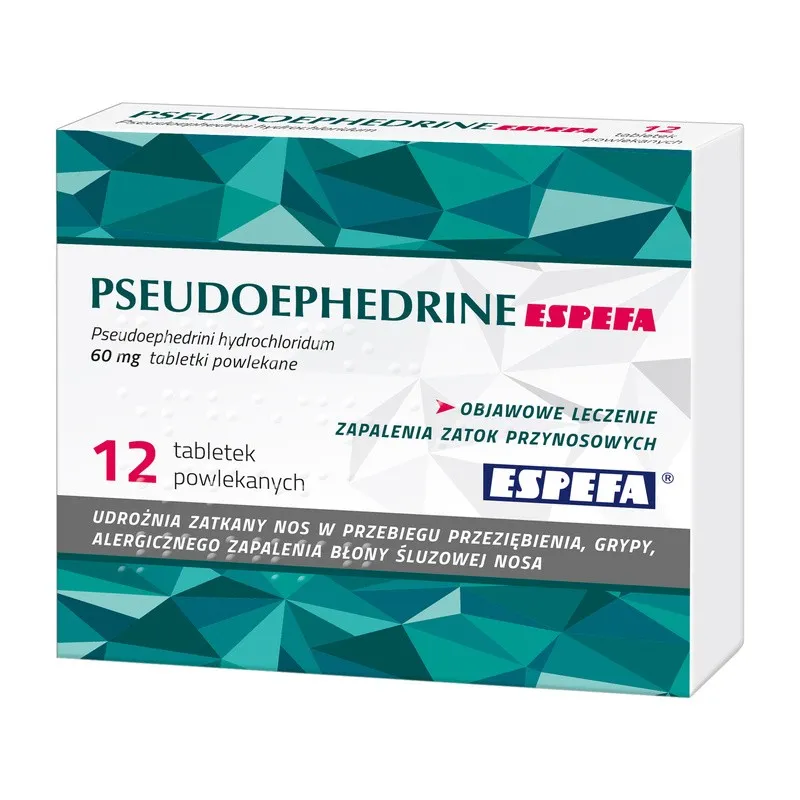
Table of Contents
- Package leaflet: Information for the patient
- 1. What PSEUDOEPHEDRINE ESPEFA is and what it is used for
- 2. Important information before using PSEUDOEPHEDRINE ESPEFA
- 3. How to take PSEUDOEPHEDRINE ESPEFA
- 4. Possible adverse reactions
- 5. How to store PSEUDOEPHEDRINE ESPEFA
- 6. Contents of the pack and other information
Package leaflet: Information for the patient
PSEUDOEPHEDRINE ESPEFA, 60 mg, coated tablets
Pseudoephedrini hydrochloridum
Please read all of this leaflet carefully before taking this medicine, because it contains
important information for the patient.
This medicine should always be taken exactly as described in this patient leaflet or as directed by
the doctor or pharmacist.
- Keep this leaflet, so that you can read it again if necessary.
- If you need advice or further information, please consult your pharmacist.
- If you experience any adverse reactions, including any adverse reactions not listed in this leaflet, inform your doctor or pharmacist. See section 4.
- If there is no improvement after 3 days or if your condition worsens, contact your doctor.
Contents of the leaflet
- What PSEUDOEPHEDRINE ESPEFA is and what it is used for
- Important information before taking PSEUDOEPHEDRINE ESPEFA
- How to take PSEUDOEPHEDRINE ESPEFA
- Possible side effects
- How to store PSEUDOEPHEDRINE ESPEFA
- Contents of the pack and other information
1. What PSEUDOEPHEDRINE ESPEFA is and what it is used for
PSEUDOEPHEDRINE ESPEFA reduces congestion of the mucous membranes of the upper
respiratory tract, particularly the nasal mucosa and paranasal sinuses, leading to a reduction in
swelling and secretion, and resulting in nasal decongestion.
PSEUDOEPHEDRINE ESPEFA is used for symptomatic treatment of inflammation of the
nasal and paranasal sinus mucosa (nasal congestion, blocked nose) occurring in:
- the common cold,
- influenza,
- allergic rhinitis.
This medicine is intended for adults and adolescents over 12 years of age.
If there is no improvement after 3 days or if your condition worsens, consult your doctor.
2. Important information before using PSEUDOEPHEDRINE ESPEFA
When not to use PSEUDOEPHEDRINE ESPEFA:
- if the patient is allergic to pseudoephedrine or to any of the other ingredients of this medicine (listed in section 6).
- if the patient has very high blood pressure (severe hypertension) or hypertension that cannot be controlled with medication.
- if the patient has severe acute (sudden) or chronic (long-term) kidney disease or kidney failure.
- if the patient has severe coronary heart disease.
- if the patient is taking or has taken within the last two weeks medicines from the group of monoamine oxidase inhibitors (medicines used, among others, in depression). Concomitant use of PSEUDOEPHEDRINE ESPEFA with such medicines may sometimes lead to increased blood pressure or hypertensive crisis.
- if the patient is taking furazolidone. The antibacterial agent furazolidone exhibits dose-dependent inhibition of monoamine oxidase activity. Despite the lack of reports on hypertensive crisis caused by concomitant use of PSEUDOEPHEDRINE ESPEFA and furazolidone, these medicines should not be used simultaneously.
Warnings and precautions
Before starting treatment with PSEUDOEPHEDRINE ESPEFA, consult a doctor:
- if the patient has hypertension, heart disease,
- if the patient has diabetes, hyperthyroidism, increased intraocular pressure or benign prostatic hyperplasia,
- if the patient has impaired liver and/or kidney function.
The use of PSEUDOEPHEDRINE ESPEFA should be discontinued and the patient should immediately
contact a doctor or seek medical help if the following occur:
- sudden abdominal pain, rectal bleeding or other symptoms of developing colitis,
- fever with generalized skin erythema and vesicular rash (see section 4).
Cases of posterior reversible encephalopathy syndrome (PRES) and reversible cerebral vasoconstriction syndrome (RCVS) have been reported following the use of medicines containing pseudoephedrine.
PRES and RCVS are rare conditions which may be associated with reduced blood flow to the brain.
If symptoms occur which may indicate PRES or RCVS, treatment with PSEUDOEPHEDRINE ESPEFA must be stopped immediately and medical help must be sought immediately (symptoms, see section 4 "Possible side effects").
If symptoms do not improve after 3 days, worsen, or if new symptoms appear, discontinue use of the medicine and consult a doctor.
PSEUDOEPHEDRINE ESPEFA and alcohol
Concomitant use of PSEUDOEPHEDRINE ESPEFA and alcohol should be avoided.
Children and adolescents
PSEUDOEPHEDRINE ESPEFA should not be used in children under 12 years of age.
PSEUDOEPHEDRINE ESPEFA and other medicines
Inform your doctor or pharmacist about all medicines currently used, recently used, or planned to be used.
Do not use PSEUDOEPHEDRINE ESPEFA with the following medicines:
- monoamine oxidase inhibitors (medicines used, among others, in depression). Concomitant use of PSEUDOEPHEDRINE ESPEFA with such medicines may sometimes lead to increased blood pressure or hypertensive crisis.
- furazolidone (an antibacterial medicine), which exhibits dose-dependent inhibition of monoamine oxidase activity.
Consult a doctor before using PSEUDOEPHEDRINE ESPEFA if the patient is taking:
- tricyclic antidepressants,
- medicines reducing mucosal congestion,
- appetite suppressants,
- psychotropic medicines with amphetamine-like effects,
- antihypertensive medicines such as bretylium, betanidine, guanethidine, debrisoquine, methyldopa, and medicines blocking α- and β-adrenergic receptors. PSEUDOEPHEDRINE ESPEFA may reduce the effectiveness of these medicines.
Pregnancy and breastfeeding
If the patient is pregnant or breastfeeding, suspects she may be pregnant, or is planning to have a child, she should consult a doctor or pharmacist before using this medicine.
PSEUDOEPHEDRINE ESPEFA may be used during pregnancy and breastfeeding only if, in the opinion of the doctor, the benefit to the mother outweighs the potential risk to the fetus or breastfed child.
Driving and operating machinery
It is unknown whether the medicine affects the ability to drive vehicles or operate machinery.
PSEUDOEPHEDRINE ESPEFA contains lactose
If the patient has previously been diagnosed with intolerance to certain sugars, the patient should consult a doctor before taking this medicine.
PSEUDOEPHEDRINE ESPEFA contains Allura red AC (E 129)
The medicine may cause allergic reactions.
3. How to take PSEUDOEPHEDRINE ESPEFA
This medicine should always be taken exactly as described in this patient information leaflet or as directed by your doctor or pharmacist. If in doubt, consult your doctor or pharmacist.
This medicine is for oral use.
Dosage for adults and adolescents over 12 years of age
One coated tablet 3 to 4 times daily. In adolescents, treatment should not exceed 4 days.
Dosage for elderly patients
No detailed studies on the effects of PSEUDOEPHEDRINE ESPEFA in elderly patients have been conducted. It is recommended to use the adult dosage, with special attention to kidney and liver function. If severe impairment of these organs occurs, the medicine should be used with caution.
Dosage in patients with hepatic impairment
Caution is advised when administering this medicine to patients with severe liver dysfunction.
Dosage in patients with renal impairment
Caution is advised when administering this medicine to patients with moderate or severe kidney dysfunction.
Overdose of PSEUDOEPHEDRINE ESPEFA
Symptoms of overdose include: nausea, vomiting, insomnia, tremor, dilated pupils, restlessness, agitation, hallucinations, seizures, palpitations, tachycardia (increased heart rate), hypertension, reflex bradycardia (slowed heart rate), cardiac arrhythmias, hypertensive crisis, intracranial hemorrhage, myocardial infarction, psychosis, muscle damage, low blood potassium levels, and intestinal ischemic infarction. In children, drowsiness has been reported in cases of overdose.
Management in case of overdose
If more than the recommended dose has been taken, seek immediate medical advice from a doctor or pharmacist. The doctor will initiate appropriate measures, such as respiratory support and administration of anticonvulsant medications if necessary. In appropriate cases, gastric lavage should be performed. Urinary catheterization may be required. If deemed appropriate by the physician, elimination of pseudoephedrine may be enhanced by administering urinary acidifying agents or by subjecting the patient to dialysis.
Missed dose of PSEUDOEPHEDRINE ESPEFA
Do not take a double dose to make up for a missed dose.
If you have any further questions about the use of this medicine, consult your doctor or pharmacist.
4. Possible adverse reactions
Like all medicines, this product may cause adverse reactions, although not everyone experiences them.
Frequently occurring adverse reactions (less than 1 in 10 people):
- dry mouth, nausea,
- dizziness,
- insomnia, nervousness.
Very rare adverse reactions (less than 1 in 10,000 people):
- heart rhythm disorders, myocardial infarction, palpitations, tachycardia,
- allergic reactions,
- rash, itching, sudden occurrence of localized swelling of the skin and/or mucous membranes, which may cause difficulty in breathing or swallowing,
- increased blood pressure,
- stroke, headache, paresthesia (tingling, numbness, or altered skin temperature sensation), excessive psychomotor activity, tremor, somnolence,
- restlessness, euphoria, hallucinations, visual hallucinations, motor restlessness,
- ischemic colitis (see section Warnings and precautions), vomiting,
- painful urination, urinary retention.
Adverse reactions with unknown frequency (frequency cannot be determined from available data):
- severe conditions affecting blood vessels in the brain, known as posterior reversible encephalopathy syndrome (PRES) and reversible cerebral vasoconstriction syndrome (RCVS).
You should immediately stop taking PSEUDOEPHEDRINE ESPEFA and seek immediate medical help if symptoms indicating posterior reversible encephalopathy syndrome (PRES) or reversible cerebral vasoconstriction syndrome (RCVS) occur. These include:
- sudden, severe headache,
- nausea,
- vomiting,
- confusion,
- seizures,
- visual disturbances,
- sudden fever, skin redness, or numerous small pustules (possible symptoms of acute generalized exanthematous pustulosis - AGEP), which may appear within the first 2 days of taking the medicine. See section 2. If such symptoms occur, discontinue use of the medicine and contact your doctor or seek immediate medical assistance.
Reporting of adverse reactions
If any adverse symptoms occur, including any adverse reactions not listed in this leaflet, inform your doctor, pharmacist, or nurse. Adverse reactions can be reported directly to the Department of Monitoring Adverse Drug Reactions of the Office for Registration of Medicinal Products, Medical Devices and Biocidal Products:
Al. Jerozolimskie 181C
02-222 Warsaw,
Phone: +48 22 49 21 301
Fax: +48 22 49 21 309
Website: https://smz.ezdrowie.gov.pl
Adverse reactions can also be reported to the marketing authorization holder.
Reporting adverse reactions helps to provide more information on the safety of the medicine.
5. How to store PSEUDOEPHEDRINE ESPEFA
Keep this medicine below 25°C.
Store in the original packaging to protect from moisture.
Keep this medicine out of sight and reach of children.
Do not use PSEUDOEPHEDRINE ESPEFA after the expiry date stated on the packaging. The expiry date refers to the last day of the stated month.
Medicines must not be disposed of via wastewater or household waste. Ask your pharmacist how to dispose of medicines no longer required. This will help protect the environment.
6. Contents of the pack and other information
What PSEUDOEPHEDRINE ESPEFA contains
- The active substance is pseudoephedrine hydrochloride. Each coated tablet contains 60 mg of pseudoephedrine hydrochloride.
- The other ingredients are: microcrystalline cellulose, pregelatinized maize starch, lactose monohydrate, magnesium stearate, colloidal anhydrous silica, and the coating AquaPolish P red containing: hypromellose, hydroxypropylcellulose, polyethylene glycol, medium-chain triglycerides, talc, titanium dioxide (E 171), Allura red AC (E 129), black iron oxide (E 172), red iron oxide (E 172).
What PSEUDOEPHEDRINE ESPEFA looks like and contents of the pack
PSEUDOEPHEDRINE ESPEFA is a red, round, biconvex coated tablet.
The pack contains 12 coated tablets.
Marketing Authorisation Holder and Manufacturer
Chemiczno-Farmaceutyczna Spółdzielnia Pracy ESPEFA
ul. J. Lea 208
30-133 Kraków
tel. 12 639 27 27
Information for blind and partially sighted people: 800-007-777