Propofol-lipuro
Poland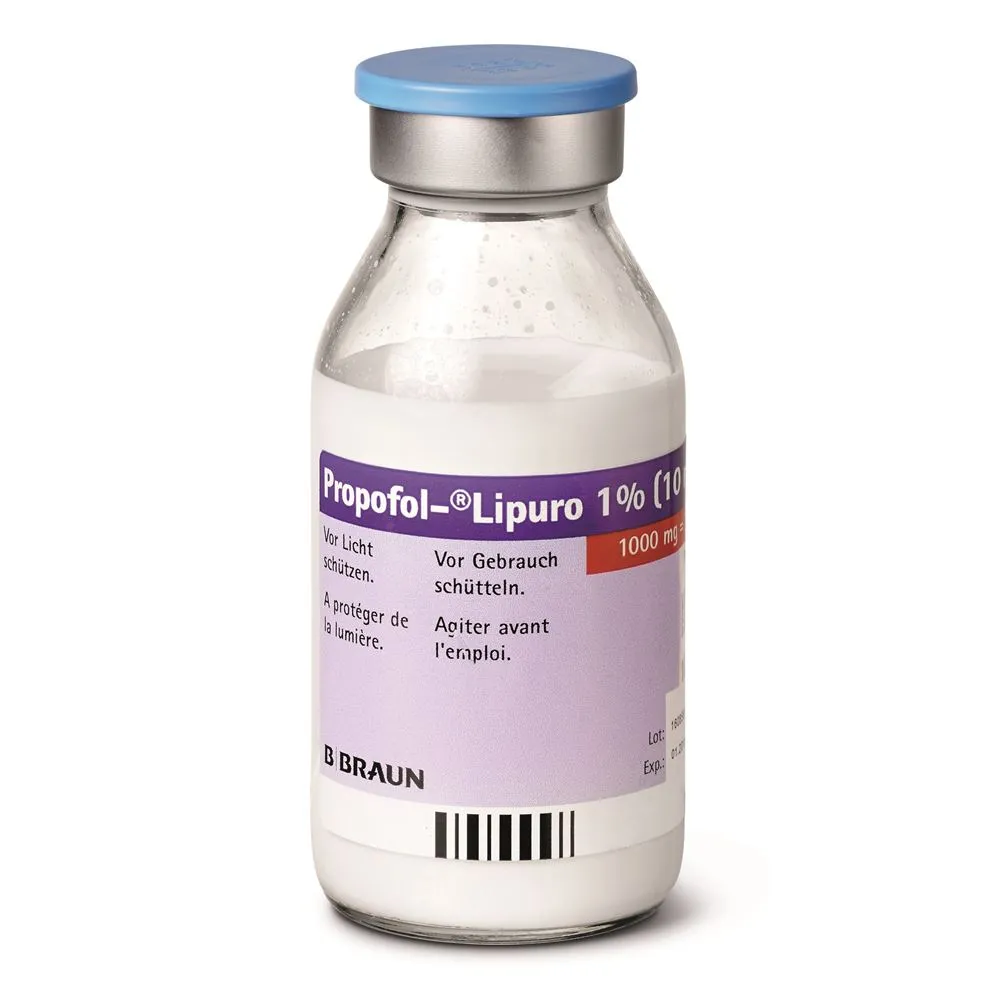
Table of Contents
Package leaflet: Information for the user
Propofol-Lipuro, 5 mg/ml, emulsion for injection or infusion
propofol
Please read all of this leaflet carefully before use, as it contains important information for the patient.
- Keep this leaflet, as you may need to read it again.
- If you have any further questions, please consult your doctor or pharmacist.
- If you experience any adverse reactions, including any not listed in this leaflet, inform your doctor or pharmacist. See section 4.
Contents of the leaflet
- What Propofol-Lipuro is and what it is used for
- What you need to know before you are given Propofol-Lipuro
- How Propofol-Lipuro is given
- Possible side effects
- How to store Propofol-Lipuro
- Contents of the pack and other information
1. What Propofol-Lipuro is and what it is used for
Propofol-Lipuro belongs to a group of medicines called general anaesthetics. General anaesthetics are used to induce anaesthesia (produce sleep) in order to perform a surgical procedure or other intervention. These medicines may also be used for sedation (reducing the patient's level of consciousness without complete sleep).
Propofol-Lipuro is used for:
- induction of general anaesthesia in adults and children aged >1 month;
- sedation of adult patients during diagnostic and surgical procedures, either alone or in combination with another agent for local or regional anaesthesia;
- induction of sedation in adults and children aged >1 month during diagnostic and surgical procedures.
2. Important information before using Propofol-Lipuro
When not to use Propofol-Lipuro:
- if the patient is allergic to propofol, soy, peanuts, or any of the other ingredients of this medicine (listed in section 6);
- for maintenance of general anaesthesia or sedation during diagnostic and surgical procedures in children;
- for sedation during intensive care.
Warnings and precautions
Before receiving Propofol-Lipuro, discuss this with your doctor or pharmacist.
Exercise particular caution:
- if the patient has severe head trauma,
- if the patient has a mitochondrial disease,
- if the patient has a condition in which the body does not properly metabolize fat,
- if the patient has any other health problems requiring special caution when using fat emulsions,
- if the patient has low circulating blood volume (hypovolemia),
- if the patient has low blood protein levels (hypoproteinemia),
- in very weak (debilitated) patients or those with heart, kidney, or liver problems,
- in patients with increased intracranial pressure,
- if the patient has breathing difficulties,
- if the patient has epilepsy,
- in patients undergoing procedures during which spontaneous movements are particularly undesirable, e.g. eye surgery. If the patient has any of these conditions or diseases, inform the doctor.
If other intravenous fat infusions are administered concurrently, the doctor will monitor
the total daily amount of fat received.
Propofol is administered by a doctor trained in anaesthesia and intensive care.
The patient is continuously monitored during anaesthesia and recovery.
If symptoms of the so-called "propofol syndrome" occur (see detailed list of symptoms
in section 4 "Possible side effects", subsection "If any of the following effects occur,
call a doctor immediately"), the doctor will immediately stop administering the drug.
Precautions to be taken after administration of propofol are described in the section
"Driving and operating machinery".
Children and adolescents
Administration of Propofol-Lipuro to neonates is not recommended.
Propofol-Lipuro and other medicines
Inform the doctor about all medicines the patient is currently taking or has recently taken,
as well as any medicines the patient plans to take.
Propofol has been successfully used in various regional anaesthesia techniques, which cause
anaesthesia only in part of the body (epidural and spinal anaesthesia).
In addition, it has been shown safe to use in combination with:
- drugs administered before surgery,
- other medicines such as muscle relaxants,
- inhalational anaesthetic agents,
- analgesic drugs. However, the doctor may administer lower doses of propofol if general anaesthesia or sedation is required as supplementation to regional anaesthesia.
The doctor will consider that other medicines with central nervous system depressant effects
may enhance the action of propofol when administered concomitantly with propofol.
Particular caution is required when using antibiotics containing rifampicin simultaneously –
the patient may develop low blood pressure.
The doctor may reduce the dose if the patient is also receiving valproate treatment (an anticonvulsant).
Propofol-Lipuro and alcohol
The doctor will advise the patient on alcohol consumption before and after administration of
Propofol-Lipuro 5 mg/ml.
Pregnancy and breastfeeding
If the patient is pregnant or breastfeeding, suspects she may be pregnant, or is planning to become pregnant, she should consult her doctor or pharmacist before using this medicine.
Propofol-Lipuro should not be used during pregnancy unless absolutely necessary.
This medicine crosses the placenta and may depress vital functions in the newborn. However, propofol may be used during procedures for termination of pregnancy.
In breastfeeding women, breastfeeding must be discontinued and milk expressed and discarded
for 24 hours after administration of Propofol-Lipuro. Studies in breastfeeding women have shown that propofol passes into breast milk in small amounts.
Driving and operating machinery
After receiving an injection or infusion of Propofol-Lipuro, patients must not drive or operate mechanical equipment.
The doctor will advise the patient:
- whether another person should accompany the patient when leaving the medical facility;
- when the patient will be able to drive and operate machinery again;
- whether the patient can take other sedative medicines (e.g. sedatives, strong analgesics, alcohol).
Propofol-Lipuro contains sodium and soy oil
The medicine contains less than 1 mmol (23 mg) of sodium per 20 ml, meaning the medicine is considered "sodium-free".
Propofol-Lipuro contains soy oil. Do not use if hypersensitivity to peanuts or soy has been diagnosed.
3. How to use Propofol-Lipuro
Propofol-Lipuro must only be administered by personnel trained in anaesthesia or specially trained physicians in a hospital or appropriately equipped day-care unit.
Dosage
The dose administered will vary depending on age, body weight, and physical condition. The physician will determine the appropriate dose for induction of anaesthesia or to achieve the desired level of sedation, carefully monitoring the patient's response and vital signs (pulse, blood pressure, respiration, etc.). The physician will decide on the duration of administration.
Propofol-Lipuro may be administered for a maximum of 1 hour.
Method of administration
Propofol-Lipuro will be given by intravenous injection or infusion through a needle or a small cannula placed in one of the patient's veins. If administered by infusion, the drug may first be diluted.
During injection or infusion, the patient's circulation and respiration will be continuously monitored.
Overdose of Propofol-Lipuro
Overdose is unlikely to occur, as the administered dose is very precisely controlled.
Nevertheless, if an overdose occurs accidentally, it may lead to impaired cardiac and respiratory function. In such a case, the physician will immediately initiate necessary treatment.
If you have any further doubts regarding the use of this medicinal product, consult your physician or pharmacist.
4. Possible adverse effects
Like all medicines, this medicine can cause adverse effects, although not everyone will experience them.
If any of the following effects occur, contact a doctor immediately.
Common (may affect up to 1 in 10 patients):
- Low blood pressure, which in rare cases may require fluid infusion and reduction of the propofol infusion rate.
- Too slow heart rate, which in rare cases may be serious.
Rare (may affect up to 1 in 1,000 patients):
- Seizures resembling epilepsy.
Very rare (may affect up to 1 in 10,000 patients):
- Allergic reactions including anaphylactic shock, such as swelling of the face, tongue or throat, wheezing, skin redness and low blood pressure.
- Cases of loss of consciousness after surgery have been reported. For this reason, the patient will be closely monitored during the recovery period.
- Fluid in the lungs (pulmonary oedema) after administration of propofol.
- Pancreatitis.
Frequency not known (frequency cannot be estimated from the available data):
-
There have been reports of isolated cases of severe adverse reactions combining the following symptoms: muscle breakdown, accumulation of acidic substances in the blood, abnormally high potassium levels, high levels of fats in the blood, abnormalities in the electrocardiogram (Brugada-type ECG), liver enlargement, irregular heartbeat, kidney failure and heart failure. This has been termed "propofol infusion syndrome". In some patients, this syndrome ultimately led to death. These effects occurred only in intensive care unit patients, mainly in patients with severe head injuries and in children with respiratory tract infections who received propofol doses exceeding 4 mg per kg body weight per hour. See also section 2 "Warnings and precautions".
-
Hepatitis, acute liver failure [symptoms may include yellowing of the skin and eyes, itching, dark urine, abdominal pain and liver tenderness on palpation (indicated as pain under the front of the rib cage on the right side of the body), sometimes with loss of appetite].
Additional adverse effects
Very common (may affect more than 1 in 10 patients):
- Pain at the injection site occurring during the first injection. Pain can be reduced by co-administering propofol into larger forearm veins. Simultaneous administration of lidocaine (a local anaesthetic) with propofol also reduces pain at the injection site.
Common (may affect up to 1 in 10 patients):
- Brief apnoea.
- Headache during recovery from the effect of the medicine.
- Nausea or vomiting during recovery from the effect of the medicine.
Uncommon (may affect up to 1 in 100 patients):
- Blood clots in veins or inflammation of veins at the injection site.
Very rare (may affect up to 1 in 10,000 patients):
- Loss of control of sexual urges during recovery from the effect of the medicine.
- Abnormal urine colour after prolonged administration of propofol.
- Cases of fever after surgery.
- Tissue damage if the medicine is accidentally injected outside the vein.
Frequency not known (frequency cannot be estimated from the available data):
- Involuntary movements.
- Abnormally elevated mood.
- Misuse and dependence on the medicine.
- Heart failure.
- Cardiac arrest.
- Shallow breathing.
- Prolonged and painful erection (priapism).
- Pain and/or swelling at the injection site when the medicine is accidentally injected outside the vein.
- Muscle tissue breakdown, which has been very rarely reported when propofol was administered at doses higher than recommended as a sedative in intensive care units.
Reporting of adverse effects
If any adverse effects occur, including any not listed in this leaflet, inform your doctor or pharmacist. Adverse effects can be reported directly to the Department for Monitoring of Adverse Drug Reactions of the Office for Registration of Medicinal Products, Medical Devices and Biocidal Products
Al. Jerozolimskie 181C
02-222 Warszawa
Tel: +48 22 49 21 301
Fax: +48 22 49 21 309
Website: https://smz.ezdrowie.gov.pl
Adverse effects can also be reported to the marketing authorisation holder.
Reporting adverse effects helps provide more information on the safety of this medicine.
5. How to store Propofol-Lipuro
Keep this medicine out of the sight and reach of children.
Do not use this medicine after the expiry date stated on the label and carton. The expiry date refers to the last day of the specified month.
Do not store above 25 °C. Do not freeze.
Propofol-Lipuro should be used immediately after opening the ampoule.
Diluted Propofol-Lipuro should be used immediately after preparation.
Do not use Propofol-Lipuro if, after shaking, two separate layers are visible or if the emulsion is not milky-white.
6. Contents of the package and other information
What Propofol-Lipuro contains
- The active substance is propofol. Each millilitre of Propofol-Lipuro 5 mg/ml contains 5 mg of propofol. One 20 ml vial contains 100 mg of propofol.
- The other ingredients are: purified soybean oil; medium-chain triglycerides; glycerol; egg phospholipids for injections; sodium oleate; water for injections.
What Propofol-Lipuro looks like and contents of the pack
Propofol-Lipuro is an emulsion for injection or infusion.
It is a white, milky oil-in-water emulsion.
The medicine is available in 20 ml vials, packs containing 5 vials.
Marketing Authorisation Holder and Manufacturer
B. Braun Melsungen AG
Carl-Braun-Strasse 1
34212 Melsungen
Postal address:
34209 Melsungen, Germany
Tel.: +49-5661-71-0
Fax: +49-5661-71-4567
This medicinal product is authorised in the Member States of the European Economic Area and in the United Kingdom (Northern Ireland) under the following names:
Austria Propofol-Lipuro 5 mg/ml Emulsion zur Injektion oder Infusion
Czech Republic Propofol-Lipuro 0.5 % (5 mg/ml)
Denmark Propofol “B.Braun” 5 mg/ml
Finland Propofol-Lipuro 5 mg/ml
France Propofol-Lipuro 5 mg/ml
Spain Propofol-Lipuro 0.5 % (5 mg/ml)
Ireland Propofol-Lipuro 0.5 % (5 mg/ml)
Luxembourg Propofol-Lipuro 5 mg/ml Emulsion zur Injektion oder Infusion
Germany Propofol-Lipuro 5 mg/ml Emulsion zur Injektion oder Infusion
Norway Propofol-Lipuro 5 mg/ml
Poland Propofol-Lipuro 5 mg/ml
Portugal Propofol-Lipuro 0.5 % (5 mg/ml)
Slovakia Propofol-Lipuro 0.5 % (5 mg/ml)
Sweden Propofol-Lipuro 5 mg/ml
Hungary Propofol-Lipuro 5 mg/ml
United Kingdom
(Northern Ireland) Propofol-Lipuro 0.5 % (5 mg/ml)
Italy Propofol B.Braun 0.5 %
<------------------------------------------------------------------------------------------------------------------------>
Information intended exclusively for healthcare professionals:
Containers are intended for single use in one patient only.
Containers must be shaken before use.
The vial neck must be disinfected with medical spirit (spray or swab) before use.
Any unused portion of the emulsion must be discarded after administration is complete. Any unused medicinal product or waste material must be disposed of in accordance with local requirements.
Detailed information on this product is available in the product characteristics.