Propofol 2% mct/lct fresenius
Poland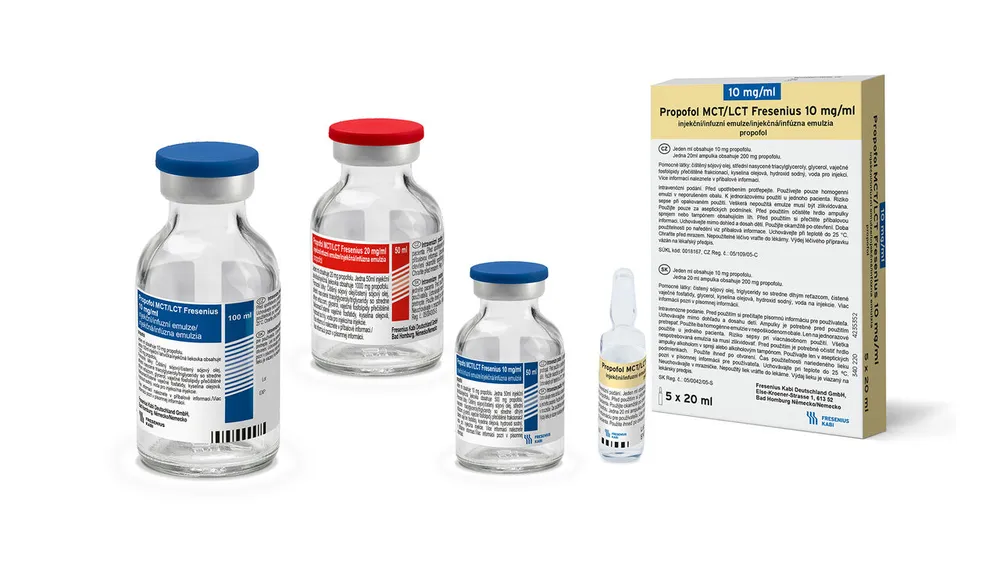
Table of Contents
- Package leaflet: Information for the user
- 1. What Propofol 2% MCT/LCT Fresenius is and what it is used for
- 2. Important information before using Propofol 2% MCT/LCT Fresenius
- 3. How to use Propofol 2% MCT/LCT Fresenius
- 4. Possible adverse reactions
- 5. How to store Propofol 2% MCT/LCT Fresenius
- 6. Contents of the pack and other information
- Information intended exclusively for healthcare professionals:
Package leaflet: Information for the user
Propofol 2% MCT/LCT Fresenius, 20 mg/ml, emulsion for injection / for infusion
Propofolum
Please read all of this leaflet before using this medicine because it contains important information for you.
- Keep this leaflet. You may need to read it again.
- If you have any further questions, ask your doctor, pharmacist, or nurse.
- If you experience any side effects, including any not listed in this leaflet, tell your doctor, pharmacist, or nurse. See section 4.
Contents of the leaflet
- What Propofol 2% MCT/LCT Fresenius is and what it is used for
- What you need to know before using Propofol 2% MCT/LCT Fresenius
- How to use Propofol 2% MCT/LCT Fresenius
- Possible side effects
- How to store Propofol 2% MCT/LCT Fresenius
- Contents of the pack and other information
1. What Propofol 2% MCT/LCT Fresenius is and what it is used for
Propofol 2% MCT/LCT Fresenius belongs to a group of medicines called general anaesthetics.
General anaesthetics are used to cause loss of consciousness (sleep) to allow surgery or other procedures to be performed.
These medicines may also be used to achieve sedation (a state in which the patient is sleepy but not fully unconscious).
Propofol 2% MCT/LCT Fresenius is used for:
- induction and maintenance of general anaesthesia in adults, adolescents, and children over 3 years of age;
- sedation of mechanically ventilated patients over 16 years of age requiring intensive care;
- sedation of adults, adolescents, and children over 3 years of age during diagnostic and surgical procedures, either as a single agent or in combination with other medicines used to induce local or regional anaesthesia.
2. Important information before using Propofol 2% MCT/LCT Fresenius
When not to use Propofol 2% MCT/LCT Fresenius
- if the patient is allergic to propofol, soy, peanuts, or any of the other ingredients of this medicine (listed in section 6);
- for sedation of patients aged 16 years or younger requiring intensive medical care.
Warnings and precautions
Please consult a doctor, pharmacist, or nurse before administering Propofol 2% MCT/LCT Fresenius, and if any of the situations listed below currently apply or have applied in the past.
Propofol 2% MCT/LCT Fresenius should not be used or should be used with special caution and under intensive monitoring in patients:
- with advanced heart failure;
- with other severe heart diseases;
- undergoing electroconvulsive therapy (electroconvulsive therapy used in psychiatric treatment).
Propofol 2% MCT/LCT Fresenius should be used with caution in elderly and debilitated patients.
Before administering Propofol 2% MCT/LCT Fresenius, inform the anaesthetist or intensive care physician if the patient has:
- heart disease;
- lung disease;
- kidney disease;
- liver disease;
- seizures (epilepsy);
- increased intracranial pressure (elevated intracranial pressure); in combination with low blood pressure, blood flow to the brain may be reduced;
- altered blood fat levels; if the patient is receiving total parenteral nutrition (nutrition through a vein), blood fat levels should be monitored;
- significant fluid loss from the body (dehydration).
Before administering Propofol 2% MCT/LCT Fresenius, the following conditions must be treated in the patient:
- heart failure;
- inadequate tissue perfusion (circulatory failure);
- severe breathing difficulties (respiratory failure);
- dehydration (hypovolemia);
- seizures (epilepsy).
Propofol 2% MCT/LCT Fresenius may increase the risk of:
- seizures;
- reflex nerve activity slowing heart rate (vagotonia, bradycardia);
- changes in organ perfusion in the patient (hemodynamic effects on the cardiovascular system), especially if the patient is overweight and receiving high doses of Propofol 2% MCT/LCT Fresenius.
During sedation with Propofol 2% MCT/LCT Fresenius, involuntary movements may occur in the patient. The doctor will consider how this may affect the surgical procedure performed under sedation and take necessary precautions.
Very rarely, after anaesthesia, postoperative unconsciousness with associated increased muscle tone may occur. The patient should be monitored, but no additional treatment is required. Consciousness returns spontaneously.
Injection of Propofol 2% MCT/LCT Fresenius may be painful. To reduce pain, a local anaesthetic may be used, but its use may cause adverse reactions.
The patient may leave the hospital only after full consciousness has been regained.
If the patient is discharged soon after receiving propofol, another person should accompany them.
Children and adolescents
Use of Propofol 2% MCT/LCT Fresenius is not recommended in children under 3 years of age.
Propofol 2% MCT/LCT Fresenius must not be used for sedation in children and adolescents under 16 years of age in intensive care units, as the safety of propofol use for this indication has not been established in this age group.
Propofol 2% MCT/LCT Fresenius and other medicines
Inform your doctor or pharmacist about all medicines currently used, recently used, or planned for use.
In particular, inform your treating physician, anaesthetist, or nurse if the patient is taking any of the following medicines:
- rifampicin (a medicine used to treat tuberculosis);
- midazolam [a medicine used to induce sedation (a deep state of calmness, drowsiness, or sleep), relieve anxiety symptoms, and reduce muscle tension].
Special caution is required if the patient is taking and/or receiving any of the following medicines simultaneously:
- medicines used for premedication (the anaesthetist will know which medicines may interact with Propofol 2% MCT/LCT Fresenius);
- other anaesthetics, including general, regional, and local anaesthetics, and inhalational anaesthetics (the anaesthetist may decide to reduce the dose of Propofol 2% MCT/LCT Fresenius);
- painkillers (analgesics);
- strong painkillers (fentanyl or opioids);
- parasympatholytic medicines (used for painful spasms, asthma, and Parkinson's disease);
- benzodiazepines (sedative medicines);
- suxamethonium (a muscle relaxant);
- medicines that may affect internal body functions such as heart rhythm, e.g., atropine;
- medicines and drinks containing alcohol;
- neostigmine (a medicine used to treat muscle weakness);
- cyclosporine (a medicine used to prevent transplant rejection);
- valproate (a medicine used to treat epilepsy and psychiatric disorders).
Propofol 2% MCT/LCT Fresenius with food, drink, and alcohol
After receiving Propofol 2% MCT/LCT Fresenius, the patient should not eat, drink, or consume alcohol until full consciousness is regained.
Pregnancy and breastfeeding
If the patient is pregnant or breastfeeding, suspects she may be pregnant, or is planning to have a child, she should consult her doctor or pharmacist before using this medicine.
Propofol 2% MCT/LCT Fresenius should not be administered to pregnant women unless absolutely necessary. Breastfeeding mothers should discontinue breastfeeding and discard breast milk collected for 24 hours after receiving Propofol 2% MCT/LCT Fresenius.
Driving and operating machinery
Drowsiness may occur for some time after receiving propofol. Do not drive, operate equipment, or machinery until you are certain that the effects of the medicine have completely worn off.
If the patient is discharged soon after receiving propofol, they should not drive or return home unaccompanied.
Ask your doctor when it is safe to resume these activities and return to work.
Propofol 2% MCT/LCT Fresenius contains soybean oil and sodium
Propofol 2% MCT/LCT Fresenius contains soybean oil. If the patient is allergic to peanuts or soy, this medicine should not be used.
This medicine contains less than 1 mmol (23 mg) of sodium per 100 ml, meaning it is considered "sodium-free".
3. How to use Propofol 2% MCT/LCT Fresenius
Propofol 2% MCT/LCT Fresenius will be administered to the patient only in a hospital or on an appropriate therapeutic ward by an anaesthesiologist or a physician specialized in intensive care medicine, or under their direct supervision.
Dosage
The dose given will depend on the patient's age, body weight, and condition. The physician will administer the appropriate dose to induce and maintain anaesthesia or achieve the required level of sedation, carefully monitoring the patient's responses and vital signs (pulse, blood pressure, respiration, etc.).
It may be necessary to use other medications to provide calming effects or full unconsciousness, relieve pain perception, ensure proper breathing, and maintain stable blood pressure. The physician will decide which medications should be used and when to administer them.
Adults
Most patients require 1.5 to 2.5 mg of propofol/kg body weight to induce sleep (induction of anaesthesia), followed by 4 to 12 mg of propofol/kg body weight/hour to maintain anaesthesia. For achieving the required level of sedation, doses ranging from 0.3 to 4.0 mg of propofol/kg body weight/hour are usually sufficient.
To achieve the required level of sedation during surgical and diagnostic procedures in adults, most patients will require a dose of 0.5 to 1 mg of propofol/kg body weight administered over 1 to 5 minutes. Maintenance of the required level of sedation can be achieved by adjusting the infusion rate of Propofol 2% MCT/LCT Fresenius appropriately.
In most patients, a dose of 1.5 to 4.5 mg of propofol/kg body weight/hour will be required. If a rapid increase in the level of sedation is needed, the infusion may be supplemented by bolus administration of propofol at a dose of 10 to 20 mg (0.5 to 1 ml of Propofol 2% MCT/LCT Fresenius).
For sedation of mechanically ventilated patients over 16 years of age during intensive care treatment, the dose should be adjusted according to the required level of sedation. A satisfactory level of sedation is usually achieved with an infusion rate ranging from 0.3 to 4.0 mg of propofol/kg body weight/hour. Infusion rates exceeding 4.0 mg of propofol/kg body weight/hour are not recommended.
Elderly and debilitated patients
Lower doses may be required in elderly and debilitated patients.
Children and adolescents above 3 years of age
Propofol 2% MCT/LCT Fresenius is not recommended for use in children under 3 years of age.
The dose should be adjusted according to age and/or body weight.
In most children above 8 years of age, the dose required for induction of anaesthesia is approximately 2.5 mg/kg body weight of Propofol 2% MCT/LCT Fresenius. In younger children, a higher dose may be required (2.5 to 4 mg/kg body weight).
Doses ranging from 9 to 15 mg/kg body weight/hour are usually sufficient to maintain the required level of anaesthesia. Higher doses may be required in younger children.
For induction of sedation with Propofol 2% MCT/LCT Fresenius during surgical and diagnostic procedures in children above 3 years of age, most patients require an initial dose of 1 to 2 mg/kg body weight of propofol. Maintenance of the required level of sedation is achieved by adjusting the infusion rate of Propofol 2% MCT/LCT Fresenius appropriately. In most patients, a dose of 1.5 to 9 mg of propofol/kg body weight/hour is required.
Propofol 2% MCT/LCT Fresenius must not be used for sedation in children and adolescents under 16 years of age in intensive care units, as the safety of propofol use for this indication has not been established in this age group.
Method of administration
Propofol 2% MCT/LCT Fresenius is intended for intravenous administration, usually into the back of the hand or forearm. The anaesthesiologist may use a needle or cannula (a thin plastic tube).
Propofol 2% MCT/LCT Fresenius may be injected into the vein manually or by means of an electric pump.
Propofol 2% MCT/LCT Fresenius is for single use only. Any unused portions of the emulsion must be discarded. The container should be shaken before use.
If two layers are visible in the emulsion after shaking, the product must not be used.
Use only medication with a homogeneous consistency and from undamaged packaging.
Before use, the rubber stopper should be cleaned with alcohol from an aerosol spray or an alcohol-impregnated swab.
Duration of treatment
When Propofol 2% MCT/LCT Fresenius is used for sedation, it must not be administered for longer than 7 days.
Administration of a higher than recommended dose of Propofol 2% MCT/LCT Fresenius
The physician will ensure that the patient receives the appropriate dose of propofol depending on the procedure being performed. However, different patients may require different doses. If a patient receives too high a dose of the drug, the anaesthesiologist will initiate appropriate measures to ensure proper cardiac and respiratory function. For this reason, anaesthetic agents are administered exclusively by physicians specialized in anaesthesiology or intensive care medicine.
If you have any further questions regarding the use of this medicinal product, consult your physician or pharmacist.
4. Possible adverse reactions
Like all medicines, this medicine can cause adverse reactions, although not everyone will experience them.
Adverse reactions occurring during anaesthesia
During anaesthesia (at the time of injection and while the patient is drowsy or fully unconscious), the adverse reactions listed below may occur. Your doctor will monitor for these. If any of these adverse reactions occur, the doctor will provide appropriate treatment.
Very common (may affect more than 1 in 10 patients):
- Pain at the injection site (at the time of injection, before the patient falls asleep).
Common (may affect less than 1 in 10 patients):
- Slow or fast heartbeat;
- Low blood pressure;
- Changes in breathing pattern (reduced breathing rate, apnoea);
- Hiccups;
- Coughing (may also occur during emergence from anaesthesia).
Uncommon (may affect less than 1 in 100 patients):
- Swelling and redness along the vein used for administration or blood clots.
Rare (may affect less than 1 in 1,000 patients):
- Body tremors, shaking or seizures (may also occur during emergence from anaesthesia).
Very rare (may affect less than 1 in 10,000 patients):
- Severe allergic reaction causing breathing difficulties, skin swelling and redness, hot flushes;
- Fluid accumulation in the lungs, causing severe breathing difficulties (may also occur during emergence from anaesthesia);
- Change in urine colour (may also occur during emergence from anaesthesia).
Frequency not known (frequency cannot be estimated from available data):
- Involuntary movements;
- Severe skin and tissue reactions following accidental extravasation (injection outside the vein);
- Prolonged, often painful erection (priapism).
Adverse reactions that may occur during emergence from anaesthesia
The following adverse reactions may occur during emergence from anaesthesia (during waking up or after the patient has woken up):
Common (may affect less than 1 in 10 patients):
- Headache;
- Nausea, vomiting;
- Coughing.
Rare (may affect less than 1 in 1,000 patients):
- Dizziness, shivering and feeling cold;
- Agitation.
Very rare (may affect less than 1 in 10,000 patients):
- Postoperative loss of consciousness (in such cases, patients returned to consciousness without complications);
- Pancreatitis, causing severe abdominal pain (causal relationship not established);
- Postoperative fever.
Frequency not known (frequency cannot be estimated from available data):
- Euphoria;
- Sexual arousal;
- Irregular heartbeat;
- Changes in ECG pattern (corresponding to Brugada syndrome);
- Enlarged liver;
- Kidney failure;
- Muscle damage (rhabdomyolysis), increased blood acidity, high blood potassium levels, high blood lipid levels, heart failure;
- Misuse of the medicine, primarily by healthcare professionals;
- Prolonged, often painful erection (priapism);
- Hepatitis, acute liver failure [symptoms may include yellowing of the skin and eyes, itching, dark urine, abdominal pain and liver tenderness on palpation (felt as pain under the front part of the rib cage on the right side of the body), sometimes accompanied by loss of appetite].
When Propofol 2% MCT/LCT Fresenius is administered in combination with lidocaine (a local anaesthetic used to reduce injection site pain), the following adverse reactions may rarely occur:
- Dizziness;
- Vomiting;
- Drowsiness;
- Seizures;
- Slow heartbeat (bradycardia);
- Irregular heartbeat (arrhythmia);
- Shock.
Reporting of adverse reactions
If any adverse reactions occur, including any adverse reactions not listed in this leaflet, inform your doctor, pharmacist or nurse. Adverse reactions can be reported directly to the Department of Monitoring of Adverse Drug Reactions, Office for Registration of Medicinal Products, Medical Devices and Biocidal Products
Al. Jerozolimskie 181C
02-222 Warsaw
Phone: +48 22 49 21 301
Fax: +48 22 49 21 309
Website: https://smz.ezdrowie.gov.pl
Adverse reactions can also be reported to the responsible entity.
Reporting adverse reactions helps to provide more information on the safety of this medicine.
5. How to store Propofol 2% MCT/LCT Fresenius
Keep the medicine out of the sight and reach of children.
Do not use this medicine after the expiry date stated on the vial and outer packaging following: EXP. The expiry date refers to the last day of the stated month.
Do not store above 25°C.
Do not freeze.
After first opening, the medicine must be used immediately.
Infusion sets containing Propofol 2% MCT/LCT Fresenius should be replaced 12 hours after opening the vial.
Medicines must not be disposed of via wastewater or household waste. Ask your pharmacist how to dispose of medicines no longer required. Such measures help protect the environment.
6. Contents of the pack and other information
What Propofol 2% MCT/LCT Fresenius contains
- The active substance is propofol.
Each ml of emulsion contains 20 mg of propofol.
Each 20 ml vial contains 400 mg of propofol.
Each 50 ml vial contains 1000 mg of propofol.
Each 100 ml vial contains 2000 mg of propofol.
- The other ingredients are: purified soybean oil, medium-chain triglycerides, purified egg phosphatides, glycerol, oleic acid, sodium hydroxide, water for injections.
What Propofol 2% MCT/LCT Fresenius looks like and contents of the pack
Propofol 2% MCT/LCT Fresenius is a white oil-in-water emulsion for injection or infusion.
Propofol 2% MCT/LCT Fresenius is available in colourless glass vials sealed with rubber stoppers.
Pack sizes:
10 glass vials containing 20 ml of emulsion each.
1 glass vial containing 50 ml of emulsion.
10 glass vials containing 50 ml of emulsion each.
10 glass vials containing 100 ml of emulsion each.
Not all pack sizes may be marketed.
Marketing Authorisation Holder
Fresenius Kabi Deutschland GmbH
Else-Kroener Strasse 1
D-61346 Bad Homburg v.d.H.
Germany
Manufacturer
Fresenius Kabi Austria GmbH
Hafnerstrasse 36
A-8055 Graz
Austria
Fresenius Kabi AB
Rapsgatan 7
S-75174 Uppsala
Sweden
For further information, contact the local representative of the Marketing Authorisation Holder:
Fresenius Kabi Polska Sp. z o.o.
Al. Jerozolimskie 134
02-305 Warsaw
Tel. +48 22 345 67 89
This medicinal product is authorised in the member states of the European Economic Area under the following names:
| Member State | Medicinal product name |
| Austria | Propofol “Fresenius” 2% mit MCT - Emulsion zur Injektion oder Infusion |
| Bulgaria | Propofol MCT/LCT Fresenius 20 mg/ml injection/infusion emulsion |
| Belgium | Propolipid 2% |
| Cyprus | Propofol 2% MCT/LCT Fresenius |
| Czech Republic | Propofol MCT/LCT Fresenius 20 mg/ml injection/infusion emulsion |
| Denmark | Propolipid |
| Estonia | Propoven 2% |
| Finland | Propolipid 20 mg/ml |
| Greece | Propofol MCT/LCT 2% |
| Spain | Propofol Lipoven Fresenius 20 mg/ml emulsión inyectable y para perfusión |
| Ireland | Propofol 2% (20 mg/ml) emulsion for injection/infusion |
| Iceland | Propolipid 20 mg/ml |
| Lithuania | Propoven 2% |
| Luxembourg | Propolipid 2% |
| Latvia | Propoven 2% |
| Germany | Propofol 2% (20 mg/1 ml) MCT Fresenius, Emulsion zur Injektion oder Infusion |
| Norway | Propolipid 20 mg/ml |
| Poland | Propofol 2% MCT/LCT Fresenius |
| Portugal | Propofol 2% MCT/LCT Fresenius |
| Romania | Propofol MCT/LCT Fresenius 20 mg/ml emulsie injectabilă/perfuzabilă |
| Slovakia | Propofol MCT/LCT Fresenius 20 mg/ml injekčná/infúzna emulzia |
| Slovenia | Propoven 20 mg/ml emulzija za injiciranje ali infundiranje |
| Sweden | Propolipid 20 mg/ml |
| Hungary | Propofol 2% MCT/LCT Fresenius |
| United Kingdom | Propofol 2% (20 mg/ml) emulsion for injection/infusion |
| Italy | Propofol Kabi |
Information intended exclusively for healthcare professionals:
For single use only. Any unused portions of the emulsion must be discarded.
Shake the container before use.
Do not use if, after shaking, two layers are visible in the emulsion.
Use only medication that is homogeneous in appearance and contained in undamaged packaging.
Before use, clean the rubber membrane with alcohol spray or an alcohol-impregnated swab. Punctured containers must be discarded after use.
Propofol should be administered only by physicians specialized in anesthesiology (or, when appropriate, by physicians specialized in intensive care medicine).
Patients must be continuously monitored, and access to equipment for maintaining airway patency, artificial ventilation, delivery of high-concentration oxygen, and other resuscitation equipment must be ensured at all times. Propofol should not be administered by the same person performing the diagnostic or surgical procedure.
Cases of propofol abuse and dependence have been reported, particularly among healthcare professionals. As with other general anesthetics, administration of propofol without maintaining respiratory function may lead to respiratory complications resulting in death.
When propofol is used to achieve sedation in conscious patients during surgical and diagnostic procedures, early signs of arterial hypotension, airway obstruction, and desaturation must be continuously monitored.
Propofol 2% MCT/LCT Fresenius must be administered as a continuous infusion in undiluted form.
Propofol 2% MCT/LCT Fresenius must not be mixed with other injectable or infusion solutions.
Propofol 2% MCT/LCT Fresenius may be administered via the same infusion set as 50 mg/ml (5%) glucose injection solution, 9 mg/ml (0.9%) sodium chloride injection solution, or 1.8 mg/ml (0.18%) sodium chloride injection solution with 40 mg/ml (4%) glucose injection solution.
Other medications or fluids administered simultaneously with Propofol 2% MCT/LCT Fresenius using the same infusion line should be given near the cannula insertion site using a Y-connector or three-way stopcock.
The use of Propofol 2% MCT/LCT Fresenius for general anesthesia in children under 3 years of age is not recommended, as the 20 mg/ml concentration makes it difficult to appropriately titrate very small doses required in young children. Consider using Propofol 1% MCT/LCT Fresenius in children aged between 1 month and 3 years, especially when the expected dose is less than, for example, 100 mg/hour.
Propofol 2% MCT/LCT Fresenius is a lipid emulsion without antimicrobial preservatives and may support rapid microbial growth.
The emulsion must be aseptically withdrawn into a sterile syringe and infusion set immediately after piercing the vial stopper. Administration should be started immediately.
Propofol 2% MCT/LCT Fresenius and any infusion equipment containing this medication must be handled under strict aseptic conditions throughout the duration of the infusion. Propofol 2% MCT/LCT Fresenius must not be administered through a microbiological filter.
To control infusion rate, infusion pumps (volumetric or syringe pumps), burettes, or drop counters are recommended.
As is generally the case with lipid emulsions, infusions of Propofol 2% MCT/LCT Fresenius must not be administered for longer than 12 hours using a single infusion set. Infusion sets for Propofol 2% MCT/LCT Fresenius must be replaced at least every 12 hours.
To reduce injection site pain, Propofol 2% MCT/LCT Fresenius may be administered into a larger vein and/or lidocaine may be injected immediately before propofol administration. Lidocaine must not be used in patients with inherited acute porphyria.
Neuromuscular blocking agents such as atracurium and mivacurium may be administered through the same infusion line as Propofol 2% MCT/LCT Fresenius only after the line has been previously flushed.