Pronasal control
Poland
Table of Contents
Patient Information Leaflet
Pronasal Control, 50 micrograms/dose, nasal spray, suspension
For use in adults
Before using the medicine, read the package leaflet carefully and review the educational
materials. These are available by scanning the QR code with a smartphone or on the website
(see section 6.).
Mometasone furoate
Please read this leaflet carefully before using the medicine, as it contains important information for the patient.
Always use this medicine exactly as described in this patient leaflet or as directed by your doctor or pharmacist.
- Keep this leaflet for future reference.
- If you need advice or further information, please consult your pharmacist.
- If you experience any adverse reactions, including any possible side effects not listed in this leaflet, inform your doctor or pharmacist. See section 4.
- If there is no improvement after 14 days, or if your symptoms worsen, contact your doctor.
Leaflet Contents:
- What Pronasal Control is and what it is used for
- Important information before using Pronasal Control
- How to use Pronasal Control
- Possible side effects
- How to store Pronasal Control
- Contents of the pack and other information
This medicine is intended only for adults who have been diagnosed by a doctor with seasonal allergic rhinitis (hay fever).
If you are unsure whether you have hay fever, you should consult your doctor.
Typical symptoms of hay fever include runny nose, sneezing, and nasal mucosal swelling causing nasal congestion occurring at certain times of the year.
1. What Pronasal Control is and what it is used for
What is Pronasal Control?
Pronasal Control, 50 micrograms/dose, nasal spray, suspension contains mometasone furoate, which belongs to a group of medicines called corticosteroids. Mometasone furoate should not be confused with anabolic steroids in tablet or injectable form, which are misused by some athletes. Mometasone furoate administered via the nose reduces inflammation of the nasal mucosa (swelling and irritation), sneezing, itching, nasal congestion, and decreases nasal discharge.
When is Pronasal Control used?
Pronasal Control is used in adults (aged over 18 years) for the treatment of symptoms of hay fever (also known as seasonal allergic rhinitis), after diagnosis by a doctor.
Hay fever, which occurs at specific times of the year, is an allergic reaction caused by inhaling pollen from trees, grasses, and other plants, as well as mould and fungal spores. Pronasal Control reduces swelling and irritation of the nasal mucosa and thereby relieves symptoms caused by hay fever, such as sneezing, itching, nasal congestion, and excessive nasal discharge.
Talk to your doctor if there is no improvement or if your condition worsens after 14 days of treatment.
2. Important information before using Pronasal Control
When not to use Pronasal Control
- if the patient is allergic to mometasone furoate or any of the other ingredients of this medicine (listed in section 6);
- if the patient has an untreated nasal mucosal infection. Using Pronasal Control during an untreated nasal infection, such as herpes simplex, may worsen the symptoms of infection. Nasal spray should not be used until the infection has resolved;
- if the patient has recently undergone nasal surgery or has sustained nasal trauma. Do not use the nasal spray until wounds have healed.
Warnings and precautions
Before starting treatment with Pronasal Control, discuss this with your doctor or pharmacist.
- if the patient currently has or has ever had tuberculosis in the past;
- if the patient has any other infection;
- if the patient is taking other corticosteroids orally or by injection;
- if the patient has cystic fibrosis.
While using Pronasal Control, consult your doctor:
- if the patient's immune system is not functioning properly (difficulty fighting infections) and the patient has been in contact with someone who has measles or chickenpox. Avoid contact with people who have these infections;
- if the patient has a nasal or throat infection;
- if the medicine has been used for several months or longer;
- if the patient has persistent nasal or throat irritation.
If nasal corticosteroid sprays are used at high doses for prolonged periods,
adverse effects due to systemic absorption of the medicine may occur.
If eye itching or irritation occurs, the doctor may recommend switching treatment from Pronasal
Control.
If the patient experiences blurred vision or any other visual disturbances, contact the
doctor immediately.
Children and adolescents
Pronasal Control should not be used in children and adolescents under 18 years of age.
Other medicines and Pronasal Control
Inform your doctor or pharmacist about all medicines the patient is currently taking or has recently taken, including over-the-counter medicines.
If the patient is being treated for allergies with other corticosteroids taken orally or by injection, the treating physician may advise the patient to discontinue their use when starting treatment with Pronasal Control. Some patients may experience adverse symptoms after stopping oral or injectable corticosteroids, such as joint or muscle pain, weakness, or depression. Other allergic symptoms may also appear, such as itching, watery eyes, or red, itchy skin rashes. Contact the doctor if any of these symptoms occur.
Some medicines may increase the effect of Pronasal Control. The doctor may then carefully
monitor the patient taking such medicines (including certain HIV medications: ritonavir,
cobicistat).
Pregnancy, breastfeeding and fertility
There are no data or only limited data on the use of Pronasal Control in pregnant women. It is not known whether mometasone furoate passes into human breast milk.
If the patient is pregnant or breastfeeding, suspects she may be pregnant, or is planning to become pregnant, she should consult her doctor or pharmacist before using this medicine.
Driving and operating machinery
There are no data on the effect of Pronasal Control on the ability to drive or operate machinery.
Pronasal Control contains benzalkonium chloride
This medicine contains 20 micrograms of benzalkonium chloride per dose.
Benzalkonium chloride may cause irritation or swelling inside the nose, especially if used for prolonged periods.
3. How to use Pronasal Control
This medicine should always be used exactly as described in this patient leaflet or as directed by your doctor or pharmacist. If in doubt, consult your doctor or pharmacist. Do not use the nasal spray at higher doses, more frequently, or for a longer duration than prescribed by your doctor.
It is recommended to use two sprays into each nostril once daily.
In some patients, symptom relief may occur within 12 hours after the first dose of Pronasal Control, but the full benefits of treatment may not be evident within the first two days of treatment. Therefore, regular use should be continued to achieve the full therapeutic effect.
- After symptoms improve, your doctor may recommend reducing the dose to one spray into each nostril once daily.
- If the patient does not experience symptom improvement, contact your doctor.
If there is no improvement in symptoms, or improvement is insufficient after 14 days of treatment, medical advice should be sought.
This medicine should not be used for longer than 3 months without consulting a doctor.
If a patient suffers from severe seasonal allergic rhinitis symptoms, the doctor may recommend starting treatment with Pronasal Control before the start of pollen season. This may help prevent the onset of hay fever symptoms. Improvement may occur towards the end of the pollen season, and treatment may no longer be necessary.
Preparing the nasal spray for use
Pronasal Control nasal spray contains a protective cap that covers the nozzle and prevents contamination. Remember to remove it before use and replace it after each use.
Before first use, prime the spray by pressing the bottle 10 times until a fine mist is produced:
- Shake the bottle vigorously.
- Hold it as follows: place your index and middle fingers on either side of the spray nozzle, and your thumb under the bottle. Do not pierce the nasal applicator.
- Pointing the nozzle away from you, press down with your fingers to spray 10 times until a uniform mist is produced (Figure 1).
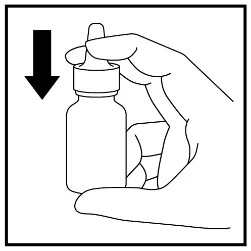
Figure 1
If the nasal spray has not been used for 14 days or more, re-prime by pressing the bottle 2 times until a fine mist is produced.
How long does a package last?
If the patient uses two sprays into each nostril once daily, the medicine will last for 15 days (for bottles containing 60 metered doses), 30 days (for bottles containing 120 metered doses), or 35 days (for bottles containing 140 metered doses).
How to use the nasal spray
- Shake the bottle vigorously and remove the cap (Figure 2).
| Nozzle Dispenser tip Bottle | Figure 2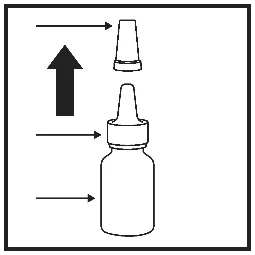 |
- Gently blow your nose.
- Close one nostril and insert the applicator tip into the other nostril, as shown in the figure (Figure 3). Tilt your head slightly forward, keeping the bottle in an upright vertical position. The applicator tip should be directed toward the nostril sidewall, not inward (i.e., not toward the nasal septum).
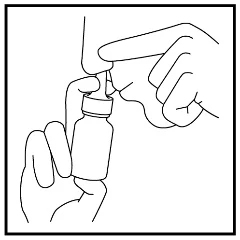
Figure 3
- Begin a slow nasal inhalation, during which press down ONCE with your fingers to spray a fine mist of the aerosol into the nostril (Figure 4).
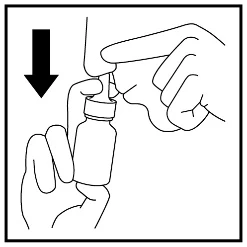
Figure 4
- Exhale through your mouth, then repeat the steps described in point 4 to administer a second dose of the aerosol into the same nostril, if necessary.
- Remove the applicator tip from the nostril and exhale through your mouth.
- Repeat the steps described in points 3–6 to administer the aerosol into the other nostril (Figure 5).
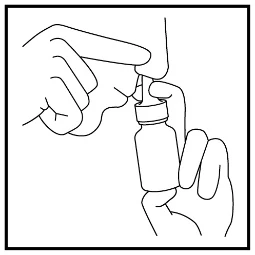
Figure 5
After using the aerosol, gently wipe the applicator tip with a clean tissue or cloth and replace the cap to prevent dust from entering.
Cleaning the nasal aerosol bottle
- The nasal aerosol bottle should be cleaned regularly, otherwise it may not function properly.
- Remove the cap (Figure 6) and gently pull off the applicator tip (Figure 7).
| Cap | Figure 6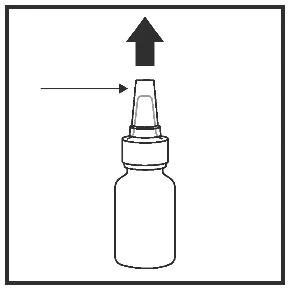 | Dispenser tip | Figure 7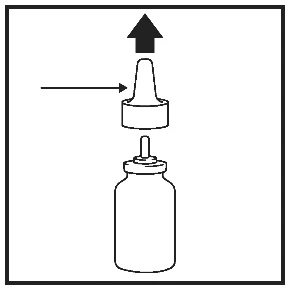 |
- Wash the nozzle (Figure 8) and the dispenser tip (Figure 9) with warm water, then rinse under running water.
| Adapter | Figure 8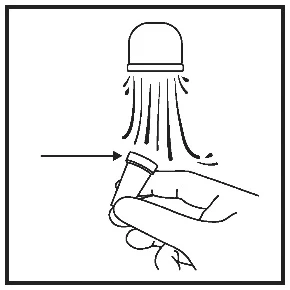 | Dosing tip | Figure 9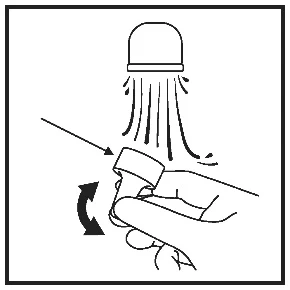 |
- Do not attempt to unblock the nasal applicator by inserting a pin or any other sharp object, as this will damage the applicator and may result in not receiving the correct dose of the medicine.
- Leave the protective cap and the spray nozzle in a warm place to dry.
- Attach the spray nozzle to the bottle (Figure 10), then insert the cap (Figure 11).
| Central aperture Applicator tip Dispensing system | Figure 10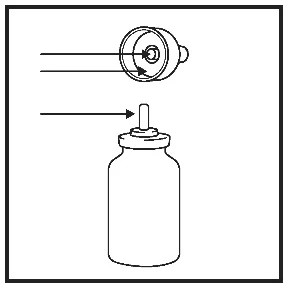 | Figure 11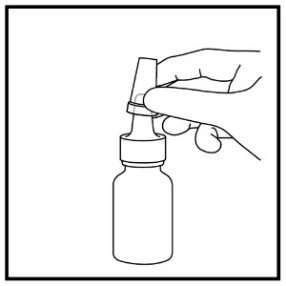 |
- After cleaning, check that the dispenser is working properly and spray the aerosol twice (Figure 12).
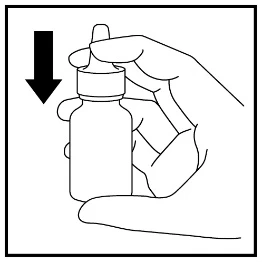
Figure 12
Use of a higher than recommended dose of Pronasal Control
Consult a doctor if you have accidentally used more of the medicine than recommended.
If steroids are used for a prolonged period or in high doses, they may rarely have an adverse effect on the patient's hormones. In children, they may affect growth and development.
Missing a dose of Pronasal Control
If the patient forgets to use the nasal aerosol at the usual time, they should take it as soon as they remember, then continue treatment at the usual time. Do not use a double dose to make up for a missed dose.
Stopping treatment with Pronasal Control
In some patients, improvement occurs within 12 hours after the first dose of Pronasal Control, although full benefits of treatment may not be evident until after 2 days of use. It is very important that the patient uses the nasal aerosol regularly. Do not stop treatment even if the patient feels better, unless the doctor has specifically advised to do so.
If there are any further doubts regarding the use of the medicine, consult a doctor or pharmacist.
4. Possible adverse effects
Like all medicines, this medicine can cause adverse effects, although not everyone will experience them.
Immediate hypersensitivity (allergic) reactions may occur after using the medicine. These reactions
can be severe. You must stop using Pronasal Control and seek immediate medical help if you experience symptoms such as:
- swelling of the face, tongue or throat
- difficulty swallowing
- urticaria (hives)
- wheezing or breathing difficulties.
When nasal corticosteroid aerosols are used at high doses over a long period, adverse effects may occur due to systemic absorption of the medicine.
Other adverse effects
Most people do not report any adverse effects after using a nasal aerosol.
However, the following adverse effects have been reported in some individuals after using Pronasal Control or another corticosteroid nasal aerosol:
Common adverse effects (may affect up to 1 in 10 people):
- headache
- sneezing and irritation/burning of the nasal mucosa
- nosebleeds [occurred very commonly (may affect more than 1 in 10 people) in patients with nasal polyps who used two doses of Pronasal Control in each nostril twice daily]
- pain in the nose or throat
- nasal mucosal ulceration
- upper respiratory tract infection
Frequency unknown (frequency cannot be estimated from available data):
- increased intraocular pressure (glaucoma) and/or cataract causing visual disturbances
- damage to the nasal septum separating the nostrils
- disturbances in taste and smell
- breathing difficulties and/or wheezing
- blurred vision
Reporting of adverse effects
If any adverse effects occur, including any not listed in this leaflet, tell your doctor, pharmacist or nurse. Adverse effects can also be reported directly to the Department of Monitoring of Adverse Drug Reactions, Office for Registration of Medicinal Products, Medical Devices and Biocidal Products, Al. Jerozolimskie 181C, 02-222 Warsaw
Tel.: +48 22 49 21 301
Fax: +48 22 49 21 309
Website: https://smz.ezdrowie.gov.pl
Adverse effects can also be reported to the marketing authorization holder.
Reporting adverse effects helps to provide more information on the safety of the medicine.
5. How to store Pronasal Control
Keep the medicine out of the sight and reach of children.
Do not use this medicine after the expiry date stated on the bottle and carton:
{Expiry date (EXP):} or {EXP:}. The expiry date refers to the last day of the stated month.
Do not store above 25°C. Do not freeze.
Period of validity after first use: 8 weeks
Medicines must not be disposed of via wastewater or household waste. Ask your pharmacist
how to dispose of medicines no longer required. This will help protect the environment.
6. Contents of the package and other information
What Pronasal Control contains
- The active substance is mometasone furoate. Each dose (0.1 ml) contains 50 micrograms of mometasone furoate (as mometasone furoate monohydrate). The total mass of one dose is 100 mg.
- Other ingredients are: microcrystalline cellulose and sodium carmellose (Avicel RC-591), glycerol, benzalkonium chloride solution, polysorbate 80, citric acid monohydrate, sodium citrate, water for injections.
What Pronasal Control looks like and contents of the pack
Pronasal Control is a nasal spray, suspension.
Each bottle contains 60, 120 or 140 doses of the medicinal product.
Not all pack sizes may be marketed.
Marketing Authorisation Holder:
Teva B.V.
Swensweg 5
2031 GA Haarlem
The Netherlands
Manufacturer:
Teva Czech Industries s.r.o.
Ostravská 305/29, Komárov, 747 70 Opava,
Czech Republic
Merckle GmbH
Ludwig-Merckle-Str.3
89143 Blaubeuren
Germany
For further information about this medicinal product, please contact the representative of the Marketing Authorisation Holder:
Teva Pharmaceuticals Polska Sp. z o.o.
ul. Emilii Plater 53
00-113 Warsaw
Tel.: (22) 345 93 00
This medicinal product is authorised in the European Economic Area countries under the following names:
Belgium: Mometeva 50 microgram/spray, nasal spray, suspension
Germany: Mometason-ratiopharm Heuschnupfenspray
Poland: Pronasal Control
Detailed and up-to-date information on this medicinal product is available by scanning with a smartphone the QR code located on the Package Leaflet. The same information is also available on the website:
http://tevamed.pl/tevamed/Materials_educational/Pronasal_Control-
educational_material_for_patient.pdf
2D