Primolut-nor
Poland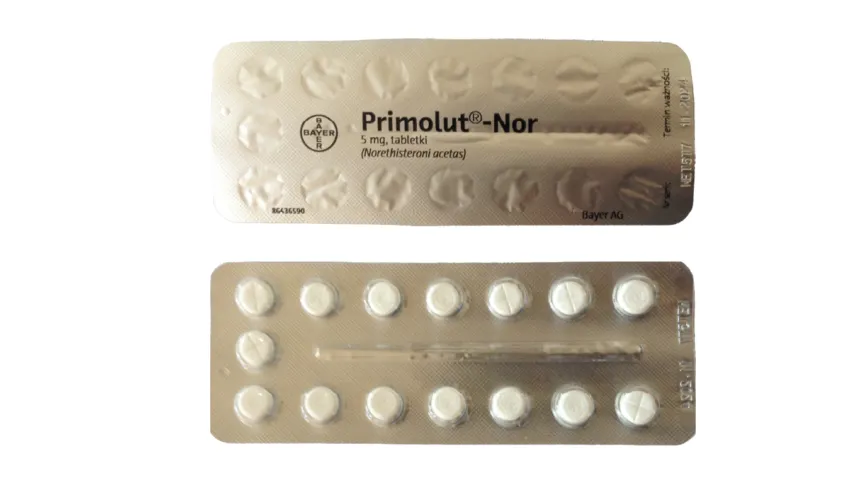
Table of Contents
Package leaflet: information for the patient
Warning! Keep this leaflet. Information on the immediate packaging in a foreign language.
Primolut-Nor
5 mg, tablets
Norethisterone acetate
Please read this leaflet carefully before taking the medicine, as it contains
important information for the patient.
- Keep this leaflet, so that you can read it again if necessary.
- If you have any doubts, please consult your doctor or pharmacist.
- This medicine has been prescribed for a specific individual. Do not pass it on to others. The medicine may harm another person, even if their symptoms are the same.
- If you experience any adverse effects, including any not listed in this leaflet, inform your doctor, pharmacist or nurse. See section 4.
Contents of the leaflet:
- What Primolut-Nor is and what it is used for
- Important information before taking Primolut-Nor
- How to take Primolut-Nor
- Possible side effects
- How to store Primolut-Nor
- Contents of the pack and other information
1. What Primolut-Nor is and what it is used for
Primolut-Nor contains a progestogen (noretisterone acetate), a synthetic analogue of the natural
female hormone (progesterone).
Indications for Primolut-Nor
Bleeding due to functional disorders, endometriosis.
2. Important information before taking Primolut-Nor
Do not take Primolut-Nor if any of the conditions described below apply.
If any of the following conditions occur during treatment with Primolut-Nor, treatment must be
discontinued immediately.
When not to take Primolut-Nor
- if you are allergic to the active substance or to any of the other ingredients of this medicine (listed in section 6);
- if pregnancy has been confirmed or is suspected;
- if you are breastfeeding;
- if there are current or past venous or arterial thromboembolic disorders (e.g. deep vein thrombosis, pulmonary embolism, myocardial infarction) or stroke;
- if there have been or currently are symptoms suggestive of thrombosis (e.g. transient ischaemic attack, angina pectoris);
- if there have been or currently are cerebrovascular incidents;
- if there is a serious risk factor or multiple risk factors for venous or arterial thrombosis;
- if you have had migraine with focal neurological symptoms such as visual disturbances, speech disorders, numbness or partial paralysis;
- if you have diabetes with vascular complications;
- if you have severe liver disease (until liver function tests return to normal);
- if you have had or currently have benign or malignant liver tumours;
- if you have or have had hormone-dependent cancer (e.g. breast or genital organ cancer).
Do not take Primolut-Nor if you have hepatitis C and are taking antiviral medications
containing ombitasvir + paritaprevir + ritonavir and dasabuvir (see also section “Primolut-Nor and
other medicines”).
Warnings and precautions
Before starting Primolut-Nor, discuss this with your doctor or pharmacist.
The sex hormone (progesterone) contained in this medicine is partially converted into
oestrogen. Therefore, in addition to warnings related to the use of Primolut-Nor, general
warnings related to combined oral contraceptives should also be considered.
If Primolut-Nor is used in any of the following conditions, special and regular medical monitoring is
required. Therefore, before starting Primolut-Nor, you should inform your doctor if you have:
- a history of smoking,
- diabetes (a metabolic disorder with elevated blood glucose levels),
- obesity,
- high blood pressure,
- heart valve disease or cardiac arrhythmias,
- superficial thrombophlebitis,
- varicose veins,
- history of thrombosis, myocardial infarction or stroke in close relatives,
- migraine,
- epilepsy,
- elevated blood lipid levels (hypertriglyceridaemia) or a positive family history of this condition. Hypertriglyceridaemia is associated with an increased risk of pancreatitis,
- family history of breast cancer,
- depression,
- liver or gallbladder disease,
- Crohn's disease or ulcerative colitis (chronic inflammatory bowel diseases),
- systemic lupus erythematosus (SLE),
- haemolytic-uraemic syndrome (a blood clotting disorder leading to kidney failure),
- sickle cell anaemia,
- diseases that first occurred or worsened during pregnancy or previous use of steroid hormones (e.g. hearing loss, herpes gestationis, Sydenham's chorea),
- skin pigmentation disorders (yellowish-brown pigment changes, so-called chloasma) currently or in the past; excessive exposure to sunlight or ultraviolet radiation should be avoided,
- hereditary angioedema. If symptoms of angioedema occur, such as swelling of the face, tongue or throat and (or) difficulty swallowing or urticaria with breathing difficulties, consult a doctor immediately (oestrogens may induce or worsen symptoms of this condition).
If any of the above-mentioned symptoms occur for the first time, recur or worsen
during treatment with Primolut-Nor, contact your doctor.
Oral contraception and thrombosis
Thrombosis involves the formation of a blood clot that may block blood vessels.
Epidemiological studies indicate that the use of combined oral contraceptives containing
oestrogen/progestogen is associated with an increased frequency of thromboembolic
complications compared to women not using any oral contraceptives.
Thrombosis sometimes occurs in the deep veins of the lower limbs (deep vein thrombosis).
If a fragment of the clot detaches from its site of formation, it may block arteries in the lungs, leading to
pulmonary embolism. Deep vein thrombosis is rare; it may occur even without taking medication, e.g. during pregnancy.
The risk of thrombosis is higher in women using hormonal medicines than in others, but not as high
as during pregnancy.
The risk of thromboembolic disease is increased in the postpartum period.
Clots may also, although very rarely, occur in blood vessels of the heart (causing
myocardial infarction) or brain (causing stroke). Exceptionally rarely, they may occur in the liver,
intestine, kidney or eye.
When to contact your doctor
- Regular check-ups. While taking Primolut-Nor, your doctor will inform you about the need for regular medical examinations.
- Contact your doctor immediately if:
- you notice worrying changes in your health, especially those mentioned in this leaflet (see also “When not to take Primolut-Nor” and “Warnings and precautions”. Also remember the points concerning close relatives);
- you detect a lump in your breast;
- you plan to take other medicines (see also “Primolut-Nor and other medicines”);
- immobilisation is expected or surgery is planned (inform your doctor at least 4 weeks in advance);
- you experience heavy vaginal bleeding.
- Discontinue Primolut-Nor immediately and consult your doctor if you notice potential symptoms of thrombosis:
- cough without apparent cause;
- pain or pressure in the chest, possibly radiating to the left arm;
- shortness of breath;
- more frequent, unusually severe or prolonged headaches or migraine attack;
- partial or complete loss of vision or double vision;
- slurred speech or loss of speech;
- sudden sensory disturbances (hearing, smell or touch);
- dizziness or fainting;
- numbness or weakness of part of the body;
- severe pain or swelling in the legs.
- Also discontinue Primolut-Nor and contact your doctor as soon as possible if you notice the following symptoms:
- jaundice (yellowing of the skin or whites of the eyes – may be symptoms of hepatitis);
- severe, generalized itching;
- high blood pressure;
- pregnancy.
The situations and symptoms listed above are described in more detail in other
sections of this leaflet.
Occasionally, thrombosis may lead to disability or death.
The risk of venous or arterial thromboembolic complications, thromboembolic disorders or
cerebrovascular incidents increases with:
- age;
- overweight;
- family history of thrombosis in leg, lung (pulmonary embolism) or other organ at a young age;
- family history of myocardial infarction or stroke at a young age;
- need for surgery, prolonged immobilisation, or serious accident. It is important to inform your doctor that you are taking Primolut-Nor, as it may be necessary to discontinue the medicine. Your doctor will advise when to restart Primolut-Nor. This is usually about 2 weeks after resuming mobility.
- smoking. It is recommended to stop smoking when taking Primolut-Nor, especially if over 35 years of age;
- increased blood lipid levels (cholesterol or triglycerides);
- high blood pressure;
- migraine;
- heart problems (valvular disease, cardiac arrhythmias).
If symptoms suggesting thrombosis occur, stop taking the tablets and
consult your doctor immediately (see “When to contact your doctor”).
Oral contraception and cancer
Breast cancer occurs slightly more frequently in women taking combined oral contraceptives
than in women of the same age who do not use them. It is not known whether this difference is
solely due to the use of hormonal contraceptives. It may also be due to the fact that women using hormonal contraception are examined more frequently and breast cancer is detected earlier.
The difference in breast cancer incidence gradually decreases and disappears within 10 years after discontinuation of combined oral contraceptives. Regularly examine your breasts and contact your doctor if you feel any lump.
Benign or, even more rarely, malignant liver tumours have been reported rarely in women taking combined oral contraceptives, which may lead to life-threatening intra-abdominal bleeding. If you experience severe upper abdominal pain, inform your doctor as soon as possible.
There are reports of increased incidence of cervical cancer in women who have used oral contraceptives for a long time. However, this association may not be related to taking the tablets, but rather to sexual behaviour or other factors such as infection with human papillomavirus.
Primolut-Nor and other medicines
Inform your doctor about all medicines you are currently taking or have recently taken, as well as any medicines you plan to take. Your doctor will advise whether additional contraceptive methods are needed and, if so, for how long.
Some medicines may affect the blood concentration of Primolut-Nor, may reduce its
effectiveness and may cause unexpected bleeding.
These include:
- medicines used to treat:
- epilepsy (e.g. primidone, phenytoin, barbiturates, carbamazepine, oxcarbazepine, topiramate, felbamate)
- tuberculosis (e.g. rifampicin)
- HIV infection or hepatitis C virus (protease inhibitors or non-nucleoside reverse transcriptase inhibitors such as ritonavir, nevirapine, efavirenz)
- fungal infections (griseofulvin, azole antifungals such as itraconazole, voriconazole, fluconazole)
- bacterial infections (macrolide antibiotics such as clarithromycin, erythromycin)
- certain heart diseases, hypertension (calcium channel blockers such as verapamil, diltiazem)
- arthritis, osteoarthritis (etoricoxib)
- pulmonary hypertension (bosentan)
- herbal preparations containing St. John's wort ( Hypericum perforatum ), mainly used for treating depressive mood
- grapefruit juice
Primolut-Nor may affect the action of other medicines, e.g.:
- those containing cyclosporine
- antiepileptic - lamotrigine (may lead to increased frequency of seizures)
- theophylline (used for breathing problems)
- tizanidine (used to treat muscle pain and (or) muscle spasms)
Do not take Primolut-Nor if you have hepatitis C and are taking antiviral
medications containing ombitasvir + paritaprevir + ritonavir and dasabuvir, as this may
cause elevated liver function test results (increased liver enzyme AlAT activity). Primolut-Nor may be restarted approximately 2 weeks after
completion of antiviral treatment. See section “When not to take Primolut-Nor”.
Laboratory tests
Before undergoing blood tests, inform your doctor or laboratory staff that you are taking Primolut-Nor, as it may affect test results.
Primolut-Nor with food and drink
Tablets should be swallowed whole, with a small amount of liquid.
Pregnancy and breastfeeding
If you are pregnant or breastfeeding, suspect you may be pregnant, or are planning to have a
child, consult your doctor before using this medicine.
The use of Primolut-Nor during pregnancy is contraindicated.
Primolut-Nor should not be used during breastfeeding.
Driving and operating machinery
The effect of Primolut-Nor on the ability to drive and operate machinery is unknown.
Primolut-Nor contains monohydrate lactose
If you have previously been diagnosed with intolerance to certain sugars, you should
consult your doctor before taking this medicine.
3. How to use Primolut-Nor
This medicine should always be used as directed by the physician. If in doubt, consult your doctor.
The tablets should be swallowed whole with a small amount of liquid.
If contraceptive protection is required, non-hormonal contraceptive methods (e.g. condoms) should be used instead of hormonal contraceptives. If there is suspicion that a woman may be pregnant despite using contraception, treatment with this medicine should be discontinued until the situation is clarified.
How to use Primolut-Nor
- Dysfunctional uterine bleeding
Take 1 tablet of Primolut-Nor 3 times daily for 10 days. In most cases, this will stop uterine bleeding not associated with organic pathology within 1 to 3 days. However, to ensure effective treatment, tablets of Primolut-Nor should be taken for the full 10-day period. Withdrawal bleeding comparable in amount and duration to normal menstrual bleeding usually occurs 2 to 4 days after stopping treatment.
Occasionally, slight bleeding may occur after initial cessation of bleeding. In such cases, continue taking the medicine as prescribed.
If vaginal bleeding does not stop despite correct use of the medicine, other conditions should be considered. Appropriate investigations are recommended in such cases. This also applies to cases where relatively heavy bleeding recurs during tablet intake after an initial cessation of bleeding.
If bleeding does not stop, contact your doctor.
To prevent recurrence of dysfunctional bleeding in patients with anovulatory cycles, Primolut-Nor may be used prophylactically (1 tablet 1 to 2 times daily from day 16 to day 25 of the cycle (day 1 of cycle = day 1 of last menstrual period)). Withdrawal bleeding usually occurs several days after taking the last tablet.
- Endometriosis
Treatment should begin between day 1 and day 5 of the cycle, with 1 tablet of Primolut-Nor taken twice daily. In case of spotting, the dose may be increased to 2 tablets taken twice daily. If bleeding stops, consider reducing the dose back to the initial dose. Treatment should be continued for at least 4 to 6 months. With uninterrupted use of the medicine, ovulation and menstruation typically do not occur.
If you feel the effect of the medicine is too strong or too weak, consult your doctor.
Taking more Primolut-Nor than recommended
There are no reports of severe adverse effects following the ingestion of multiple tablets of Primolut-Nor at once. If a higher dose than recommended has been taken, or if someone else has taken the medicine, inform your doctor.
Missed dose of Primolut-Nor
Do not take a double dose to make up for a missed dose.
The effectiveness of Primolut-Nor may be reduced if a dose is missed according to the instructions. If a dose is missed, take the last missed tablet as soon as possible, and take the next tablet at the usual time.
Stopping Primolut-Nor
If you have any further questions about the use of this medicine, consult your doctor or pharmacist.
The medicine may be discontinued at any time. There are no specific withdrawal symptoms associated with stopping Primolut-Nor. However, there is a possibility of recurrence of the initial symptoms.
4. Possible adverse reactions
Like all medicines, Primolut-Nor may cause adverse reactions, although not everyone experiences them.
If any of the adverse symptoms worsen or if any adverse reactions not listed in this leaflet occur, inform your doctor or pharmacist.
Adverse reactions occur more frequently during the first few months of treatment with Primolut-Nor and usually subside during continued treatment. In addition to the adverse reactions mentioned in the section "Warnings and precautions", the following adverse reactions have been observed in patients treated with Primolut-Nor, although in some cases a causal relationship with the use of the medicine could not be confirmed.
The adverse reactions listed below are categorized by organ systems and frequency of occurrence.
Very common (occur in 10 or more out of 100 people)
- uterine/vaginal bleeding, including spotting,
- hypomenorrhea (scanty menstrual periods).
Common (occur in 1 to 10 out of 100 people)
- headache,
- nausea,
- absence of bleeding,
- swelling.
Uncommon (occur in 1 to 10 out of 1,000 people)
- migraine.
Rare (occur in 1 to 10 out of 10,000 people)
- hypersensitivity reactions,
- urticaria,
- rash.
Very rare (occur in less than 1 out of 10,000 people)
- visual disturbances,
- dyspnoea (in the indication "endometriosis").
Reporting of adverse reactions
If any adverse reactions occur, including those not listed in this leaflet, inform your doctor, pharmacist or nurse. Adverse reactions can be reported directly to the Department of Monitoring of Adverse Drug Reactions of the Office for Registration of Medicinal Products, Medical Devices and Biocidal Products:
Al. Jerozolimskie 181C, 02-222 Warsaw, tel.: 22 49-21-301
fax: 22 49-21-309, website: https://smz.ezdrowie.gov.pl
Reporting adverse reactions helps to provide more information on the safety of the medicine.
5. How to store Primolut-Nor
Keep out of the sight and reach of children.
Store in the original packaging to protect from light.
Do not use after the expiry date stated on the packaging. The expiry date refers to the last day of the stated month.
Medicines should not be disposed of via wastewater or household waste. Ask your pharmacist how to dispose of medicines no longer in use. This will help protect the environment.
6. Contents of the package and other information
What Primolut-Nor contains
- The active substance is 5 mg of norethisterone acetate ( Norethisteroni acetas ).
- The other ingredients are: monohydrate lactose, corn starch, povidone 25000, talc, magnesium stearate.
What Primolut-Nor looks like and contents of the pack
Primolut-Nor tablets are white, round, with a cross mark on one side.
Packaging containing 30 tablets in a cardboard box is available.
For further detailed information, please contact the responsible party or parallel importer:
Responsible party in Spain, country of export:
Bayer Hispania, S.L.
Av. Baix Llobregat, 3 - 5
08970 Sant Joan Despí – Barcelona
Spain
Manufacturer:
Bayer Weimar GmbH und Co. KG
Döbereiner Str. 20
99427 Weimar
Germany
Parallel importer:
Delfarma Sp. z o.o.
ul. Św. Teresy od Dzieciątka Jezus 111
91-222 Łódź
Repackaged in:
Delfarma Sp. z o.o.
ul. Św. Teresy od Dzieciątka Jezus 111
91-222 Łódź
Spanish marketing authorization number, country of export: 724247.5
Parallel import authorization number: 133/22