Prestilol
Poland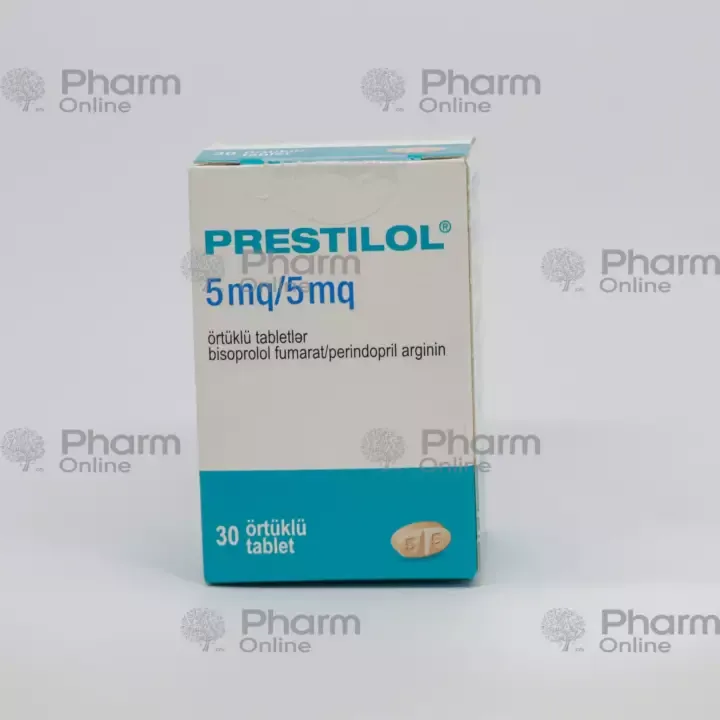
Table of Contents
Package leaflet: information for the patient
Prestilol
5 mg + 10 mg, film-coated tablets
Bisoprolol fumarate + Perindopril arginine
Please read the entire leaflet carefully before taking this medicine, as it contains
important information for the patient.
- Keep this leaflet, as you may need to read it again.
- If you have any further questions, please ask your doctor, pharmacist, or nurse.
- This medicine has been prescribed for a specific individual. Do not pass it on to others. It may harm someone else, even if their symptoms are the same.
- If you experience any adverse effects, including any not listed in this leaflet, tell your doctor, pharmacist, or nurse. See section 4.
Leaflet contents:
- What Prestilol is and what it is used for
- Important information before taking Prestilol
- How to take Prestilol
- Possible side effects
- How to store Prestilol
- Contents of the pack and other information
1. What Prestilol is and what it is used for
Prestilol contains two active substances in one tablet: bisoprolol fumarate and perindopril arginine.
- Bisoprolol fumarate belongs to a group of medicines called beta-blockers. Beta-blockers slow down the heart rate and make the heart more efficient at pumping blood throughout the body.
- Perindopril arginine is an angiotensin-converting enzyme (ACE) inhibitor. It works by relaxing blood vessels, making it easier for the heart to pump blood.
Prestilol is used to treat high blood pressure (hypertension) and/or to reduce the risk of cardiovascular events such as heart attack in patients with stable coronary artery disease (a condition in which blood supply to the heart is reduced or blocked), who have previously had a heart attack and/or undergone a procedure to improve blood supply to the heart by widening the blood vessels that supply it.
Instead of taking bisoprolol fumarate and perindopril arginine in separate tablets, the patient will take a single Prestilol tablet containing both active substances in the same amounts.
2. Important information before using Prestilol
When not to use Prestilol:
- if the patient is allergic to bisoprolol or any other beta-blocker, to perindopril or any other ACE inhibitor, or to any of the other ingredients of this medicine (listed in section 6);
- if the patient has heart failure which has suddenly worsened and (or) requires hospital treatment;
- if the patient has cardiogenic shock (a severe heart condition causing very low blood pressure);
- if the patient has a heart disease characterised by slow or irregular heartbeat (second- or third-degree atrioventricular block, sinoatrial block, sick sinus syndrome);
- if the patient has a slow heart rate;
- if the patient has very low blood pressure;
- if the patient has severe asthma or severe chronic lung disease;
- if the patient has severe circulatory problems in the limbs (such as Raynaud's syndrome), which may cause tingling, paleness or blueness of the fingers of the hands and feet;
- if the patient has an untreated chromaffin tumour, a rare tumour of the adrenal gland;
- if the patient has metabolic acidosis, a condition in which the blood contains too much acid;
- if during previous treatment with an ACE inhibitor the patient experienced symptoms such as: wheezing, swelling of the face, tongue or throat, severe itching or severe skin rash, or if such symptoms occurred in a blood relative under any circumstances (a condition called angioedema);
- if the patient is more than 3 months pregnant (it is also advisable to avoid using Prestilol during early pregnancy - see section "Pregnancy");
- if the patient has diabetes or kidney problems and is being treated with a blood pressure-lowering medicine containing aliskiren;
- if the patient is undergoing dialysis or blood filtration by another method. Depending on the device used, Prestilol may not be suitable for the patient;
- if the patient has kidney disorders causing reduced blood supply to the kidneys (renal artery stenosis);
- if the patient has taken or is currently taking a combination medicine containing sacubitril and valsartan, used to treat heart failure, as this increases the risk of angioedema (rapid swelling of the tissues under the skin in the throat area) (see "Warnings and precautions" and "Prestilol with other medicines").
Warnings and precautions
Before starting to take Prestilol, discuss this with your doctor or pharmacist if:
- the patient has diabetes;
- the patient has kidney problems (this also applies to patients who have had a kidney transplant) or is undergoing dialysis;
- liver problems occur;
- the patient has been diagnosed with narrowing of the aortic and mitral valves (narrowing of the main blood vessel leading from the heart), hypertrophic cardiomyopathy (a heart muscle disease) or renal artery stenosis (arteries supplying blood to the kidneys);
- the patient has abnormally increased levels of a hormone called aldosterone in the blood (primary hyperaldosteronism);
- the patient has heart failure or any other heart disease, such as heart rhythm disorders or severe chest pain at rest (Prinzmetal's angina);
- the patient has been diagnosed with collagenosis (connective tissue disease), such as systemic lupus erythematosus or scleroderma;
- the patient is on a low-salt diet or uses salt substitutes containing potassium (excess potassium in the blood may cause changes in heart rate);
- the patient has recently had diarrhoea or vomiting, or the patient is dehydrated (Prestilol may cause a drop in blood pressure);
- the patient is undergoing LDL apheresis (removal of cholesterol from the blood using a special device);
- the patient is undergoing desensitisation treatment to reduce allergic reactions to bee and wasp stings;
- the patient is fasting or on a diet;
- the patient is undergoing anaesthesia and (or) surgery;
- the patient has circulatory problems in the limbs;
- the patient has asthma or chronic lung disease;
- the patient has (or has had) psoriasis;
- the patient has an adrenal gland tumour (pheochromocytoma);
- the patient has thyroid disorders (Prestilol may mask symptoms of hyperthyroidism);
- angioedema occurs (a severe allergic reaction characterised by: swelling of the face, lips, tongue or throat, difficulty swallowing or breathing). This reaction may occur at any time during treatment. If the patient experiences such symptoms, the use of Prestilol should be stopped immediately and the doctor contacted without delay.
- in black patients, there is a higher risk of developing angioedema, and this medicine may be less effective in lowering blood pressure than in patients of other races.
- the patient is taking any of the following medicines used to treat high blood pressure:
- angiotensin II receptor antagonist (ARB) (also known as sartans - for example, valsartan, telmisartan, irbesartan), especially if the patient has kidney problems related to diabetes;
- aliskiren. The treating doctor may monitor kidney function, blood pressure and blood electrolyte levels (e.g. potassium) at regular intervals. See also information under the heading "When not to use Prestilol".
- the patient is taking any of the following medicines, which increase the risk of angioedema:
- racecadotril (used to treat diarrhoea);
- sirolimus, everolimus, temsirolimus and other medicines belonging to the group of medicines known as mTOR inhibitors (used to prevent rejection of transplanted organs and in cancer treatment);
- sacubitril (available in a combination medicine containing sacubitril and valsartan), used to treat chronic heart failure;
- linagliptin, saxagliptin, sitagliptin, vildagliptin and other medicines belonging to the group of medicines known as gliptins (used to treat diabetes).
Do not stop taking Prestilol suddenly, as this may cause a severe worsening of heart function. Treatment should not be stopped abruptly, especially in patients with coronary heart disease.
The patient should inform the doctor if she thinks she is (or may be) pregnant. Prestilol is not recommended during early pregnancy and must not be taken if the patient is more than 3 months pregnant, as the medicine may cause serious harm to the unborn child if used during this period (see section "Pregnancy").
Children and adolescents
Prestilol is not recommended for use in children and adolescents under 18 years of age.
Prestilol with other medicines
Tell your doctor or pharmacist about all medicines the patient is currently taking or has recently taken, as well as any medicines the patient plans to take.
The action of Prestilol may be affected by other medicines, or Prestilol may alter the action of other preparations. This type of interaction may cause one or both medicines to be less effective. It may also increase the risk or severity of adverse effects.
Tell your doctor if the patient is taking any of the following medicines:
- medicines used to control blood pressure or heart diseases (such as amiodarone, amlodipine, clonidine, digitalis glycosides, diltiazem, disopyramide, felodipine, flecainide, lidocaine, methyldopa, moxonidine, procainamide, propafenone, quinidine, rilmenidine, verapamil);
- other medicines used to treat high blood pressure, including angiotensin II receptor antagonists (ARB), aliskiren (see also information under the heading "When not to use Prestilol" and "Warnings and precautions") or diuretics (medicines that increase the amount of urine produced by the kidneys);
- potassium-sparing medicines (e.g. triamterene, amiloride), potassium supplements or salt substitutes containing potassium, other medicines that may increase potassium levels in the body (such as heparin, a medicine used to thin the blood to prevent blood clots; trimethoprim and co-trimoxazole, also known as a combination medicine containing trimethoprim and sulfamethoxazole, used to treat bacterial infections);
- potassium-sparing medicines used to treat heart failure: eplerenone and spironolactone at doses of 12.5 mg to 50 mg per day;
- sympathomimetic medicines used to treat shock (adrenaline, noradrenaline, dobutamine, isoprenaline, ephedrine);
- estramustine used to treat cancer;
- medicines most commonly used to treat diarrhoea (racecadotril) or to prevent rejection of transplanted organs (sirolimus, everolimus, temsirolimus and other medicines belonging to the group of medicines known as mTOR inhibitors). See section "Warnings and precautions".
- a combination medicine containing sacubitril and valsartan (used to treat chronic heart failure). See sections "When not to use Prestilol" and "Warnings and precautions".
- lithium used to treat mania or depression;
- certain medicines used to treat depression, such as imipramine, amitriptyline, monoamine oxidase inhibitors (MAO inhibitors; except MAO-B inhibitors);
- certain medicines used to treat schizophrenia (antipsychotics);
- certain medicines used to treat epilepsy (phenytoin, barbiturates such as phenobarbital);
- anaesthetics used in surgical procedures;
- vasodilators, including nitrates (medicines that cause blood vessels to widen);
- trimethoprim used to treat infections;
- immunosuppressive medicines (reducing the body's immune response), such as cyclosporine, tacrolimus, used to treat autoimmune disorders or after organ transplantation;
- allopurinol used to treat gout;
- parasympathomimetic medicines used to treat conditions such as Alzheimer's disease or glaucoma;
- locally applied beta-blockers used to treat glaucoma (increased eye pressure);
- mefloquine used to prevent or treat malaria;
- baclofen used to treat muscle stiffness in diseases such as multiple sclerosis;
- gold salts, particularly when administered intravenously (used to treat symptoms of rheumatoid arthritis);
- medicines used to treat diabetes, such as insulin, metformin, linagliptin, saxagliptin, sitagliptin, vildagliptin;
- non-steroidal anti-inflammatory drugs (NSAIDs), such as ibuprofen, diclofenac or high doses of acetylsalicylic acid, used to treat joint inflammation, headache, pain or inflammatory conditions.
Prestilol with food and drink
It is recommended to take Prestilol before a meal.
Pregnancy and breastfeeding
If the patient is pregnant or breastfeeding, suspects she may be pregnant, or is planning to have a child, she should consult her doctor or pharmacist before using this medicine.
Pregnancy
The patient should inform the doctor if she thinks she is (or may be) pregnant. Usually, the doctor will recommend discontinuing Prestilol before conception or as soon as the patient finds out she is pregnant, and will recommend taking another medicine instead of Prestilol. Prestilol is not recommended during early pregnancy and must not be taken if the patient is more than 3 months pregnant, as the medicine may cause serious harm to the unborn child if used after the third month of pregnancy.
Breastfeeding
The patient should inform the doctor if she is breastfeeding or starts breastfeeding. Prestilol is not recommended for mothers who are breastfeeding, and the doctor may choose another treatment method if the patient wishes to breastfeed, especially if the child is a newborn or was born prematurely.
Driving and operating machinery
Prestilol usually does not affect alertness, but in some patients dizziness or weakness related to low blood pressure may occur, especially at the beginning of treatment or after a change in medication or in combination with alcohol. In such a situation, the ability to drive and operate machinery may be impaired.
Prestilol contains sodium
Prestilol contains less than 1 mmol of sodium (23 mg) per tablet, which means the medicine is considered "sodium-free".
3. How to use Prestilol
This medicine should always be used exactly as directed by a doctor or pharmacist. If in doubt,
consult a doctor or pharmacist.
The recommended dose is one tablet once daily. The tablet should be swallowed with a glass of water,
in the morning before food.
In some cases, the doctor may recommend half a tablet of Prestilol once daily, in the morning before
food.
Patients with kidney disease
Prestilol is not recommended for patients with moderate or severe kidney disease.
Use in children and adolescents
Use in children and adolescents is not recommended.
Taking more Prestilol than recommended
If too many tablets are taken, contact a doctor or pharmacist immediately.
The most likely symptoms of overdose are low blood pressure, which may cause dizziness or fainting (if this occurs, placing the patient with elevated legs may be helpful), severe breathing difficulties, tremor (due to decreased blood sugar levels), and slowed heart rate.
Missed dose of Prestilol
It is important to take the medicine regularly every day for optimal effectiveness. If a dose of Prestilol is missed, the next dose should be taken at the usual time. A double dose should not be taken to make up for the missed dose.
Stopping Prestilol treatment
Do not stop treatment with Prestilol suddenly or change the dose without consulting a doctor, as this may lead to a significant worsening of heart function. Therapy should not be stopped abruptly, especially in patients with coronary artery disease.
If there are any further doubts regarding the use of this medicine, consult a doctor, pharmacist, or nurse.
4. Possible adverse reactions
Like all medicines, this medicine can cause adverse reactions, although not everyone experiences them.
You must stop taking this medicine and contact your doctor immediately if any of the following
adverse reactions occur:
- severe dizziness or fainting caused by low blood pressure (common – may occur in up to 1 in 10 patients);
- worsening of heart failure causing significant shortness of breath and/or fluid retention in the body (common – may occur in up to 1 in 10 patients);
- swelling of the face, lips, mouth, tongue or throat, difficulty breathing (angioedema; uncommon – may occur in up to 1 in 100 patients);
- sudden onset of wheezing, chest pain, shortness of breath or difficulty breathing (bronchospasm; uncommon – may occur in up to 1 in 100 patients);
- extremely rapid or irregular heartbeat, chest pain (angina) or heart attack (very rare – may occur in up to 1 in 10,000 patients);
- muscle weakness in arms or legs, or difficulty speaking, which may be signs of stroke (very rare – may occur in up to 1 in 10,000 patients);
- inflammation of the pancreas, which may cause severe abdominal pain radiating to the back and very poor general condition (very rare – may occur in up to 1 in 10,000 patients);
- yellowing of the skin or eyes (jaundice), which may be a sign of liver inflammation (very rare – may occur in up to 1 in 10,000 patients);
- rash often starting with red, itchy spots on the face, arms or legs (erythema multiforme; very rare – may occur in up to 1 in 10,000 patients).
Prestilol is generally well tolerated, but as with other medicines, patients may experience various adverse reactions, especially at the beginning of treatment.
You should immediately inform your doctor or pharmacist if any of the following adverse
reactions occur:
Very common (may occur in more than 1 in 10 patients):
- slow heartbeat.
Common (may occur in up to 1 in 10 patients):
- headache;
- centrally originating dizziness;
- labyrinthine dizziness;
- taste disturbances;
- tingling;
- numbness of hands or feet;
- visual disturbances;
- tinnitus (sensation of hearing sounds);
- cold sensation in hands or feet;
- cough;
- shortness of breath;
- gastrointestinal disturbances such as nausea, vomiting, abdominal pain, indigestion or difficulty digesting, diarrhoea, constipation;
- allergic reactions such as rashes, itching;
- painful muscle cramps;
- feeling of fatigue;
- tiredness.
Uncommon (may occur in up to 1 in 100 patients):
- mood changes;
- sleep disturbances;
- depression;
- dry mouth;
- severe itching or severe rashes;
- formation of clusters of blisters on the skin;
- increased sensitivity of the skin to light (photosensitivity reaction);
- sweating;
- kidney disorders;
- impotence;
- increased number of eosinophils (a type of white blood cell);
- drowsiness;
- fainting;
- palpitations;
- tachycardia;
- irregular heart rate (atrioventricular conduction disturbances);
- vasculitis (inflammation of blood vessels);
- dizziness upon standing;
- muscle weakness;
- joint pain;
- muscle pain;
- chest pain;
- malaise;
- peripheral oedema;
- fever;
- falls;
- changes in laboratory test results: high potassium levels in blood, transient after discontinuation of treatment, low sodium levels, hypoglycaemia (very low blood sugar levels) in diabetic patients, increased blood urea levels, increased creatinine levels in blood.
Rare (may occur in up to 1 in 1,000 patients):
- acute kidney failure;
- dark urine, nausea or vomiting, muscle cramps, disorientation and seizures. These may be symptoms of a condition called SIADH (syndrome of inappropriate antidiuretic hormone secretion);
- reduced or absent urine output;
- sudden redness of the face and neck;
- nightmares, hallucinations;
- decreased tear production (dry eyes);
- hearing problems;
- liver inflammation, which may cause yellowing of the skin or whites of the eyes;
- allergic rhinitis, sneezing;
- allergy-like reactions: itching, hot flushes, rash;
- exacerbation of psoriasis;
- changes in laboratory test results: increased liver enzyme activity, high bilirubin levels in serum, abnormal blood lipid levels.
Very rare (may occur in up to 1 in 10,000 patients):
- disorientation;
- eye irritation and redness (conjunctivitis);
- eosinophilic pneumonia (a rare type of lung inflammation);
- pancreatitis (which may cause severe upper abdominal pain radiating to the back);
- hair loss;
- occurrence or worsening of psoriasis, psoriasiform rash;
- blood count changes such as reduced number of white and red blood cells, reduced haemoglobin concentration, reduced platelet count.
Frequency not known (cannot be estimated from available data):
- bluish discoloration, numbness and pain in fingers of hands or feet (Raynaud's phenomenon).
If any of these symptoms occur, you should contact your doctor as soon as possible.
Reporting of adverse reactions
If any adverse reactions occur, including any adverse reactions not listed in this leaflet, you should inform your doctor, pharmacist or nurse. Adverse reactions can be reported directly to the Department of Monitoring Adverse Drug Reactions of the Office for Registration of Medicinal Products, Medical Devices and Biocidal Products
Al. Jerozolimskie 181C
02-222 Warsaw
Phone: +48 22 49 21 301
Fax: +48 22 49 21 309
Website: https://smz.ezdrowie.gov.pl
Adverse reactions can also be reported to the marketing authorization holder.
Reporting adverse reactions helps to provide more information on the safety of the medicine.
5. How to store Prestilol
Keep this medicine out of the sight and reach of children.
Do not use this medicine after the expiry date stated on the packaging following the abbreviation "EXP"
(abbreviation used to describe the expiry date). The expiry date refers to the last day of the stated month.
The word "Lot" on the packaging indicates the batch number of the medicine.
No special storage instructions apply to this medicinal product.
After first opening the tablet container containing 30 coated tablets of Prestilol,
the product should be used within 60 days.
After first opening the tablet container containing 100 coated tablets of Prestilol,
the product should be used within 100 days.
Medicines must not be disposed of via the sewage system or household waste. Ask your
pharmacist how to dispose of medicines no longer required. Such measures will help protect the environment.
6. Contents of the pack and other information
What Prestilol contains
- The active substances are bisoprolol fumarate and perindopril with arginine. Each tablet of Prestilol contains 5 mg of bisoprolol fumarate, equivalent to 4.24 mg of bisoprolol, and 10 mg of perindopril with arginine, equivalent to 6.790 mg of perindopril.
- The other ingredients are: microcrystalline cellulose PH 102, calcium carbonate, pregelatinized starch, corn starch, sodium carboxymethyl starch (type A), colloidal anhydrous silica, magnesium stearate, sodium croscarmellose, glycerol, hypromellose, macrogol 6000, titanium dioxide (E171), yellow iron oxide (E172), red iron oxide (E172).
What Prestilol looks like and contents of the pack
Prestilol is a pink-beige, elongated, two-layer, film-coated tablet with a score line to facilitate
splitting, marked with “ ” on one side and “5/10” on the other side of the tablet.

The tablet may be divided into two equal parts.
Tablets are available in containers containing 30, 90 (3 containers of 30 tablets each), or 100 tablets,
packaged in cardboard boxes.
Not all pack sizes may be marketed.
Marketing Authorisation Holder:
Les Laboratoires Servier
50, rue Carnot
92284 Suresnes cedex
France
Manufacturer:
Les Laboratoires Servier Industrie (LSI)
905 route de Saran
45520 Gidy
France
Servier (Ireland) Industries Ltd (SII)
Moneylands, Gorey Road
Arklow - Co. Wicklow
Ireland
Anpharm Przedsiębiorstwo Farmaceutyczne S.A.
ul. Annopol 6B
03-236 Warszawa
EGIS Pharmaceuticals PLC
Mátyás király u. 65
H-9900 Körmend
Hungary
For detailed information, please contact the representative of the Marketing Authorisation Holder:
Servier Polska Sp. z o.o.
Telephone number: (22) 594 90 00
This medicinal product is authorised in the Member States of the European Economic Area under the following names:
Belgium Bipressil 5 mg/10 mg comprimé pelliculé
Bulgaria Prestilol 5 mg/10 mg филмирани таблетки
Croatia Prestilol 5 mg/10 mg filmom obložene tablete
Cyprus Cosyrel 5 mg/10 mg επικαλυμμένα με λεπτό υμένιο δισκία
Czech Republic Cosyrel 5 mg/10 mg, potahované tablety
Estonia Prestilol
Finland Cosyrel 5 mg/10 mg Tabletti, kalvopäällysteinen
France Cosimprel 5 mg/10 mg, comprimé pelliculé
Greece Cosyrel 5 mg/10 mg επικαλυμμένα με λεπτό υμένιο δισκία
Hungary Cosyrel 5 mg/10 mg filmtabletta
Ireland Cosimprel 5 mg/10 mg film-coated tablet
Italy Cosyrel
Latvia Prestilol 5 mg/10 mg apvalkotās tabletes
Lithuania Cosimprel 5 mg/10 mg plėvele dengtos tabletės
Luxembourg Bipressil 5 mg/10 mg comprimé pelliculé
Netherlands Cosimprel 5 mg/10 mg filmomhulde tabletten
Poland Prestilol
Portugal Cosyrel 5 mg/10 mg
Romania Cosyrel 5 mg/10 mg comprimate filmate
Slovakia Prestilol 5 mg/10 mg filmom obalené tablety
Slovenia Cosyrel 5 mg/10 mg filmsko obložene tablete