Predasol
Poland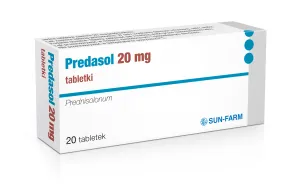
Table of Contents
Patient Information Leaflet
Predasol, 5 mg, tablets
Prednisolone
Please read all of this leaflet carefully before taking this medicine, because it contains important information for you.
- Keep this leaflet. You may need to read it again.
- If you have any further questions, please ask your doctor or pharmacist.
- This medicine has been prescribed for you personally. Do not pass it on to others. It may harm someone else, even if their symptoms are the same as yours.
- If you experience any side effects, including any not listed in this leaflet, tell your doctor or pharmacist. See section 4.
Contents of the leaflet
- What Predasol is and what it is used for
- What you need to know before taking Predasol
- How to take Predasol
- Possible side effects
- How to store Predasol
- Contents of the pack and other information
1. What Predasol is and what it is used for
Predasol is a glucocorticoid (corticosteroid) that affects metabolism, electrolyte balance, and tissue function.
Predasol is indicated for the treatment of diseases requiring systemic glucocorticoid therapy. Depending on the symptoms and severity of these diseases, they include [see section 3, dosing regimens (DR): from "a" to "d" and regimen "e"]:
Replacement therapy:
- Reduced or absent adrenal cortex function (adrenal insufficiency) of any cause (e.g., Addison's disease, adrenogenital syndrome, post-surgical adrenalectomy, pituitary insufficiency) after completion of growth (hydrocortisone and cortisone are drugs of choice),
- Stress situations following long-term corticosteroid therapy.
Rheumatic diseases:
- Active phase of vascular diseases:
- Polyarteritis nodosa (DR: a, b; in cases of hepatitis B-associated polyarteritis, treatment duration should be limited to two weeks),
- Giant cell arteritis, muscle pain and stiffness (polymyalgia rheumatica) (DR: c),
- Temporal arteritis (inflammation mainly affecting the temporal artery) (DR: a); in cases of sudden vision loss, initial intravenous high-dose glucocorticoid pulse therapy followed by maintenance treatment with ESR monitoring,
- Granulomatosis with polyangiitis: initial treatment (DR: a–b) in combination with methotrexate (for mild forms not involving kidneys) or according to the Fauci regimen [for severe forms involving kidneys and/or lungs], maintenance of remission: (DR: d, with gradual dose reduction) in combination with immunosuppressive agents,
- Churg-Strauss syndrome: initial treatment (DR: a–b) with organ manifestation and severe forms in combination with immunosuppressive drugs, maintenance of remission (DR: d),
- Active phases of rheumatic diseases, possibly involving internal organs (DR: a, b): systemic lupus erythematosus involving internal organs, muscle weakness and pain (polymyositis), cartilage inflammation (chronic relapsing polychondritis), mixed connective tissue disease,
- Active rheumatoid arthritis (DR: a to d) in severe, progressive forms, e.g., with rapid joint destruction (DR: a) or with extra-articular manifestations (DR: b),
- Other forms of rheumatoid arthritis, if necessary due to severity of symptoms or when other treatments for rheumatic diseases (NSAIDs) are ineffective or contraindicated:
- Inflammatory changes, particularly in the spine (spondylitis), ankylosing spondylitis involving other joints, e.g., hands and feet (DR: b, c), psoriasis with joint involvement (psoriatic arthritis) (DR: c, d), joint disease associated with gastrointestinal disorders with significant inflammatory activity (enteropathic arthritis) (DR: a),
- Arthritis occurring as a reaction to another underlying disease (DR: c),
- Arthritis associated with sarcoidosis (initially DR: b),
- Carditis in rheumatic fever, beyond 2–3 months in severe cases (DR: a),
- Juvenile arthritis of unknown cause (juvenile idiopathic arthritis), in severe forms involving internal organs (Still's disease) or eyes (uveitis) unresponsive to local treatment (DR: a).
Bronchial and lung diseases:
- Bronchial asthma (DR: c to a); concomitant use of bronchodilators is also recommended,
- Exacerbation of chronic obstructive pulmonary disease (COPD) (DR: b) – recommended treatment duration: up to 10 days,
- Specific lung diseases such as acute pneumonitis (DR: b), pulmonary fibrosis (tissue hardening and structural changes in the lungs) (DR: b), bronchiolitis obliterans with organizing pneumonia (BOOP) (DR: b, with gradual dose reduction), if necessary in combination with immunosuppressive drugs, chronic eosinophilic pneumonia (DR: b with gradual dose reduction), long-term treatment of chronic sarcoidosis in stages II and III (with dyspnea, cough, and impaired lung function) (DR: b),
- Prevention of respiratory distress syndrome in preterm infants (DR: b, two single doses).
Upper respiratory tract diseases:
- Severe forms of hay fever and allergic rhinitis after failure of intranasal glucocorticoid therapy (DR: c),
- Acute laryngeal and bronchial obstruction: mucosal edema (angioedema), subglottic laryngitis (pseudocroup) (DR: b to a).
Skin diseases:
Skin and mucous membrane diseases that, due to their severity and/or extent or involvement of internal organs, cannot be adequately treated with locally applied glucocorticosteroids. These include:
- Allergic, pseudoallergic, and infection-related allergic diseases: e.g., acute urticaria, anaphylactoid reactions,
- Severe skin disorders, some causing skin discontinuity, drug eruptions, erythema multiforme, toxic epidermal necrolysis (Lyell's syndrome), acute generalized exanthematous pustulosis, nodular erythema, severe febrile neutrophilic dermatosis (Sweet's syndrome), allergic contact dermatitis (DR: b to a),
- Skin rashes: e.g., allergic skin rashes such as atopic dermatitis, contact dermatitis, rashes caused by pathogenic microorganisms (pityriasis versicolor) (DR: b to a),
- Diseases with nodule formation, e.g., sarcoidosis, cheilitis (granulomatous cheilitis) (DR: b to a),
- Severe blistering skin diseases: e.g., pemphigus vulgaris, bullous pemphigoid, benign mucosal pemphigoid, linear IgA dermatosis (DR: b to a),
- Vasculitis: e.g., allergic vasculitis, polyarteritis nodosa (DR: b to a),
- Immune system (autoimmune) diseases: e.g., dermatomyositis, systemic sclerosis (sclerotic phase), chronic discoid lupus erythematosus and subacute cutaneous lupus erythematosus (DR: b to a),
- Severe skin diseases during pregnancy (see also section "Pregnancy and breastfeeding"): e.g., pemphigoid gestationis, prurigo gestationis (DR: d to a),
- Severe skin diseases with redness and scaling, e.g., pustular psoriasis, erythema annulare centrifugum, pityriasis group (DR: c to a), erythroderma, including cases of Sézary syndrome (DR: c to a),
- Other severe skin diseases: e.g., Jarisch-Herxheimer reaction to penicillin used in syphilis treatment, cavernous hemangioma with rapidly progressive proptosis, Behçet's disease, pyoderma gangrenosum, eosinophilic fasciitis, erythema annulare centrifugum, hereditary epidermolysis bullosa (DR: c to a).
Blood disorders/cancer diseases:
- Autoimmune blood disorders: anemia caused by destruction of red blood cells (autoimmune hemolytic anemia) (DR: c to a), idiopathic thrombocytopenic purpura (Werlhof's disease) (DR: a), acute transient decrease in platelet count (acute transient thrombocytopenia) (DR: a),
- Cancer diseases such as acute lymphoblastic leukemia (DR: e), Hodgkin's lymphoma (DR: e), non-Hodgkin's lymphoma (DR: e), chronic lymphocytic leukemia (DR: e), Waldenström's macroglobulinemia (DR: e), multiple myeloma (DR: e),
- Hypercalcemia associated with malignancy (DR: c to a),
- Prevention and treatment of chemotherapy-induced vomiting (DR: b to a),
- Palliative therapy of cancer diseases. Note: Predasol may be used to relieve symptoms, e.g., loss of appetite, anorexia, and general weakness in advanced cancer diseases after exhausting other treatment options.
Nervous system diseases:
- Certain forms of muscle paralysis (myasthenia) (azathioprine is the drug of first choice), chronic Guillain-Barré syndrome, Tolosa-Hunt syndrome, neuropathy in monoclonal gammopathy, multiple sclerosis (with oral gradual dose reduction after initial high-dose parenteral glucocorticoid administration during acute relapse), certain forms of childhood epilepsy (infantile spasms – West syndrome).
Specific infectious diseases:
- Toxic states in severe infections (in combination with antibiotics or chemotherapeutic agents), e.g., tuberculous meningitis (DR: b), severe forms of pulmonary tuberculosis (DR: b).
Eye diseases (DR: b to a):
- In systemic diseases involving the eyes and immunological processes within the orbit and eye: optic neuropathy (e.g., giant cell arteritis, ischemia-related or trauma-related), Behçet's disease, sarcoidosis, thyroid eye disease, orbital pseudotumor (orbital tissue swelling), transplant rejection, and certain uveitis (inflammation of the middle eye layer), such as Harada syndrome and sympathetic ophthalmia.
The use of Predasol is indicated only when local therapy has failed in the following eye conditions. Inflammatory conditions of various parts of the eye:
- Scleritis (outer part) and surrounding tissues, keratitis, uveitis (middle part), chronic inflammation of the eye part producing aqueous humor (eye fluid), allergic conjunctivitis, alkali burns,
- Keratitis occurring in autoimmune disease or syphilis (requires additional antimicrobial treatment), herpes simplex virus-induced keratitis (only if the corneal surface is intact and regular ophthalmological monitoring is ensured).
Gastrointestinal and liver diseases:
- Ulcerative colitis (DR: b to c),
- Crohn's disease (DR: b),
- Autoimmune hepatitis (DR: b),
- Esophageal burns caused by corrosive substances (DR: a).
Kidney diseases:
- Certain autoimmune kidney diseases: minimal change glomerulonephritis (DR: a), proliferative extracapillary glomerulonephritis (rapidly progressive glomerulonephritis) (DR: pulse high-dose therapy, usually in combination with cytostatics), dose reduction and discontinuation in Goodpasture’s syndrome, long-term treatment in all other forms (DR: d),
- Idiopathic retroperitoneal fibrosis (DR: b).
2. Important information before using Predasol
When not to use Predasol:
- if the patient is allergic to prednisolone or any of the other ingredients of this medicine (listed in section 6).
With the exception of allergic reactions, there are no other contraindications for short-term use of
Predasol in the treatment of acute, life-threatening conditions.
Warnings and precautions
Before starting treatment with Predasol, discuss this with your doctor or pharmacist if:
The patient suffers from scleroderma (an autoimmune disorder also known as systemic sclerosis), as doses of at least 15 mg per day may increase the risk of a serious complication called scleroderma renal crisis. Symptoms of scleroderma renal crisis include elevated blood pressure and reduced urine output. The treating physician may recommend regular monitoring of blood pressure and urine output.
Cases of pheochromocytoma crisis ( Pheochromocytoma crisis ) (elevated arterial pressure, headache, excessive sweating, palpitations, pallor) have been reported after administration of Predasol, which may lead to death. Treatment of patients with suspected or diagnosed adrenal pheochromocytoma should only be initiated after appropriate assessment of benefit-risk ratio.
Particular caution should be exercised when using Predasol in higher doses than those used for replacement therapy. In such cases, Predasol should be used only if the physician considers it absolutely necessary.
Due to suppression of immune system function, Predasol may lead to an increased risk of bacterial, viral, parasitic, opportunistic, and fungal infections. Objective and subjective signs of existing or developing infections may be masked, making diagnosis more difficult. Latent infections such as tuberculosis or hepatitis B virus infection may be activated.
Concomitant targeted antimicrobial therapy should be used in the following conditions:
- acute viral infections (hepatitis B, chickenpox, shingles, herpes simplex, herpes keratitis caused by Herpes viruses);
- acute and chronic bacterial infections;
- fungal infections involving internal organs;
- certain parasitic diseases (e.g. caused by amoebae, nematodes); in patients with suspected or confirmed strongyloidiasis (intestinal threadworm infection), Predasol may lead to activation and significant multiplication of parasites;
- swollen lymph nodes after BCG vaccination (in patients with past history of tuberculosis – use only with anti-tuberculosis drugs);
- infectious liver disease (chronic active viral hepatitis with positive HBsAg test);
- Heine-Medin disease (poliomyelitis);
- within approximately 8 weeks before to 2 weeks after vaccination with live attenuated microorganisms (live vaccines);
The following diseases should be carefully monitored and appropriately treated during treatment with Predasol:
- gastric and intestinal ulcers;
- difficult-to-control arterial hypertension;
- difficult-to-control diabetes mellitus;
- bone demineralization (osteoporosis);
- psychiatric disorders (current or past), including suicide risk. In such cases, supervision by a neurologist or psychiatrist is recommended;
- increased intraocular pressure (narrow- and wide-angle glaucoma) – ophthalmological monitoring and concomitant treatment are recommended;
- corneal damage and ulcers – ophthalmological monitoring and concomitant treatment are recommended.
Due to the risk of intestinal perforation, Predasol may be used only if there are significant medical indications and under appropriate supervision in the following cases:
- severe intestinal inflammation (ulcerative colitis) with risk of perforation, abscesses or suppurative inflammation, possibly even without peritoneal irritation;
- diverticulitis;
- immediately after certain intestinal surgeries (intestinal anastomoses).
In patients receiving high doses of glucocorticoids, symptoms of peritoneal irritation after gastrointestinal perforation may not occur.
The risk of tendon disorders, tendonitis, and tendon rupture is increased when fluoroquinolones (a certain group of antibiotics) are administered concomitantly with Predasol.
During treatment of certain types of muscle paralysis (myasthenia gravis), symptoms may initially worsen. Therefore, Predasol should initially be administered in a hospital setting. Predasol should be introduced gradually, especially in cases of severe facial or pharyngeal involvement or respiratory disturbances.
During treatment with high doses of Predasol, slow heart rate (bradycardia) may occur.
The occurrence of bradycardia does not necessarily correlate with the duration of treatment.
In principle, vaccinations with inactivated vaccines (containing killed microorganisms) are permissible. However, it should be considered that vaccine efficacy may be reduced when higher doses of Predasol are used.
During long-term treatment with Predasol, regular medical check-ups are required (including ophthalmological examination every 3 months).
In diabetic patients, metabolism should be regularly monitored, and an increased need for antidiabetic medications (insulin or oral hypoglycemics) should be considered.
During long-term treatment with high doses of Predasol, adequate potassium intake (e.g. vegetables, bananas) should be ensured and salt intake limited. Serum potassium levels should be monitored under medical supervision.
Severe anaphylactic reactions (immune system hyperreactivity) may occur.
If the patient has arterial hypertension or severe heart failure, monitoring by a physician is required, as there is a risk of worsening of these conditions.
Regular monitoring of arterial blood pressure is required during treatment with Predasol, especially during high-dose therapy and in patients with difficult-to-control hypertension.
If special physical stress situations occur during treatment with Predasol, such as feverish illness, accident, surgery, childbirth, etc., the treating physician or emergency doctor should be immediately informed about ongoing treatment. Temporary increase in the daily dose of Predasol may be necessary. During long-term treatment, the patient should receive an emergency information card from the physician, which should always be carried.
Depending on the doses used and duration of treatment, a negative effect of the drug on calcium metabolism should be expected. Therefore, osteoporosis prophylaxis is recommended. This particularly applies to individuals with existing risk factors such as family predisposition, advanced age, inadequate protein and calcium intake, heavy smoking, excessive alcohol consumption, postmenopausal period, and lack of physical activity. Prophylaxis includes adequate calcium and vitamin D intake and physical activity. In cases of existing osteoporosis, additional pharmacological treatment should be considered.
During tapering or after interruption of long-term glucocorticoid therapy, the risk of the following conditions should be considered: exacerbation or recurrence of the underlying disease, acute adrenal insufficiency (especially during stressful situations such as infection, after accidents, during increased physical stress), and objective and subjective symptoms due to cortisone withdrawal.
Viral diseases (e.g. chickenpox, measles) may have a particularly severe course in patients taking Predasol. Patients with weakened immune systems who have not previously had chickenpox or measles are at highest risk. If such patients on Predasol come into contact with individuals suffering from measles or chickenpox, they should immediately contact their physician, who will initiate appropriate prophylactic treatment if necessary.
If the patient experiences blurred vision or other visual disturbances, medical advice should be sought.
Children and adolescents
In children, due to the risk of growth suppression, Predasol may be used only if there are significant medical indications. The child's growth should be regularly monitored. Treatment with Predasol should be limited in duration or administered on an alternate-day schedule (e.g. every other day, but at double dose).
Elderly patients
Since elderly patients are at higher risk of osteoporosis, the benefit-risk ratio of using Predasol should be carefully evaluated.
Predasol and other medicines
Inform your doctor about all medicines currently or recently taken, as well as any medicines planned for use, including those available without prescription.
Other medicines affecting the action of Predasol
-
Medicines accelerating metabolism in the liver, such as certain sedatives (barbiturates), antiepileptic drugs (phenytoin, carbamazepine, primidone), and certain tuberculosis treatments (containing rifampicin) may reduce the effect of Predasol.
-
Ephedrine (e.g. may be contained in medicines used to treat low blood pressure, chronic bronchitis, asthma attacks, nasal catarrh, and as an ingredient in appetite suppressants): The effectiveness of Predasol may be reduced due to accelerated metabolism in the body.
-
Medicines slowing down liver metabolism, e.g. certain antifungal drugs (ketoconazole, itraconazole), may increase the effect of Predasol.
-
Certain female sex hormones, e.g. those used in contraceptives ("the pill"), may increase the effect of Predasol.
-
Medicines used for excessive gastric acid production (antacids): concomitant use of magnesium hydroxide or aluminium hydroxide may reduce absorption of prednisolone. These medicines should be taken at least 2 hours apart.
-
Some medicines may enhance the effect of Predasol, and the doctor may wish to closely monitor the patient taking such medicines (including certain HIV drugs: ritonavir, cobicistat).
Effect of Predasol on other medicines
- Predasol may enhance the effect of cardiac glycosides (heart-strengthening drugs) due to potassium deficiency.
- Predasol may increase potassium loss caused by diuretics and laxatives.
- Predasol may reduce the glucose-lowering effect of oral antidiabetic drugs and insulin.
- Predasol may decrease or increase the effect of anticoagulant drugs (oral anticoagulants, coumarin derivatives). The doctor will decide whether dose adjustment of the anticoagulant is necessary.
- Predasol may increase the risk of gastric ulcers and gastrointestinal bleeding when used concomitantly with anti-inflammatory drugs (containing salicylates, indomethacin or other non-steroidal anti-inflammatory drugs).
- Predasol may prolong the muscle-relaxing effect of certain non-depolarizing neuromuscular blocking agents.
- Predasol may enhance the effect of certain drugs (atropine and other anticholinergics) that increase intraocular pressure.
- Predasol may reduce the effectiveness of antiparasitic drugs (containing praziquantel).
- Predasol may increase the risk of muscle disease and heart muscle disease (myopathy and cardiomyopathy) when taken concomitantly with drugs used in the treatment of malaria and rheumatic diseases (containing chloroquine, hydroxychloroquine, mefloquine).
- Growth hormone (somatotropin): its effect is reduced, especially during high-dose Predasol therapy.
- Predasol may reduce the effect of thyrotropin (TSH) stimulation after administration of protirelin (TRH - a hormone produced by part of the brain).
- Predasol used concomitantly with immunosuppressive drugs (medicines reducing immune system function) may increase susceptibility to infections and may exacerbate or trigger symptoms of previously undiagnosed infections.
- Also in the case of cyclosporine (an immunosuppressive drug): Predasol may increase cyclosporine blood levels and thereby increase the risk of seizures.
- Certain blood pressure-lowering drugs (angiotensin-converting enzyme inhibitors): increased risk of blood morphology changes.
- Fluoroquinolones – a certain group of antibiotics – may increase the risk of tendon damage.
Effect on laboratory test results
Skin reactions in allergy tests may be suppressed.
Predasol with food and drink
Tablets should be taken during or after a meal, preferably after breakfast, without chewing, with sufficient fluid.
Pregnancy and breastfeeding
If the patient is pregnant or breastfeeding, suspects she may be pregnant, or plans to become pregnant, she should consult her doctor or pharmacist before using this medicine.
Pregnancy
This medicine may be used during pregnancy only on medical advice. Therefore, if the patient is pregnant, she should inform her doctor.
During long-term use of Predasol in pregnancy, impaired fetal growth cannot be excluded.
If Predasol is used towards the end of pregnancy, adrenal insufficiency may occur in the newborn, which may require replacement therapy with gradual dose reduction. Animal studies have shown harmful effects of prednisolone on fetuses (e.g. cleft palate). Reports suggest an increased risk of such malformations in humans following prednisolone administration during the first three months of pregnancy.
Breastfeeding
Prednisolone passes into breast milk. No disturbances in infants have been reported so far. Nevertheless, the necessity of using the drug during breastfeeding should be carefully considered. If higher doses are medically required, breastfeeding should be discontinued. Consult your doctor immediately.
Fertility
Predasol may reduce fertility in men.
Driving and operating machinery
There are currently no data indicating that Predasol impairs the ability to drive or operate machinery. The same applies to working without safety protection.
Predasol contains lactose and sodium
This medicine contains lactose. If the patient has previously been diagnosed with intolerance to certain sugars, he or she should consult a doctor before taking the medicine.
The medicine contains less than 1 mmol (23 mg) of sodium per tablet, meaning the medicine is considered "sodium-free".
Improper use of the drug as doping
Use of Predasol may lead to positive results in anti-doping controls and may pose a health risk if the drug is used as a doping agent.
3. How to use Predasol
This medicine should always be used exactly as prescribed by the doctor. The doctor will determine the dose individually for each patient. You must follow the prescribed dosage, otherwise the effect of Predasol may be inadequate.
If in doubt, consult your doctor or pharmacist.
Method of administration
Tablets should be taken without chewing, during or immediately after a meal, preferably after breakfast, with sufficient fluid.
Substitution therapy in chronic adrenal insufficiency is lifelong.
Depending on the clinical condition and the individual patient's response to treatment, the doctor will assess whether the patient may take the medicine every other day.
Unless otherwise directed by the doctor, the usual dosage is:
Substitution therapy (outside the growth period)
5 to 7.5 mg prednisolone per day, divided into two single doses (morning and noon; in adrenogenital syndrome: morning and evening). Mineralocorticoid (fludrocortisone) should be co-administered if required. In cases of significant physical stress such as infection with fever, trauma, surgery or childbirth, the dose may be temporarily increased by the doctor.
Stress situations after long-term glucocorticoid therapy: up to 50 mg prednisolone per day, administered at appropriate times. The dose should be tapered over several days.
Treatment of certain diseases (pharmacotherapy)
To allow higher doses to be used, Predasol is also available as 10 mg and 20 mg tablets. Score lines on the tablets allow individual dose adjustment.
The following tables provide an overview of general dosing guidelines:
Adults (dosing regimens a–d)
Doses Dose (mg per day) Dose (mg/kg body weight per day)
a) high 80 – 100 (250) 1.0 – 3.0
b) medium 40 – 80 0.5 – 1.0
c) low 10 – 40 0.25 – 0.5
d) very low 1.5 – 7.5 (10) ---
e) in haematopoietic disorders, as part of special treatment regimens (see below “Dosing regimen „e” (DR: e)”)
Generally, the total daily dose is taken early in the morning between 6:00 and 8:00 a.m. However, depending on the disease, high daily doses may be divided into 2–4 single doses, and medium daily doses into 2–3 single doses.
Children
Doses Dose (mg/kg body weight per day)
high 2 – 3
medium 1 – 2
maintenance 0.25
In children, treatment should be conducted with the lowest possible dose. In special cases (e.g. infantile spasms – West syndrome), this recommendation may be deviated from.
Tapering the dose
Dose reduction should begin once the desired clinical effect has been achieved, depending on the underlying disease. If the daily dose is divided into several single doses, the evening dose should be reduced first, followed by the noon dose, if applicable. Dose reduction should initially proceed somewhat faster, then more slowly from around 25 mg per day.
The duration of treatment depends on the course of the disease. After achieving a satisfactory treatment outcome, the dose should be reduced to a maintenance dose or treatment discontinued.
The following steps, together with monitoring of disease activity, may serve as guidelines for dose reduction:
above 30 mg per day reduce by 10 mg every 2–5 days,
from 30 to 15 mg per day reduce by 5 mg weekly,
from 15 to 10 mg per day reduce by 2.5 mg every 1–2 weeks,
from 10 to 6 mg per day reduce by 1 mg every 2–4 weeks,
below 6 mg per day reduce by 0.5 mg every 4–8 weeks.
Treatment with high and maximum doses lasting for several days may, depending on the underlying disease and clinical response, be discontinued without the need for gradual dose reduction.
In hypothyroidism or liver cirrhosis, lower doses may be sufficient or dose reduction may be necessary.
If the patient feels that the effect of Predasol is too strong or too weak, they should contact their doctor or pharmacist.
Dosing regimen „e” (DR: e)
In this case, prednisolone is generally administered as a single dose without the need for gradual dose reduction at the end of treatment. The following example dosing regimens are known in chemotherapy:
- non-Hodgkin's lymphoma: CHOP regimen, prednisolone 100 mg/m² day 1–5; COP regimen, prednisolone 100 mg/m² day 1–5
- chronic lymphatic leukaemia: Knospe regimen, prednisolone 75/50/25 mg day 1–3
- Hodgkin's disease: COPP-ABVD regimen, prednisolone 40 mg/m² day 1–14
- multiple myeloma: Alexanian regimen, prednisolone 2 mg/kg body weight day 1–4
Use of a higher than recommended dose of Predasol
Predasol is generally well tolerated, even with short-term use of high doses. No special measures are required. If the patient experiences severe or unusual adverse reactions, medical advice should be sought.
Missed dose of Predasol
A missed dose may be taken during the same day, and treatment continued with the prescribed dose at the usual time the next day. Do not take a double dose to make up for a missed dose. If several doses are missed, the treated condition may relapse or worsen. In such cases, consult your doctor, who will evaluate the treatment and adjust it if necessary.
Stopping Predasol
Always follow the dosing regimen prescribed by your doctor. Never stop taking Predasol without consulting your doctor, as long-term use of Predasol may suppress the body's natural production of glucocorticoids. In such cases, significant physical stress may be life-threatening (adrenal crisis).
If you have any further questions about the use of this medicine, consult your doctor or pharmacist.
4. Possible adverse effects
Like all medicines, this medicine can cause adverse effects, although not everyone will experience them.
Replacement therapy:
Low risk of adverse effects when the recommended dosage is followed.
Treatment of specific diseases, using higher doses than in replacement therapy:
The following adverse effects may occur, which largely depend on the dose and duration of treatment, and for which therefore it is not possible to determine the frequency of occurrence:
Infections and parasitic infestations
Masking of infections, occurrence, worsening or recurrence of viral, fungal, bacterial, as well as parasitic and opportunistic infections, activation of intestinal tuberculosis.
Blood and lymphatic system disorders
Changes in blood morphology (increase in number of white blood cells or all blood cells, decrease in number of certain types of white blood cells).
Immune system disorders
Hypersensitivity reactions (e.g. drug rash), severe anaphylactic reactions such as cardiac arrhythmia, bronchospasm (contraction of smooth muscles in the bronchi), decreased or increased blood pressure, circulatory collapse, myocardial infarction, immunosuppression.
Endocrine disorders
Induction of so-called Cushing's syndrome (typical symptoms: large, round face – "moon face", trunk obesity and facial redness), suppression or reduction of adrenal cortex function.
Metabolism and nutrition disorders
Increased body weight, increased blood glucose concentration, diabetes, increased blood lipid levels (cholesterol and triglycerides), fluid retention, potassium deficiency due to increased potassium excretion, increased appetite.
Psychiatric disorders
Depression, irritability, euphoria, increased drive, psychosis, mania, hallucinations, emotional lability, anxiety, sleep disturbances, suicidal thoughts.
Nervous system disorders
Increased intracranial pressure, emergence of symptoms of latent epilepsy, increased tendency to seizures in epilepsy.
Eye disorders
Lens opacity (cataract), increased intraocular pressure (glaucoma), worsening of corneal ulceration, increased susceptibility to bacterial, viral and fungal eye infections, blurred vision.
Cardiac disorders
Bradycardia
Vascular disorders
Hypertension, increased risk of atherosclerosis and thrombosis, vasculitis (also as withdrawal syndrome after long-term treatment), increased capillary fragility.
Gastrointestinal disorders
Gastric and intestinal ulcers, gastrointestinal bleeding, pancreatitis.
Skin and subcutaneous tissue disorders
Striae, skin thinning ("parchment skin"), dilated blood vessels, tendency to bruising, petechial or superficial skin hemorrhages, hirsutism, acne, inflammatory skin conditions of the face, especially around the mouth, nose and eyes, skin pigmentation changes.
Musculoskeletal and connective tissue disorders
Disorders affecting muscles, muscle weakness, muscle atrophy, osteoporosis (bone loss) occurring depending on dose and possible even during short-term use, other forms of bone degeneration (bone necrosis), disorders affecting tendons, tendonitis, tendon rupture, growth suppression in children.
Note: When the dose is rapidly reduced after long-term treatment, symptoms such as muscle and joint pain may occur.
Renal and urinary disorders
Scleroderma renal crisis in patients with scleroderma (autoimmune disorder). Symptoms of scleroderma renal crisis include elevated blood pressure and reduced urine production.
Reproductive system and breast disorders
Disorders of sex hormone secretion (resulting in absence of menstrual bleeding, male pattern of body hair in women – hirsutism, impotence).
General disorders and administration site conditions
Delayed wound healing.
What to do
You should contact your doctor or pharmacist if any of the listed adverse effects occur, or any other adverse effect during use of Predasol.
Never discontinue treatment without consulting your doctor.
If gastrointestinal symptoms, back, shoulder or hip joint pain, psychiatric disorders, noticeable fluctuations in blood glucose levels (in diabetic patients) or other disturbances occur, you should contact your doctor immediately.
Reporting of adverse effects
If any adverse symptoms occur, including any adverse effects not listed in this leaflet, you should inform your doctor, pharmacist or nurse. Adverse effects can be reported directly to the Department of Monitoring Adverse Drug Reactions, Office for Registration of Medicinal Products, Medical Devices and Biocidal Products
Al. Jerozolimskie 181C
02-222 Warsaw
Tel.: + 48 22 49 21 301
Fax: + 48 22 49 21 309
Website: https://smz.ezdrowie.gov.pl
Adverse effects can also be reported to the responsible entity.
By reporting adverse effects, more information on the safety of this medicine can be collected.
5. How to store Predasol
Keep this medicine out of sight and reach of children.
Do not use this medicine after the expiry date stated on the packaging after "EXP". The expiry date refers to the last day of the stated month.
No special storage instructions apply for this medicine.
6. Contents of the package and other information
What Predasol contains
- The active substance is prednisolone. Each tablet contains 5 mg of prednisolone.
- Other ingredients: microcrystalline cellulose, lactose monohydrate, pregelatinized maize starch, hypromellose 2910, sodium croscarmellose, colloidal silicon dioxide (hydrophobic), talc, magnesium stearate, purified water.
What Predasol looks like and contents of the pack
Predasol is a white, round tablet with a score line on one side.
The tablets can be divided into equal doses.
Predasol is available in PVC/PVDC/Aluminium blister packs in cardboard cartons containing 20,
60 or 100 tablets.
Not all pack sizes may be marketed.
Marketing Authorisation Holder and Manufacturer
Marketing Authorisation Holder
SUN-FARM Sp. z o.o.
ul. Dolna 21
05-092 Łomianki
Manufacturer
mibe GmbH Arzneimittel
Münchener Straße 15
06796 Brehna
Germany
SUN-FARM Sp. z o.o.
ul. Dolna 21
05-092 Łomianki