Precifit
PolandTable of Contents
- Patient Information Leaflet
- 1. What Precifit is and what it is used for
- 2. Important information before taking Precifit
- 3. How to take Precifit
- 4. Possible adverse reactions
- 5. How to store Precifit
- 6. Package contents and other information
- Package leaflet: Information for the user
- 1. What Precifit is and what it is used for
- 2. What you need to know before taking Precifit
- 3. How to take Precifit
- 4. Possible side effects
- 5. How to store Precifit
- 6. Contents of the pack and other information
Patient Information Leaflet
Precifit, 5 mg + 1.25 mg, dispersible tablets for oral suspension, for dispenser
Levodopum + Carbidopum
Please read all of this leaflet carefully before taking this medicine, because it contains
important information for you.
- Keep this leaflet. You may need to read it again.
- If you have any further questions, ask your doctor or pharmacist.
- This medicine has been prescribed for a specific individual. Do not pass it on to others. It may harm them even if their symptoms are the same.
- If you experience any adverse effects, including any not listed in this leaflet, tell your doctor or pharmacist. See section 4.
Table of contents
- What Precifit is and what it is used for
- What you need to know before taking Precifit
- How to take Precifit
- Possible side effects
- How to store Precifit
- Contents of the pack and other information
1. What Precifit is and what it is used for
Precifit helps to relieve the symptoms of Parkinson's disease. Parkinson's disease is a chronic condition in which:
- the patient's movements become slow and unsteady,
- muscles become stiff,
- tremor may occur.
Untreated Parkinson's disease can make performing everyday activities difficult.
Precifit contains two active substances – levodopa and carbidopa.
- Levodopa is converted in the brain into a substance called dopamine. Dopamine helps to relieve the symptoms of Parkinson's disease.
- Carbidopa belongs to a group of medicines called aromatic amino acid decarboxylase inhibitors. It enhances the effect of levodopa by slowing down its breakdown in the body.
Precifit is in the form of small tablets (mini-tablets) which are taken using a separately supplied dispenser called MyFID. The dispenser, programmed by your doctor or nurse, dispenses a specific number of tablets for each scheduled dose.
2. Important information before taking Precifit
When not to take Precifit:
- if the patient is allergic to carbidopa or levodopa, or to any of the other components of this medicine (listed in section 6);
- if the patient has ever had skin cancer or currently has unusual moles that have not been examined by a doctor;
- if the patient is taking certain antidepressants called monoamine oxidase inhibitors (MAOIs). These medicines must be discontinued at least two weeks before starting Precifit (see also section "Precifit and other medicines" below);
- if the patient has a condition called narrow-angle glaucoma, which may cause a sudden increase in intraocular pressure;
- if the patient has episodes of hypertension caused by a tumour of the adrenal gland (pheochromocytoma);
- if the patient has hormonal disorders (excessive production of cortisol or thyroid hormones);
- if the patient has severe heart disease.
If any of the above conditions apply, the patient should not take
Precifit. If in doubt, speak to a doctor or pharmacist before taking
Precifit.
Warnings and precautions
Before starting Precifit, discuss with a doctor or pharmacist if:
- the patient has previously had seizures;
- the patient has lung disorders (such as bronchial asthma);
- the patient has ever had gastrointestinal ulcers (duodenal or gastric ulcers) or has ever vomited blood;
- the patient has ever had a heart attack, heart problems, or circulatory disorders;
- the patient is taking medicines that may cause low blood pressure when standing up from sitting or lying down (orthostatic hypotension);
- the patient has kidney or liver problems;
- the patient has hormonal disorders;
- the patient has ever had depression or other psychiatric disorders;
- the patient has chronic open-angle glaucoma, which may lead to increased intraocular pressure. The patient will have regular eye pressure checks;
- the patient experiences sudden attacks of sleep or excessive daytime sleepiness;
- the patient is about to undergo surgery.
Inform the doctor if the patient, their family, or caregiver notice the occurrence of unusual impulses or compulsive behaviours in the patient, or if the patient cannot resist impulses, urges, or compulsions to perform certain actions that may be harmful to themselves or others. These behaviours are known as impulse control disorders and may include gambling addiction, compulsive eating or spending, abnormally high sex drive, and intensified sexual thoughts and feelings. The doctor may need to review the patient's current medications.
If the patient or their family (caregiver) notice symptoms resembling addiction, leading to a desire to take high doses of Precifit or other medicines used in Parkinson's disease treatment, inform the doctor.
This medicine may interfere with laboratory test results for urine or blood ordered by a doctor.
If in doubt whether any of the above information applies to the patient, consult a doctor or pharmacist.
Precifit and other medicines
Tell the doctor or pharmacist about all medicines the patient is currently taking, has recently taken, or plans to take. This includes herbal preparations. The effectiveness of treatment may change when Precifit is taken together with certain other medicines.
In particular, inform the doctor or pharmacist if the patient is taking any of the following medicines:
- medicines used in Parkinson's disease (such as tolcapone, entacapone, amantadine),
- medicines used for severe allergic reactions, asthma, chronic bronchitis, heart disease, and low blood pressure (such as anticholinergic and sympathomimetic agents),
- medicines used for seizures or epilepsy (such as phenytoin),
- medicines used for high blood pressure (antihypertensive medicines),
- medicines used for psychiatric disorders (antipsychotics such as phenothiazine derivatives, butyrophenone derivatives, and risperidone),
- medicines used to treat depression (such as tricyclic antidepressants or non-selective monoamine oxidase inhibitors),
- medicines used to treat tuberculosis (such as isoniazid),
- anxiolytics (such as benzodiazepines),
- medicines used for anaemia (such as iron preparations),
- antiemetics (such as metoclopramide),
- medicines used for blood vessel spasms (such as papaverine).
If the patient is unsure whether any of the above apply, they should
consult a doctor or pharmacist before taking this medicine.
Pregnancy, breastfeeding, and fertility
Do not take Precifit during pregnancy, as there is insufficient experience regarding its use in pregnant women.
Do not take Precifit while breastfeeding, as levodopa passes into human milk.
If the patient is pregnant or breastfeeding, suspects she may be pregnant, or is planning to have a child, she should consult a doctor or pharmacist before using this medicine.
Driving and operating machinery
- Precifit affects individuals differently. Precifit may lower blood pressure, which could lead to dizziness and vertigo. Therefore, extreme caution should be exercised when driving or operating machinery (see section "Possible side effects").
- Precifit may cause drowsiness and sudden onset of sleep. In such cases, the patient should not drive or operate machinery. The doctor will decide whether the patient can resume driving if these episodes cease.
3. How to take Precifit
This medicine should always be taken as directed by the physician or pharmacist. If in
doubt, consult the physician or pharmacist.
The dose of the medicine will be determined by the physician.
The physician will monitor the patient during treatment and, if necessary, adjust the dose.
The tablets should be dissolved in half a glass of water. After dissolving in water, a white
suspension will form, which should be drunk immediately.
Taking this medicine
- The Precifit tablet cartridge must be used exclusively with the MyFID dispenser. The physician will adjust the dose according to the patient's needs using the dispenser's functions.
- Tablets should be taken at regular intervals. The dispenser is equipped with a dose reminder function to help the patient remember to take the tablets.
- The dispenser records administered doses and is equipped with a symptom severity assessment system, the data from which can be transmitted to the physician.
- The cartridge inside the dispenser contains 750 tablets for preparing a suspension. At normal dosing, the content of one cartridge lasts for 1-2 weeks. Before placing the cartridge into the dispenser, remove the foil packaging.
Tablets should be taken as follows:
- The MyFID dispenser will generate a notification, and the message "TAKE DOSE" and a specific time will appear alternately on the screen. Press this message. The dose may be taken from 15 minutes before to 15 minutes after the scheduled time. Before taking the dose, turn the dispenser upside down. This will allow any potentially blocked tablets to be released. After pressing the "TAKE DOSE" message, the window will open. If necessary and as directed by the physician, the dose may be adjusted (increased or decreased). Remember that the physician sets the value by which the patient may adjust the dose. Then press the "TAKE DOSE" message again. The tablets will be counted and collected into the container inside the dispenser. During the tablet counting process, the MyFID dispenser must be held in an upright position. At this moment, the mini-tablets are dispensed into the container inside the dispenser. After the tablet counting is completed, a new window will appear. While holding the dispenser upright over a glass, press the "EJECT" button to release the mini-tablets into the glass/tumbler. The dispenser must be held upright until the tablet dispensing is complete.
- After ejecting the tablets, dissolve them in half a glass of water. After dissolving in water, a white suspension will form, which should be drunk immediately.
- For doses exceeding 100 mg, i.e., more than 20 tablets, the tablets will be counted and ejected in two stages. The dispenser will display instructions for ejecting the tablets twice. Follow the on-screen instructions. The tablets from the second stage will be ejected only after pressing the "EJECT" button.
- Further information can be found in the dispenser's user manual.
Precifit with food and drink
In some patients, the effect of Precifit may be slightly reduced when taken with a high-protein meal. Protein is found in foods such as meat, fish, eggs, legumes, milk, and cheese. If possible, Precifit should be taken 30 minutes before a meal or 1 hour after a meal.
If the patient has not previously taken levodopa
100 mg (20 tablets for preparing a suspension) three times daily. The physician will gradually increase the dose using the dose escalation protocol in the dispenser.
In patients experiencing unsatisfactory effect of the medicine towards the end of the dosing interval (the "wearing-off" phenomenon), the dosing regimen may be divided into smaller, more frequent doses without changing the total daily dose. The physician will recommend appropriate adjustments to the dose and frequency of administration.
If the patient has previously taken levodopa
The physician will recommend discontinuing any previously used Parkinson's disease medications before starting Precifit.
Use in children and adolescents
The safety of Precifit in patients under 18 years of age has not been established. Precifit is not indicated for use in children and adolescents for the treatment of Parkinson's disease.
Taking more than the recommended dose of Precifit
If more tablets than recommended are taken, consult a physician immediately.
Missed dose of Precifit
Do not take a double dose to make up for a missed dose.
Stopping treatment with Precifit
Do not stop taking Precifit without first discussing it with the physician.
If treatment with Precifit is stopped, muscle stiffness, elevated body temperature (fever), and psychiatric disturbances may occur.
If temporary interruption of treatment with Precifit is necessary, e.g., before a surgical procedure, treatment should be resumed with the usual doses as soon as possible.
If there are any further doubts regarding the use of this medicine, consult the physician or pharmacist.
4. Possible adverse reactions
Like all medicines, this medicine can cause adverse reactions, although not everyone will experience them.
You must stop taking Precifit and immediately contact your doctor if you notice any of the following symptoms:
- allergic reactions, symptoms may include hives, itching, rash, swelling of the face, lips, tongue or throat, which may lead to difficulty breathing or swallowing,
- chest pain,
- irregular heartbeat or palpitations,
- gastrointestinal bleeding, which may be observed as blood in the stool or dark stools (gastrointestinal bleeding),
- blood disorders, symptoms may include pale skin, fatigue, fever, sore throat, or mild bruising and prolonged bleeding after minor cuts,
- muscle stiffness, severe inability to remain still, high fever, sweating, excessive salivation and altered mental status (neuroleptic malignant syndrome),
- psychiatric changes including delusions, hallucinations and depression (very rare), suicidal tendencies,
- seizures.
Other adverse reactions that may occur during treatment with this medicine:
Very common (may affect more than 1 in 10 people):
- urinary tract infections
Common (may affect up to 1 in 10 people):
- loss of appetite (anorexia),
- confusion, dizziness, nightmares, drowsiness, fatigue, insomnia, elevated mood (euphoria), dementia, feeling of restlessness, sleep disturbances,
- movement disorders (dyskinesia), disorders characterized by sudden involuntary movements (chorea), muscle tension disorders (dystonia), movement disorders caused by non-neurological factors, sudden fluctuations in Parkinson's disease symptoms (the on-off phenomenon), slowed movement during on-off periods (bradykinesia),
- drop in blood pressure, for example, when standing up too quickly from a sitting or lying position, sometimes accompanied by dizziness (orthostatic hypotension), tendency to faint,
- sudden loss of consciousness,
- nausea, vomiting, dry mouth, bitter taste.
Uncommon (may affect up to 1 in 100 people):
- decrease or increase in body weight,
- muscle coordination disorders (ataxia), worsening of hand tremor,
- increase in blood pressure,
- hoarseness, chest pain,
- constipation, diarrhoea, bloating,
- excessive salivation, difficulty swallowing,
- fluid accumulation in the body (oedema),
- muscle cramps,
- dark urine,
- loss of strength (asthenia), feeling of weakness,
- feeling unwell (general malaise),
- hot flushes.
Rare (may affect up to 1 in 1000 people):
-
blood disorders (low white blood cell count) associated with increased susceptibility to infections (leukopenia), anaemia, blood disorder (low platelet count) associated with bruising and tendency to bleed (thrombocytopenia),
-
feeling of excitement (restlessness), anxiety, impaired thinking ability, disorientation, headache, increased sex drive, numbness, seizures,
-
episodes of severe mental illness, during which the patient's ability to control their behaviour and conduct is impaired,
-
severe disorders such as those caused by neuroleptic drugs, which may present as muscle stiffness, severe inability to sit still, high fever, sweating, excessive salivation and altered consciousness (neuroleptic malignant syndrome),
-
sensation of pricking, tingling and itching without apparent cause,
-
increased frequency of falls, gait disturbances, bruxism,
-
blurred vision, contraction of the circular eye muscle (may indicate drug overdose), reactivation of pre-existing Horner's syndrome (eye disorder), double vision, dilated pupils, impaired eye movement,
-
inflammation of veins,
-
shortness of breath, abnormal breathing patterns,
-
digestive disorders with symptoms such as feeling of heaviness in the lower abdomen, upper abdominal pain, belching, nausea, vomiting and heartburn (dyspepsia), stomach and intestinal pain, dark discoloration of saliva, teeth grinding, hiccups, bleeding from the stomach and intestines, burning sensation of the tongue, duodenal ulcers,
-
sudden accumulation of fluid under the skin and mucous membranes (e.g. throat and tongue), difficulty breathing and (or) itching and skin rash, often occurring as allergic reactions (angioedema),
-
skin rash with severe itching and blistering (urticaria), itching, facial flushing, hair loss, skin rash, excessive sweating, dark discoloration of sweat,
-
in children, bleeding within the skin and gastrointestinal tract wall related to allergy (Schönlein-Henoch disease),
-
urinary retention, involuntary urination, prolonged erection (priapism).
Very rare (may affect up to 1 in 10,000 people):
- very serious blood disorders (loss of white blood cells) presenting with sudden high fever, severe sore throat and mouth ulcers (agranulocytosis),
- drowsiness and persistent daytime fatigue, sudden attacks of sleepiness.
Frequency not known (frequency cannot be estimated from available data):
- muscle tremor,
- inability to resist the impulse to perform actions that may be harmful; this may include:
- a strong impulse to engage in uncontrollable gambling, despite serious personal or family consequences,
- altered or increased sexual interests and behaviours of significant importance to the patient or others, e.g. activities related to increased sexual drive,
- compulsive, uncontrolled spending or shopping,
- episodes of binge eating (consuming large amounts of food in a short time) or compulsive eating (eating more food than normal and more than needed to satisfy hunger).
- The desire to take high doses of Precifit, higher than necessary to control motor symptoms, is known as dopamine dysregulation syndrome. In some patients, taking high doses of Precifit may lead to severe adverse effects such as involuntary movements (dyskinesias), mood swings or other adverse reactions.
If any of the above behaviours occur, you should talk to your doctor.
He or she will discuss ways to treat or alleviate these symptoms.
If any of the symptoms listed above do not go away, or if any adverse reactions not mentioned in this leaflet occur, you should inform your doctor or pharmacist.
It may be helpful to record the symptoms, the date they occurred, and their duration.
Reporting of adverse reactions
If any adverse effects occur, including any adverse effects not listed in this leaflet, inform your doctor, pharmacist or nurse. Adverse reactions can be reported directly to the Department of Monitoring Adverse Drug Reactions of the Office for Registration of Medicinal Products, Medical Devices and Biocidal Products
Al. Jerozolimskie 181C
02-222 Warsaw
Phone: +48 22 49 21 301
Fax: +48 22 49 21 309
Website: https://smz.ezdrowie.gov.pl
Adverse reactions can also be reported to the marketing authorisation holder.
If any adverse reactions occur in the patient, including any adverse reactions not listed in this leaflet, inform the doctor or pharmacist.
5. How to store Precifit
- Keep the medicine out of the sight and reach of children.
- Store in the original packaging to protect from light and moisture.
- After opening the foil pouch, the contents should be used within 3 months. Store below 30°C.
- Do not use this medicine after the expiry date stated on the label after: EXP. The expiry date refers to the last day of the stated month.
- Medicines must not be disposed of via wastewater or household waste. Ask your pharmacist how to dispose of medicines no longer required. This will help protect the environment.
6. Package contents and other information
What Precifit contains
- The active substances in this medicine are levodopa and carbidopa.
- The other ingredients are: silicified microcrystalline cellulose (microcrystalline cellulose, colloidal anhydrous silica), maize starch, sodium carboxymethyl starch (type A), magnesium stearate.
What Precifit looks like and contents of the pack
Precifit is available as white, spherical dispersible tablets with a diameter of approximately
3 mm.
Precifit is supplied in a blister pack placed in a sealed aluminium bag,
inside a cardboard box.
Each blister pack contains 750 dispersible tablets.
Pack size: 10 x 750 dispersible tablets.
The Precifit blister pack must be used with a dispenser. Only the
MyFID dispenser should be used. The tablet dispenser for Precifit is supplied separately.
Marketing Authorisation Holder
Orion Corporation
Orionintie 1
FI 02200 Espoo
Finland
Manufacturer
Desitin Arzneimittel GmbH
Weg beim Jaeger 214
22335 Hamburg
Germany
Package leaflet: Information for the user
Precifit, 5 mg + 1.25 mg, dispersible tablets, for dispenser
Levodopum + Carbidopum
Please read all of this leaflet carefully before taking this medicine because it contains
important information for you.
- Keep this leaflet. You may need to read it again.
- If you have any further questions, ask your doctor or pharmacist.
- This medicine has been prescribed for you only. Do not pass it on to others. It may harm them even if their symptoms are the same as yours.
- If you get any side effects, talk to your doctor or pharmacist. This includes any side effects not listed in this leaflet. See section 4.
Contents of the leaflet
- What Precifit is and what it is used for
- What you need to know before taking Precifit
- How to take Precifit
- Possible side effects
- How to store Precifit
- Contents of the pack and other information
1. What Precifit is and what it is used for
Precifit helps to relieve the symptoms of Parkinson's disease. Parkinson's disease is a chronic condition in which:
- movements become slow and unsteady,
- muscles become stiff,
- tremor may occur.
Untreated Parkinson's disease can make performing everyday activities difficult.
Precifit contains two separate active substances – levodopa and carbidopa.
- Levodopa is converted in the brain into a substance called dopamine. Dopamine helps to relieve the symptoms of Parkinson's disease.
- Carbidopa belongs to a group of medicines called aromatic amino acid decarboxylase inhibitors. It enhances the effect of levodopa by slowing down its breakdown in the body.
Precifit is in the form of small tablets (mini-tablets) taken using a filled dispenser called OraFID.
2. What you need to know before taking Precifit
Do not take Precifit:
- if you are allergic to carbidopa or levodopa, or to any of the other ingredients of this medicine (listed in section 6);
- if you have ever had skin cancer or currently have unusual moles that have not been examined by a doctor;
- if you are taking certain antidepressants called monoamine oxidase inhibitors (MAOIs). These medicines must be stopped at least two weeks before starting Precifit (see also section “Precifit and other medicines” below);
- if you have a condition called narrow-angle glaucoma, which may cause a sudden increase in pressure inside the eye;
- if you have attacks of high blood pressure caused by a tumour of the adrenal gland (pheochromocytoma);
- if you have hormonal disorders (excessive production of cortisol or thyroid hormones);
- if you have severe heart disease.
Do not take Precifit if you have any of the conditions listed above. If in doubt, talk to your doctor or pharmacist before taking Precifit.
Warnings and precautions
Talk to your doctor or pharmacist before taking Precifit if:
- you have had seizures (fits) in the past;
- you have lung problems (such as bronchial asthma);
- you have ever had stomach or duodenal ulcers or have ever vomited blood;
- you have ever had a heart attack, heart problems or circulation problems;
- you are taking medicines that may cause low blood pressure when standing up from sitting or lying down (orthostatic hypotension);
- you have kidney or liver problems;
- you have hormonal disorders;
- you have ever had depression or other mental disorders;
- you have a condition called chronic open-angle glaucoma, which may lead to increased eye pressure. Your eye pressure will be checked regularly;
- you experience sudden attacks of sleepiness or feel very sleepy;
- you are about to undergo surgery.
Tell your doctor if you, your family or caregiver notice that you are developing unusual urges or compulsive behaviours, or if you cannot resist impulses, urges or compulsions to perform certain actions that could be harmful to you or others. These behaviours are known as impulse control disorders and may include gambling addiction, excessive eating or spending, abnormally high sex drive, and intensified sexual thoughts and feelings. Your doctor may need to review your treatment.
If you or your family (caregiver) notice symptoms resembling addiction, leading to a desire to take high doses of Precifit and other medicines used to treat Parkinson's disease, tell your doctor.
This medicine may affect the results of laboratory tests on your blood or urine ordered by your doctor.
If you are unsure whether any of the above information applies to you, talk to your doctor or pharmacist.
Precifit and other medicines
Tell your doctor or pharmacist if you are taking, have recently taken or might take any other medicines. This includes herbal preparations. The effectiveness of treatment may change if Precifit is taken together with certain other medicines.
In particular, tell your doctor or pharmacist if you are taking any of the following medicines:
- medicines used for Parkinson's disease (such as tolcapone, entacapone, amantadine),
- medicines used for severe allergic reactions, asthma, chronic bronchitis, heart disease and low blood pressure (such as anticholinergics and sympathomimetics),
- medicines used for seizures or epilepsy (such as phenytoin),
- medicines used for high blood pressure (antihypertensives),
- medicines used for mental disorders (antipsychotics such as phenothiazine derivatives, butyrophenone derivatives and risperidone),
- medicines used for depression (such as tricyclic antidepressants or non-selective monoamine oxidase inhibitors),
- medicines used for tuberculosis (such as isoniazid),
- anxiolytics (such as benzodiazepines),
- medicines used for anaemia (such as iron preparations),
- antiemetics (such as metoclopramide),
- medicines used for blood vessel spasms (such as papaverine).
If you are not sure whether any of the above applies to you, talk to your doctor or pharmacist before taking this medicine.
Pregnancy, breastfeeding and fertility
- Do not take Precifit during pregnancy, as there is insufficient experience with its use in pregnant women.
- Do not take Precifit while breastfeeding, as levodopa passes into human milk.
- If you are pregnant or breastfeeding, think you may be pregnant, or are planning to have a baby, talk to your doctor or pharmacist before taking this medicine.
Driving and using machines
- Precifit affects people differently. Precifit may lower blood pressure, which may lead to dizziness and vertigo. Therefore, take special care when driving or operating machinery (see section “Possible side effects”).
- Precifit may cause sleepiness and sudden sleep attacks. In such cases, do not drive or operate machinery. Your doctor will decide whether you can resume driving if the attacks stop.
3. How to take Precifit
Always take this medicine exactly as your doctor or pharmacist has told you. If in doubt, talk to your doctor or pharmacist.
Your doctor will determine your dose.
Your doctor will monitor you during treatment and may adjust your dose if necessary.
Take the tablets at regular intervals, e.g. three times a day.
Dissolve the tablets in half a glass of water. After dissolving, a milky solution will form, which should be drunk immediately.
Using the filled OraFID dispenser
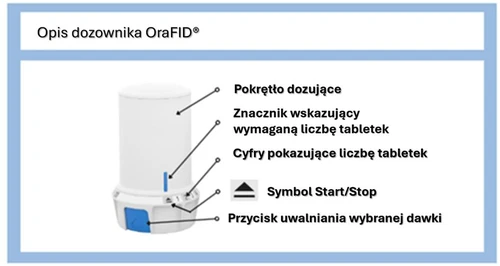
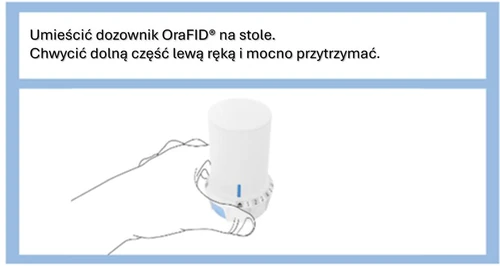
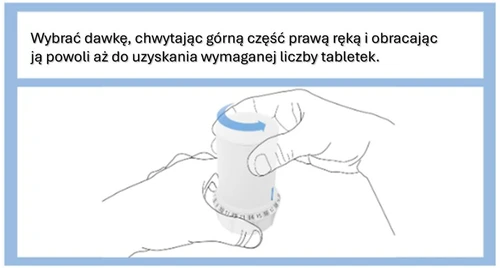
- The filled OraFID dispenser contains soluble Precifit tablets. To ensure correct use, follow the instructions below.
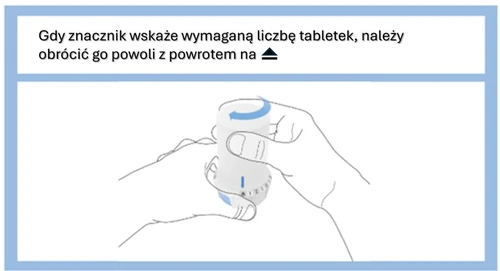
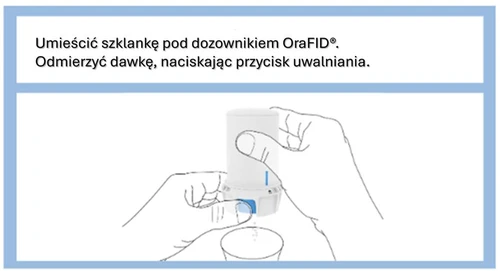
- The dispenser can release from 1 to 20 tablets per dose. If the dose is more than 20 tablets, e.g. 24 tablets, divide the dose into two parts and release 12 tablets twice. The dispenser will dose the correct number of tablets as long as the container contains enough tablets to deliver the required dose. After releasing each dose, gently shake the container and listen for the sound of tablets. If you hear tablets remaining in the OraFID dispenser, there is no need to count the released tablets. If you do not hear a sound, count the released tablets. If too few tablets have been released, use a new OraFID container and dispense the missing number of tablets to obtain the full dose. Always keep an extra OraFID container available to avoid running out of tablets.
- The OraFID dispenser contains 2,250 dispersible tablets. When taking a daily levodopa dose of 300–400 mg, the contents of the filled dispenser last approximately 4 to 5 weeks.
- The filled OraFID dispenser is single-use and must not be refilled.
Instructions for use
Troubleshooting
If you are unsure how many tablets have been released, count them and correct the number if necessary.
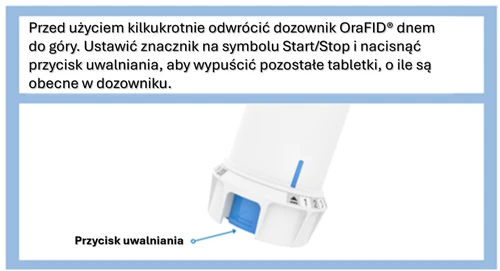
- If a tablet becomes blocked and you cannot turn the dosing knob, rotate the dispenser again and try to release the tablets. If the tablets remain blocked, turn the dispenser upside down, hold it in this position and turn the dosing knob several times in both directions, then set the indicator to the “Start/Stop” symbol. Holding the dispenser in an upright position, release the tablets by pressing the blue release button, then repeat the procedure to set the number of tablets to be dispensed. Count the released tablets to ensure the correct number.
- The release button can only be pressed when the blue indicator is on the “Start/Stop” symbol. Do not turn the dosing knob back to the “Start/Stop” symbol until the indicator shows the required number of tablets. Only when the indicator reaches the number to be released should you turn the dosing wheel back to the “Start/Stop” symbol.
Precifit with food and drink
In some patients, the effect of Precifit may be slightly reduced when taken with a high-protein meal. Protein is found in foods such as meat, fish, eggs, legumes, milk and cheese. If possible, take Precifit 30 minutes before or 1 hour after a meal.
If you have not previously taken levodopa
100 mg (20 dispersible tablets) three times a day. Your doctor will gradually increase the dose.
For patients with unsatisfactory effect towards the end of the dosing interval (the “wearing-off” phenomenon), the dosing may be divided into smaller, more frequent doses without changing the total daily dose. Your doctor will advise on appropriate dose adjustment and frequency.
If you have previously taken levodopa
Your doctor will advise you to stop taking any current Parkinson's disease medicines before starting Precifit.
Use in children and adolescents
The safety of Precifit has not been established in patients under 18 years of age. Precifit is not indicated for use in children and adolescents for the treatment of Parkinson's disease.
Taking more Precifit than prescribed
If you take more tablets than prescribed, contact your doctor immediately.
If you forget to take Precifit
Do not take a double dose to make up for a missed dose.
Stopping Precifit
Do not stop taking Precifit without first talking to your doctor.
If you stop taking Precifit, you may experience muscle stiffness, increased temperature (fever) and mental disturbances.
If temporary discontinuation of Precifit treatment is necessary, e.g. before surgery, resume taking your usual doses as soon as possible.
If you have any further questions about using this medicine, talk to your doctor or pharmacist.
4. Possible side effects
Like all medicines, this medicine can cause side effects, although not everybody gets them.
Stop taking Precifit and contact your doctor immediately if you experience any of the following:
- allergic reactions, symptoms may include hives, itching, rash, swelling of the face, lips, tongue or throat, which may lead to difficulty breathing or swallowing,
- chest pain,
- irregular heartbeat or palpitations,
- gastrointestinal bleeding, which may appear as blood in the stool or dark stools (gastrointestinal bleeding),
- blood disorders, symptoms may include pale skin, fatigue, fever, sore throat or mild bruising and prolonged bleeding after minor injury,
- muscle stiffness, severe inability to sit still, high fever, sweating, increased salivation and confusion (neuroleptic malignant syndrome),
- psychiatric changes including delusions, hallucinations and depression (very rare), suicidal thoughts,
- seizures.
Other side effects that may occur during treatment with this medicine:
Very common (may affect more than 1 in 10 people):
- urinary tract infections
Common (may affect up to 1 in 10 people):
- loss of appetite (anorexia),
- confusion, dizziness, nightmares, drowsiness, fatigue, insomnia, elevated mood (euphoria), dementia, feeling of restlessness, sleep disturbances,
- movement disorders (dyskinesia), disorders characterised by sudden involuntary movements (chorea), muscle tension disorders (dystonia), movement disorders unrelated to the nervous system, sudden fluctuations in Parkinson's symptoms (on-off phenomenon), slowed movement during on-off periods (bradykinesia),
- drop in blood pressure, e.g. due to standing up too quickly from sitting or lying down, sometimes accompanied by dizziness (orthostatic hypotension), tendency to faint,
- sudden loss of consciousness,
- nausea, vomiting, dry mouth, bitter taste.
Uncommon (may affect up to 1 in 100 people):
- decrease or increase in body weight,
- muscle coordination disorders (ataxia), worsening of hand tremor,
- increase in blood pressure,
- hoarseness, chest pain,
- constipation, diarrhoea, bloating,
- increased salivation, difficulty swallowing,
- fluid accumulation in the body (oedema),
- muscle cramps,
- dark urine,
- loss of strength (asthenia), feeling of weakness,
- feeling of illness (general malaise),
- hot flushes.
Rare (may affect up to 1 in 1,000 people):
- blood disorders (low white blood cells) with increased susceptibility to infections (leucopenia), anaemia, blood disorder (low platelets) with bruising and tendency to bleed (thrombocytopenia),
- feeling of excitement (agitation), anxiety, thinking disorders, disorientation, headache, increased sex drive, numbness, seizures,
- episodes of severe mental illness, during which the patient's ability to control their behaviour is impaired,
- severe disorders such as those caused by neuroleptic medicines, which may present as muscle stiffness, severe inability to sit still, high fever, sweating, increased salivation and confusion (neuroleptic malignant syndrome),
- sensation of pricking, tingling and itching without visible cause,
- increased frequency of falls, gait disturbances, bruxism,
- blurred vision, spasms of the eye's circular muscle (may indicate drug overdose), reactivation of pre-existing Horner's syndrome (eye disorder), double vision, dilated pupils, impaired eye movement,
- inflammation of veins,
- shortness of breath, abnormal breathing patterns,
- digestive disorders with symptoms such as abdominal fullness, upper abdominal pain, belching, nausea, vomiting and heartburn (dyspepsia), stomach and intestinal pain, dark saliva, teeth grinding, hiccups, gastrointestinal bleeding, burning sensation of the tongue, duodenal ulcers,
- sudden accumulation of fluid in the skin and mucous membranes (e.g. throat and tongue), breathing difficulties and (or) itching and skin rash, often occurring as allergic reactions (angioedema),
- skin rash with severe itching and blistering (urticaria), itching, facial flushing, hair loss, skin rash, excessive sweating, dark sweat,
- in children, bleeding in the skin and gastrointestinal tract related to allergy (Schönlein-Henoch disease),
- urinary retention, involuntary urination, persistent erection (priapism).
Very rare (may affect up to 1 in 10,000 people):
- very serious blood disorders (loss of white blood cells) with sudden high fever, severe sore throat and mouth ulcers (agranulocytosis),
- drowsiness and persistent fatigue during the day, sudden sleep attacks.
Frequency unknown (cannot be estimated from available data):
- muscle tremor,
- inability to resist the impulse to perform actions that may be harmful; this may include:
- strong impulse to engage in uncontrollable gambling despite serious personal or family consequences,
- changed or increased sexual interests and behaviours significant to the patient or others, e.g. activities related to increased sex drive,
- compulsive, uncontrolled spending or shopping,
- binge eating (consuming large amounts of food in a short time) or compulsive eating (consuming more food than normal and more than needed to satisfy hunger).
- The desire to take high doses of Precifit, higher than necessary to control motor symptoms, is known as dopamine dysregulation syndrome. In some patients, taking high doses of Precifit may cause severe disorders such as involuntary movements (dyskinesias), mood swings or other side effects.
If any of the above behaviours occur, talk to your doctor. They will discuss how to treat or alleviate these symptoms.
If any of the symptoms listed above do not go away or if you experience any side effects not listed in this leaflet, tell your doctor or pharmacist.
It may be helpful to record the symptoms, date of occurrence and duration.
Reporting of side effects
If you experience any side effects, including those not listed in this leaflet, tell your doctor, pharmacist or nurse. Side effects can be reported directly to the Department of Monitoring of Adverse Drug Reactions of the Office for Registration of Medicinal Products, Medical Devices and Biocidal Products
Al. Jerozolimskie 181C
02-222 Warsaw
Tel.: +48 22 49 21 301
Fax: +48 22 49 21 309
Website: https://smz.ezdrowie.gov.pl
Side effects can also be reported to the marketing authorisation holder.
If you experience any side effects, including those not listed in this leaflet, tell your doctor or pharmacist.
5. How to store Precifit
- Keep this medicine out of the sight and reach of children.
- Store in the original packaging to protect from light and moisture.
- After opening the foil pouch, the tablets in the filled OraFID dispenser should be used within 3 months. Store below 30°C.
- Do not use this medicine after the expiry date stated on the filled OraFID dispenser after EXP. The expiry date refers to the last day of the stated month.
- Medicines should not be disposed of via wastewater or household waste. Ask your pharmacist how to dispose of medicines no longer in use. These measures will help protect the environment.
6. Contents of the pack and other information
What Precifit contains
- The active substances in this medicine are levodopa and carbidopa.
- The other ingredients are: silicified microcrystalline cellulose (microcrystalline cellulose, colloidal anhydrous silica), maize starch, sodium carboxymethyl starch (type A), magnesium stearate.
What Precifit looks like and contents of the pack
Precifit is available as white, spherical dispersible tablets with a diameter of approximately
3 mm.
The tablets are packed in a polypropylene (PP) filled dispenser (OraFID).
The OraFID dispenser is placed in a sealed aluminium bag containing a moisture absorber, inside a cardboard box.
The dispenser can release from 1 to 20 tablets per dose.
Pack size: 2,250 dispersible tablets.
If the plastic container is empty, dispose of it according to local regulations.
Marketing Authorisation Holder
Orion Corporation
Orionintie 1
FI 02200 Espoo
Finland
Manufacturers
Desitin Arzneimittel GmbH
Weg beim Jaeger 214
22335 Hamburg
Germany
Orion Corporation Orion Pharma
Orionintie 1
02200 Espoo
Finland
Orion Corporation Orion Pharma
Joensuunkatu 7
24100 Salo
Finland
Navamedic ASA
Henrik Ibsens gate 100
0255 Oslo
Norway