Posaconazole msn
Poland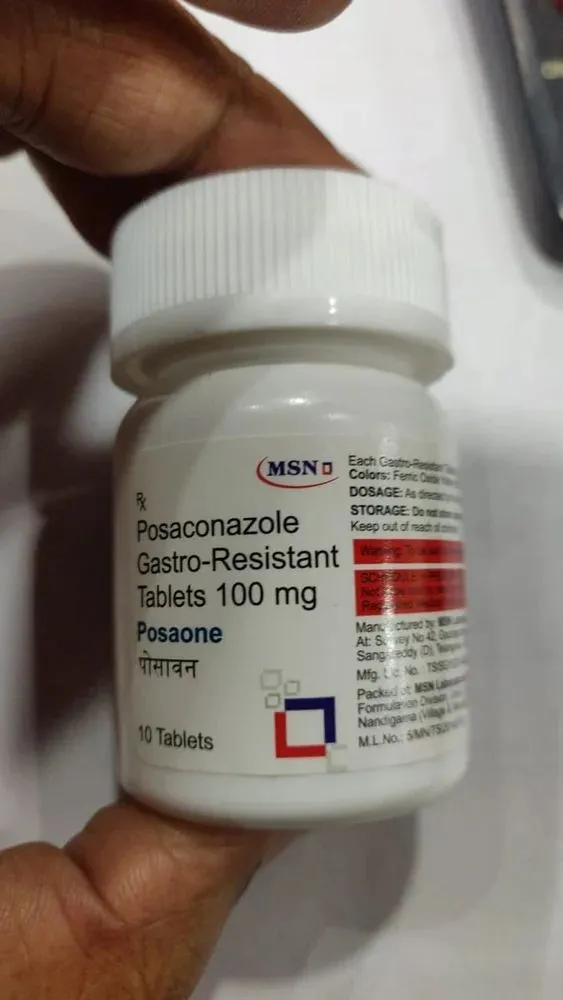
Table of Contents
Package leaflet: Information for the user
Posaconazole MSN, 100 mg, enteric-coated tablets
Posaconazolum
Please read the entire leaflet carefully before taking this medicine, as it contains
important information for the patient.
- Keep this leaflet, as you may need to read it again.
- If you have any further questions, please ask your doctor, pharmacist, or nurse.
- This medicine has been prescribed for a specific individual. Do not pass it on to others. It may harm someone else, even if their symptoms are the same.
- If you experience any adverse reactions, including any not listed in this leaflet, tell your doctor, pharmacist, or nurse. See section 4.
Leaflet contents:
- What Posaconazole MSN is and what it is used for
- Important information before taking Posaconazole MSN
- How to take Posaconazole MSN
- Possible side effects
- How to store Posaconazole MSN
- Contents of the pack and other information
1. What Posaconazole MSN is and what it is used for
This medicine contains the active substance posaconazole. It belongs to a group of medicines called "antifungal agents". It is used to prevent and treat various types of fungal infections.
This medicine works by killing or inhibiting the growth of certain types of fungi that may cause infections.
Posaconazole MSN may be used in adults for the treatment of fungal infections caused by fungi of the genus Aspergillus.
Posaconazole MSN may be used in adults and children aged 2 years and older with body weight above 40 kg for the treatment of the following fungal infections:
- infections caused by species of the genus Aspergillus, if there has been no improvement with antifungal therapy using amphotericin B or itraconazole, or if treatment with these medicines had to be discontinued;
- infections caused by fungi of the genus Fusarium, if there has been no improvement with amphotericin B or if treatment with amphotericin B had to be discontinued;
- infections caused by fungi leading to diseases such as "chromoblastomycosis" and "mycetoma (maduromycosis)", if there has been no improvement with itraconazole or if treatment with itraconazole had to be discontinued;
- infections caused by fungi of the genus Coccidioides, if there has been no improvement with one or more of the following medicines: amphotericin B, itraconazole, or fluconazole, or if treatment with these medicines had to be discontinued.
This medicine may also be used prophylactically to prevent fungal infections in adults and children aged 2 years and older with body weight above 40 kg who are at high risk of fungal infection, for example:
- in patients with weakened immune systems due to chemotherapy for "acute myelogenous leukaemia" (AML) or "myelodysplastic syndromes" (MDS);
- in patients receiving "high-dose immunosuppressive therapy after haematopoietic stem cell transplant" (HSCT).
2. Important information before using Posaconazole MSN
When not to take Posaconazole MSN
- if the patient is allergic to posaconazole or any of the other ingredients of this medicine (listed in section 6).
- if the patient is taking terfenadine, astemizole, cisapride, pimozide, halofantrine, quinidine, any medicines containing "ergot alkaloids" such as ergotamine or dihydroergotamine, or "statins" such as simvastatin, atorvastatin or lovastatin.
- if the patient has just started treatment with venetoclax or the dose of venetoclax is being gradually increased as part of therapy for chronic lymphocytic leukaemia (CLL).
Do not take Posaconazole MSN if any of the above situations apply to the patient. If in doubt, consult a doctor or pharmacist before taking Posaconazole MSN.
Further information on this topic, including information about other medicines that may interact with Posaconazole MSN, is provided below in section "Posaconazole MSN and other medicines".
Warnings and precautions
Before starting Posaconazole MSN, discuss with your doctor, pharmacist or nurse if:
-
the patient has previously had an allergic reaction to another antifungal medicine such as ketoconazole, fluconazole, itraconazole or voriconazole.
-
the patient currently has or has previously had liver problems. Blood tests may be required during treatment with this medicine.
-
the patient currently has severe diarrhoea or severe vomiting, which may reduce the effectiveness of this medicine.
-
the patient has heart rhythm abnormalities on ECG indicating QTc prolongation.
-
the patient has been diagnosed with weakened heart muscle or heart failure.
-
the patient has significant slowing of the heart rate.
-
the patient has heart rhythm disorders.
-
the patient has abnormal levels of potassium, magnesium or calcium in the blood.
-
if the patient is taking vincristine, vinblastine or other "vinca alkaloids" (medicines used in cancer treatment).
-
if the patient is taking venetoclax (a medicine used in cancer treatment).
If any of the above situations apply to the patient (or if in doubt), consult a doctor, pharmacist or nurse before taking Posaconazole MSN.
If severe diarrhoea or severe vomiting occurs while taking Posaconazole MSN, contact a doctor, pharmacist or nurse immediately, as this may reduce the effectiveness of the medicine. Further information on this topic is provided in section 4.
During treatment, avoid exposure to sunlight. It is important to cover exposed skin areas with protective clothing and to use a high sun protection factor (SPF) sunscreen, as increased sensitivity of the skin to ultraviolet (UV) radiation may occur.
Children
Posaconazole MSN must not be given to children under 2 years of age.
Posaconazole MSN and other medicines
Tell your doctor or pharmacist about all medicines the patient is currently taking or has recently taken, as well as any medicines the patient plans to take.
Do not take Posaconazole MSN if the patient is taking any of the following medicines:
- terfenadine (used to treat allergies)
- astemizole (used to treat allergies)
- cisapride (used to treat gastrointestinal complaints)
- pimozide (used to treat symptoms of Tourette’s syndrome and psychiatric disorders)
- halofantrine (used to treat malaria)
- quinidine (used to treat heart rhythm disorders).
Posaconazole MSN may increase blood levels of these medicines and consequently cause serious heart rhythm disturbances.
- any medicines containing ergot alkaloids, such as ergotamine or dihydroergotamine, used to treat migraine headaches. Posaconazole MSN may increase blood levels of these medicines, which may lead to significant reduction in blood flow to fingers or toes and consequently to tissue damage.
- statins such as simvastatin, atorvastatin or lovastatin, used to lower high cholesterol levels.
- venetoclax, used at the beginning of treatment for a type of cancer called chronic lymphocytic leukaemia (CLL).
Do not take Posaconazole MSN if any of the above situations apply to the patient. If in doubt, consult a doctor or pharmacist before taking this medicine.
Other medicines
Review the above list of medicines that must not be taken during treatment with Posaconazole MSN. In addition to the medicines listed above, there are other medicines that carry a risk of heart rhythm disturbances. This risk may be greater when they are taken together with Posaconazole MSN. Make sure your treating doctor is informed about all medicines the patient is taking (both prescription and over-the-counter).
Some medicines may increase the risk of adverse effects of Posaconazole MSN by increasing blood levels of posaconazole.
The following medicines may reduce the effectiveness of Posaconazole MSN by decreasing the amount of posaconazole in the blood:
- rifabutin and rifampicin (used to treat certain infections). Patients taking rifabutin should have blood tests and monitor for possible adverse effects of rifabutin.
- phenytoin, carbamazepine, phenobarbital or primidone (used to treat or prevent seizures).
- efavirenz and fosamprenavir (used to treat HIV infection).
- flucloxacillin (an antibiotic used to prevent bacterial infections).
Posaconazole MSN may probably increase the risk of adverse effects of certain medicines by increasing their blood concentrations. These include:
- vincristine, vinblastine and other vinca alkaloids (used in cancer treatment)
- venetoclax (used in cancer treatment)
- cyclosporine (used during or after organ transplantation)
- tacrolimus and sirolimus (used during or after organ transplantation)
- rifabutin (used to treat certain infections)
- medicines used to treat HIV infection called protease inhibitors (including lopinavir and atazanavir taken together with ritonavir)
- midazolam, triazolam, alprazolam or other benzodiazepines (used as sedatives or muscle relaxants)
- diltiazem, verapamil, nifedipine, nisoldipine or other calcium channel blockers (used to treat high blood pressure)
- digoxin (used to treat heart failure)
- glipizide or other sulfonylurea derivatives (used to lower high blood sugar levels)
- all-trans retinoic acid (ATRA), also known as tretinoin (used to treat certain blood cancers)
If any of the above situations apply to the patient (or if in doubt), consult a doctor or pharmacist before taking Posaconazole MSN.
Pregnancy and breastfeeding
If the patient is pregnant or suspects she may be pregnant, she should inform her doctor before starting Posaconazole MSN.
Do not take Posaconazole MSN during pregnancy unless specifically advised by a doctor.
Women of childbearing potential should use effective contraception during treatment with this medicine. If pregnancy occurs while taking Posaconazole MSN, inform the doctor immediately.
Do not breast-feed while taking Posaconazole MSN, as small amounts of the medicine may pass into breast milk.
Driving and operating machinery
While taking Posaconazole MSN, dizziness, drowsiness or blurred vision may occur, which could impair the ability to drive, use tools or operate machinery. In such cases, do not drive, use tools or operate machinery, and consult a doctor.
Posaconazole MSN contains sodium
This medicine contains less than 1 mmol (23 mg) of sodium per tablet, i.e. the medicine is considered "sodium-free".
3. How to use Posaconazole MSN
This medicine should always be used exactly as directed by your doctor or pharmacist. If you have any doubts,
you should consult your doctor or pharmacist.
Posaconazole MSN tablets for intestinal use must not be used interchangeably with
posaconazole oral suspension without consulting your doctor or pharmacist, as this
may result in lack of effectiveness or increased risk of adverse reactions.
What dose should be used
The usual dose of posaconazole is 300 mg (three 100 mg tablets) twice on the first day, followed by 300 mg (three 100 mg tablets) once daily.
The duration of treatment may depend on the type of infection the patient has and may be individually adjusted by the doctor. Do not adjust the dose or treatment regimen independently without consulting your doctor.
How to take the medicine
- Swallow the tablet whole with water.
- Do not crush, chew, divide, or dissolve the tablets.
- The tablets may be taken with food or independently of meals.
Taking more Posaconazole MSN than recommended
If you suspect that you have taken too much Posaconazole MSN, contact your doctor immediately or go to the hospital.
Missing a dose of Posaconazole MSN
- If you miss a dose, take it as soon as possible.
- However, if it is almost time for the next dose, skip the missed dose and return to your regular dosing schedule.
- Do not take a double dose to make up for a missed dose. If you have any further doubts about using this medicine, consult your doctor, pharmacist, or nurse.
4. Possible adverse reactions
Like all medicines, this medicine can cause adverse reactions, although not everyone will experience them.
Serious adverse reactions
Immediately inform your doctor, pharmacist or nurse if any of the following serious adverse reactions occur,
as immediate medical attention may be required:
- nausea or vomiting, diarrhoea
- symptoms of liver failure – these include yellowing of the skin or whites of the eyes (jaundice), unusually dark urine or pale stools, nausea without apparent cause, stomach discomfort, loss of appetite, unusual tiredness or weakness, increased liver enzyme activity shown in blood tests
- allergic reaction
Other adverse reactions
Inform your doctor, pharmacist or nurse if any of the following adverse reactions occur:
Common: may affect up to 1 in 10 people
- changes in electrolyte levels in the blood shown in blood tests – symptoms include feeling disoriented or weak
- abnormal skin sensations, including numbness, tingling, itching, goosebumps, pricking or burning
- headache
- low potassium levels shown in blood tests
- low magnesium levels shown in blood tests
- high blood pressure
- loss of appetite, stomach pain or upset stomach, gas, dry mouth, taste disturbances
- heartburn (a burning sensation in the chest and throat)
- decreased neutrophil count (a type of white blood cell) shown in blood tests (neutropenia), which may increase susceptibility to infections
- fever
- feeling weak, dizziness, fatigue or drowsiness
- rash
- itching
- constipation
- discomfort in the rectum
Uncommon: may affect up to 1 in 100 people
- anaemia – symptoms include headache, feeling tired or dizzy, shortness of breath or pale skin, and low haemoglobin levels shown in blood tests
- decreased platelet count shown in blood tests (thrombocytopenia), which may lead to bleeding
- decreased white blood cell count shown in blood tests (leukopenia), which may increase susceptibility to infections
- increased eosinophil count (a type of white blood cell) shown in blood tests (eosinophilia), which may be associated with inflammatory conditions
- vasculitis (inflammation of blood vessels)
- heart rhythm disorders
- seizures
- nerve damage (neuropathy)
- abnormal heart rhythm shown on ECG, palpitations, slow or rapid heartbeat, high or low blood pressure
- low blood pressure
- pancreatitis, which may cause severe abdominal pain
- spleen infarction (splenic infarction) – this may cause severe abdominal pain
- serious kidney function disorders – symptoms include decreased or increased urine output, or changes in urine colour
- high creatinine levels in blood shown in blood tests
- cough, hiccups
- nosebleeds
- severe, sharp chest pain occurring during breathing (pleuritic pain)
- swollen lymph nodes (lymphadenopathy)
- reduced sensation, especially of the skin
- tremor
- increased or decreased blood sugar levels
- blurred vision, light sensitivity
- hair loss (alopecia)
- mouth ulcers
- chills, general malaise
- pain, back or neck pain, pain in hands or feet
- fluid retention in the body (oedema)
- menstrual disorders (abnormal vaginal bleeding)
- difficulty falling asleep (insomnia)
- partial or complete loss of speech ability
- swelling of the mouth
- unusual dreams or sleep problems
- coordination or balance disturbances
- mucositis (inflammation of mucous membranes)
- stuffy nose
- breathing difficulties
- chest discomfort
- bloating
- mild to severe nausea, vomiting, abdominal cramps and diarrhoea, usually caused by a virus, abdominal pain
- belching
- feeling of restlessness
Rare: may affect up to 1 in 1,000 people
- pneumonia – symptoms may include shortness of breath and coughing up discoloured sputum
- high blood pressure in the blood vessels of the lungs (pulmonary hypertension), which may lead to severe lung and heart damage
- blood disorders, such as abnormal blood clotting or prolonged bleeding time
- severe allergic reactions, including widespread blistering rash and skin peeling
- psychiatric disorders, such as hearing voices and seeing things that are not there
- fainting
- problems with thinking or speaking, sudden uncontrolled limb movements, especially of the hands
- stroke – symptoms may include pain, weakness, numbness or tingling in limbs
- appearance of a blind spot or dark spot (scotoma) in the visual field
- heart failure or heart attack, which may lead to cardiac arrest and death, heart rhythm disorders causing sudden death
- presence of blood clots in the blood vessels of the lower limbs (deep vein thrombosis) – symptoms may include severe leg pain or swelling
- presence of blood clots in the blood vessels of the lungs (pulmonary embolism) – symptoms may include shortness of breath or pain during breathing
- bleeding from the stomach or intestines – symptoms may include vomiting blood or presence of blood in stool
- intestinal obstruction, especially of the small intestine. Obstruction prevents the movement of intestinal contents into the lower part of the digestive tract (large intestine). Symptoms may include feeling bloated, vomiting, severe constipation, loss of appetite and intestinal cramps
- haemolytic-uraemic syndrome, in which red blood cells break down (haemolysis). This may be accompanied by kidney failure
- pancytopenia, i.e. decreased number of all blood cells (white and red blood cells and platelets) shown in blood tests
- large purple bruises under the skin (thrombotic thrombocytopenic purpura)
- swelling of the face or tongue
- depression
- double vision
- chest pain
- adrenal gland dysfunction, which may cause weakness, fatigue, loss of appetite, changes in skin pigmentation
- pituitary gland dysfunction, which may cause decreased levels of certain hormones in the blood affecting the function of male or female reproductive organs
- hearing problems
- pseudoaldosteronism, resulting in high blood pressure with low potassium levels in the blood (visible in blood tests)
Frequency unknown: frequency cannot be estimated from available data
- some patients have also reported feeling disoriented after taking posaconazole
- skin redness
If any of the above adverse reactions occur, consult your doctor, pharmacist or nurse.
Reporting adverse reactions
If any adverse reactions occur, including any adverse reactions not listed in this leaflet, inform your doctor, pharmacist or nurse. Adverse reactions can be reported directly to the Department of Monitoring Adverse Drug Reactions, Office for Registration of Medicinal Products, Medical Devices and Biocidal Products, Al. Jerozolimskie 181C, 02-222 Warsaw, phone: +48 22 49 21 301, fax: +48 22 49 21 309, website: www.smz.ezdrowie.gov.pl
Adverse reactions can also be reported to the marketing authorisation holder.
Reporting adverse reactions helps provide more information on the safety of the medicine.
5. How to store Posaconazole MSN
Keep this medicine out of the sight and reach of children.
Do not use this medicine after the expiry date stated on the label and carton following EXP.
The expiry date refers to the last day of the stated month.
No special storage precautions apply.
Medicines should not be disposed of via wastewater or household waste. Ask your pharmacist how to dispose of medicines no longer required. These measures will help protect the environment.
6. Contents of the packaging and other information
What Posaconazole MSN contains
- The active substance is posaconazole. Each tablet contains 100 mg of posaconazole.
- The other components are: hypromellose acetate succinate, microcrystalline cellulose, hydroxypropylcellulose (E 463), sodium croscarmellose (E 468), colloidal anhydrous silica, magnesium stearate (E 470b), polyvinyl alcohol (partially hydrolysed) (E 1203), titanium dioxide (E 171), macrogol 4000 (E 1521), talc (E 553b), yellow iron oxide (E 172).
What Posaconazole MSN looks like and contents of the pack
Posaconazole MSN enteric-coated tablets are yellow, capsule-shaped, textured, biconvex tablets approximately 18 mm in length, with the imprint "MP 1" on one side and smooth on the other side.
Pack sizes:
The tablets are packed in blisters containing 24, 48 or 96 tablets, as well as in single-dose perforated blisters containing 24 x 1, 48 x 1 or 96 x 1 tablets, in cardboard boxes.
Not all pack sizes may be marketed.
Marketing Authorisation Holder and Manufacturer/Importer
Marketing Authorisation Holder:
MSN Labs Europe Limited
KW20A, Corradino Park
Paola, PLA 3000
Malta
tel.: (+48) 699 711 147
(logo of the Marketing Authorisation Holder)
Manufacturer/Importer:
Pharmadox Healthcare Limited
KW20A, Kordin Industrial Park
Paola, PLA 3000
Malta
MSN Labs Europe Limited
KW20A, Corradino Park
Paola, PLA 3000
Malta
This medicinal product is authorised in the Member States of the European Economic Area under the following names:
Germany: Posaconazol Vivanta Generics 100 mg magensaftresistente Tabletten
Czech Republic: Posaconazole MSN
Slovakia: Posaconazole MSN 100 mg
Hungary: Posaconazole MSN 100 mg gyomornedvellenálló tabletta
Croatia: Posakonazol MSN 100 mg želučanootporne tablete
Slovenia: Posakonazol MSN 100 mg gastrorezistentne tablete
Romania: Posaconazol MSN 100 mg comprimate gastrorezistente
Poland: Posaconazole MSN