Polcortolon
Poland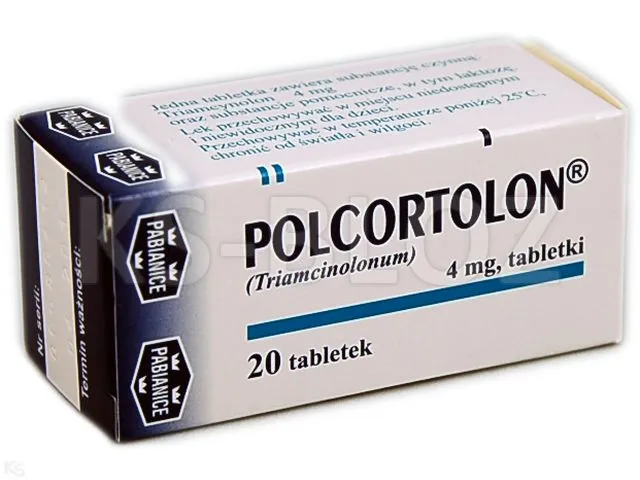
Table of Contents
Patient Information Leaflet
Polcortolon, 4 mg, tablets
(Triamcinolone)
Please read this leaflet carefully before taking this medicine, as it contains important information for you.
- Keep this leaflet as you may need to read it again.
- Ask your doctor or pharmacist if you have any further questions.
- This medicine has been prescribed for a specific individual. Do not pass it on to others.
- This medicine may harm other people, even if their symptoms are the same.
- If you experience any adverse reactions, including any not listed in this leaflet, inform your doctor, pharmacist, or nurse. See section 4.
Table of contents:
- What Polcortolon is and what it is used for
- Important information before taking Polcortolon
- How to take Polcortolon
- Possible side effects
- How to store Polcortolon
- Contents of the pack and other information
1. What Polcortolon is and what it is used for
Polcortolon belongs to a group of medicines called steroids (full name: glucocorticosteroids).
Polcortolon has strong anti-inflammatory properties. It contains a synthetic (artificial) corticosteroid hormone.
Polcortolon is indicated for the treatment of:
- endocrine disorders (e.g.: primary adrenal insufficiency, adrenogenital syndrome);
- rheumatic diseases;
- collagenoses (connective tissue diseases);
- skin diseases (e.g.: exfoliative dermatitis, severe psoriasis, pemphigus);
- severe allergic conditions unresponsive to other treatments;
- eye diseases (e.g.: conjunctivitis, keratitis, uveitis, and iridocyclitis);
- respiratory diseases (e.g.: sarcoidosis, pulmonary tuberculosis);
- hematological disorders;
- neoplastic diseases (as symptomatic treatment);
- gastrointestinal disorders (ulcerative colitis, Crohn's disease);
- multiple sclerosis.
2. Important information before taking Polcortolon
When not to take Polcortolon
- if you are allergic (hypersensitive) to the active substance or any of the other ingredients of Polcortolon (see section 6);
- if you have fungal infections;
- if you are due to be vaccinated, especially with vaccines containing live viruses.
Warnings and precautions
The following situations require special caution when using Polcortolon:
- increased severity of certain infectious diseases such as chickenpox, shingles, and measles. In case of infection, your doctor will recommend appropriate management. Patients who have never had these diseases should avoid exposure to infection;
- reduced resistance to infection. The medicine may mask (hide) symptoms of infection.
Before taking Polcortolon, inform your doctor if you have:
- peptic ulcer of the stomach and/or duodenum;
- intestinal disorders (e.g.: recent intestinal anastomoses, diverticulitis, colitis);
- thrombophlebitis;
- renal insufficiency;
- osteoporosis (especially in postmenopausal women);
- excessive muscle weakness and fatigue (myasthenia);
- fungal or viral infections;
- glaucoma;
- elevated cholesterol and triglyceride levels;
- decreased blood protein levels;
- high blood pressure;
- congestive heart failure;
- epilepsy;
- impaired liver function, liver cirrhosis;
- herpes zoster ophthalmicus;
- acute psychosis and psychiatric disorders. The medicine may worsen symptoms of these conditions;
- tuberculosis;
- hypothyroidism;
- diabetes;
- coagulation factor deficiency (prothrombin) and are simultaneously taking aspirin.
- if you experience blurred vision or other visual disturbances, contact your doctor.
Polcortolon may unmask strongyloidiasis (a gastrointestinal disease caused by the parasitic nematode Strongyloides stercoralis).
Polcortolon and other medicines
Inform your doctor or pharmacist about all medicines you are currently taking, have recently taken, or plan to take.
Some medicines may enhance the effect of Polcortolon, and your doctor may wish to monitor you closely if you are taking such medicines (including certain HIV medications: ritonavir, cobicistat).
You should inform your doctor if you are taking any of the following medicines:
- insulin and oral antidiabetic agents;
- diuretics;
- coumarin derivatives, indandione, heparin (anticoagulant medicines);
- streptokinase, urokinase (thrombolytic agents);
- non-steroidal anti-inflammatory drugs (NSAIDs), e.g. ibuprofen;
- anabolic steroids, androgens (medicines used in hormonal disorders);
- oral contraceptives containing estrogens;
- vaccines (Polcortolon reduces vaccine efficacy);
- amphotericin B (an antibiotic used to treat fungal infections);
- carbonic anhydrase inhibitors (medicines used in glaucoma treatment);
- cholinolytic agents (mainly atropine);
- tricyclic antidepressants (medicines used to treat depression);
- medicines used in hyperthyroidism and thyroid hormones;
- cardiac glycosides (e.g. digitalis glycosides used in heart failure treatment);
- isoniazid (a medicine used in tuberculosis treatment);
- mexiletine (a medicine used in cardiac arrhythmias);
- folic acid (Polcortolon increases the body's requirement for folic acid).
Food, drink, and alcohol
Polcortolon may be taken independently of meals.
This medicine increases sodium retention in the body, which may lead to edema and increased blood pressure. Therefore, salt intake should be limited.
Alcohol should not be consumed during treatment, as there is a risk of gastrointestinal bleeding.
Pregnancy and breastfeeding
If you are pregnant, breastfeeding, think you may be pregnant, or are planning to have a baby, consult your doctor before using this medicine.
Pregnancy
Polcortolon should not be used in pregnant women.
Breastfeeding
Polcortolon should not be used during breastfeeding. Small amounts of the medicine pass into breast milk.
Driving and operating machinery
Polcortolon may cause headache and dizziness, and even psychiatric disturbances. If such symptoms occur, do not drive, operate machinery, or perform any other tasks requiring concentration.
Polcortolon contains lactose
Each tablet contains 200 mg of monohydrate lactose.
If you have been previously diagnosed with intolerance to certain sugars, consult your doctor or pharmacist before taking this medicine.
3. How to use Polcortolon
This medicine should always be taken exactly as directed by the doctor. In case of doubts, consult
your doctor or pharmacist.
The dosage of Polcortolon and duration of treatment are determined by the doctor.
The usual recommendation is to take the medicine once daily in the morning.
Adults:
Typical dosage:
from 4 mg to 48 mg per day.
Sometimes higher doses may be necessary.
Use in children
The doctor will determine the dosage individually. The dose depends on the type of disease and the
child's body weight.
Regular medical check-ups are necessary. Polcortolon may cause disturbances in growth and development in infants and children (especially if the medicine is used for a long time).
Taking more than the recommended dose of Polcortolon
If a dose higher than recommended is taken, stop taking the medicine and contact your doctor immediately.
Symptoms of overdose may occur, such as increased blood pressure and swelling.
Missing a dose of Polcortolon
If a dose is missed, take the medicine as soon as possible. If it is almost time for the next dose, skip the missed dose.
Do not take a double dose to make up for a missed dose.
Stopping treatment with Polcortolon
The decision to discontinue Polcortolon treatment must be made by the doctor.
The following symptoms of glucocorticosteroid withdrawal syndrome may occur:
fever, muscle and joint pain, general malaise.
If you have any further doubts regarding the use of this medicine, consult your doctor or pharmacist.
4. Possible adverse reactions
Like all medicines, this medicine can cause adverse reactions, although not everyone experiences them.
You should contact your doctor immediately if any of the following symptoms occur:
Unknown (frequency cannot be estimated from the available data):
- severe allergic reaction (rash, itching, swelling of the face, lips, tongue, breathing difficulties), chest tightness;
- persistent nausea or vomiting, vomiting with blood, black stools or stools containing fresh blood;
- menstrual disorders;
- seizures;
- rapid and irregular heartbeat;
- prolonged sore throat, cold-like symptoms, and fever;
- symptoms of psychosis;
- swelling of the feet or legs;
- bruising or bleeding;
- weight gain;
- visual disturbances;
- psychiatric disorders (abnormally excessive elation, deep sadness, personality changes).
Other adverse reactions:
Unknown (frequency cannot be estimated from the available data):
-
congestive heart failure;
-
increased blood pressure;
-
muscle weakness, osteoporosis, increased tendency to bone fractures, aseptic necrosis of the femoral and humeral head;
-
increased appetite, weight gain, nausea, abdominal pain, bloating, heartburn;
-
gastric ulcer, gastrointestinal bleeding, pancreatitis;
-
impaired wound healing, excessive skin hair growth, acne, wide skin striae; skin thinning;
-
swelling, redness of the skin on the leg, pain worsening during walking, increased skin temperature (venous thrombosis);
-
insomnia, dizziness, and headaches;
-
Cushing's syndrome – characteristic appearance: moon face, rounded trunk, thin limbs;
-
growth suppression in children;
-
increased blood glucose levels (diabetes);
-
increased risk of blood clots;
-
increased calcium excretion.
-
blurred vision
Reporting of adverse reactions
If any adverse reactions occur, including any adverse reactions not listed in this leaflet, inform your doctor or pharmacist. Adverse reactions can be reported directly to the Department of Monitoring Adverse Drug Reactions of the Office for Registration of Medicinal Products, Medical Devices and Biocidal Products
Al. Jerozolimskie 181C
02-222 Warsaw
Phone: +48 22 49 21 301
Fax: +48 22 49 21 309
Website: https://smz.ezdrowie.gov.pl
Adverse reactions may also be reported to the marketing authorization holder or representative of the marketing authorization holder.
Reporting adverse reactions helps to provide more information on the safety of the medicine.
5. How to store Polcortolon
Keep the medicine out of sight and reach of children.
Store below 25°C.
Keep in the original packaging to protect from light and moisture.
Do not use this medicine after the expiry date stated on the label and the cardboard
box after: "Expiry date". The expiry date refers to the last day of the specified month.
Medicines must not be disposed of via wastewater or household waste. Ask your
pharmacist how to dispose of medicines no longer in use. This will help protect
the environment.
6. Contents of the pack and other information
What Polcortolon contains
The active substance is triamcinolone.
Each tablet contains 4 mg of triamcinolone.
The other ingredients are: potato starch, magnesium stearate, monohydrate lactose.
What Polcortolon looks like and contents of the pack
White or almost white, round, flat-faced tablets, embossed with the mark "o" on one side and " " on the other side.
The pack contains 20 tablets.
Marketing Authorisation Holder:
Adamed Pharma S.A.
Pieńków, ul. M. Adamkiewicza 6A
05-152 Czosnów
Manufacturer:
Adamed Pharma S.A.
Pieńków, ul. M. Adamkiewicza 6A
05-152 Czosnów