Plyzari
Poland
Table of Contents
Package leaflet: Information for the user
Plyzari, 6 mg/mL, solution for injection in a pre-filled pen
Liraglutidum
Please read all of this leaflet carefully before using this medicine because it contains
important information for you.
- Keep this leaflet. You may need to read it again.
- If you have any further questions, ask your doctor, pharmacist or nurse.
- This medicine has been prescribed for you only. Do not pass it on to others. It may harm them, even if their symptoms are the same as yours.
- If you get any side effects, talk to your doctor, pharmacist or nurse. This includes any side effects not listed in this leaflet. See section 4.
Contents of this leaflet
- What Plyzari is and what it is used for
- What you need to know before using Plyzari
- How to use Plyzari
- Possible side effects
- How to store Plyzari
- Contents of the pack and other information
1. What Plyzari is and what it is used for
What Plyzari is
Plyzari is a medicine that helps reduce body weight and contains the active substance
liraglutide. This substance mimics a naturally occurring hormone called glucagon-like peptide-1
(GLP-1), which is released from the intestines after a meal. Plyzari works by acting on receptors in
the brain that regulate appetite, causing a feeling of fullness and reducing hunger. This may help
limit the amount of food consumed and reduce body weight.
What Plyzari is used for
Plyzari is a weight-loss aid used together with diet and physical exercise in adults aged 18 years and
older, in whom:
- BMI is 30 kg/m² or higher (obesity), or
- BMI is between 27 kg/m² and less than 30 kg/m² (overweight) and there are weight-related conditions (such as diabetes, high blood pressure, abnormal blood lipid levels, or sleep-related breathing disorders known as “sleep apnoea”). Body Mass Index (BMI) is a measure of body weight relative to height.
Treatment with Plyzari should only be continued if, after 12 weeks of treatment at a dose of 3.0 mg/day, body weight has decreased by at least 5% (see section 3). To continue treatment, you must consult your doctor.
Plyzari may be used as an adjunct to a healthy diet and increased physical activity for weight management in adolescents aged 12 years and older with:
- obesity (diagnosed by a doctor)
- body weight above 60 kg
Treatment with Plyzari may be continued only if BMI has decreased by at least 4% after 12 weeks of treatment at a dose of 3.0 mg/day or at the maximum tolerated dose (see section 3). To continue treatment, you must consult your doctor.
Plyzari is indicated as an adjunct to a healthy diet and increased physical activity for weight management in children aged 6 to <12 years with:
- obesity (diagnosed by a doctor)
- body weight ≥ 45 kg
Treatment with Plyzari may be continued if BMI has decreased by at least 4% within 12 weeks of treatment at a dose of 3.0 mg/day or at the maximum tolerated dose (see section 3). To continue treatment, you must consult your doctor.
Diet and exercise
Your doctor will recommend a diet and an exercise programme. You should follow these recommendations during treatment with Plyzari.
2. What you need to know before using Plyzari
Do not use Plyzari
- if you are allergic to liraglutide or any of the other ingredients of this medicine (listed in section 6).
Warnings and precautions
Talk to your doctor, pharmacist or nurse before using Plyzari.
The use of Plyzari in patients with severe heart failure is not recommended.
Experience with use in patients aged 75 years and older is limited. Use of this medicine is not recommended in patients aged 75 years and older.
Limited data are available on the use of this medicine in patients with renal impairment. Patients with kidney problems or patients on dialysis should consult their doctor.
Limited data are available on the use of this medicine in patients with hepatic impairment. Patients with liver problems should consult their doctor.
This medicine is not recommended for patients with severe stomach or intestinal disorders causing delayed gastric emptying (gastroparesis) or with inflammatory bowel disease.
If you are scheduled for surgery requiring anaesthesia (general anaesthesia), inform your doctor that you are taking this medicine.
Patients with diabetes
Patients with diabetes should not use Plyzari as a substitute for insulin.
Pancreatitis
If you have or have had a disease of the pancreas, talk to your doctor.
Gallbladder inflammation and gallstones
During significant weight loss, you may be at risk of developing gallstones and, consequently, gallbladder inflammation. Stop using Plyzari and contact your doctor immediately if you experience sudden severe pain in the upper abdomen, usually stronger on the right side under the ribs. The pain may radiate to the back or right shoulder. See section 4.
Thyroid disease
If you have a thyroid disease, including nodules or an enlarged thyroid gland, talk to your doctor.
Heart rate
If you experience palpitations (awareness of heartbeat) or a feeling of increased heart rate at rest during treatment with Plyzari, talk to your doctor.
Fluid loss and dehydration
After starting treatment with Plyzari, you may lose body fluids or become dehydrated. This may be caused by nausea, vomiting and diarrhoea. Drink plenty of fluids to avoid dehydration. If you have any questions or concerns, talk to your doctor, pharmacist or nurse. See section 4.
Children and adolescents
The safety and efficacy of Plyzari in children under 6 years of age have not been studied.
Plyzari with other medicines
Tell your doctor, pharmacist or nurse about all medicines you are currently taking, have recently taken or might take.
In particular, inform your doctor, pharmacist or nurse if:
- you are taking antidiabetic medicines called sulfonylureas (such as glimepiride or glyburide) or insulin – there is a risk of low blood sugar (hypoglycaemia) when Plyzari is used together with these antidiabetic medicines. Your doctor may adjust the dose of the antidiabetic medicine to prevent low blood sugar. See section 4 for symptoms of low blood sugar. If insulin dose adjustment is needed, your doctor may recommend more frequent blood sugar monitoring.
- you are taking warfarin or other oral anticoagulant medicines (blood thinners). More frequent blood clotting tests may be needed.
Pregnancy and breastfeeding
If you are pregnant, think you may be pregnant or are planning to have a baby, you should not use this medicine. There is no information on the effects of liraglutide on the unborn child.
Do not breast-feed during treatment with Plyzari. It is not known whether liraglutide passes into human milk.
Driving and using machines
Plyzari is unlikely to affect the ability to drive or operate machinery. However, some patients taking this medicine may experience dizziness, mainly during the first 3 months of treatment (see “Possible side effects”). If you feel dizzy, take special care when driving or operating machinery. For further information, talk to your doctor.
Plyzari contains sodium
This medicine contains less than 1 mmol (23 mg) of sodium per dose, i.e. it is considered “sodium-free”.
3. How to use Plyzari
This medicine should always be used exactly as prescribed by your doctor. If in doubt, consult your
doctor, pharmacist, or nurse.
Your doctor will start you on a diet and exercise program. You must follow these recommendations
throughout treatment with Plyzari.
What dose of medicine should be injected
Adults
Treatment starts with a low dose, which should be gradually increased over the first five weeks of treatment.
- The initial dose of Plyzari is 0.6 mg once daily for at least one week.
- The dose should be gradually increased by 0.6 mg, as directed by your doctor, usually once a week, until the recommended dose of 3.0 mg once daily is reached. Your doctor will inform you of the dose of Plyzari to be taken in the subsequent weeks of therapy. The usual dosing schedule is generally as follows:
Injected dose
Week
Week 1 0.6 mg once daily
Week 2 1.2 mg once daily
Week 3 1.8 mg once daily
Week 4 2.4 mg once daily
From Week 5 3.0 mg once daily
After reaching the recommended dose of 0.6 mg in Week 5, this dose should be maintained for the remainder of the treatment. Do not increase the dose further.
Your doctor will regularly assess the treatment results.
Children and adolescents (aged 6 to 18 years)
For children and adolescents aged 6 to 18 years, a similar dose-escalation schedule as for adults (see the table above for adults) should be followed. The dose should be gradually increased until reaching a dose of 3.0 mg (maintenance dose) or until the maximum dose tolerated by the patient is reached. Daily doses higher than 3.0 mg are not recommended.
How and when to use Plyzari
- Before using the injection pen for the first time, your doctor or nurse will show you how to use it.
- Plyzari may be taken at any time of day, with or without food or drink.
- You should take Plyzari approximately at the same time each day – you may choose the most convenient time for yourself.
Injection site
Plyzari should be injected under the skin (subcutaneous injection).
- The best injection sites are the front of the waist (abdomen), the front of the thigh, or the upper arm.
- Change the injection site each day to reduce the risk of developing lumps.
- Do not inject the medicine into a vein or into a muscle.
The injection pen does not contain needles. It can be used with disposable needles such as BD Ultra-Fine or NovoFine disposable needles, 32 G in thickness and up to 8 mm in length.
Detailed instructions are provided on the reverse of this leaflet.
Patients with diabetes
If you have diabetes, you should inform your doctor. To prevent low blood sugar, your doctor may adjust the dose of your anti-diabetic medicines.
- Do not mix Plyzari with other injectable medicines (e.g. insulin).
- Do not use Plyzari in combination with other medicines that are GLP-1 receptor agonists (such as exenatide or lixisenatide).
Use of more than the recommended dose of Plyzari
If more than the recommended dose of Plyzari has been used, contact your doctor immediately or go to hospital. Take the medicine packaging with you.
You may require treatment. The following symptoms may occur:
- nausea
- vomiting
- low blood sugar (hypoglycaemia). Symptoms indicating low blood sugar – see section on side effects under “Common”.
Missed dose of Plyzari
- If less than 12 hours have passed since the scheduled time of taking Plyzari, take the missed dose as soon as possible.
- However, if more than 12 hours have passed since the time when Plyzari should have been taken, skip the missed dose and take the next dose as usual the following day.
- Do not take a double dose or increase the dose the next day to make up for a missed dose.
Stopping Plyzari treatment
Do not stop using this medicine without consulting your doctor.
If you have any further questions about the use of this medicine, consult your doctor, pharmacist, or nurse.
4. Possible adverse reactions
Like all medicines, this medicine can cause adverse reactions, although not everyone will experience them.
Serious adverse reactions
Severe allergic reactions (anaphylaxis) have been reported rarely in patients treated with Plyzari.
If symptoms such as difficulty breathing, facial and throat swelling, or rapid heartbeat occur,
seek immediate medical attention.
Inflammation of the pancreas (pancreatitis) has been reported not infrequently in patients treated with
Plyzari. Pancreatitis may be severe and potentially life-threatening.
Treatment with this medicine should be discontinued and immediate medical advice sought if any of the following serious adverse reactions occur:
- Severe and persistent abdominal pain (in the stomach area) possibly radiating to the back, along with nausea and vomiting, as these may be symptoms of pancreatitis.
Other adverse reactions
Very common: may occur in more than 1 in 10 patients
- Nausea, vomiting, diarrhoea, constipation, headache – these symptoms usually resolve within a few days or weeks.
Common: may occur in no more than 1 in 10 patients
- Gastrointestinal disorders such as dyspepsia, gastritis, stomach discomfort, upper abdominal pain, heartburn, bloating, gas, belching, and dry mouth
- Feeling of weakness or fatigue
- Taste disturbances
- Dizziness
- Difficulty sleeping (insomnia); these symptoms usually occur during the first 3 months of treatment
- Gallstones
- Rash
- Injection site reactions (such as bruising, pain, irritation, itching, and rash)
- Low blood sugar (hypoglycaemia). Symptoms of low blood sugar may appear suddenly and include cold sweats, cold pale skin, headache, palpitations, nausea, intense hunger, blurred vision, drowsiness, weakness, nervousness, anxiety, confusion, difficulty concentrating, and tremor. Your doctor will advise you on how to manage symptoms caused by low blood sugar and what to do if such symptoms occur.
- Increased activity of pancreatic enzymes such as lipase and amylase.
Uncommon: may occur in no more than 1 in 100 patients
- Fluid loss (dehydration). These symptoms are more likely at the beginning of treatment and may be caused by vomiting, nausea, and diarrhoea
- Delayed gastric emptying
- Inflammation of the gallbladder
- Allergic reactions, including skin rash
- General malaise
- Rapid heartbeat.
Rare: may occur in no more than 1 in 1,000 patients
- Kidney dysfunction
- Acute kidney failure; symptoms may include reduced urine volume, metallic taste in the mouth, and easy bruising.
Frequency not known: frequency cannot be determined from available data
- Intestinal obstruction. A severe form of constipation with additional symptoms such as abdominal pain, bloating, vomiting, etc.
- Subcutaneous nodules may be caused by the accumulation of a protein called amyloid (cutaneous amyloidosis; frequency not established).
Reporting of adverse reactions
If any adverse reactions occur, including any not listed in this leaflet, inform your doctor or pharmacist. Adverse reactions can be reported directly to the Department for Monitoring Adverse Drug Reactions of the Office for Registration of Medicinal Products, Medical Devices and Biocidal Products,
Al. Jerozolimskie 181C, 02-222 Warsaw
tel.: + 48 22 49 21 301, fax: + 48 22 49 21 309, website: https://smz.ezdrowie.gov.pl
Adverse reactions can also be reported to the marketing authorization holder. Reporting adverse reactions helps provide more information on the safety of this medicine.
5. How to store Plyzari
Keep this medicine out of the sight and reach of children.
Do not use this medicine after the expiry date stated on the injector label and outer packaging after EXP. The expiry date refers to the last day of the specified month.
Before first use:
Store in a refrigerator (2°C – 8°C). Do not freeze.
After first use of the injector:
The injector may be stored for up to 1 month at a temperature below 30°C or in the refrigerator (2°C – 8°C). Do not freeze.
When the injector is not in use, protect it from light by replacing the cap on the injector.
Do not use this medicine if you notice that the solution is not clear and colourless or almost colourless.
Medicines must not be disposed of via wastewater or household waste. Ask your pharmacist how to dispose of medicines no longer required. These measures will help protect the environment.
6. Contents of the pack and other information
What Plyzari contains
- The active substance is liraglutide. 1 mL of injection solution contains 6 mg of liraglutide. One pre-filled automatic injector contains 18 mg of liraglutide.
- Other ingredients are: disodium citrate dihydrate, propylene glycol, phenol, and water for injections. Additionally, hydrochloric acid and (or) sodium hydroxide may be added to adjust pH.
What Plyzari looks like and contents of the pack
Plyzari is supplied as a clear, colourless or almost colourless solution for injection in a pre-filled pen. Each injector contains 3 mL of solution and allows administration of doses of 0.6 mg, 1.2 mg, 1.8 mg, 2.4 mg, and 3.0 mg.
Plyzari is available in packs containing 1, 3, or 5 injectors. Not all pack sizes may be marketed.
The pack does not contain needles.
Marketing Authorisation Holder and Importer
Marketing Authorisation Holder
Zentiva k.s.
U kabelovny 130
Dolní Měcholupy
102 37 Prague 10
Czech Republic
Importer
Pharmadox Healthcare Ltd.
KW20A Kordin Industrial Park
Paola PLA 3000
Malta
This medicinal product is authorised in the European Economic Area countries under the following names:
Austria: Luntin 6 mg/ml Injektionslösung in einem Fertigpen
Spain: Plyzari 6 mg/ml solución inyectable en pluma precargada
France: LIENDAX 6 mg/mL, solution injectable en stylo prérempli
Netherlands: Nevolat 6 mg/ml oplossing voor injectie in een voorgevulde pen
Hungary: Nevolat 6 mg/ml oldatos injekció előretöltött injekciós tollban
Germany, Norway, Sweden: Nevolat
Czech Republic, Poland, Portugal, Italy: Plyzari
For further information about this medicinal product, please contact the local representative of the Marketing Authorisation Holder:
Zentiva Polska Sp. z o.o.
ul. Bonifraterska 17
00-203 Warsaw, Poland
Tel.: +48 22 375 92 00
INSTRUCTION FOR USE OF THE PLYZARI INJECTION PEN
| Instructions for use of Plyzari 6 mg/mL solution for injection in a prefilled automatic pen injector Before using the Plyzari prefilled automatic pen injector, carefully read the instructions below. Do not use the pen injector without proper training from a doctor or nurse. Begin by checking that the pen contains Plyzari 6 mg/mL, then review the illustrations next to familiarize yourself with the individual parts of the pen injector and the needle. Visually impaired or blind individuals who cannot read the dose counter on the pen injector should not use the injector without assistance. Seek help from a person with good vision who has been trained in the use of the Plyzari prefilled automatic pen injector. This pen is a prefilled automatic pen injector with adjustable dose selection. It contains 18 mg of liraglutide and delivers doses of 0.6 mg, 1.2 mg, 1.8 mg, 2.4 mg, and 3.0 mg. Single-use BD Ultra-Fine or NovoFine needles are recommended. Needles are not included in the package. Important information Pay special attention to this information, as it is essential for the safe use of the pen injector. | 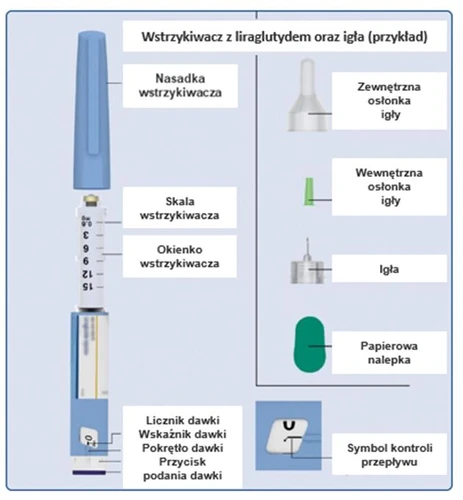 |
|  |
| Check whether the solution in the pen is clear and colorless. Look through the viewing window of the pen. If the solution is cloudy, do not use the pen. | 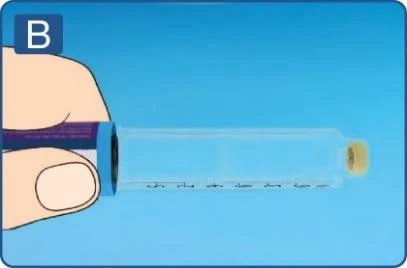 |
| Take a new needle and peel off the paper tab. | 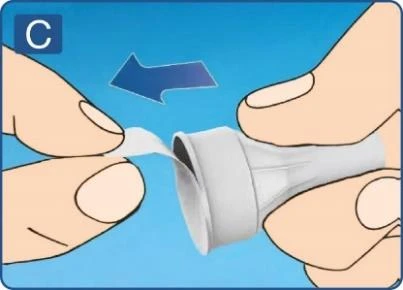 |
| Attach the needle directly onto the pen. Screw it on until it is securely fastened. | 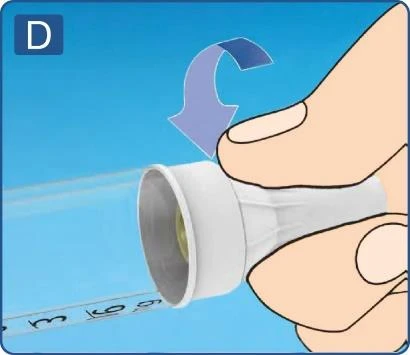 |
| Remove the outer needle cap and keep it for later. It will be needed after injection for safe removal of the needle from the pen. | 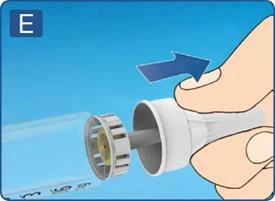 |
| Remove the inner needle cap and discard it. Attempting to reattach it may result in accidental needlestick injury.
A drop of solution may appear at the needle tip. This is normal. However, during the first use of the pen, flow must be checked.
Do not attach a new needle to the pen until you are ready to administer the injection.
Always use a new needle for each injection.
This helps prevent needle blockage, contamination, infection, and inaccurate dosing.
Never use a bent or damaged needle. | 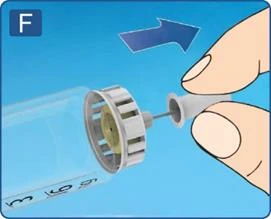 |
 | 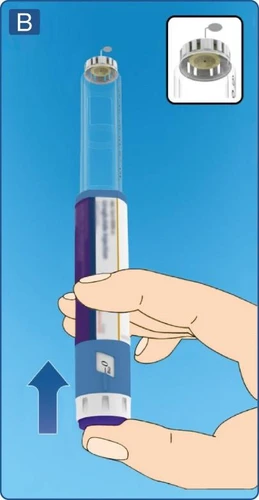 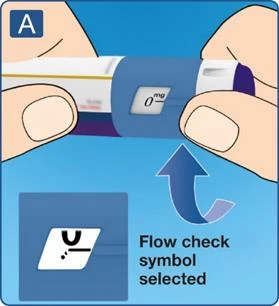 |
3. Setting the Dose
- Turn the dose selector dial until the dose counter
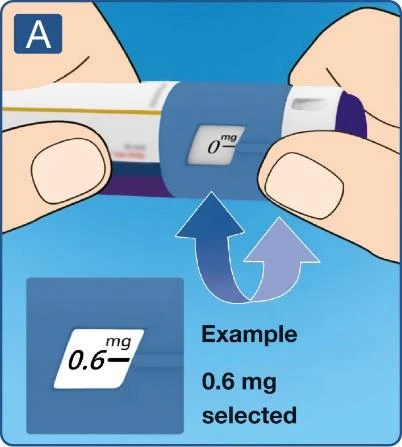
displays the correct dose (0.6 mg,
1.2 mg, 1.8 mg, 2.4 mg, or 3.0 mg).
If an incorrect dose is selected, you may turn the dial forward or backward to correct the dose. The injection pen allows doses up to 3.0 mg to be selected.
The dose selector dial enables adjustment of the dose.
Only the dose counter and dose pointer indicate how many mg have been selected for the dose.
You may select up to 3.0 mg per dose. If the pen contains less than 3.0 mg of medication, the dose counter will stop before reaching 3.0 mg.
The clicking sounds of the dose selector dial differ when turning forward or backward, and when the selected dose exceeds the remaining amount of medication in the pen. Do not count the clicks of the pen.
Before injecting the medication, always verify
the selected number of mg by checking the
dose counter and dose pointer.
Do not count the clicks of the pen. Do not use the pen scale. This scale only shows an approximate amount of solution remaining in the pen.
Use the dose selector dial to select only the
following doses: 0.6 mg, 1.2 mg, 1.8 mg, 2.4 mg,
or 3.0 mg. The selected dose must align exactly with the dose pointer to ensure accurate dosing.
How much solution remains?
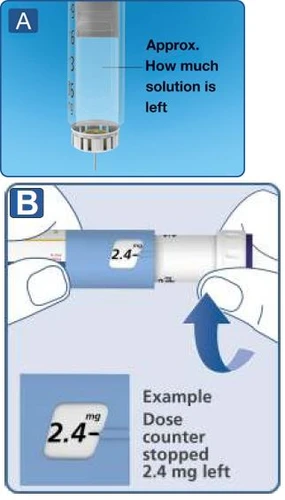
- The pen scale shows the approximate amount

of solution remaining in the pen.
- To accurately check how much solution remains, use the dose counter: Turn the dose selector dial until the dose counter stops. If the number 3.0 is visible, at least 3.0 mg of medication remains in the pen. If the dose counter stops before 3.0 mg, this means the pen does not contain enough solution to deliver a full 3.0 mg dose.
If more medication is needed than remains in the pen
You may split a dose between the current pen and a new pen only if you have been trained by your doctor or nurse, or have received appropriate instructions from them.
Use a calculator to determine the required doses.
| according to the instructions provided by the doctor or nurse. Calculations must be performed very carefully. If there is any doubt about how to divide the dose between two syringes, select and administer the required dose using a new syringe. | |
| 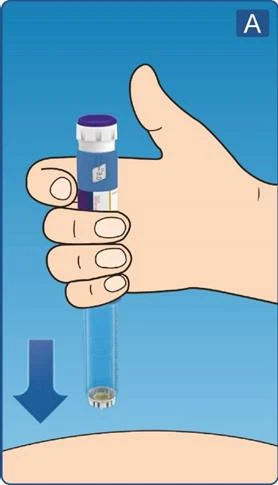 |
| 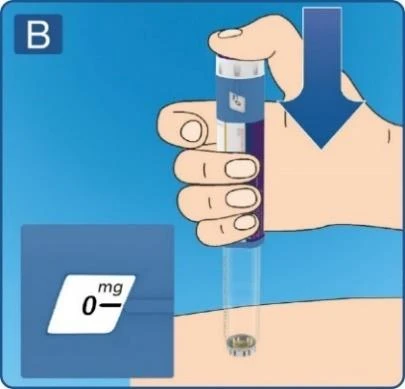 |
|  |
| 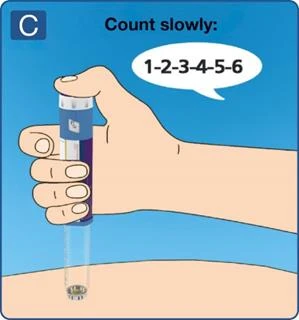 |
| After injection, a drop of solution may appear at the needle tip. This is normal and does not affect the administered dose. Always observe the dose counter to verify the number of mg of medication administered. Keep the dose button pressed until the dose counter shows 0. How to check whether the needle is blocked or damaged?
| 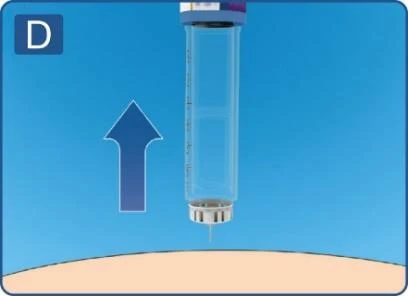 |
| |
| 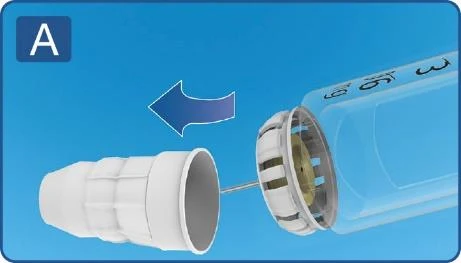 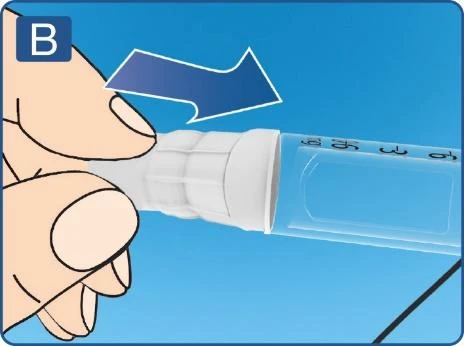 |
| 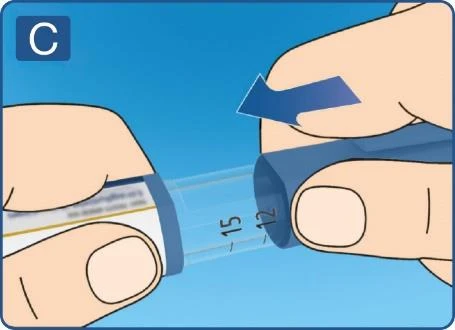 |
Other important information
| |
Caring for the injector
| |
|