Plenvu
Poland
Table of Contents
Package leaflet: Information for the patient
Plenvu, powder for oral solution
Macrogol 3350, sodium ascorbate, anhydrous sodium sulfate, ascorbic acid, sodium chloride and potassium chloride.
Please read all of this leaflet carefully before taking this medicine because it contains important information for you.
- Keep this leaflet. You may need to read it again.
- If you have any further questions, ask your doctor, pharmacist or nurse.
- This medicine has been prescribed for a specific individual. Do not pass it on to others. It may harm them even if their symptoms are the same.
- If you experience any side effects, including any not listed in this leaflet, tell your doctor, pharmacist or nurse. See section 4.
Contents of the leaflet
- What Plenvu is and what it is used for
- What you need to know before taking Plenvu
- How to take Plenvu
- Possible side effects
- How to store Plenvu
- Contents of the pack and other information
1. What Plenvu is and what it is used for
Plenvu contains several active substances: macrogol 3350, sodium ascorbate, anhydrous sodium sulfate, ascorbic acid, sodium chloride and potassium chloride.
Plenvu is a bowel cleansing agent.
Plenvu is intended for use in adults aged 18 years and older prior to any clinical procedure requiring bowel cleansing.
Plenvu cleanses the bowel by inducing diarrhoea.
2. Important information before taking Plenvu
When not to use Plenvu:
- if the patient is allergic to the active substances or to any of the other ingredients of Plenvu (listed in section 6);
- in case of intestinal obstruction (intestinal blockage);
- in case of a perforation in the wall of the stomach or intestine (intestinal perforation);
- in case of intestinal paralysis (ileus);
- if the patient has disorders affecting the emptying of solid and liquid contents from the stomach (e.g. gastroparesis, gastric retention);
- if the patient has phenylketonuria. This is an inherited condition in which the body cannot properly metabolize certain amino acids. Plenvu contains a source of phenylalanine.
- if the patient’s body is unable to produce sufficient glucose-6-phosphate dehydrogenase;
- in case of significant intestinal distension (toxic megacolon).
Warnings and precautions
Before taking Plenvu, consult a doctor, pharmacist, or nurse if:
- the patient has heart problems or cardiac arrhythmias;
- the patient has kidney disease and/or is dehydrated;
- the patient has heart failure, severe kidney problems, or is taking blood pressure medications;
- the patient has gastrointestinal problems, including intestinal inflammation;
- the patient has difficulty swallowing (see also "Taking Plenvu with food and drink");
- the patient has elevated or reduced levels of salts (e.g. sodium, potassium) in the blood;
- the patient has any other medical condition (e.g. seizure);
- the patient has epilepsy or has previously experienced seizures.
Plenvu must not be administered to patients with impaired consciousness unless under medical supervision.
Patients in poor health or suffering from serious illness must pay particular attention to possible adverse effects listed in section 4. In case of doubt, contact a doctor, pharmacist, or nurse.
If, during administration of Plenvu for bowel cleansing, the patient experiences sudden abdominal pain or rectal bleeding, contact a doctor or seek immediate medical attention.
If vomiting (with blood) occurs during administration of Plenvu, followed by sudden chest, neck, or abdominal pain, difficulty swallowing, or breathing difficulties, discontinue taking the medicine immediately and contact a doctor without delay.
Children and adolescents
Plenvu is not recommended for children and adolescents under 18 years of age.
Plenvu and other medicines
Inform the doctor, pharmacist, or nurse about all medicines currently or recently taken by the patient, as well as any medicines the patient plans to take (including oral contraceptives).
Oral medications may be flushed out of the gastrointestinal tract and may not be properly absorbed if taken within one hour before, during, or one hour after taking Plenvu.
When using oral contraception, additional contraceptive methods (e.g. condoms) may be necessary to prevent pregnancy.
Taking Plenvu with food and drink
On the day before the procedure, a light breakfast and a light lunch may be consumed.
For the two-day split-dosing regimen OR the day-before dosing regimen, the lunch meal must be completed at least 3 hours before starting Plenvu, after which only clear liquids may be consumed.
For the same-day morning dosing regimen, a clear soup and/or plain natural yogurt may be consumed for dinner (which should be completed by approximately 8:00 PM). After the evening meal on the day before the procedure, only clear liquids may be consumed.
Note: Information on dosing regimens is provided in section 3.
On the day of the procedure, breakfast must not be eaten.
Continue drinking clear liquids before, during, and after taking Plenvu to help prevent fluid loss (dehydration). It is important to drink the additional recommended amounts of clear liquids.
Examples of clear liquids include: water, clear soups, herbal tea, black tea or coffee (without milk), non-alcoholic drinks/diluted syrups, and clear fruit juices (without pulp).
Important information:
- Alcohol, milk, any red or purple liquids (e.g. blackcurrant juice), or other drinks containing pulp must not be consumed.
- Solid foods must not be consumed during Plenvu administration and until the procedure is completed.
Fluid intake must be stopped at least:
- two hours before the procedure under general anaesthesia, or
- one hour before the procedure without general anaesthesia.
Plenvu may reduce the effectiveness of thickening agents used to thicken liquids for safe swallowing.
Pregnancy, breastfeeding, and fertility
There are no data on the use of Plenvu during pregnancy or breastfeeding; therefore, its use is not recommended. Plenvu may be taken only if the doctor considers it necessary. If the patient is pregnant or breastfeeding, suspects she may be pregnant, or is planning to have a child, she should consult a doctor or pharmacist before using Plenvu.
Driving and operating machinery
Plenvu has no effect on the ability to drive or operate machinery.
Plenvu contains sodium, potassium, and a source of phenylalanine
This medicine contains 458.5 mmol (10.5 g) of sodium per treatment cycle. This should be taken into account in patients who are monitoring their sodium intake.
This medicine contains 29.4 mmol (1.1 g) of potassium per treatment cycle. This should be considered in patients with impaired kidney function and in those monitoring their potassium intake.
Plenvu contains a source of phenylalanine. It may be harmful to patients with phenylketonuria.
It also contains ascorbate, which may be harmful to patients with glucose-6-phosphate dehydrogenase deficiency.
3. How to take Plenvu
This medicine should always be taken as directed by your doctor or pharmacist. If you have any
doubts, consult your doctor, pharmacist or nurse.
Before taking Plenvu, carefully read the instructions below. Important information:
- When to take Plenvu
- How to prepare Plenvu
- How to drink Plenvu
- What to expect
When to take Plenvu
Treatment with Plenvu must be completed before the clinical procedure.
The dosing regimen can be taken in separate doses as described below:
Split-dose regimen over two days
Dose 1 should be taken the evening before the clinical procedure, and dose 2 should be taken the
morning of the procedure, approximately 12 hours after starting the first dose or
Single-day morning regimen
Doses 1 and 2 should be taken on the morning of the clinical procedure. Dose 2 should be taken
at least 2 hours after starting dose 1 or
Day-before evening regimen
Doses 1 and 2 should be taken in the evening on the day before the clinical procedure. Dose 2
should be taken at least 2 hours after starting dose 1.
Your doctor will inform you which dosing regimen you should follow. DO NOT
add any other ingredients to the medicine.
During treatment with Plenvu and until the procedure is performed, solid food should not be consumed.
Information regarding meal times before taking Plenvu is provided in section 2.
How to prepare dose 1 of Plenvu
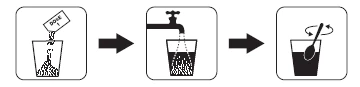
- Open the cardboard package and remove the sachet containing dose 1.
- Pour the contents of the dose 1 sachet into a measuring cup with a capacity of 500 ml.
- Add water up to the 500 ml mark and mix until all the powder dissolves. This may take up to 8 minutes.
How to drink dose 1 of Plenvu
Drink 500 ml of dose 1 and 500 ml of clear fluid within 60 minutes. It is acceptable to alternate
between the prepared solution and clear fluid. Try to drink a full glass of fluid every 10–15 minutes.
Clear fluids include water, clear broth, diluted syrups/fruit juices (without pulp), tea, or coffee (without milk).

How to prepare dose 2 of Plenvu
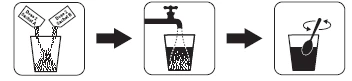
- When the patient is ready to take dose 2, pour the contents of sachets A and B of dose 2 into a measuring cup with a capacity of 500 ml.
- Add water up to the 500 ml mark and mix until all the powder dissolves. This may take up to 8 minutes.
How to drink dose 2 of Plenvu
According to the recommended dosing schedule, prepare and drink 500 ml of dose 2 and 500 ml of clear fluid within 60 minutes. Alternating between the prepared solution and clear fluid is permitted.

Additional clear fluids may be consumed during the bowel preparation process—before, during, and after taking Plenvu. However, fluid intake must be stopped 1 to 2 hours before the clinical procedure. Drinking clear fluids helps prevent fluid loss (dehydration).
What to expect
After starting to drink the Plenvu solution, remain close to a toilet. Watery bowel movements will occur at certain times. This is normal and indicates that the Plenvu solution is working. Abdominal bloating may occur before the first bowel movement.
If you follow these instructions, your bowel will be properly cleansed, which will help ensure a successful examination. Allow sufficient time after bowel movements have ceased before traveling to the clinic/hospital.
Taking a higher than recommended dose of bowel cleansing agents
If Plenvu is taken before or after other bowel cleansing products, excessive diarrhea may occur, which could lead to dehydration. Drink plenty of clear fluids. If you have any doubts, contact your doctor or go immediately to the nearest hospital emergency department.
Missing a dose of Plenvu
- If you miss taking Plenvu as directed, take it as soon as you remember and contact your doctor, pharmacist, or nurse for advice before undergoing the clinical procedure.
- It is important to allow sufficient time for Plenvu to work, ensuring thorough bowel cleansing at least 2 hours before the clinical procedure.
If you have any further questions about the use of this medicine, consult your doctor, pharmacist, or nurse.
4. Possible adverse effects
Like all medicines, Plenvu can cause adverse effects, although they do not occur in everyone.
Experiencing diarrhoea during treatment with Plenvu is a normal reaction.
If bowel movement does not occur within 6 hours after taking Plenvu, treatment should be discontinued
and medical advice should be sought immediately.
If any of the following adverse symptoms occur, treatment with Plenvu should be discontinued
and a doctor should be consulted immediately, as these may be symptoms of a serious allergic reaction:
- extreme tiredness,
- palpitations,
- rash or itching,
- shortness of breath,
- swelling of the face, ankles or other body parts.
Treatment with Plenvu should be discontinued and medical advice should be sought immediately if any of the following adverse symptoms occur:
- seizures.
A doctor should be informed immediately if any of the following symptoms occur during treatment with Plenvu, as they may indicate overhydration or dehydration:
- dizziness,
- headache,
- less frequent urination than usual,
- vomiting.
Medical advice should also be sought immediately if severe stomach (abdominal) pain occurs.
In rare cases, when using bowel cleansing agents for bowel preparation, especially in patients with concomitant heart disease or electrolyte disturbances, serious cardiac arrhythmias may occur (i.e. a sensation of strong, fluttering or irregular heartbeat lasting for several seconds or even minutes). If such symptoms persist, a doctor should be informed.
Frequent adverse effects (may occur in up to 1 in 10 people):
- dehydration,
- nausea,
- vomiting.
Uncommon adverse effects (may occur in up to 1 in 100 people):
- abdominal distension and pain,
- discomfort and pain,
- allergic reaction,
- chills,
- fatigue,
- headache or migraine,
- hot flushes,
- increased blood glucose levels in diabetic patients,
- rapid heartbeat,
- palpitations,
- anal pain,
- insomnia,
- transient increase in blood pressure,
- transient increase in liver enzyme activity,
- thirst,
- various electrolyte disturbances,
- weakness.
Frequency not known (frequency cannot be estimated from available data):
- oesophageal rupture due to vomiting.
Reporting of adverse effects
If any adverse effects occur, including any not listed in this leaflet, inform a doctor, pharmacist or nurse.
Adverse effects can be reported directly to the Department of Monitoring of Adverse Drug Reactions, Office for Registration of Medicinal Products, Medical Devices and Biocidal Products
Al. Jerozolimskie 181C
02-222 Warsaw
Tel.: +48 22 49 21 301
Fax: +48 22 49 21 309
Website: https://smz.ezdrowie.gov.pl
Adverse effects can also be reported to the marketing authorisation holder.
Reporting adverse effects helps to provide more information on the safety of the medicine.
5. How to store Plenvu
Keep this medicine out of sight and reach of children.
Do not use this medicine after the expiry date stated on the sachet and outer carton following the abbreviation EXP. The expiry date refers to the last day of the stated month.
Please note that the expiry dates of individual sachets and the packaging may differ.
Before opening, do not store above 25°C.
Store prepared solutions below 25°C and consume within 24 hours.
Solutions may be stored in a refrigerator. Prepared solutions should be kept covered.
Medicines must not be disposed of via wastewater or household waste. Ask your pharmacist how to dispose of medicines no longer required. This will help protect the environment.
6. Contents of the pack and other information
What Plenvu contains
In the sachet containing Dose 1: the following active substances are present:
Macrogol 3350 100 g
Anhydrous sodium sulfate 9 g
Sodium chloride 2 g
Potassium chloride 1 g
The electrolyte ion concentrations after preparation of 500 ml of solution from Dose 1 are as follows:
Sodium 160.9 mmol/500 ml
Sulfate 63.4 mmol/500 ml
Chloride 47.6 mmol/500 ml
Potassium 13.3 mmol/500 ml
Dose 1 also contains 0.79 g of sucralose (E955).
In the sachets containing Dose 2 (Sachets A and B): the following active substances are present:
Sachet A:
Macrogol 3350 40 g
Sodium chloride 3.2 g
Potassium chloride 1.2 g
Sachet B:
Sodium ascorbate 48.11 g
Ascorbic acid 7.54 g
The electrolyte ion concentrations after preparation of 500 ml of solution from Dose 2 (using Sachets A and B) are as follows:
Sodium 297.6 mmol/500 ml
Ascorbate 285.7 mmol/500 ml
Chloride 70.9 mmol/500 ml
Potassium 16.1 mmol/500 ml
Excipients with known effect
Dose 2 (Sachet A) also contains 0.88 g of aspartame (E951).
Other ingredients:
Mango flavour containing maltodextrin (E1400), glycerol (E422), natural flavouring substances, arabic gum (E414), and flavouring preparations.
Fruit flavour containing maltodextrin (E1400), arabic gum (E414), flavouring substances, and flavouring preparations.
Further information is provided in section 2.
What Plenvu looks like and contents of the pack
The pack contains three sachets: Dose 1, Sachet A of Dose 2, and Sachet B of Dose 2.
Plenvu, powder for oral solution, is available in packs containing 1 treatment set and in packs containing 40, 80, 160, and 320 treatment sets.
Not all pack sizes may be marketed.
Marketing Authorisation Holder:
Norgine B.V.
Antonio Vivaldistraat 150,
1083 HP Amsterdam
The Netherlands
Tel: +31 (0)20 567 09 00
Importer:
Norgine B.V.
Antonio Vivaldistraat 150
1083 HP Amsterdam
The Netherlands
Norgine Pharma
29 rue Ethe Virton
Dreux 28100
France
This medicinal product is authorised in the European Economic Area countries and in the United Kingdom (Northern Ireland) under the following names:
Belgium, Bulgaria, Czech Republic, Croatia, Denmark, Finland, France, Germany, Hungary, Iceland, Ireland, Italy, Luxembourg, Norway, Poland, Portugal, Romania, Slovakia, Slovenia, Sweden, United Kingdom (Northern Ireland): PLENVU
Austria, The Netherlands, Spain: PLEINVUE