Pixalzina
Poland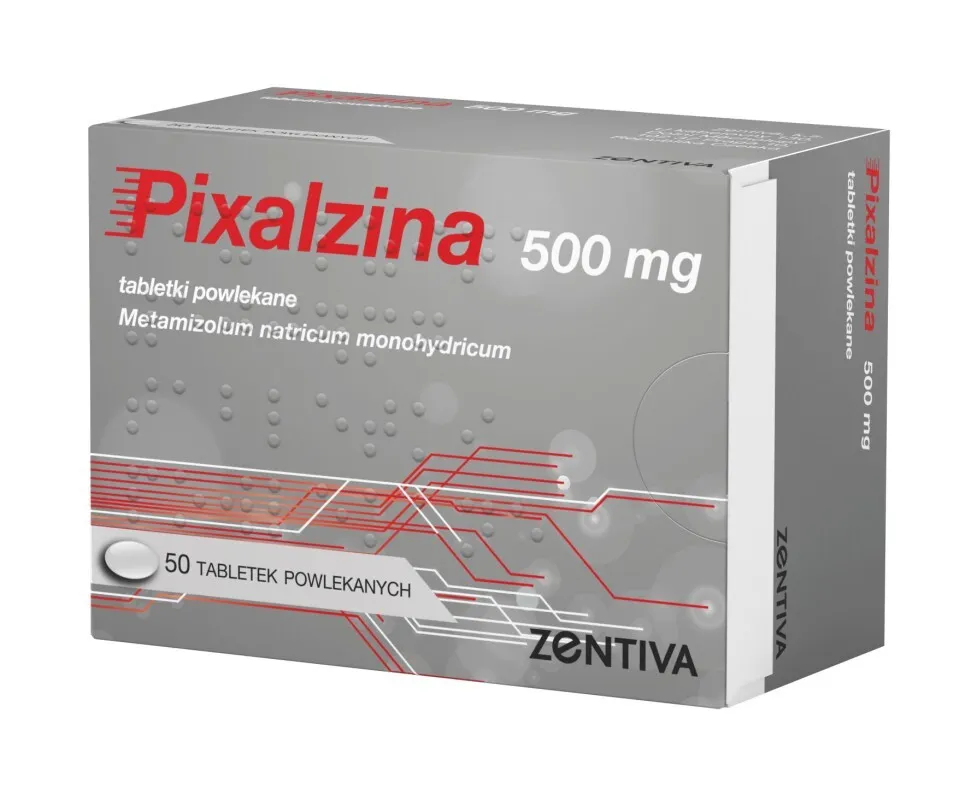
Table of Contents
Package leaflet: Information for the patient
Pixalzina, 500 mg, coated tablets
Metamizolum natricum monohydricum
Pixalzina may cause a significantly reduced number of white blood cells (agranulocytosis), which can
lead to severe and life-threatening infections (see section 4).
The medicine must be discontinued and immediate contact with a doctor must be sought if any of the
following symptoms occur: fever, chills, sore throat, painful ulcers of the nose, oral cavity and throat, or
in the genital or anal area.
If agranulocytosis has ever occurred in the patient during treatment with metamizole or similar
medicines, this medicine must never be taken again in the future (see section 2).
Please read this leaflet carefully before using the medicine, as it contains
important information for the patient.
This medicine should always be taken exactly as described in this patient leaflet or as directed by the
doctor, pharmacist, or nurse.
- Keep this leaflet so that you can read it again if necessary.
- If you need advice or further information, please consult your pharmacist.
- If any adverse reactions occur, including any possible adverse reactions not listed in this leaflet, inform your doctor or pharmacist. See section 4.
- If there is no improvement after 3–5 days, or if the patient feels worse, contact a doctor.
Contents of the leaflet:
- What Pixalzina is and what it is used for
- Important information before taking Pixalzina
- How to take Pixalzina
- Possible side effects
- How to store Pixalzina
- Contents of the package and other information
1. What Pixalzina is and what it is used for
Pixalzina is an analgesic medicine containing sodium metamizole monohydrate, belonging to a group
of medicines called pyrazolones. In addition to its analgesic effect, Pixalzina has antispasmodic
(anticonvulsant) and antipyretic (reduces fever) properties.
It is used in the treatment of acute, severe, or chronic pain (such as headache, migraine, toothache,
muscle and joint pain, traumatic and postoperative pain, pain caused by renal or biliary colic, pain in
malignant diseases) and high fever when other treatment methods are ineffective.
This medicine is intended for adults and adolescents above the age of 15 years.
2. Important information before using Pixalzina
When not to use Pixalzina
- if the patient is allergic to metamizole or other pyrazolones (e.g. phenazone, propyphenazone), or pyrazolidines (e.g. phenylbutazone, oxyphenbutazone), or to any of the other ingredients of this medicine (listed in section 6).
- if the patient has previously experienced a significant reduction in the number of white blood cells called granulocytes, caused by metamizole or other similar medicines known as pyrazolones or pyrazolidines.
- if the patient has bone marrow dysfunction or a condition affecting the production or function of blood cells.
- if the patient has disorders of blood formation (haematopoietic disorders).
- if the patient has a diagnosed intolerance to analgesic drugs (analgesic asthma syndrome or analgesic intolerance manifesting as urticaria and/or angioedema). This applies to patients who experience bronchospasm (sudden narrowing of the lower airways) or other allergic reactions such as itching, rhinitis, and swelling (urticaria, rhinitis, angioedema) following exposure to analgesic drugs such as salicylates, paracetamol, diclofenac, ibuprofen, indometacin, or naproxen.
- if the patient has congenital glucose-6-phosphate dehydrogenase deficiency (a hereditary condition associated with the risk of red blood cell breakdown).
- if the patient has acute intermittent hepatic porphyria (an inherited disorder associated with disturbances in haemoglobin synthesis).
- if the patient is in the last trimester of pregnancy.
Warnings and precautions
Before starting to take Pixalzina, consult a doctor or pharmacist if:
- the patient shows signs and symptoms indicating blood disorders (e.g. general weakness, infection, persistent fever, bruising, bleeding, pallor), contact a doctor immediately. This condition may be referred to as pancytopenia (reduction in the number of all types of blood cells),
- the patient has any of the following conditions, as there is an increased risk of severe hypersensitivity reactions to metamizole:
- bronchial asthma and concurrent rhinitis,
- chronic and/or persistent urticaria,
- hypersensitivity to dyes (e.g. tartrazine) or preservatives (e.g. benzoates),
- alcohol hypersensitivity, i.e. if even a small amount of alcoholic beverages causes sneezing, tearing, and pronounced facial flushing,
- the patient has low blood pressure, dehydration, unstable fluid volume, early circulatory failure, or high fever. In such cases, there is an increased risk of severe hypotensive reactions (reactions related to blood pressure drop). Extreme caution is required when administering metamizole, and if metamizole is administered under such conditions, close medical supervision is required. Measures to prevent severe hypotensive reactions must be taken. Administration of metamizole may cause hypotensive reactions unrelated to the above-mentioned diseases. These reactions appear to be dose-dependent,
- the patient has severe coronary heart disease or significant narrowing of blood vessels supplying the brain. In such cases, lowering of blood pressure must be strictly avoided; therefore, metamizole should be administered only under strict circulatory monitoring,
- the patient has kidney or liver disease. In such cases, high doses of metamizole should not be administered, as its elimination from the body is reduced,
- the doctor performs any laboratory tests, as metamizole may affect the results of certain tests (e.g. blood creatinine levels, lipids, HDL cholesterol, or uric acid).
Low white blood cell count (agranulocytosis)
Pixalzina may cause agranulocytosis, i.e. very low numbers of a type of white blood cells called granulocytes, which play an important role in fighting infections (see section 4).
Treatment with metamizole should be discontinued and medical advice sought immediately if the following symptoms occur, as they may indicate possible agranulocytosis: chills, fever, sore throat, and painful mucosal ulcers, especially in the oral cavity, nose, throat, genital area, or anus. The doctor will order laboratory tests to check the patient's blood cell count.
If metamizole is used for fever, some symptoms of developing agranulocytosis may remain unnoticed. Similarly, symptoms may also be masked if the patient is receiving antibiotics.
Agranulocytosis may develop at any time during treatment with Pixalzina, and even shortly after discontinuation of metamizole.
Agranulocytosis may occur even if metamizole was previously administered without complications.
Liver-related disorders
Hepatitis with symptoms appearing from several days to several months after starting treatment has been reported in patients receiving metamizole.
Treatment with Pixalzina should be discontinued and a doctor consulted if the patient experiences liver-related symptoms such as malaise (nausea or vomiting), fever, fatigue, loss of appetite, dark urine, pale stools, yellowing of the skin or sclera, itching, rash, or upper abdominal pain. The doctor will check the patient's liver function.
The patient should not take Pixalzina if they previously used any medicinal product containing metamizole and experienced liver-related disorders.
Severe skin reactions
Severe skin reactions have been reported with metamizole treatment, including Stevens-Johnson syndrome, toxic epidermal necrolysis, and drug reaction with eosinophilia and systemic symptoms (DRESS syndrome). Treatment with metamizole should be discontinued and immediate medical help sought if any symptoms related to these severe skin reactions occur, as described in section 4. If the patient has ever experienced severe skin reactions, treatment with Pixalzina should never be resumed in the future (see section 4).
Children and adolescents
Pixalzina should not be given to children and adolescents under 15 years of age.
Pixalzina with other medicines
Inform your doctor or pharmacist about all medicines currently taken or recently taken, as well as any medicines planned for use, particularly:
- Methotrexate (a medicine used in the treatment of cancer or certain rheumatic conditions). Combination with metamizole may increase the potential risk of methotrexate-induced haematopoietic toxicity, especially in elderly patients. Therefore, this combination should be avoided.
- Cyclosporine (an immunosuppressive medicine). Pixalzina may reduce cyclosporine blood levels. If cyclosporine is taken concurrently, an increased cyclosporine dose may be necessary.
- Efavirenz (a medicine used in the treatment of HIV/AIDS).
- Methadone (a medicine used in opioid addiction treatment).
- Valproate (a medicine used in the treatment of epilepsy or bipolar affective disorder).
- Tacrolimus (a medicine used to prevent organ rejection in transplant patients).
- Sertraline (a medicine used in the treatment of depression).
- Acetylsalicylic acid. Metamizole may reduce the effect of acetylsalicylic acid on platelets. Caution is required when using Pixalzina if acetylsalicylic acid is taken in low doses for cardiovascular protection.
- Bupropion (a medicine used in the treatment of depression or as an aid in smoking cessation).
Pixalzina with alcohol
Alcohol must not be consumed while taking Pixalzina.
Pregnancy, breastfeeding, and fertility
If the patient is pregnant, breastfeeding, suspects she may be pregnant, or plans to become pregnant, she should consult a doctor or pharmacist before using this medicine.
Pregnancy
Metamizole is not recommended during the first 6 months of pregnancy. Available data on metamizole use during the first 3 months of pregnancy are limited but do not indicate harmful effects on the foetus. In selected cases where no alternative treatment is available, single doses of metamizole during the first 6 months of pregnancy may be acceptable after consultation with a doctor or pharmacist and careful consideration of the benefits and risks associated with metamizole use.
Pixalzina must not be taken during the last 3 months of pregnancy due to increased risk of complications for mother and child (bleeding, premature closure of a major blood vessel, the ductus arteriosus Botalli, in the unborn child, which normally closes only after birth).
Breastfeeding
Breastfeeding should not be continued if the patient repeatedly takes this medicine. Metamizole metabolites may pass into breast milk in significant amounts and pose a risk to the breastfed infant. After a single dose of metamizole, mothers should be advised to express and discard breast milk for 48 hours after drug administration.
Driving and operating machinery
At the recommended dosage, no adverse effects on reaction or concentration ability are known. However, at higher doses, operating machinery, driving vehicles, or performing other hazardous activities should be avoided, as adverse effects may occur. This particularly applies to individuals consuming alcohol.
Pixalzina contains lactose and sodium
If the patient has previously been diagnosed with intolerance to certain sugars, they should consult a doctor before taking this medicine.
The medicine contains 32.7 mg of sodium (a major component of table salt) per tablet. This corresponds to 1.6% of the maximum recommended daily dietary sodium intake for adults.
3. How to use Pixalzina
This medicine should always be used exactly as described in the patient leaflet or as directed by a doctor or pharmacist. If in doubt, consult a doctor or pharmacist.
Recommended dose
Dosage depends on the intensity of pain or fever and the individual response to Pixalzina. The lowest effective dose for relieving pain and/or fever should always be used. The doctor will inform the patient about the dose and duration of treatment with Pixalzina.
The recommended dose for adults and adolescents over 15 years of age (with body weight above 53 kg) is 1 to 2 tablets (corresponding to 500 to 1000 mg of metamizole), which may be taken up to 4 times daily at intervals of 6 to 8 hours. The maximum daily dose is 8 tablets (corresponding to 4000 mg of metamizole).
The effect of Pixalzina is expected within 30–60 minutes and lasts for approximately 4 hours.
Tablets should be swallowed whole, without chewing, with sufficient water (about half a glass).
Pixalzina may be taken with or without food.
Pixalzina should not be taken for longer than 3–5 days.
Use in children and adolescents
Pixalzina is not recommended for use in children and adolescents under 15 years of age. Other pharmaceutical forms and/or strengths of this medicine are available for younger children and adolescents.
If further doubts arise, consult a doctor or pharmacist.
Elderly patients, patients in poor general condition, or with kidney disorders
Dosage should be reduced in elderly patients, weakened patients, and those with kidney dysfunction, as elimination of metamizole metabolites may be delayed.
Patients with kidney or liver disorders
Since elimination from the body is slower in patients with kidney or liver dysfunction, repeated administration of high doses should be avoided. Dose reduction is not necessary for short-term use only.
Experience with long-term use is lacking.
Use of a higher than recommended dose of Pixalzina
In case of overdose, contact a doctor immediately to initiate appropriate countermeasures.
Symptoms of overdose include nausea (malaise), vomiting (nausea), abdominal pain, kidney dysfunction, and less frequently, neurological symptoms (dizziness, drowsiness, loss of consciousness, seizures). Severe overdose may also lead to low blood pressure (sometimes shock) and rapid heartbeat.
After ingestion of very high doses, a harmless metabolite may be excreted, causing red discoloration of urine, which disappears after discontinuation of treatment.
Missed dose of Pixalzina
Do not take a double dose to make up for a missed dose.
If in doubt about the use of this medicine, consult a doctor or pharmacist.
4. Possible adverse reactions
Like all medicines, this medicine can cause adverse reactions, although not everyone will experience them.
The following adverse reactions may be serious; discontinue use of the medicine
Pixalzina and contact a doctor immediately:
If any of the following adverse reactions occur suddenly or progress rapidly,
as some reactions (e.g. severe hypersensitivity reactions, severe skin reactions such as
Stevens–Johnson syndrome or toxic epidermal necrolysis, agranulocyt游戏副本
5. How to store Pixalzina
Keep this medicine out of the sight and reach of children.
Do not use this medicine after the expiry date stated on the carton and blister pack following EXP.
The expiry date refers to the last day of the stated month.
No special storage conditions apply for this medicine.
Medicines must not be disposed of via wastewater or household waste. Ask your pharmacist how to dispose of medicines no longer required. Such measures help protect the environment.
6. Contents of the package and other information
What Pixalzina contains
- The active substance is metamizole sodium monohydrate. Each tablet contains 500 mg of metamizole sodium monohydrate.
- The other ingredients are:
Tablet core: maize starch; lactose monohydrate; macrogol 6000; povidone (K 25); magnesium stearate; potato starch.
Coating: talc; basic butyl methacrylate copolymer; titanium dioxide (E171); magnesium stearate, purified castor oil.
What Pixalzina looks like and contents of the pack
Film-coated tablet.
Pixalzina is a white to slightly yellowish, oblong film-coated tablet, approximately 16.2×8.2 mm in size, with a single breakline. The breakline is intended solely to facilitate tablet splitting for easier swallowing and is not intended for dividing the tablet into equal doses.
Pixalzina is packed in opaque PVC/aluminum blisters and cardboard boxes.
Pixalzina is available in pack sizes of 12, 20, and 30 film-coated tablets.
Not all pack sizes may be marketed.
Marketing Authorisation Holder and Manufacturer
Marketing Authorisation Holder
Zentiva, k.s.,
U kabelovny 130,
Dolní Měcholupy,
102 37 Prague 10,
Czech Republic
Manufacturer
S.C. Zentiva S.A.
B-dul Theodor Pallady, No. 50
032266, Sector 3, Bucharest
Romania
G.L. Pharma GmbH
Industriestraße 1
8502 Lannach, Austria
This medicinal product is authorised in the European Economic Area countries under the following names:
Czech Republic: Afexil
Austria: Metagelan 500 mg Filmtabletten
Poland: Pixalzina
Romania: Algocalmin 500 mg comprimate filmate
Slovakia: Nofebran 500 mg filmom obalené tablety
Hungary: Nofebran 500 mg filmtabletta
For further information about this medicinal product, please contact the local representative of the Marketing Authorisation Holder in Poland:
Zentiva Polska Sp. z o.o.
ul. Bonifraterska 17
00-203 Warsaw
tel.: +48 22 375 92 00