Pimafucort
Poland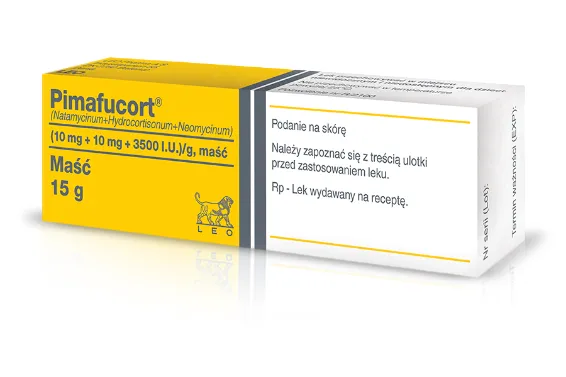
Table of Contents
Package leaflet: Information for the patient
Pimafucort, (10 mg + 10 mg + 3500 I.U.)/g, ointment
(Natamycinum + Hydrocortisonum + Neomycinum)
Please read this leaflet carefully before using the medicine, as it contains
important information for the patient.
- Keep this leaflet so that you can read it again if necessary.
- If you have any doubts, please consult your doctor or pharmacist.
- This medicine has been prescribed for a specific individual. Do not pass it on to others. The medicine may harm another person, even if their symptoms are the same.
- If the patient experiences any adverse reactions, including any adverse reactions not listed in this leaflet, inform your doctor or pharmacist. See section 4.
Table of contents of the leaflet:
- What Pimafucort is and what it is used for
- Important information before using Pimafucort
- How to use Pimafucort
- Possible side effects
- How to store Pimafucort
- Contents of the pack and other information
1. What Pimafucort is and what it is used for
Pimafucort ointment contains hydrocortisone, natamycin, and neomycin.
Hydrocortisone is a weak corticosteroid with anti-inflammatory and vasoconstrictive properties.
It suppresses inflammatory reactions and relieves symptoms of inflammatory skin conditions, often accompanied by itching, without treating the underlying disease.
The medicine also contains neomycin, a broad-spectrum antibiotic effective against Gram-positive bacteria (e.g. Staphylococcus spp., Enterococcus spp.) and Gram-negative bacteria (e.g. Klebsiella spp., Proteus spp., Escherichia coli).
In addition to hydrocortisone and neomycin, Pimafucort ointment contains natamycin, an antifungal antibiotic particularly effective against yeasts of the genus Candida spp.
Pimafucort is indicated for short-term treatment of superficial skin disorders responsive to corticosteroids, not primarily caused by microbial infection, but with coexisting secondary infections caused by bacteria or fungi sensitive to neomycin or natamycin.
2. Important information before using Pimafucort
When not to use Pimafucort
- if the patient has skin diseases caused by primary bacterial infections, viral infections, primary infections caused by fungi and yeasts, or parasitic infections;
- if the patient has ulcerative skin diseases, wounds, leg ulcers, burn injuries; adverse effects following topical use of corticosteroids (post-steroid perioral dermatitis, skin striae);
- if the patient has: ichthyosis, tinea pedis (athlete's foot), acne vulgaris, rosacea, capillary fragility, skin atrophy;
- if the patient is allergic to the active substances or to any of the other ingredients of this medicine (listed in section 6).
Warnings and precautions
Before starting treatment with Pimafucort, consult your doctor or pharmacist.
Avoid contact of the ointment with the eyes and avoid applying it around the eye area, as contact with the conjunctiva may lead to simple glaucoma or subcapsular cataract.
When applying Pimafucort to large areas of skin, in children, or under occlusive dressing, consider the possibility of suppression of adrenal cortex function.
In individuals sensitive to neomycin, cross-sensitivity may occur with other antibiotics of similar chemical structure, such as kanamycin, paromomycin, gentamicin, and other aminoglycoside antibiotics (cross-sensitivity).
Avoid prolonged use of the medicine and application to wounds or damaged skin due to the theoretical risk of ototoxic and nephrotoxic effects of neomycin following its absorption into the systemic circulation.
If superinfection or excessive fungal growth occurs, discontinue use of the medicine and initiate alternative treatment.
If the patient experiences blurred vision or other visual disturbances during treatment, contact a doctor.
Pimafucort and other medicines
Inform your doctor or pharmacist about all medicines currently or recently taken, as well as any medicines the patient plans to use.
Interactions with other medicines are not known.
Pregnancy and breastfeeding
If the patient is pregnant or breastfeeding, suspects she may be pregnant, or is planning to have a baby, she should consult a doctor or pharmacist before using this medicine.
Due to the theoretical risk that topical medicines containing neomycin may have ototoxic effects on the fetus, Pimafucort should not be used during pregnancy on large skin areas, for prolonged periods, or under occlusive dressings.
Driving and operating machinery
There are no data regarding the effect of Pimafucort on the ability to drive or operate machinery. However, it does not appear that the medicine may impair such ability.
3. How to use Pimafucort
This medicine should always be used as directed by a physician. In case of doubt, consult your
doctor or pharmacist.
A small amount of the ointment is usually applied to the affected skin area 2 to 4 times
daily. Pimafucort should not be used for longer than 14 days.
Pimafucort ointment is recommended for the treatment of skin lesions accompanied by
dryness, desquamation, or skin cracking, particularly in seborrheic dermatitis.
Use of a higher than recommended dose of Pimafucort ointment
There are no reports of overdose. It does not appear possible for a toxic dose of neomycin to be absorbed through the skin.
If you have any further doubts regarding the use of this medicine, consult your doctor or pharmacist.
4. Possible adverse reactions
Like all medicines, this medicine can cause adverse reactions, although not everyone will experience them.
Adverse reactions occurring rarely (may occur less frequently than in 1 out of 1,000 people):
- suppression of adrenal cortex function;
- skin atrophy with thinning of the skin;
- dilation of small blood vessels;
- purpura;
- striae (stretch marks);
- dermatitis with symptoms resembling rosacea;
- perioral dermatitis with or without skin atrophy;
- "rebound effect", i.e. worsening of disease symptoms after discontinuation of treatment, which may lead to dependence on topical steroids;
- delayed healing process;
- skin discoloration;
- excessive hair growth (hypertrichosis);
- contact allergy to neomycin
Adverse reactions occurring very rarely (may occur less frequently than in 1 out of 10,000 people):
- increased intraocular pressure;
- increased risk of cataract development
Adverse reactions with unknown frequency (frequency cannot be estimated from available data):
- blurred vision
Reporting of adverse reactions
If any adverse symptoms occur, including any adverse effects not listed in this leaflet, inform your doctor. Adverse reactions can be reported directly to the Department of Monitoring of Adverse Drug Reactions of the Office for Registration of Medicinal Products, Medical Devices and Biocidal Products
Al. Jerozolimskie 181C
PL-02 222 Warsaw
Tel.: +48 22 49 21 301
Fax: +48 22 49 21 309
e-mail: [email protected]
Reporting adverse reactions enables continued monitoring of the medicine's safety and helps provide more information on its safe use.
5. How to store Pimafucort
Keep this medicine out of sight and reach of children.
Do not use this medicine after the expiry date stated on the carton and tube after: {EXP}.
The expiry date refers to the last day of the stated month.
Do not store above 25°C.
Medicines must not be disposed of via wastewater or household waste. Ask your pharmacist how to dispose of medicines no longer required. This will help protect the environment.
6. Contents of the pack and other information
What Pimafucort contains
- The active substances are natamycin, hydrocortisone and neomycin as neomycin sulfate. Each gram of ointment contains 10 mg of natamycin, 10 mg of hydrocortisone and 3500 I.U. of neomycin as ne游戏副本ycin sulfate.
- Other ingredients: ointment base (containing liquid paraffin and 5% polyethylene).
What Pimafucort looks like and contents of the pack
Pimafucort ointment is white to slightly yellowish in colour.
The pack contains 15 g of ointment.
Marketing Authorisation Holder and Manufacturer
Marketing Authorisation Holder:
LEO Pharma A/S
Industriparken 55
DK-2750 Ballerup
Denmark
Manufacturers:
-
Astellas Pharma Europe B.V.
Sylviusweg 62
2333 BE Leiden
The Netherlands -
Temmler Italia S.R.L.
Via Delle Industrie 2
20061 Carugate (MI)
Italy -
Prodlekpol Sp. z o.o.
ul. Chełmżyńska 249
04-458 Warszawa
Poland
For further information, contact the representative of the Marketing Authorisation Holder:
LEO Pharma Sp. z o.o.
ul. Marynarska 15
02-674 Warszawa
Tel: 22 244 18 40