Phenytoin wzf
Poland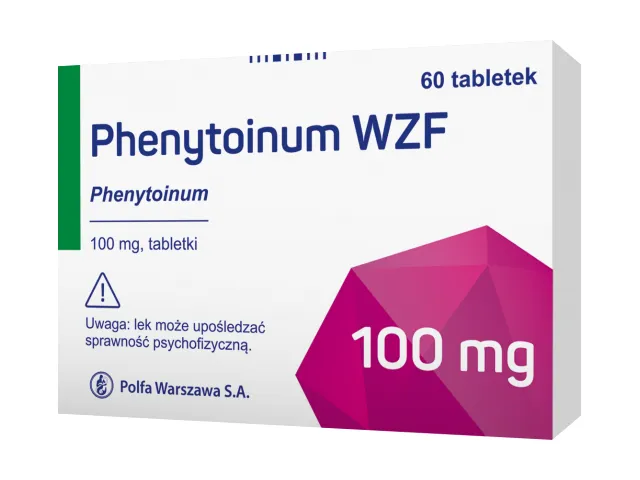
Table of Contents
Package leaflet: Information for the patient
PHENYTOINUM WZF, 100 mg, tablets
Phenytoinum
Please read this leaflet carefully before using the medicine, as it contains
important information for the patient.
- Keep this leaflet, so you can read it again if necessary.
- If you have any questions, please consult your doctor or pharmacist.
- This medicine has been prescribed for a specific individual. Do not pass it on to others.
- The medicine may harm another person, even if their symptoms are the same.
- If the patient experiences any adverse reactions, including any adverse reactions not listed in this leaflet, inform a doctor or pharmacist immediately. See section 4.
Table of contents of the leaflet
- What Phenytoinum WZF is and what it is used for
- Important information before taking Phenytoinum WZF
- How to take Phenytoinum WZF
- Possible side effects
- How to store Phenytoinum WZF
- Contents of the pack and other information
1. What Phenytoinum WZF is and what it is used for
The medicine contains phenytoin, a substance with anticonvulsant activity. Phenytoin prevents the occurrence and reduces the frequency of generalized seizures. It also reduces the frequency of partial seizures and prevents their generalization, and additionally inhibits the spread of pain impulses in trigeminal neuralgia.
Phenytoinum WZF is used:
- in epilepsy (generalized seizures, complex partial seizures);
- in the prevention of epileptic seizures following neurosurgical procedures and head injuries;
- in trigeminal neuralgia – only when carbamazepine has proven ineffective or in cases of hypersensitivity (intolerance) to carbamazepine.
2. Important Information Before Using Phenytoinum WZF
When not to use Phenytoinum WZF:
- if the patient is allergic to phenytoin or other hydantoin derivatives, or to any of the other ingredients of this medicine (listed in section 6);
- if the patient has been diagnosed with porphyria.
Warnings and precautions
Before starting treatment with Phenytoinum WZF, discuss this with your doctor or pharmacist.
In patients with diabetes, phenytoin may affect glucose metabolism and inhibit insulin secretion, leading to increased blood glucose levels.
Phenytoin may cause or worsen absence seizures or myoclonic seizures.
Life-threatening skin reactions (Stevens-Johnson syndrome, toxic epidermal necrolysis) have been reported after phenytoin use. These reactions initially present as small red spots or round patches on the trunk, often with blisters in their center. Additional symptoms include mucosal ulcers in the mouth, throat, nose, genital organs, and conjunctivae (red, swollen eyes). These potentially life-threatening rashes are often accompanied by flu-like symptoms. The rash may progress to widespread blisters or skin peeling.
The highest risk of severe skin reactions occurs during the first weeks of treatment.
If a patient has previously experienced Stevens-Johnson syndrome or toxic epidermal necrolysis after taking phenytoin, this medicine must never be used again.
If a patient develops a rash or the above-mentioned skin symptoms after taking phenytoin, urgent medical advice must be sought, and the doctor must be informed that the patient is taking this medicine.
During treatment with Phenytoinum WZF, serious skin-related adverse reactions occur rarely. This risk may be associated with a specific gene mutation in patients of Chinese or Thai descent. Patients of Chinese or Thai origin who have previously been identified as carriers of this genetic variant (HLA-B*1502) should discuss this with their doctor before starting Phenytoinum WZF.
If a patient is of Taiwanese, Japanese, Malaysian, or Thai descent and test results show they are a carrier of the CYP2C9*3 genetic variant, they should discuss this with their doctor before taking Phenytoinum WZF.
In patients who experience both generalized and absence-type seizures, the doctor may prescribe additional medications alongside phenytoin.
Conditions such as confusion (symptoms: impaired consciousness, disorientation, severe disturbances in thought processes, psychomotor agitation with disorganized movements) may be early signs of phenytoin toxicity and may indicate that the dose is too high. Medical advice should be sought; the doctor may decide to reduce the dose or discontinue the medicine.
Phenytoin may interfere with vitamin D metabolism. In cases of inadequate vitamin D supplementation or insufficient exposure to sunlight, bone demineralization, decreased serum calcium levels, or rickets may occur.
During treatment, herbal preparations containing St. John’s wort (Hypericum perforatum) should not be used.
In patients with impaired liver function, phenytoin may accumulate excessively in the body, leading to toxic effects. Therefore, the doctor may recommend a lower dose for these patients.
Caution should be exercised when administering this medicine to elderly patients — phenytoin doses are individually determined by the doctor, taking into account concomitant medications. Elderly patients generally require lower doses.
If Phenytoinum WZF is used during pregnancy, there is a risk of fetal harm. Women of childbearing potential should use effective contraception during treatment with Phenytoinum WZF (see section "Pregnancy and breastfeeding").
Phenytoinum WZF and other medicines
Inform your doctor or pharmacist about all medicines currently used, recently used, or planned for use.
Phenytoin affects the action of various medicines; therefore, during any medical consultation, regardless of specialty, the patient should inform the doctor about taking this medicine. The doctor may recommend blood tests to monitor the influence of other medicines on phenytoin levels.
- Phenytoin may affect the action of medicines used:
- in epilepsy — carbamazepine, lamotrigine, sodium valproate, valproic acid, succinimides (e.g. ethosuximide), vigabatrin, phenobarbital;
- in fungal infections — e.g. amphotericin B, fluconazole, itraconazole, ketoconazole, miconazole;
- in tuberculosis and other infections — chloramphenicol, isoniazid, rifampicin, sulfonamides, doxycycline, ciprofloxacin;
- in asthma and bronchitis — theophylline;
- in pain and inflammatory conditions — phenylbutazone, salicylate derivatives, corticosteroids;
- in peptic ulcer disease — omeprazole, sucralfate, certain antacids, histamine receptor blockers (e.g. cimetidine, ranitidine, famotidine);
- in sleep disorders, depression, psychiatric conditions — chlordiazepoxide, clozapine, diazepam, disulfiram, fluoxetine, methylphenidate, paroxetine, phenothiazine derivatives, trazodone, tricyclic antidepressants, viloxazine;
- in cancer — anticancer drugs;
- in autoimmune diseases — cyclosporine;
- in cardiac and circulatory disorders — amiodarone, reserpine, digitoxin, furosemide, quinidine, oral anticoagulants from the vitamin K antagonist group (e.g. dicoumarol, warfarin), calcium channel blockers (e.g. diltiazem, nifedipine);
- in diabetes — tolbutamide;
- in hormone replacement therapy (estrogens), contraception (oral contraceptives);
- in anesthesia (halothane), during surgical procedures (muscle relaxants);
- Medicines whose serum concentration and (or) effect may be reduced by phenytoin:
- oral anticoagulants that are direct thrombin or factor Xa inhibitors, e.g. rivaroxaban, dabigatran, apixaban, edoxaban;
- lacosamide;
- ticagrelor.
- Additionally, phenytoin affects the action of methadone, folic acid, and vitamin D.
- Concomitant use of phenytoin with herbal preparations containing St. John’s wort (Hypericum perforatum) should be avoided, as it reduces the effectiveness of phenytoin. If St. John’s wort-containing preparations are used, consultation with a doctor is recommended before discontinuation.
- Phenytoin may affect the results of certain laboratory tests (e.g. blood glucose, alkaline phosphatase, serum calcium, folic acid, thyroxine levels).
Phenytoinum WZF and alcohol
Alcohol consumption during phenytoin treatment affects the drug's blood concentration. Alcohol should not be consumed during treatment, as it may lead to fluctuations in phenytoin blood levels (initially increasing, and with chronic alcohol abuse — decreasing concentrations).
Pregnancy and breastfeeding
If the patient is pregnant or breastfeeding, suspects she may be pregnant, or plans to become pregnant, she should consult her doctor or pharmacist before using this medicine.
Phenytoin used during pregnancy may cause developmental abnormalities in the fetus; however, such abnormalities may also be caused by epilepsy itself or genetic factors.
Phenytoinum WZF may cause serious congenital malformations. If a patient takes Phenytoinum WZF during pregnancy, her fetus is up to three times more likely to develop congenital malformations than fetuses of women not taking antiepileptic drugs. Serious congenital malformations have been reported, including growth retardation and malformations of the skull, face, nails, fingers, and heart. Some of these may occur together as developmental disorders known as the fetal hydantoin syndrome.
Neurodevelopmental disorders (related to brain development) have been reported in infants born to mothers who used phenytoin during pregnancy. Results from some studies indicate that phenytoin has a negative impact on the neurological development of unborn children exposed to the drug, while other studies have not shown such an effect. However, a negative effect of phenytoin on neurological development cannot be ruled out.
Women of childbearing potential who do not plan pregnancy should use effective contraception during treatment with Phenytoinum WZF. Phenytoinum WZF may affect the action of hormonal contraceptives, such as birth control pills, reducing their effectiveness in preventing pregnancy. To select the most appropriate contraceptive method to be used during treatment with Phenytoinum WZF, consultation with a doctor is recommended.
Women of childbearing potential who plan to become pregnant should discuss with their doctor changing their treatment to alternative appropriate therapies before stopping contraception and attempting pregnancy, to avoid fetal exposure to the negative effects of phenytoin.
If a patient is pregnant or suspects she may be pregnant, she should immediately inform her doctor. The medicine should not be discontinued without first discussing it with the doctor. Stopping the medicine without prior consultation may lead to seizures, which may endanger the health of both the patient and her unborn child. The doctor may decide to change the treatment.
Phenytoin may be used during pregnancy only if the doctor decides that the benefit to the mother outweighs the risk to the fetus. During phenytoin use in pregnancy, the doctor may recommend periodic monitoring of serum phenytoin levels to adjust dosing according to the patient’s condition.
Phenytoin is not recommended during breastfeeding; women taking phenytoin should not breastfeed.
Driving and operating machinery
This medicine may impair psycho-motor performance — driving vehicles and operating machinery should be avoided during treatment.
3. How to use Phenytoinum WZF
This medicine should always be taken exactly as prescribed by the doctor. In case of doubt, consult
your doctor or pharmacist.
The dosage of phenytoin is determined individually by the doctor for each patient. In some cases,
monitoring of serum drug concentration may be necessary, especially after dose adjustment or
when suspicion of drug interactions arises. A steady serum concentration of phenytoin is
reached after 7–10 days; therefore, dosage changes should not be made earlier than after
this period.
The usual dosage regimens are as follows:
Adults
For the first 7 days, 300 mg daily in three divided doses. Every 7–10 days the dose may be
increased or decreased until reaching a maintenance dose of 300 mg to 400 mg daily.
Some patients may require up to 600 mg daily.
For trigeminal neuralgia – usually 400 mg to 500 mg daily.
Children
From 3 to 8 mg/kg body weight in divided doses; the total daily dose should not exceed 300 mg.
If the doses cannot be divided equally, the larger dose should be administered before bedtime.
Use of a higher than recommended dose of Phenytoinum WZF
If a higher dose of Phenytoinum WZF than recommended is taken, the following may occur:
nystagmus, disturbances in motor coordination, speech disorders. After significant overdose,
coma, respiratory disturbances (including apnea), and death may occur.
Treatment: the doctor will consider gastric lavage and administer appropriate symptomatic
treatment (there is no specific antidote).
Missed dose of Phenytoinum WZF
If a dose of Phenytoinum WZF is missed, take it as soon as possible. However, if it is almost time
for the next dose, skip the missed dose and take the next dose according to the prescribed
schedule. Do not take a double dose to make up for a missed dose.
Stopping treatment with Phenytoinum WZF
If it becomes necessary to reduce the dose or discontinue the medicine completely, dosage changes
must be made gradually and only under a doctor's supervision, because abrupt discontinuation
of phenytoin treatment in patients with epilepsy may trigger status epilepticus. If an allergic
reaction to the medicine occurs, discontinuation may be required – in such a case, contact your
doctor immediately, who will recommend another antiepileptic medicine.
If you have any further doubts regarding the use of this medicine, consult your doctor, pharmacist,
or nurse.
4. Possible adverse reactions
Like all medicines, this medicine can cause adverse reactions, although not everybody will experience them.
Blood and lymphatic system disorders
- Blood disorders (rare), occasionally fatal:
- decreased number of blood platelets (thrombocytopenia),
- decreased number of white blood cells (leukopenia),
- decreased number of neutrophils (granulocytopenia) or absence of granulocytes in peripheral blood (agranulocytosis), presenting with ulceration of the throat and oral mucosa, accompanied by fever,
- deficiency of all normal blood cells (pancytopenia),
- anaemia,
- excessive increase in red blood cells (macrocytosis),
- enlarged lymph nodes (localised and generalised), including benign lymph node hyperplasia and other lymph node changes; possible symptoms: fever, rash, liver function abnormalities. If enlarged lymph nodes are observed, consult a doctor immediately.
- decreased number of a specific type of red blood cells (pure red cell aplasia) – frequency unknown.
Immune system disorders
- hypersensitivity syndrome, which in rare cases may be fatal, characterised by: joint pain, increased number of eosinophils (a type of white blood cells) in blood, fever, liver function abnormalities, enlarged lymph nodes or rash,
- systemic lupus erythematosus,
- polyarteritis nodosa,
- immunoglobulin (antibody) disorders.
Nervous system disorders
- nystagmus (involuntary eye movements),
- slurred speech,
- disorientation,
- sensory disturbances (e.g. tingling, pricking, burning),
- drowsiness, dizziness, insomnia,
- irritability,
- headache,
- impaired coordination and other movement disorders (rare) (including involuntary muscle contractions, e.g. of the trunk and arms – chorea), disturbances in muscle tone, tremor of hands, brief, slight muscle twitches (fasciculations),
- irreversible cerebellar dysfunction, occasionally after severe phenytoin overdose,
- peripheral nerve damage (in patients taking phenytoin long-term),
- aggression or sedation, memory impairment, and depression.
Gastrointestinal disorders
- nausea, vomiting, constipation,
- toxic hepatitis (rare), liver damage.
Skin and subcutaneous tissue disorders
- various types of skin rash (morbilliform or scarlatiniform, sometimes accompanied by fever),
- bullous, exfoliative or purpuric dermatitis,
- systemic lupus erythematosus (a severe skin disease affecting multiple internal organs). Potentially life-threatening skin reactions (Stevens-Johnson syndrome, toxic epidermal necrolysis) have been reported (see section 2.). These occurred very rarely.
Musculoskeletal and connective tissue disorders
- bone disorders, including osteopenia and osteoporosis (decreased bone mineral density) and fractures. Patients who are taking long-term antiepileptic medication, have osteoporosis or are taking steroids should consult their doctor.
- coarsening of facial features, lip enlargement, gingival hyperplasia, excessive hair growth,
- Peyronie’s disease (erectile dysfunction) (rare),
- Dupuytren’s contracture.
Other
- polyarthropathy (disorders affecting multiple joints),
- interstitial nephritis,
- lung inflammation.
Children and adolescents
Adverse reactions in children and adolescents occur with similar frequency as in adult patients. Gingival hyperplasia (drug-induced) occurs more frequently in children and adolescents, and in patients who do not maintain adequate oral hygiene.
Reporting of adverse reactions
If any adverse reactions occur, including any adverse reactions not listed in this leaflet, inform your doctor or pharmacist. Adverse reactions can be reported directly to the Department of Monitoring Adverse Drug Reactions of the Office for Registration of Medicinal Products, Medical Devices and Biocidal Products
Al. Jerozolimskie 181C
02-222 Warsaw
Phone: +48 22 4921301
Fax: +48 22 4921309
Website: https://smz.ezdrowie.gov.pl
Adverse reactions can also be reported to the marketing authorisation holder.
Reporting adverse reactions helps provide more information on the safety of this medicine.
5. How to store Phenytoinum WZF
Keep in the original packaging to protect from light.
Keep the medicine out of the sight and reach of children.
Do not use this medicine after the expiry date stated on the carton and on the blister.
The expiry date refers to the last day of the stated month.
The marking on the packaging following EXP indicates the expiry date, and following Lot/LOT indicates the batch number.
Medicines must not be disposed of via wastewater or household waste. Ask your pharmacist how to dispose of medicines no longer required. This will help protect the environment.
6. Contents of the packaging and other information
What Phenytoinum WZF contains
- The active substance is phenytoin. Each tablet contains 100 mg of phenytoin.
- The other ingredients are: potato starch, povidone K-25, talc, magnesium stearate.
What Phenytoinum WZF looks like and contents of the pack
Phenytoinum WZF is a white, round, biconvex tablet with a bevelled edge and engraved letter H on one side.
The pack contains 60 tablets.
Marketing Authorisation Holder
Zakłady Farmaceutyczne POLPHARMA S.A.
ul. Pelplińska 19, 83-200 Starogard Gdański
tel. + 48 22 364 61 01
Manufacturer
Zakłady Farmaceutyczne POLPHARMA S.A.
Production Plant in Nowa Dęba
ul. Metalowca 2, 39-460 Nowa Dęba