Pharmalgen hymenoptera venoms
PolandTable of Contents
- Package leaflet: Information for the user
- 1. What Pharmalgen Hymenoptera venoms is and what it is used for
- 2. Important information before using Pharmalgen Hymenoptera venoms
- 3. How to use Pharmalgen Hymenoptera venoms
- 4. Possible adverse reactions
- 5. How to store Pharmalgen Hymenoptera venoms
- 6. Contents of the packaging and other information
- Information intended exclusively for healthcare professionals:
Package leaflet: Information for the user
Pharmalgen Hymenoptera venoms
Allergen extracts of Hymenoptera venoms (wasp, bee)
120 μg
Powder and solvent for solution for injection
Read carefully all of this leaflet before using this medicine because it contains important information for you.
- Keep this leaflet as you may need to read it again.
- If you have any questions, ask your doctor or pharmacist.
- This medicine has been prescribed for a specific individual. Do not pass it on to others. It may harm them even if their symptoms are the same.
- If you experience any side effects, including any not listed in this leaflet, tell your doctor or pharmacist. See section 4.
Contents of the leaflet:
- What Pharmalgen Hymenoptera venoms is and what it is used for
- What you need to know before using Pharmalgen Hymenoptera venoms
- How to use Pharmalgen Hymenoptera venoms
- Possible side effects
- How to store Pharmalgen Hymenoptera venoms
- Contents of the pack and other information
1. What Pharmalgen Hymenoptera venoms is and what it is used for
Pharmalgen Hymenoptera venoms is a medicine containing allergen extracts of Hymenoptera venoms.
This medicine is used in the diagnosis and treatment of IgE-mediated (allergic) reactions to bee and wasp venom.
2. Important information before using Pharmalgen Hymenoptera venoms
When not to use Pharmalgen Hymenoptera venoms
- if the patient is allergic to any of the other components of this medicine, except the active substance (listed in section 6),
- if the patient has any immunological disorders,
- if the patient has severe asthma,
- if the patient has been diagnosed with chronic heart or lung disease,
- if the patient has severe hypertension,
- if the patient has acute or chronic infectious diseases,
- if the patient has a severe rash,
- if the patient is being treated with beta-blockers (beta-adrenolytics), including eye drops,
- if the patient is being treated with ACE inhibitors,
- if the patient is being treated with tricyclic antidepressants,
- if the patient is being treated with monoamine oxidase inhibitors (MAO),
- if the patient has a malignant disease.
Warnings and precautions
General guidelines
Before starting treatment with Pharmalgen Hymenoptera venoms, discuss this with your doctor.
On the day of injection, avoid significant physical exertion, hot baths,
and alcohol consumption.
If the patient has elevated serum tryptase levels and/or has mastocytosis,
the risk of adverse reactions may be higher.
If the patient has mastocytosis, the effectiveness of the treatment may be lower than in the general
population of patients allergic to insect venom.
Before each injection of Pharmalgen Hymenoptera venoms:
- the doctor will check the volume and date of the previous injection (interval between doses),
- the doctor will assess the patient's lung function,
- the doctor will evaluate the patient's general health status,
- if an allergic reaction occurred after the last injection, inform the doctor, as this may indicate the need for a lower dose (dose reduction),
- inform the doctor whether or not the patient is taking other antiallergic medications.
Injections should be postponed for the following reasons:
- if the patient's lung function has worsened,
- if the patient has symptoms of infection (infectious disease) or an accompanying fever,
- if the patient has experienced any allergic symptoms within the last 3–4 days,
- if symptoms of atopic dermatitis have worsened.
After each injection of Pharmalgen Hymenoptera venoms:
- the patient must remain under medical supervision at the healthcare facility for 30 minutes after the injection,
- if any allergic reaction occurs, inform the doctor or nurse before leaving the facility,
- the doctor will assess the patient's lung function,
- carefully observe the injection site and inform the doctor during the next visit about any allergic reaction that occurred after leaving the healthcare facility,
- immediately contact a doctor or emergency department if symptoms of a severe allergic reaction occur.
Children
Particular caution should be exercised when Pharmalgen Hymenoptera venoms is used
in children under 5 years of age.
For each child, the doctor should carefully evaluate the risk-benefit ratio.
Data on clinical efficacy in children aged 5 years and older are limited; however, available safety data do not indicate a higher risk than in adults.
Pharmalgen Hymenoptera venoms and other medicines
Inform the doctor about all medicines currently or recently taken by the patient,
as well as any medicines the patient plans to take.
Medications that modify the allergic response, such as antihistamines, bronchodilators,
sodium cromoglicate, and glucocorticosteroids administered before allergen injection,
may increase tolerance to the medicine. If the patient fails to use standard medications before injection,
serious reactions may occur.
Concomitant treatment with immunosuppressive agents that reduce immune response should not be used.
No vaccinations should be administered within 7 days before or after administration of Pharmalgen Hymenoptera venoms.
Pregnancy and breastfeeding
Pregnancy
If the patient is pregnant or breastfeeding, suspects she might be pregnant, or is planning to become pregnant,
she should consult her doctor before using this medicine.
Initiating treatment with Pharmalgen Hymenoptera venoms during pregnancy is not recommended.
Women who become pregnant during treatment may continue the therapy, provided that the doctor has previously evaluated their general condition and response to prior injections of Pharmalgen Hymenoptera venoms.
Breastfeeding
There is no experience regarding the use of Pharmalgen Hymenoptera venoms during breastfeeding.
Driving and operating machinery
Pharmalgen Hymenoptera venoms may have a minor or moderate effect on the ability to drive and operate machinery. After injection, fatigue may occur, which could affect the ability to drive a car or operate machinery.
3. How to use Pharmalgen Hymenoptera venoms
Treatment will be conducted exclusively by physicians experienced in specific
immunotherapy.
Pharmalgen Hymenoptera venoms will be administered to the patient as a subcutaneous
injection into the upper arm or forearm.
Appropriate emergency treatment measures for anaphylactic shock must be readily available.
Diagnosis
Before initiating treatment with Pharmalgen Hymenoptera venoms, allergy to bee or wasp venom should be confirmed based on the patient's medical history and by diagnostic methods in vivo (skin prick test using a drop of solution or intradermal test) and/or in vitro (measurement of specific immunoglobulin E (IgE) in the patient's blood serum).
Before administration, Pharmalgen Hymenoptera venoms will be diluted by trained medical personnel using the diluent containing albumin. Trained medical personnel must familiarize themselves with the instructions for reconstitution and dilution of Pharmalgen Hymenoptera venoms, located at the end of this leaflet.
Treatment
Treatment consists of two phases: the initial phase (during which the dose is gradually increased with each injection) and the maintenance phase (during which a constant dose is administered).
Dosing in both phases is individually determined by the physician, depending on the patient's tolerance and sensitivity to the allergen.
Initial phase
During the initial phase, the dose of Pharmalgen Hymenoptera venoms is gradually increased until reaching the highest appropriate dose for the patient (maintenance dose).
The initial phase lasts from 7 to 12 weeks, except for accelerated treatment regimens, which require hospitalization for approximately 1 week.
Maintenance phase (maintenance treatment)
The physician will decide which maintenance dose is appropriate for the patient. After reaching the maintenance dose, the interval between injections of Pharmalgen Hymenoptera venoms is gradually extended from 1 to 2 and then to 4 weeks. The maintenance dose should be administered every 4 weeks for at least 3 years (3–5 years). After achieving the maintenance dose, it is possible to switch from Pharmalgen Hymenoptera venoms to a depot formulation (slow-release preparation) such as Alutard SQ Bee Venom or Alutard SQ Wasp Venom. After switching to Alutard SQ Bee Venom or Alutard SQ Wasp Venom, the intervals between doses are gradually extended from 1 to 2, 4, and then 6 weeks. Subsequently, the maintenance dose should be administered every 6 weeks ± 2 weeks. The maintenance dose should be given every 6 weeks ± 2 weeks for at least 3 years (3–5 years).
Dose reduction
The physician will adjust the dose of the medicinal product in the following situations:
- if the interval between two injections was longer than recommended,
- if a severe local reaction occurred at the injection site,
- in case of a generalized reaction to the medicinal product. If a severe reaction occurs, careful consideration should be given to whether treatment should continue. If treatment is continued, the dose should be reduced to 1/10 of the last administered dose and then gradually increased again.
Treatment of more than one sensitization
Patients allergic to both bee and wasp venom should initially be treated with one medicinal product (containing either wasp or bee venom). Once the maintenance dose has been achieved, treatment with the second medicinal product may be initiated. Maintenance doses of both venoms should be administered with an interval of 2–3 days between injections.
Administration of a higher than recommended dose of Pharmalgen Hymenoptera venoms
If a higher than recommended dose of Pharmalgen Hymenoptera venoms is administered, the risk of developing an allergic reaction increases. The patient should remain under medical observation, and symptomatic treatment should be initiated if a reaction occurs.
Missed dose of Pharmalgen Hymenoptera venoms
If the patient suspects that an injection has been missed, they should inform their physician.
In case of an excessively long interval between two injections, the physician may reduce the dose to avoid allergic reactions.
If you have any further questions regarding the use of this medicinal product, please consult your physician or pharmacist.
4. Possible adverse reactions
Like any medicine, this product may cause adverse reactions, although they do not occur in everyone.
You should consult your doctor on how to proceed if an allergic adverse reaction occurs.
You should contact your doctor immediately if a severe adverse reaction develops.
Adverse reactions may be an allergic response to the allergen being administered to the patient.
Symptoms of early adverse reactions may occur within the first 30 minutes after injection, although delayed reactions may also appear up to 24 hours after administration of the injection.
Most allergic adverse reactions are mild or moderate in severity and can be treated symptomatically with antihistamines, if necessary.
Very common adverse reactions (occurring in more than 1 in 10 people)
Headache
Swelling at the injection site
Common adverse reactions (occurring in more than 1 in 100 but less than 1 in 10 people)
Redness of the eyes
Diarrhoea, vomiting, nausea, indigestion
Itching and urticaria at the injection site
Feeling of discomfort and fatigue
Wheezing, cough, shortness of breath
Urticaria, itching, rash
Uncommon adverse reactions (occurring in more than 1 in 1,000 but less than 1 in 100 people)
Anaphylactic reactions (such as facial, lip or throat swelling, breathing difficulties, and urticaria)
Back pain
Rare adverse reactions (occurring in more than 1 in 10,000 but less than 1 in 1,000 people)
Anaphylactic shock. Frequent symptoms indicating a severe anaphylactic reaction may include hot flushes, intense itching on the inner surface of the palms, soles or other parts of the body, urticaria, and breathing difficulties. A sensation of warmth, general discomfort and restlessness may also occur.
Other adverse reactions with unknown frequency
Feeling of rapid or irregular heartbeat and bluish skin discoloration
Fainting (dizziness)
Eyelid swelling
Abdominal pain
Itching, feeling of discomfort in the chest, chills, redness at the injection site, pain at the injection site, sensation of a foreign body
Skin redness
Joint pain and swelling
Dizziness, vertigo, skin prickling and tingling sensations
Asthma, nasal congestion or runny nose, sneezing, bronchospasm, throat irritation, sensation of throat tightness
Facial, lip and throat swelling (angioedema)
Low blood pressure and pallor
You should contact your doctor immediately if any of the following symptoms occur:
Sudden feeling of discomfort with hot flushes, intense itching and breathing difficulties
Facial, lip and throat swelling
Difficulty swallowing
Breathing difficulties
Worsening of pre-existing asthma
Rash
Reporting of adverse reactions
If any adverse symptoms occur, including any not listed in this leaflet, you should inform your doctor or pharmacist. Adverse reactions can be reported directly to the Department of Monitoring Adverse Reactions of Medicinal Products, Office for Registration of Medicinal Products, Medical Devices and Biocidal Products, Al. Jerozolimskie 181 C, 02-222 Warsaw, Tel.: +48 22 49 21 301, Fax: +48 22 49 21 309, e-mail: [email protected]
Adverse reactions can also be reported to the marketing authorization holder.
Reporting of adverse reactions helps to provide more information on the safety of the medicine.
5. How to store Pharmalgen Hymenoptera venoms
Keep the medicine out of the sight and reach of children.
Do not use this medicine after the expiry date stated on the packaging following
"Expiry date". The expiry date refers to the last day of the specified month.
Store in a refrigerator (2°C - 8°C).
Do not freeze.
Store vials in the original packaging to protect from light.
Shelf life after reconstitution and dilution with albumin diluent:
100 micrograms/ml – 6 months.
0.1 microgram/ml – 1 week
1 microgram/ml – 1 week
10 micrograms/ml – 2 weeks
After dilution to a concentration below 0.1 microgram/ml – must be used on the same day.
After reconstitution and dilution of Pharmalgen Hymenoptera venoms, a new expiry date must be entered. The expiry date after reconstitution and dilution must not exceed the expiry date of the lyophilized Pharmalgen Hymenoptera venoms or the expiry date of the albumin diluent.
Only the albumin diluent should be used for reconstitution and dilution of this medicine.
6. Contents of the packaging and other information
What Pharmalgen Hymenoptera venoms contains
The active substances are:
Allergen extracts of Hymenoptera venom:
801 bee venom
802 wasp venom
One vial of powder contains 120 micrograms of allergen extracts from Hymenoptera venom.
Other components are: powder: mannitol and human albumin. Diluent: human albumin, phenol and sodium chloride, hydrochloric acid (for pH adjustment), water for injections.
What Pharmalgen Hymenoptera venoms looks like and contents of the pack
Vials made of type I glass with a chlorobutyl rubber stopper and an aluminium cap.
Pharmalgen Hymenoptera venoms (wasp or bee) is supplied in packs containing 4 vials of powder, each with 120 micrograms, and 4 vials of diluent containing albumin, each 5 ml.
Dilution kit:
10 vials of 5 ml diluent with albumin.
Marketing Authorisation Holder and Manufacturer:
ALK-Abelló A/S
Bøge Allé 6-8
DK-2970 Hørsholm, Denmark
Information intended exclusively for healthcare professionals:
The product must be reconstituted with diluent containing albumin prior to administration, according to the instructions below.
Reconstitution of the powder:
- Withdraw 1.2 ml of the diluent with albumin into a single-use syringe.
- Carefully inject 1.2 ml of the diluent with albumin into the vial containing the lyophilized venom.
- Before removing the needle, withdraw 1.2 ml of air to relieve any overpressure.
- Gently rotate the vial 10–20 times, then check whether the powder has been fully reconstituted.
After reconstitution, the solution contains 100 micrograms/ml of Hymenoptera venom. The date of reconstitution and the expiry date must be recorded on the vial label.
Serial dilutions
Lower concentrations should be prepared by diluting the solution. Use the diluent with albumin for dilution. To avoid confusion between concentrations, clearly label each vial in advance [minimum information: allergen, concentration, date of dilution, and expiry date (see section 5)].
Serial dilutions:
- 10 micrograms/ml (1:10): 0.55 ml of the 100 micrograms/ml venom solution + 5 ml diluent with albumin.
- 1 microgram/ml (1:100): 0.55 ml of the 10 micrograms/ml venom solution + 5 ml diluent with albumin.
- 0.1 microgram/ml (1:1000): 0.55 ml of the 1 microgram/ml venom solution + 5 ml diluent with albumin.
Further dilutions can be prepared in an analogous manner (see figure below).
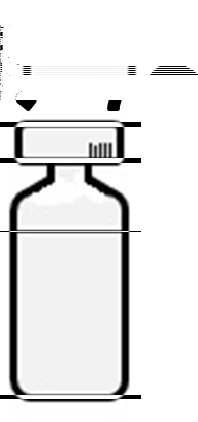

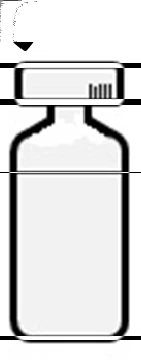
NOTE: Do not use the same sterile syringe to transfer solutions of different concentrations. Use a new sterile single-use syringe for each concentration. To avoid confusion between concentrations, clearly label each vial in advance [minimum information: allergen, concentration, date of dilution, and expiry date (see section 5)].