Penthrox
PolandTable of Contents
Package leaflet: Information for the user
Penthrox, 99.9%, liquid for vapor inhalation
Methoxyfluranum
Please read the entire leaflet carefully before use, as it contains
important information for the patient.
- Keep this leaflet for future reference.
- If you have any questions, consult your doctor or healthcare professional.
- This medicine has been prescribed for a specific individual. Do not share it with others. The medicine may harm another person, even if their symptoms are similar.
- If the patient experiences any adverse reactions, including any not listed in this leaflet, inform the doctor or healthcare professional immediately (see section 4).
Leaflet contents
- What Penthrox is and what it is used for
- Important information before using Penthrox
- How to use Penthrox
- Possible side effects
- How to store Penthrox
- Contents of the pack and other information
1. What Penthrox is and what it is used for
Penthrox contains the active substance methoxyflurane. It is indicated for short-term relief of pain and is inhaled into the lungs via the single-use Penthrox inhaler.
Penthrox is intended to reduce the intensity of pain, not to eliminate it completely.
2. Important information before using Penthrox
When not to use Penthrox:
- if the patient is allergic to methoxyflurane, any inhaled anaesthetic agent, or any of the other ingredients of this medicine (listed in section 6);
- if the patient or family history includes malignant hyperthermia. Malignant hyperthermia is a condition characterized by symptoms such as very high fever, rapid and irregular heartbeat, muscle spasms, and breathing difficulties, which occur in patients or their relatives after administration of an anaesthetic;
- or if serious adverse reactions to inhaled anaesthetics have been observed in the patient's relatives;
- if the patient has experienced liver damage following prior use of methoxyflurane or other inhaled anaesthetics;
- if the patient has significant kidney function impairment;
- if the patient has altered consciousness due to any cause, including head injury, medication use, or alcohol consumption;
- if the patient has severe heart disease or circulatory system disorders;
- if the patient has shallow breathing or breathing difficulties.
Penthrox must not be used as an anaesthetic agent.
If the patient has any doubts whether this medicine is suitable for them,
they should contact a doctor or healthcare professional.
Warnings and precautions
For patients with any of the conditions listed below, discuss with a doctor before starting
treatment with Penthrox:
- patients with kidney or liver disease;
- patients with conditions that may affect kidney function;
- elderly patients.
Respiratory depression, with symptoms such as abnormally slow and shallow breathing or other breathing difficulties (section 4), has been reported during treatment with Penthrox. If any breathing problems occur, a healthcare professional must be notified immediately.
Use in children and adolescents
Penthrox must not be used in children and adolescents under 18 years of age.
Penthrox and other medicines
Inform the doctor or healthcare professional about all medicines currently used, recently used, or planned for use, particularly the following:
- Isoniazid used in the treatment of tuberculosis.
- Phenobarbital or carbamazepine used in the treatment of epilepsy.
- Rifampicin or other antibiotics used to treat infections.
- Medicines or illicit substances that depress the central nervous system, such as narcotics, analgesics, sedatives, hypnotics, general anaesthetics, phenothiazines, anxiolytics, muscle relaxants, and antihistamines with sedative effects.
- Antibiotics and other medicines that may have harmful effects on the kidneys, such as tetracycline, gentamicin, colistin, polymyxin B, amphotericin, and contrast agents.
- Efavirenz or nevirapine used in the treatment of HIV.
If in doubt, consult a doctor.
If the patient requires hospital treatment involving general anaesthesia, they should
inform the medical staff about previous use of Penthrox.
Penthrox with food, drink and alcohol
Alcohol should not be consumed during treatment with this medicine, as it may enhance its effects.
Food and fluids may be taken during treatment unless the doctor or healthcare professional advises otherwise.
Pregnancy, breastfeeding and fertility
If the patient is pregnant or breastfeeding, suspects she may be pregnant, or is planning to have a child, she should consult a doctor before using this medicine. The doctor or healthcare professional should discuss with the patient the potential risks and benefits of using Penthrox.
Driving and operating machinery
This medicine may affect the ability to drive and operate machinery. Before driving or operating machinery, the patient should ensure they are fully capable of performing these activities. Penthrox may cause drowsiness and dizziness.
Penthrox contains butylated hydroxytoluene (E 321)
Penthrox contains a non-medicinal ingredient – a stabilizer – butylated hydroxytoluene (E 321) (0.01% w/w). Butylated hydroxytoluene may cause local skin reactions (e.g. contact dermatitis) or irritation of the eyes and mucous membranes.
3. How to use Penthrox
This medicine should always be used exactly as directed by a doctor. If in doubt, consult
a doctor or medical personnel.
Adults
One or two bottles containing 3 ml of Penthrox each may be administered per single dose.
The maximum dose is two bottles containing 3 ml of medicine each. The maximum dose of 6 ml
must not be exceeded.
Instructions for using Penthrox
- A doctor or other medical personnel will prepare the inhaler for use and place the safety strap on the patient's wrist.
- The medicine should be inhaled through the inhaler mouthpiece to reduce the
intensity of pain symptoms. If in doubt, ask medical personnel for assistance. To get accustomed to the fruity smell of the medicine, take the first few breaths cautiously. Exhale through the inhaler as well. After cautiously taking the first few breaths, begin breathing normally through the inhaler.
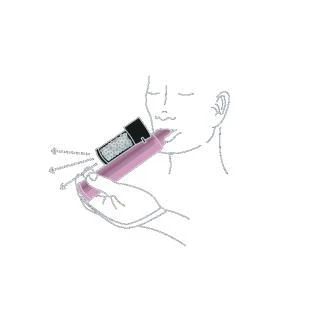
- If stronger analgesic effect is needed, cover with a finger the opening located at the top of the transparent activated charcoal chamber. Medical personnel will indicate the location of this opening.
- It is not necessary to breathe through the inhaler continuously. Medical
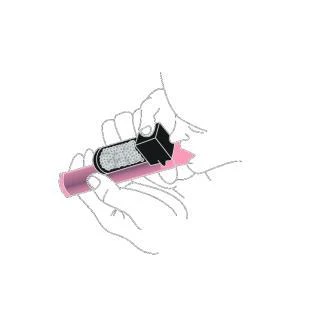
personnel will encourage taking breaks from inhalation, as this pattern allows prolongation of analgesic effect.
- Continue inhalations for as long as directed by medical personnel or until the maximum recommended dose of medicine has been received.
Do not give this medicine to anyone else, even if their symptoms are the same.
Taking more Penthrox than recommended
The patient uses the medicine under supervision of trained medical personnel qualified in its administration; therefore, the likelihood of overdose is extremely low. No more than two bottles of medicine should be used at one time. Exceeding the maximum dose of Penthrox may result in kidney damage. If the patient suspects having taken a higher dose than recommended, they should immediately inform the medical personnel.
If you have any questions or doubts, contact your doctor or medical personnel.

4. Undesirable effects
Like all medicines, this medicine can cause undesirable effects, although not everybody will experience them.
Serious undesirable effects
If any of the following symptoms occur, inform your doctor or healthcare professional immediately:
- Severe allergic reactions, symptoms including difficulty breathing and/or facial swelling.
- Symptoms related to the liver, such as loss of appetite, nausea, vomiting, jaundice (yellowing of the skin and/or whites of the eyes), dark urine, pale stools, pain or tenderness on the right side (below the ribs).
- Symptoms related to the kidneys, such as reduced or increased urination, swelling of the feet or lower legs.
- Breathing that is too slow and shallow or other breathing difficulties (symptoms of respiratory depression) (frequency cannot be determined from available data).
The above undesirable effects may be life-threatening; therefore, their occurrence must be reported
immediately to a doctor or healthcare professional.
Other undesirable effects
Very common (may occur in more than 1 in 10 patients):
- Dizziness
Commonly reported undesirable effects (may occur in up to 1 in 10 patients):
- Drowsiness
- Headache or nausea
- Euphoric feeling
- Feeling of alcohol intoxication
- Taste disturbances
- Cough
Uncommonly reported undesirable effects (may occur in up to 1 in 100 patients):
- Anxiety or depression
- Attention disturbance
- Inappropriate emotions or actions
- Repetition of words or difficulty speaking
- Memory loss
- Tingling in hands and feet
- Numbness
- Visual disturbances
- Skin redness
- Low or high blood pressure
- Dry mouth
- Oral discomfort or itching
- Increased salivation
- Increased appetite
- Vomiting
- Sweating
- Fatigue
- Malaise
- Chills
- Feeling of relaxation
Frequency unknown (frequency cannot be determined from available data):
- Hypersensitivity
- Mood disturbances
- Nervousness or agitation
- Feeling detached from reality
- Disorientation
- Altered states of consciousness
- Choking
- Shallow breathing
- Uncontrolled eye movements
Reporting of undesirable effects
If any undesirable effects occur, including any undesirable effects not listed in this leaflet, inform your doctor or pharmacist. Undesirable effects can be reported directly to:
Department of Monitoring of Adverse Drug Reactions, Office for Registration of Medicinal Products, Medical Devices and Biocidal Products, Al. Jerozolimskie 181C, 02-222 Warsaw, phone: +48 22 49 21 301, fax: +48 22 49 21 309,
website: https://smz.ezdrowie.gov.pl
Undesirable effects can also be reported directly to the marketing authorization holder.
Reporting undesirable effects helps to provide more information on the safety of this medicine.
5. How to store Penthrox
Keep this medicine out of the sight and reach of children.
Do not use this medicine after the expiry date stated on the packaging after: EXP.
The expiry date refers to the last day of the specified month.
No special precautions for storage of this medicinal product are required.
The doctor or medical staff will dispose of any remaining Penthrox medicine and the Penthrox inhaler
in accordance with local regulations.
6. Contents of the pack and other information
What Penthrox contains
- The active substance is methoxyflurane. One sealed bottle contains 3 ml of 99.9% methoxyflurane.
- The other ingredient is: butylated hydroxytoluene (E 321).
What Penthrox looks like and contents of the pack
Penthrox is a clear, almost colourless, volatile liquid with a characteristic fruity odour. When used with the Penthrox inhaler, the medicine is converted into vapour or gas.
The medicinal product Penthrox is available in the following pack sizes:
10 bottles of 3 ml in a cardboard box.
1 or 10 kits.
Each kit contains: one 3 ml bottle of 99.9% methoxyflurane, one Penthrox inhaler, and one tamper-proof activated charcoal chamber.
The 5 ml bottle is made of amber Type I glass with a PET insert, closed with a POM (polyoxymethylene) cap and a tamper-evident seal.
Not all pack sizes may be marketed.
Marketing Authorisation Holder
Medical Developments NED B.V.
Strawinskylaan 411, WTC Tower A
1077 XX Amsterdam
The Netherlands
Manufacturer
MIAS Pharma Limited
Suite 1, First Floor, Stafford House
Strand Road
Portmarnock, Co.
Dublin
Ireland
This medicinal product is authorised in the European Economic Area and the United Kingdom (Northern Ireland) under the following names:
Austria Penthrop
Belgium Methoxyflurane Medical Developments NED
Croatia Penthrox
Czech Republic Penthrox
Denmark Penthrox
Finland Penthrox
France Methoxyflurane Medical Developments NED
Spain Penthrox
Iceland Penthrox
Ireland Methoxyflurane Medical Developments MD&P
Luxembourg Methoxyflurane Medical Developments NED
Germany Penthrox
Norway Penthrox
Poland Penthrox
Portugal Penthrox
Slovakia Penthrox
Slovenia Penthrox
Sweden Penthrox
Italy Penthrox
<----------------------------------------------------------------------------------------------------------------------------->
Information for healthcare professionals
The following information is intended exclusively for healthcare professionals:
Below are instructions for the proper preparation and use of the Penthrox inhaler.
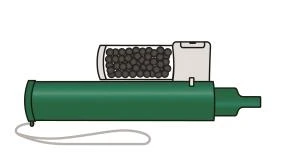
- Ensure that the activated charcoal chamber is placed in the slot located at the top of the Penthrox inhaler.
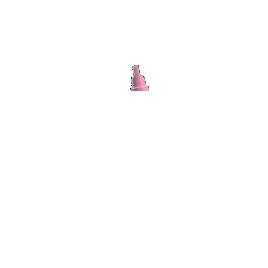
- Remove the bottle cap manually. Alternatively: use the base of the Penthrox inhaler to loosen the bottle cap – insert the bottle into the base and rotate by 180º (half a turn). Detach the inhaler from the bottle and remove the cap by hand.
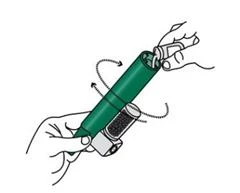
- Hold the Penthrox inhaler at a 45° angle and pour the entire contents of one Penthrox bottle into the base of the inhaler, while rotating the inhaler several times around its axis.
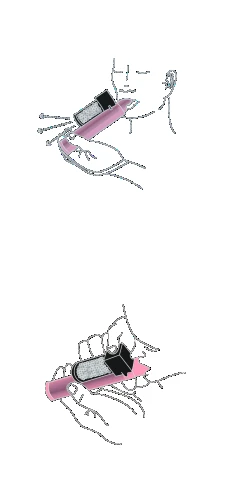
- Secure the safety strap around the patient's wrist. The patient breathes through the mouthpiece of the Penthrox inhaler to achieve analgesia. Instruct the patient to take the first breaths cautiously through the inhaler, then continue breathing normally.
-
The patient also exhales into the Penthrox inhaler. The exhaled vapour passes through the activated charcoal chamber, which captures any residual methoxyflurane.
-
If a stronger analgesic effect is required, the patient may cover with a finger the opening located at the top of the activated charcoal chamber during inhalation.
-
If further analgesia is needed after using the first bottle, a second bottle may be used if available. Alternatively, a bottle from a new kit may be used. Prepare it for use in the same way as the previous dose (steps 2 and 3).
There is no need to replace the activated charcoal chamber.
Place the used bottle into the provided plastic bag. -
The patient should be advised that to achieve adequate analgesia, inhalations should be taken intermittently. Continuous inhalation shortens the duration of analgesic effect. The patient should use the lowest effective dose sufficient to achieve adequate pain control.

- Close the empty medicinal product bottle Penthrox. Place the used Penthrox inhaler and empty bottle into the enclosed resealable plastic bag and dispose of appropriately.
The doctor, nurse, paramedic, or trained person responsible for administering the medicinal product Penthrox must provide the patient with the patient leaflet and review its contents with them.