Paracetamol olimp
Poland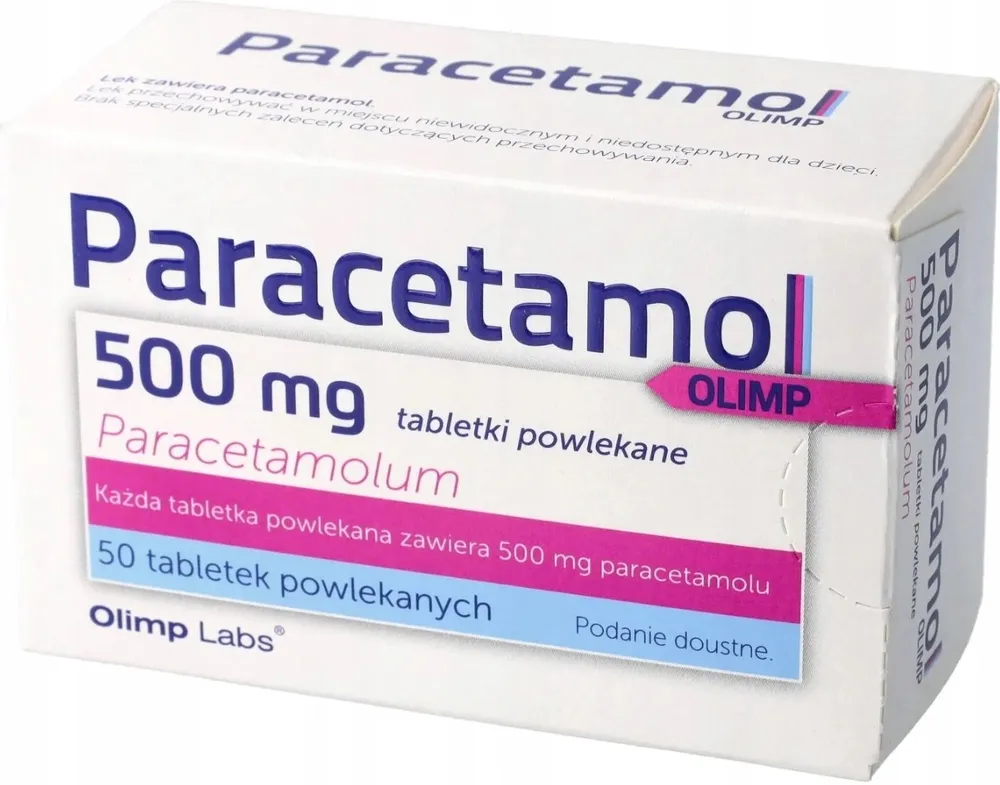
Table of Contents
Package leaflet: Information for the user
Paracetamol OLIMP, 500 mg, coated tablets
Paracetamolum
Please read all of this leaflet carefully before taking this medicine, because it contains
important information for you.
This medicine should always be taken exactly as described in this patient leaflet or as directed by
your doctor or pharmacist.
- Keep this leaflet so that you can read it again if necessary.
- If you need advice or further information, please consult your pharmacist.
- If you experience any adverse reactions, including any adverse reactions not listed in this leaflet, inform your doctor or pharmacist. See section 4.
- If there is no improvement after 3 days or if you feel worse, consult your doctor.
Contents of the leaflet
- What Paracetamol OLIMP is and what it is used for
- Important information before taking Paracetamol OLIMP
- How to take Paracetamol OLIMP
- Possible side effects
- How to store Paracetamol OLIMP
- Contents of the pack and other information
1. What Paracetamol OLIMP is and what it is used for
Paracetamol OLIMP contains paracetamol, which has analgesic and antipyretic effects.
Paracetamol OLIMP is indicated for symptomatic treatment of mild to moderate pain, such as:
headache, toothache, menstrual pain, and (or) for reduction of fever.
If there is no improvement after 3 days or if you feel worse, consult your doctor.
2. Important information before using Paracetamol OLIMP
Do not take Paracetamol OLIMP
- if the patient is allergic to paracetamol or any of the other ingredients of this medicine (listed in section 6).
Warnings and precautions
Please read the leaflet carefully before using the medicine and follow the recommendations
contained therein.
The medicine contains paracetamol. Do not exceed the recommended dose. Taking
paracetamol in higher doses may cause severe liver damage.
Do not take this medicine simultaneously with other medicines containing paracetamol, such as painkillers, antipyretics, or medicines used to treat symptoms of cold and flu.
Taking a single dose exceeding the recommended daily dose may cause serious liver damage; in
such a case, seek immediate medical help.
Before using the medicine, consult a doctor or pharmacist if:
- the patient has liver or kidney disease (impaired function), or Gilbert's syndrome
- hemolytic anemia
- the patient is dehydrated due to vomiting, diarrhea, or insufficient fluid intake
- the patient has deficiency of certain enzymes (glucose-6-phosphate dehydrogenase or methemoglobin reductase), or low glutathione reserves (a protein involved in liver metabolism)
- the patient regularly consumes alcohol; patients who drink alcohol during paracetamol treatment are at increased risk of liver damage (complete discontinuation of this medicine or dose reduction may be necessary)
- the patient is underweight (body weight below 50 kg) or malnourished
- the patient is taking other medicines that may increase hepatic metabolism of paracetamol (see section 4.5)
- the patient suffers from mild joint inflammation but requires daily use of painkillers
- the patient has a severe infection (sepsis), which may lead to metabolic acidosis. Symptoms of metabolic acidosis include:
- deep, rapid, and labored breathing
- nausea, vomiting, and loss of appetite
- general malaise. Contact a doctor immediately if the patient experiences the above symptoms simultaneously. During treatment with Paracetamol OLIMP, inform the doctor immediately if the patient has severe illnesses, including severe kidney dysfunction or sepsis (when bacteria and their toxins circulate in the blood, leading to organ damage), malnutrition, chronic alcoholism, or if the patient is also taking flucloxacillin (an antibiotic). Cases of a serious condition called metabolic acidosis (an abnormality of blood and fluids) have been reported in patients who take paracetamol regularly over a prolonged period or who take paracetamol together with flucloxacillin. Symptoms of metabolic acidosis may include: severe breathing difficulties, including rapid deep breathing, drowsiness, nausea, and vomiting.
Contact a doctor if the patient suffers from chronic headaches.
The risk of overdose leading to life-threatening liver damage is particularly high in exhausted patients and those who regularly consume alcohol. Pre-existing liver disease increases the risk of liver damage associated with paracetamol use.
Inform the doctor if the patient is taking other medicines containing paracetamol. The doctor will check the dosing to minimize the risk of overdose.
After discontinuing painkillers following long-term use (especially at high doses), rebound headache or increased headache frequency, as well as transient, mild symptoms such as fatigue and weakness, may occur. These phenomena are characteristic of most painkillers; symptoms are usually mild and transient and do not require additional treatment.
Life-threatening skin reactions have been reported during paracetamol treatment. If such symptoms occur (e.g., progressive skin rash, often with blisters or mucosal lesions), discontinue the medicine immediately and go to the hospital.
If there is no improvement after 3 days or if the patient feels worse, consult a doctor.
Keep the medicine out of sight and reach of children.
Paracetamol OLIMP and other medicines
Inform your doctor or pharmacist about all medicines currently used, recently used, or planned to be used.
Do not take Paracetamol OLIMP simultaneously with other medicines containing
paracetamol.
Before taking paracetamol, consult a doctor if the patient is taking any of the following medicines:
- drugs enhancing gastrointestinal motility (movement of food and digestive products through the digestive tract), e.g., metoclopramide or domperidone (medicines used to treat nausea and vomiting). These drugs accelerate paracetamol absorption.
- drugs inhibiting gastrointestinal motility or absorption, e.g., cholestyramine (a medicine used to reduce elevated lipid levels in blood serum)
- anticoagulants (such as warfarin or other coumarin derivatives), especially if long-term paracetamol use is necessary
- drugs increasing hepatic metabolism and/or decreasing glutathione reserves, e.g., certain sedatives or certain antiepileptic drugs (e.g., phenobarbital, phenytoin, carbamazepine) and rifampicin (used to treat bacterial infections) or isoniazid (used to treat tuberculosis), which may lead to liver damage even at recommended paracetamol doses
- MAO inhibitors (medicines used in psychiatry and neurology, e.g., phenelzine). Concomitant use of these drugs with paracetamol may increase the risk of agitation and fever.
- salicylamide
- non-steroidal anti-inflammatory drugs (e.g., acetylsalicylic acid)
- herbal medicines containing St. John's wort (used to treat depression)
- medicines used in HIV infection (zidovudine): increased tendency to reduced white blood cell count (neutropenia). Concomitant use of paracetamol with zidovudine is possible only after consultation with a doctor
- probenecid (used to treat gout), the patient may require a reduced paracetamol dose
- chloramphenicol (an antibiotic)
Inform the doctor or pharmacist if the patient is taking:
- flucloxacillin (an antibiotic), due to a serious blood and fluid disorder (called metabolic acidosis), which requires urgent treatment (see section 2).
Paracetamol use may affect laboratory test results.
Before undergoing laboratory tests, the patient should inform the doctor that they are taking a
medicine containing paracetamol. Paracetamol use may cause false results in certain laboratory
tests (e.g., blood glucose measurement, uric acid measurement).
Paracetamol OLIMP with food and drink
Alcohol may increase the risk of toxic liver damage. Do not consume alcohol during paracetamol
treatment.
Pregnancy and breastfeeding
If the patient is pregnant or breastfeeding, suspects she may be pregnant, or is planning to have a
child, she should consult a doctor or pharmacist before using this medicine.
Pregnancy
Paracetamol OLIMP may be given to pregnant women if necessary. Use the lowest effective dose to relieve pain or reduce fever, and take the medicine for as short a time as possible. If pain is not relieved or fever does not subside, or if increased dosing frequency is required, consult a doctor. Like other medicines, this medicine should be used during pregnancy only if absolutely necessary.
Breastfeeding
Paracetamol is excreted in small amounts into breast milk. Available data do not show any contraindications to breastfeeding during treatment with this medicine. Use the lowest possible dose for the shortest possible time and with the lowest possible frequency. Like other medicines, this medicine should be used during breastfeeding only if absolutely necessary.
Driving and operating machinery
Paracetamol OLIMP has no effect on the ability to drive or operate machinery.
Paracetamol OLIMP contains sodium
This medicine contains less than 1 mmol (23 mg) of sodium per tablet, per single dose, and per maximum daily dose, meaning the medicine is considered "sodium-free".
3. How to use Paracetamol OLIMP
This medicine should always be taken exactly as described in this patient leaflet or as directed by a
doctor or pharmacist. If in doubt, consult a doctor or pharmacist.
If there is no improvement after 3 days or if the patient feels worse, medical advice should be sought.
Recommended dose
Adults, including elderly people and adolescents over 12 years of age (with body weight above 50 kg):
The recommended single dose is 1 to 2 tablets. If necessary, the dose may be repeated no more
frequently than every 4 hours, up to 4 times daily. The maximum daily dose of paracetamol is 4 g (8
tablets).
Adults, including elderly people and adolescents over 12 years of age (with body weight 40–50 kg):
The recommended single dose is 1 tablet. If necessary, the dose may be repeated no more frequently
than every 4 hours, up to 6 times daily. The maximum daily dose of paracetamol is 3 g (6 tablets).
Children aged 11 years (with body weight 40 kg):
Dosage is determined according to the child's age and body weight.
The single dose is 10 to 15 mg/kg body weight.
For an 11-year-old child (40 kg) – 1 tablet (500 mg), no more frequently than every 4 hours, not more
than 4 doses per day.
In case of doubt regarding dosage, the child's caregiver should consult a doctor.
Children under 11 years of age or with body weight below 40 kg:
Paracetamol OLIMP should not be used, as the tablets cannot be divided into smaller doses.
Paracetamol dosage depends on body weight and age; usually, the single dose is 10–15 mg/kg body
weight.
This medicine should not be used regularly for longer than 3 days without consulting a doctor.
Do not exceed the recommended maximum daily dose.
Use the lowest effective dose for the shortest possible duration.
Tablets should be swallowed with water.
Children
Paracetamol OLIMP is not intended for use in children under 11 years of age.
Special patient groups:
Patients with impaired or mild renal dysfunction
In patients with impaired liver or kidney function or Gilbert's syndrome, the dose should be reduced or
the dosing interval extended.
Do not exceed a total daily dose of 2 g without medical advice.
Patients with severe renal impairment
In severe renal impairment (creatinine clearance < 10 ml/min), the dosing interval must be at least 8
hours.
Elderly patients
Dose adjustment in elderly patients is generally not necessary. However, in frail, immobilized elderly
patients with impaired liver or kidney function, dose reduction or prolonged dosing intervals may be
required.
Without medical advice, do not exceed the maximum daily dose of 60 mg/kg body weight (maximum
2 g/day) in patients with:
- body weight below 50 kg,
- chronic alcohol-related disease,
- dehydration,
- chronic malnutrition.
Use of a higher than recommended dose of Paracetamol OLIMP
Seek immediate medical advice if a higher than recommended dose of this medicine has been taken.
Paracetamol overdose can lead to severe liver damage, which may result in liver transplantation or
death. Cases of acute pancreatitis have been reported, usually associated with impaired liver
function (including acute liver failure) and hepatotoxic effects. To avoid potential liver damage, it is
important that a doctor evaluates the patient's condition and, if necessary, administers an antidote as
soon as possible. If paracetamol has been taken in a single dose of 5 g or more and less than one
hour has passed since ingestion, vomiting may be induced. Administer 60–100 g of activated
charcoal orally, preferably mixed with water. Symptoms of overdose usually appear within 24 hours
after taking the medicine and may include: nausea, vomiting, anorexia (loss of appetite), pallor,
abdominal pain, and diarrhea. In case of paracetamol overdose, immediate medical action is
necessary, even if no symptoms are observed.
Missed dose of Paracetamol OLIMP
Do not take a double dose to make up for a missed dose.
If you have any further questions about the use of this medicine, consult your doctor or pharmacist.
4. Possible adverse reactions
Like all medicines, this medicine can cause adverse reactions, although not everybody will get them.
You should stop using the medicine and consult a doctor if any of the following occur:
- allergic reaction (hypersensitivity), symptoms of which may include: skin rash, itching, sometimes accompanied by difficulty breathing or swelling of the lips, tongue, throat or face
- anaphylactic shock (a severe allergic reaction characterized, among others, by dizziness, disturbances of consciousness, increased heart rate, and drop in blood pressure)
- skin rash or severe skin reaction characterized by acute generalized pustular rash or blisters and erosions on the skin, in the mouth, eyes and genital organs, fever and joint pain, or rupturing giant blisters
subcutaneous blisters, extensive erosions on the skin, shedding of large sheets of epidermis,
and fever
- breathing problems, if similar problems occurred previously during use of acetylsalicylic acid or other non-steroidal anti-inflammatory drugs
- unexplained bruising or bleeding; various rare blood abnormalities have been reported, such as reduced platelet count (thrombocytopenia) or significant reduction in certain white blood cells (agranulocytosis)
- nausea, loss of appetite, short-term weight loss, yellowing of the eyes and skin
The above adverse reactions are very rare, i.e. occurring in fewer than 1 in 10,000 treated
patients, except for severe skin and allergic reactions (anaphylactic shock), for which
frequency cannot be determined from available data.
Other possible adverse reactions are listed below by frequency of occurrence:
Rare (may occur in 1 in 1,000 patients)
- allergic reactions including itching, rash, urticaria
- abdominal pain, diarrhoea, nausea, vomiting, dyspepsia (indigestion)
- headache
- slight increase in activity of certain liver enzymes (serum aminotransferases)
- liver function disorders including liver failure, liver necrosis, jaundice
- skin reactions: itching, rash, urticaria, sweating, angioedema (swelling of the skin and soft tissues)
- dizziness, malaise
- overdose and poisoning
Very rare (may occur in fewer than 1 in 10,000 patients)
- blood disorders: thrombocytopenia (reduced platelet count), leukopenia (reduced white blood cell count), pancytopenia (reduced red and white blood cells as well as platelets), neutropenia (low neutrophil count, a type of white blood cell), hemolytic anemia (abnormal breakdown of red blood cells), agranulocytosis (significant reduction in white blood cells)
- severe skin reactions such as toxic epidermal necrolysis (TEN), Stevens-Johnson syndrome (SJS), or acute generalized exanthematous pustulosis (AGEP)
- presence of white blood cells in urine (cloudy urine)
- hepatotoxicity
Not known (frequency cannot be determined from available data)
- severe kidney diseases caused by long-term use of high doses (interstitial nephritis, renal tubular necrosis)
- anaemia (reduced number of red blood cells)
- hepatitis
- serious condition that may cause blood to become more acidic (i.e. metabolic acidosis) in patients with severe illness taking paracetamol (see section 2).
Reporting of adverse reactions
If you experience any adverse effects, including any not listed
in this leaflet, inform your doctor or pharmacist. Adverse reactions can
be reported directly to the Department of Monitoring Adverse Drug Reactions of the Office for Registration of Medicinal Products, Medical Devices and Biocidal Products, Al. Jerozolimskie 181C, 02-222 Warsaw; tel.: +48 22 492 13 01; fax +48 22 492 13 09; website: https://smz.ezdrowie.gov.pl .
Adverse reactions can also be reported to the marketing authorization holder.
Reporting adverse reactions helps provide more information on the safety of the medicine.
5. How to store Paracetamol OLIMP
Keep this medicine out of sight and reach of children.
Do not use this medicine after the expiry date stated on the carton and blister (after the symbol EXP). The expiry date refers to the last day of the stated month.
There are no special requirements for storage conditions.
Medicines should not be disposed of via wastewater or household waste. Ask your pharmacist how to dispose of medicines no longer required. This will help protect the environment.
6. Contents of the pack and other information
What Paracetamol OLIMP contains
- The active substance is paracetamol. Each tablet contains 500 mg of paracetamol.
- The other ingredients (excipients) are: tablet core: microcrystalline cellulose, povidone K90, purified water, anhydrous colloidal silicon dioxide, sodium croscarmellose, sodium stearyl fumarate; tablet coating: polyvinyl alcohol, titanium dioxide (E 171), talc, macrogol 3350, methacrylic acid and ethyl acrylate copolymer (1:1), sodium carbonate.
What Paracetamol OLIMP looks like and contents of the pack
Film-coated tablet, elongated, biconvex, white or almost white.
PVC/Aluminium blister in a cardboard box.
The pack contains 12 or 50 film-coated tablets.
Not all pack sizes may be marketed.
Marketing authorisation holder and manufacturer
OLIMP Laboratories Sp. z o.o.
Pustynia 84F
39-200 Dębica
Tel. +48 14 680 32 00
{logo of the marketing authorisation holder}
This medicinal product is authorised in the European Economic Area countries under the following names:
Germany: Panaprex
Poland: Paracetamol OLIMP