Paracetamol dr. max
Poland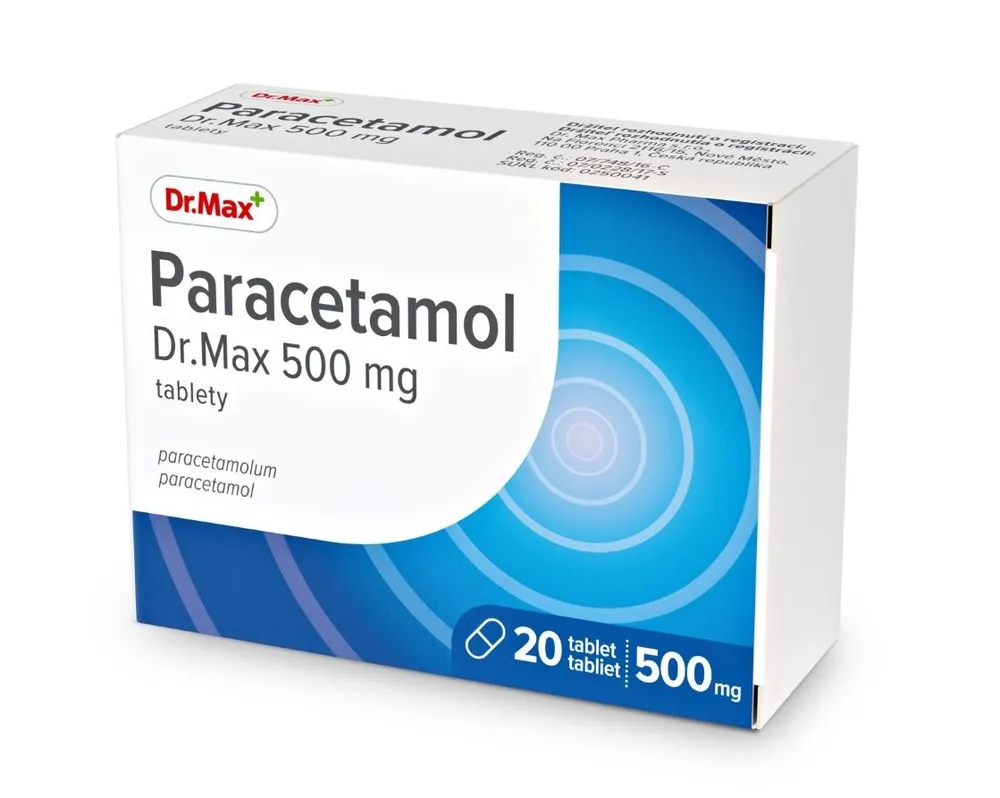
Table of Contents
Package leaflet: information for the patient
Paracetamol Dr.Max, 500 mg, tablets
Paracetamolum
Please read the entire leaflet carefully before using the medicine, as it contains
important information for the patient.
This medicine should always be used exactly as described in the patient leaflet or according to
the instructions provided by the doctor or pharmacist.
- Keep this leaflet, so that you can read it again if necessary.
- If you need advice or further information, please consult your pharmacist.
- If you experience any adverse reactions, including any possible adverse reactions not listed in this leaflet, inform your doctor or pharmacist. See section 4.
- If there is no improvement after 3 days, or if you feel worse, you should contact your doctor.
Contents of the leaflet:
- What Paracetamol Dr.Max is and what it is used for
- Important information before taking Paracetamol Dr.Max
- How to take Paracetamol Dr.Max
- Possible side effects
- How to store Paracetamol Dr.Max
- Contents of the pack and other information
1. What Paracetamol Dr.Max is and what it is used for
Paracetamol, the active substance in Paracetamol Dr.Max, has analgesic and antipyretic effects.
Paracetamol Dr.Max is used to relieve mild to moderate pain, such as headache, migraine, back pain, toothache, or menstrual pain. It provides relief from symptoms of flu and colds, such as muscle pain, joint pain, sore throat, and reduces fever.
On a doctor's advice, Paracetamol Dr.Max may also be used to relieve pain in certain rheumatic diseases, e.g. osteoarthritis, and neuralgia (nerve pain).
Paracetamol Dr.Max is intended for adults, adolescents, and children above 6 years of age (or children with body weight of at least 21 kg).
If you do not feel better or feel worse after 3 days, consult your doctor.
Without medical advice, Paracetamol Dr.Max should not be used for longer than 7 days in adults and 3 days in children.
2. Important information before using Paracetamol Dr.Max
When not to use Paracetamol Dr.Max
- if the patient is allergic to paracetamol or any of the other ingredients of this medicine (listed in section 6)
- if the patient has severe liver failure or acute hepatitis
- if the patient has a certain type of severe anaemia called haemolytic anaemia.
Warnings and precautions
Do not take Paracetamol Dr.Max together with other medicinal products
containing paracetamol.
Do not take Paracetamol Dr.Max without consulting a doctor if the patient
has liver or kidney disease.
Before starting to take Paracetamol Dr.Max, discuss with a doctor or
pharmacist if:
- the patient has kidney function disorders (in such cases, the medicine should only be taken on a doctor's advice, as lower doses may be required),
- the patient has glucose-6-phosphate dehydrogenase deficiency (an inherited disorder causing a decrease in red blood cells),
- the patient has liver function disorders,
- the patient has a very low BMI (body mass index),
- the patient has been taking higher doses of paracetamol for a prolonged period; regular monitoring of liver function is required; the risk of overdose is higher in patients with liver disease who are already taking other medicines containing paracetamol,
- alcoholic beverages must not be consumed during treatment; long-term alcohol consumption significantly increases the risk of liver damage caused by paracetamol.
If the patient is unsure whether any of the above situations apply, they should
contact a doctor immediately.
While taking Paracetamol Dr.Max, inform a doctor immediately if:
The patient has severe illnesses, including severe kidney function disorders or sepsis
(when bacteria and their toxins circulate in the blood, leading to organ damage) or malnutrition,
chronic alcoholism, or if the patient is also taking flucloxacillin (an antibiotic).
Cases of a severe condition called metabolic acidosis (a disturbance in blood and
body fluids) have been reported in patients who take paracetamol regularly for a prolonged
period or who take paracetamol together with flucloxacillin. Symptoms of metabolic acidosis may
include: severe breathing difficulties, including rapid deep breathing, drowsiness, nausea and vomiting.
This medicine contains paracetamol. Do not exceed the recommended doses. Taking higher
doses than recommended may lead to severe liver failure. Liver damage caused by paracetamol
may occur even during short-term treatment with therapeutic doses without prior liver impairment.
Life-threatening skin reactions have been reported during paracetamol treatment. If such
symptoms occur (e.g. progressive skin rash, often with blisters or mucosal lesions), discontinue
Paracetamol Dr.Max and seek immediate hospital care.
Children
Due to its paracetamol content, Paracetamol Dr.Max is not intended for children under 6 years of age (or children with body weight below 21 kg).
Paracetamol Dr.Max and other medicines
Tell your doctor or pharmacist if the patient is taking, has recently taken, or might take any other medicines.
The medicine contains paracetamol. Do not take this medicine together with other medicines containing
paracetamol.
Before starting Paracetamol Dr.Max, discuss with a doctor or
pharmacist if the patient is taking:
- medicines used to treat nausea and vomiting or stomach ulcers (metoclopramide, domperidone, and propantheline),
- warfarin or other anticoagulant medicines; long-term use of higher doses of paracetamol may enhance the effect of these medicines; occasional concurrent use does not produce a significant effect,
- certain medicines used to treat epilepsy or insomnia (glutethimide, phenobarbital, phenytoin, carbamazepine, lamotrigine),
- antidepressants, including monoamine oxidase inhibitors or tricyclic antidepressants,
- sedatives, tranquilisers, or other medicines that depress the central nervous system (barbiturates),
- medicines for tuberculosis (isoniazid),
- zidovudine (for treatment of HIV and AIDS),
- certain antibiotics (rifampicin, chloramphenicol),
- medicines used to treat gout (probenecid),
- medicines that reduce blood lipid levels (cholestyramine),
- medicines containing acetylsalicylic acid or other medicines used to treat pain and fever from the group of non-steroidal anti-inflammatory drugs (NSAIDs); (long-term concurrent use with paracetamol may lead to kidney damage),
- medicines or dietary supplements containing St. John's wort (Hypericum perforatum),
- flucloxacillin (antibiotic), due to the serious risk of a blood and body fluid disorder (called metabolic acidosis), which requires urgent treatment (see section 2).
The effect of Paracetamol Dr.Max and other medicines taken at the same time
may interact. Therefore, the doctor should be informed about all medicines the patient is taking or intends to take, including prescription and over-the-counter medicines. Before taking any over-the-counter medicines together with Paracetamol Dr.Max, consult a doctor.
Paracetamol Dr.Max with food, drink, and alcohol
Do not drink alcohol during treatment due to increased risk of liver damage.
Patients with alcohol-related problems should consult a doctor before starting treatment.
Pregnancy, breastfeeding, and fertility
If the patient is pregnant or breastfeeding, suspects she may be pregnant, or plans to have a
child, she should consult a doctor or pharmacist before using this medicine.
Paracetamol Dr.Max may be given to pregnant women if necessary. The lowest effective dose
providing adequate pain relief or fever reduction should be used, and the medicine should be taken
for as short a time as possible. If pain is not relieved or fever does not subside, or if it becomes necessary to increase the frequency of dosing, consult a
doctor.
Breastfeeding women may take Paracetamol Dr.Max for a short period; prolonged treatment is possible only after consultation with a doctor.
Driving and using machines
Paracetamol Dr.Max has no effect on the ability to drive or operate machinery.
Paracetamol Dr.Max contains sodium
This medicine contains less than 1 mmol (23 mg) of sodium per tablet, meaning the medicine is considered "sodium-free".
3. How to use Paracetamol Dr.Max
This medicine should always be taken exactly as described in this patient information leaflet or as directed by a doctor or pharmacist. If in doubt, consult a doctor or pharmacist.
Paracetamol Dr.Max can be taken regardless of meals.
This medicine is for oral use. Swallow the tablets with water.
Always use the lowest effective dose for the shortest duration necessary to relieve symptoms.
The interval between doses must be at least 4 hours.
Do not exceed the recommended dose. Taking higher than recommended doses may lead to a risk of severe liver damage.
Adults and adolescents over 15 years of age
The recommended dose is 1–2 tablets several times daily, with at least a 4-hour interval between doses.
One tablet is intended for individuals weighing 34–60 kg; 2 tablets are intended for individuals weighing over 60 kg.
The maximum daily dose is 8 tablets. In long-term treatment (beyond 10 days), do not exceed 5 tablets per day.
Adolescents aged 12–15 years
The recommended dose is 1 tablet several times daily, with at least a 4–6 hour interval between doses.
The maximum daily dose is 6 tablets.
Children aged 6–12 years (or with body weight above 21 kg)
The recommended dose is ½ – 1 tablet several times daily, with at least a 4–6 hour interval between doses.
The maximum single and maximum daily doses depending on body weight are given in the table below.
| Body weight | Single dose | Maximum daily dose |
| 21 – 24 kg | ½ tablet | 2 ½ tablets |
| 25 – 32 kg | 3 tablets | |
| 33 – 40 kg | 1 tablet | 4 tablets |
Use in children under 6 years of age or weighing less than 21 kg
Due to the content of the active substance, Paracetamol Dr.Max is not recommended for use in children under 6 years of age or weighing less than 21 kg.
Patients with impaired liver or kidney function
If the patient has impaired kidney or liver function, consult a physician before starting treatment. The physician will determine the appropriate dose. Do not take this medicine if the patient has severe impairment of liver function.
Do not use Paracetamol Dr.Max for longer than 7 days in adults or 3 days in children without medical advice. If after 3 days the patient does not feel better or feels worse, consult a physician.
Regular physician visits are necessary in case of long-term treatment (several weeks).
Use of a higher than recommended dose of Paracetamol Dr.Max
In all cases of overdose or suspected overdose, which may present with symptoms such as nausea, vomiting, and pallor, or if a child accidentally swallows the medicine, contact a physician or the nearest hospital immediately, even if no symptoms of overdose are present. Bring the packaging and patient leaflet with you and show them to the healthcare provider. Paracetamol overdose may cause liver failure, which may require liver transplantation or lead to death.
Missed dose of Paracetamol Dr.Max
If a dose of Paracetamol Dr.Max is missed, take the next dose as soon as the patient remembers, then continue following the dosing intervals stated in section 3. Do not exceed the maximum daily dose. Do not take a double dose to make up for a missed dose.
For any further questions regarding the use of this medicine, consult a physician or pharmacist.
4. Possible adverse reactions
Like all medicines, this medicine can cause adverse reactions, although not everyone will experience them.
The patient should stop taking this medicine and immediately contact a doctor if any of the following problems occur:
- allergic reactions, which may be serious, including skin rash, itching, sometimes swelling of the lips or face, or difficulty breathing;
- skin rashes, skin peeling, or mouth ulcers;
- breathing problems; these adverse reactions are more likely if the patient has previously experienced breathing problems after taking other pain-relieving and antipyretic medicines (such as ibuprofen or acetylsalicylic acid);
- unusual bruising or bleeding.
Uncommon (may affect up to 1 in 1,000 patients):
- allergic reactions, skin hypersensitivity reactions
- increased levels of liver function enzymes
Rare (may affect up to 1 in 10,000 patients):
- severe allergic reaction (anaphylaxis)
- bronchospasm
- blood disorders
- very rare cases of severe skin reactions have been reported (toxic epidermal necrolysis (TEN), Stevens-Johnson syndrome (SJS), acute generalised exanthematous pustulosis (AGEP)).
Frequency not known (frequency cannot be estimated from the available data):
- serious condition causing blood to become more acidic (so-called metabolic acidosis) in patients with severe illness taking paracetamol (see section 2).
If any of the above-mentioned or other unusual reactions occur, the patient should stop taking this
medicine or stop giving the medicine to a child and consult a doctor.
Reporting of adverse reactions
If any adverse reactions occur, including any adverse reactions not listed in this leaflet, inform a doctor or pharmacist. Adverse reactions can be reported directly to the Department of Monitoring Adverse Drug Reactions of the Office for Registration of Medicinal Products, Medical Devices and Biocidal Products, Al. Jerozolimskie 181C, 02-222 Warsaw, phone: +48 22 49 21 301, fax: +48 22 49 21 309, website: https://smz.ezdrowie.gov.pl
Reporting adverse reactions helps to provide more information on the safety of the medicine.
Adverse reactions can also be reported to the marketing authorization holder.
5. How to store Paracetamol Dr.Max
Keep the medicine out of sight and reach of children.
No special storage conditions are required for this medicine.
Do not use this medicine after the expiry date stated on the carton and blister pack after: EXP.
The expiry date refers to the last day of the stated month.
Medicines must not be disposed of via wastewater or household waste. Ask your pharmacist how to
dispose of medicines no longer required. These measures will help protect the environment.
6. Contents of the pack and other information
What Paracetamol Dr.Max contains
- The active substance is paracetamol. Each tablet contains 500 mg of paracetamol.
- The other ingredients are: maize starch gelatinised, povidone (K-25), sodium croscarmellose, microcrystalline cellulose (PH102), colloidal anhydrous silica, magnesium stearate.
What Paracetamol Dr.Max looks like and contents of the pack
Paracetamol Dr.Max is an almost white, elongated tablet with a score line on both sides, 16 mm in length. The tablet can be divided into equal doses.
Blister pack made of transparent PVC/PVDC/Aluminium in a cardboard box.
Pack sizes: 10, 20, 30 and 50 tablets.
Not all pack sizes may be marketed.
Marketing Authorisation Holder and Manufacturer
Marketing Authorisation Holder:
Dr. Max Pharma s.r.o.
Na Florenci 2116/15
Nové Město
110 00 Prague 1
Czech Republic
tel.: (+420) 516 770 199
Manufacturer:
Saneca Pharmaceuticals a.s.
Nitrianska 100
920 27 Hlohovec
Slovakia
This medicinal product is authorised in the European Economic Area countries under the following names:
Slovakia: Paracetamol Dr.Max 500 mg
Czech Republic: Paracetamol Dr.Max
Italy: Dolivio
Poland: Paracetamol Dr.Max
Romania: Paracetamol Dr.Max 500 mg tablets