Paracetamol biofarm
Poland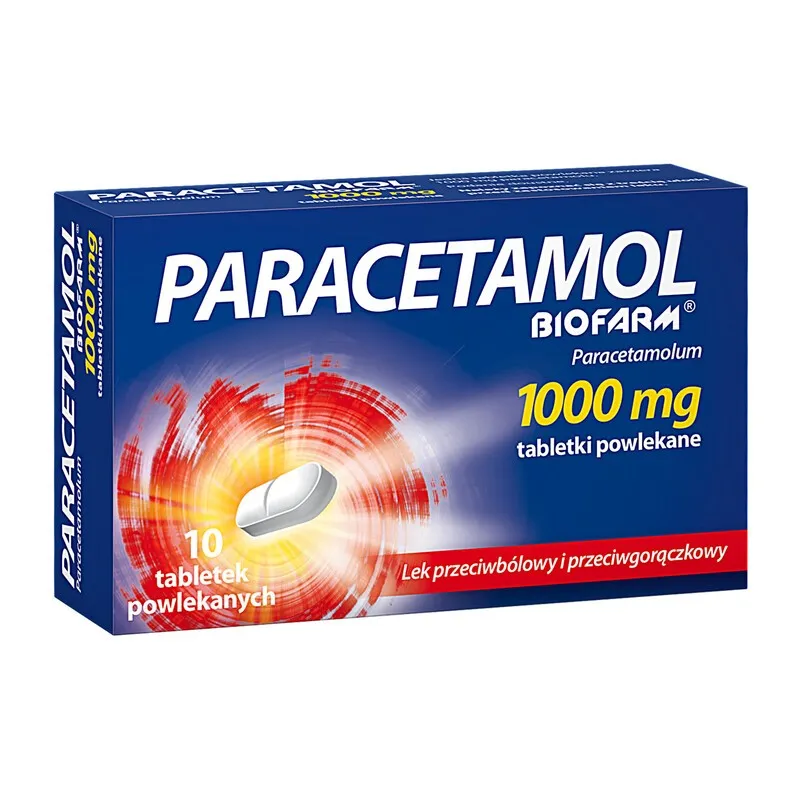
Table of Contents
- Package leaflet: Information for the user
- 1. What Paracetamol Biofarm is and what it is used for
- 2. Important information before using Paracetamol Biofarm
- 3. How to use Paracetamol Biofarm
- 4. Possible adverse reactions
- 5. How to store Paracetamol Biofarm
- 6. Contents of the pack and other information
Package leaflet: Information for the user
Paracetamol Biofarm, 500 mg, tablets
Paracetamolum
Please read all of this leaflet carefully before taking this medicine, because it contains
important information for the patient.
This medicine should always be taken exactly as described in this patient leaflet or as directed by
the doctor or pharmacist.
- Keep this leaflet so that you can read it again if necessary.
- If you need advice or further information, consult your pharmacist.
- If any adverse reactions occur, including any not listed in this leaflet, inform your doctor or pharmacist. See section 4.
- If there is no improvement after 3 days, or if the patient feels worse, consult a doctor.
Contents of the leaflet
- What Paracetamol Biofarm is and what it is used for
- Important information before taking Paracetamol Biofarm
- How to take Paracetamol Biofarm
- Possible side effects
- How to store Paracetamol Biofarm
- Contents of the package and other information
1. What Paracetamol Biofarm is and what it is used for
Paracetamol Biofarm contains the active substance paracetamol, which has analgesic
and antipyretic properties. Paracetamol does not irritate the stomach.
Indications
Pain of various origins and mild to moderate intensity, particularly such as:
- headache;
- migraine;
- rheumatic pain;
- joint, muscle and bone pain;
- back pain;
- neuralgia;
- menstrual pain;
- toothache.
Fever (e.g. associated with cold and/or flu).
Paracetamol Biofarm is intended for adults, adolescents and children over 6 years of age.
If there is no improvement after 3 days, or if the patient feels worse, consult a doctor.
2. Important information before using Paracetamol Biofarm
When not to use Paracetamol Biofarm:
- if the patient is allergic to paracetamol or any of the other ingredients of this medicine (listed in section 6);
- if the patient has severe liver function disorders;
- if the patient has severe kidney function disorders;
- if the patient is currently taking monoamine oxidase inhibitors (MAO inhibitors) or within 2 weeks after discontinuation of such treatment – see section "Other medicines and Paracetamol Biofarm";
- if the patient has alcoholic liver disease.
Warnings and precautions
This medicine contains paracetamol.
Do not take Paracetamol Biofarm together with other medicines containing paracetamol due to the risk of overdose and serious adverse effects (see also "Taking more Paracetamol Biofarm than recommended" in section 3).
Avoid frequent use of medicines containing paracetamol.
Do not exceed the maximum daily dose of paracetamol (i.e. no more than 10–15 mg paracetamol/kg body weight). Taking Paracetamol Biofarm in doses higher than recommended may cause severe liver damage (see section 3 below, "Taking more Paracetamol Biofarm than recommended").
Do not take this medicine for longer than 3 days.
If any of the following situations apply to the patient, consult a doctor before starting Paracetamol Biofarm:
- if the patient has kidney function disorders (mild to moderate), the doctor may recommend reducing the dose (see section 4);
- if the patient has:
- if the patient has liver function disorders (mild to moderate), the doctor may recommend reducing the dose (see section 4);
- glucose-6-phosphate dehydrogenase deficiency and methemoglobin reductase deficiency (enzymes responsible for normal red blood cell function);
- Gilbert's syndrome (a disorder of bilirubin metabolism in the liver causing periodic jaundice);
- hepatitis;
- if the patient is taking medicines affecting liver function (see section "Other medicines and Paracetamol Biofarm");
- if the patient is chronically undernourished, which may be due to e.g. alcohol dependence, loss of appetite, or poor nutrition;
- if the patient is allergic to acetylsalicylic acid, as there is an increased risk of allergy to paracetamol as well. Patients with bronchial asthma should be particularly cautious (risk of bronchospasm);
- if the patient regularly consumes alcohol, is alcohol-dependent, or has alcohol-related liver disease;
- if the patient is dehydrated;
- if the patient is taking various painkillers for a prolonged period, as this may lead to the occurrence or worsening of headaches. In such a case, the patient should contact a doctor for advice;
- in case of haemolytic anaemia (destruction of red blood cells).
Do not drink alcohol while taking paracetamol, as this may cause liver damage. The risk of liver damage is particularly high in fasting individuals, regular alcohol drinkers, and patients with alcoholic liver disease without cirrhosis.
Cases of liver failure have been reported in patients with reduced glutathione levels, especially in severely undernourished patients, those with anorexia, low body mass index (BMI), and those with alcoholic liver disease (see also "Paracetamol Biofarm with food, drink or alcohol" below).
During treatment with Paracetamol Biofarm, immediately inform the doctor:
If the patient has serious illnesses, including severe kidney disorders, sepsis (when bacteria and their toxins circulate in the blood, leading to organ damage), malnutrition, chronic alcoholism, or if the patient is also taking flucloxacillin (an antibiotic). In such cases, severe metabolic acidosis (an abnormality in blood and body fluids) has been reported in patients taking paracetamol regularly for a prolonged period or taking paracetamol together with flucloxacillin. Symptoms of metabolic acidosis may include: severe breathing difficulties, including rapid deep breathing, drowsiness, nausea and vomiting.
Exercise caution when using paracetamol in patients with reduced glutathione levels (such as in sepsis). Paracetamol use may increase the risk of metabolic acidosis.
Symptoms of metabolic acidosis include, among others:
- deep, rapid, and labored breathing,
- nausea, vomiting, and loss of appetite,
- general malaise.
Seek immediate medical attention if the patient experiences any of the above symptoms simultaneously.
Life-threatening skin reactions have been reported during paracetamol treatment. If such symptoms occur (e.g. progressive skin rash, often with blisters or mucosal lesions), discontinue Paracetamol Biofarm immediately and seek hospital care without delay.
Paracetamol Biofarm may affect the results of certain laboratory tests, such as blood glucose measurements.
Do not misuse or take Paracetamol Biofarm for longer than 3 days.
Without consulting a doctor or dentist, do not take Paracetamol Biofarm together with other pain-relieving or antipyretic medicines due to the risk of kidney damage (see section "Other medicines and Paracetamol Biofarm").
Children and adolescents
This medicine should not be given to children under 6 years of age. For children in this age group, other paracetamol-containing medicines in child-appropriate formulations are available.
Detailed information on the use of this medicine in children and adolescents can be found in section 3:
- "Dosage" and "Use in children and adolescents".
Paracetamol Biofarm and other medicines
Inform your doctor or pharmacist about all medicines currently used, recently taken, or planned for use.
In particular, inform your doctor if the patient is taking any of the following medicines:
- other medicines containing paracetamol – see warnings above;
- monoamine oxidase inhibitors (MAO inhibitors), used e.g. in depression and Parkinson's disease. Concurrent use of these medicines with paracetamol may cause agitation and high fever; Paracetamol Biofarm should not be used earlier than 14 days after discontinuation of MAO inhibitor treatment. At least a 7-day interval should be maintained between stopping paracetamol and starting MAO inhibitor therapy;
- metoclopramide and domperidone (medicines used to treat nausea and vomiting), as they may enhance the effect of paracetamol;
- propanteline (a medicine delaying gastric emptying) and cholestyramine (used to reduce cholesterol levels), as they may reduce the effectiveness of paracetamol;
- medicines that may impair liver function, such as:
- sedatives, anticonvulsants (e.g. phenobarbital, phenytoin, carbamazepine),
- rifampicin (an antibiotic);
- isoniazid;
- probenecid used in the treatment of gout; when paracetamol is taken together with probenecid, the doctor may reduce the paracetamol dose;
- oral anticoagulants (e.g. warfarin), as paracetamol enhances the effect of these medicines, increasing the risk of bleeding;
- salicylamide (used for fever and mild pain), as it may delay paracetamol elimination from the body;
- non-steroidal anti-inflammatory drugs (e.g. acetylsalicylic acid, ibuprofen), as their concurrent use with paracetamol increases the risk of kidney function disorders;
- caffeine, as it enhances the analgesic effect of paracetamol;
- zidovudine (an antiviral medicine used in HIV infection), as concurrent use with paracetamol increases the risk of bone marrow dysfunction. This medicine may be used together with zidovudine only after consultation with a doctor;
- flucloxacillin (an antibiotic), due to a serious risk of blood and body fluid disorders (called metabolic acidosis), which require urgent treatment (see section 2).
Paracetamol Biofarm may affect the results of certain laboratory tests, such as uric acid and blood glucose measurements.
Paracetamol Biofarm with food, drink or alcohol
Do not drink alcohol while taking Paracetamol Biofarm due to an increased risk of toxic liver damage (see also above "Warnings and precautions" and "When not to use Paracetamol Biofarm").
Taking the medicine with food may delay the onset of paracetamol's action.
Pregnancy, breastfeeding and fertility
If the patient is pregnant or breastfeeding, suspects she may be pregnant, or is planning to have a child, she should consult a doctor or pharmacist before using this medicine.
Paracetamol Biofarm may be used during pregnancy if necessary. Use the lowest effective dose sufficient to relieve pain or reduce fever, and take the medicine for as short a duration as possible.
If pain is not relieved or fever does not subside, or if increased dosing frequency is required, consult a doctor.
Paracetamol passes into breast milk in clinically insignificant amounts. Available data do not indicate any contraindications to breastfeeding during treatment.
Like other medicines, this product should be used during pregnancy and breastfeeding only when clearly necessary, for a short duration. Prolonged treatment is possible only after consultation with a doctor.
Driving and using machines
Paracetamol has no effect or negligible effect on the ability to drive and operate machinery.
The medicine contains less than 1 mmol (23 mg) of sodium per recommended dose unit, meaning the medicine is considered "sodium-free".
3. How to use Paracetamol Biofarm
This medicine should always be used exactly as described in this patient information leaflet or as directed by a doctor or pharmacist. If in doubt, consult a doctor or pharmacist.
Dosage
Use the lowest effective dose possible.
Paracetamol Biofarm should not be used regularly for longer than 3 days without consulting a doctor.
Do not use more than the recommended dose. Using higher than recommended doses may lead to a risk of severe liver damage.
Adults and adolescents aged 12 years and older
Single dose: 1 to 2 tablets (corresponding to 500 mg to 1000 mg of paracetamol).
If necessary, the dose may be repeated no more frequently than every 4 hours, up to 4 times daily.
Maximum daily dose: 8 tablets (4000 mg of paracetamol).
Use in children and adolescents
Children aged 6 to 12 years
Single dose: half or one tablet (corresponding to 250 mg or 500 mg of paracetamol), not exceeding 10–15 mg paracetamol/kg body weight.
If necessary, the dose may be repeated no more frequently than every 4 hours, up to a maximum of 4 times daily.
Maximum daily dose of paracetamol: 60 mg paracetamol/kg body weight/day, administered in divided doses as described above.
It is particularly important to follow the dosing instructions based on the child's body weight.
Children under 6 years of age
This medicine should not be given to children under 6 years of age. For this patient group, paracetamol-containing medicines in pharmaceutical forms suitable for children are available.
Special patient groups
Patients with hepatic impairment, renal impairment, or Gilbert's syndrome should consult a doctor to determine the appropriate dose and frequency of administration.
Method of administration
This medicine is for oral use.
The tablet should be swallowed whole with a small amount of liquid (preferably boiled water).
Taking the medicine with food may delay the onset of paracetamol's action.
The tablet may be divided into two equal doses.
Use of a higher than recommended dose of Paracetamol Biofarm
If a higher than recommended dose of Paracetamol Biofarm is taken, contact a doctor immediately (even if the patient feels well), as there is a risk of severe, delayed liver damage, which may result in liver injury or even death.
Overdose may cause nausea, vomiting, excessive sweating, drowsiness, and general weakness within a few to several hours. In any case of a single intake of paracetamol at a dose of 5 g or more, vomiting should be induced if no more than one hour has passed since ingestion, and immediate medical advice should be sought. Administer 60–100 g of activated charcoal orally, preferably mixed with water.
Missed dose of Paracetamol Biofarm
Do not take a double dose to make up for a missed dose.
Stopping Paracetamol Biofarm
If you have any further questions about the use of this medicine, consult your doctor or pharmacist.
4. Possible adverse reactions
Like all medicines, this medicine can cause adverse reactions, although not everyone will experience them.
You should immediately stop taking Paracetamol Biofarm and contact your doctor without delay if any of the following occur:
- Angioedema, sometimes associated with breathing difficulties or swelling of the lips, tongue, throat, or face, difficulty breathing, excessive sweating, nausea, low blood pressure, shock, anaphylactic shock (very rare: less than 1 in 10,000 patients).
- Allergic reactions such as skin rash, itching, urticaria (rare: 1 to 10 in 10,000 patients).
- Skin rashes or severe skin reactions presenting as acute generalized pustular rash or blisters and erosions on the skin, in the mouth, eyes, and genital organs, fever and joint pain, or rupturing large subcutaneous blisters, extensive skin erosions, peeling of large skin sheets, and fever (very rare).
- Breathing difficulties, if similar problems occurred previously during use of acetylsalicylic acid or other non-steroidal anti-inflammatory drugs (very rare).
- Bruising or bleeding caused by thrombocytopenia, platelet disorders, thrombocytopenic purpura, or hemolytic anemia (rare).
- Increased susceptibility to infections and general weakness due to agranulocytosis (rare) or pancytopenia (reduced blood cell count) (very rare).
- Liver function disorders, liver damage, jaundice (yellowing of the skin and whites of the eyes), liver necrosis (death of liver cells) (rare), hepatotoxicity (liver damage caused by chemical substances) (very rare).
- Overdose and poisoning (rare).
- Low blood sugar (very rare).
- Pyuria, severe kidney damage, interstitial nephritis, blood in urine, inability to pass urine (very rare).
Other adverse reactions:
Rare (in 1 to 10 out of 10,000 patients):
- Blood disorders including leukopenia and bone marrow dysfunction.
- Depression, disorientation, hallucinations.
- Tremor, headache.
- Visual disturbances.
- Edema.
- Abdominal pain, gastrointestinal bleeding, diarrhea, nausea, vomiting.
- Dizziness, malaise, fever, drowsiness, interactions with other medicines.
- Sweating.
- Purpura.
Very rare (less than 1 in 10,000 patients):
- Very rare cases of severe skin reactions have been reported (toxic epidermal necrolysis, TEN, Stevens-Johnson syndrome, SJS, acute generalised exanthematous pustulosis, AGEP).
Frequency not known (cannot be estimated from available data):
- Skin disorders caused by paracetamol – drug-induced dermatoses.
- A serious condition that may cause blood acidification (so-called metabolic acidosis) in patients with severe illness taking paracetamol (see section 2).
Reporting of adverse reactions
If any adverse reactions occur, including any adverse reactions not listed in this leaflet, inform your doctor or pharmacist. Adverse reactions can be reported directly to the Department of Monitoring of Adverse Drug Reactions at the Office for Registration of Medicinal Products, Medical Devices and Biocidal Products
Al. Jerozolimskie 181C
02-222 Warsaw
Phone: +48 22 49 21 301
Fax: +48 22 49 21 309
Website: https://smz.ezdrowie.gov.pl
Adverse reactions can also be reported to the marketing authorization holder.
Reporting adverse reactions helps provide more information on the safety of this medicine.
5. How to store Paracetamol Biofarm
No special storage instructions are required for this medicinal product.
The medicine should be stored out of sight and reach of children.
Do not use this medicine after the expiry date stated on the blister and carton after EXP.
The expiry date refers to the last day of the stated month.
Medicines should not be disposed of via wastewater or household waste. Ask your pharmacist
how to dispose of medicines no longer required. These measures will help protect
the environment.
6. Contents of the pack and other information
What Paracetamol Biofarm contains
- The active substance is paracetamol. One tablet contains 500 mg of paracetamol.
- The other ingredients are: maize starch gelatinised, povidone K30, crospovidone A, sodium croscarmellose, microcrystalline cellulose, stearic acid 50, magnesium stearate.
What Paracetamol Biofarm looks like and contents of the pack
Elongated, biconvex, white or almost white tablets with a dividing line on one side.
The tablet can be divided into equal doses.
The tablets are packed in aluminium/PVC blisters, placed in a cardboard box.
Pack sizes:
2, 6, 10, 20, 30 or 50 tablets
Not all pack sizes may be marketed.
Marketing Authorisation Holder and Manufacturer
Biofarm Sp. z o.o.
ul. Wałbrzyska 13
60-198 Poznań
tel.: +48 61 66 51 500
fax: +48 61 66 51 505
e-mail: [email protected]