Paracetamol aurovitas
Poland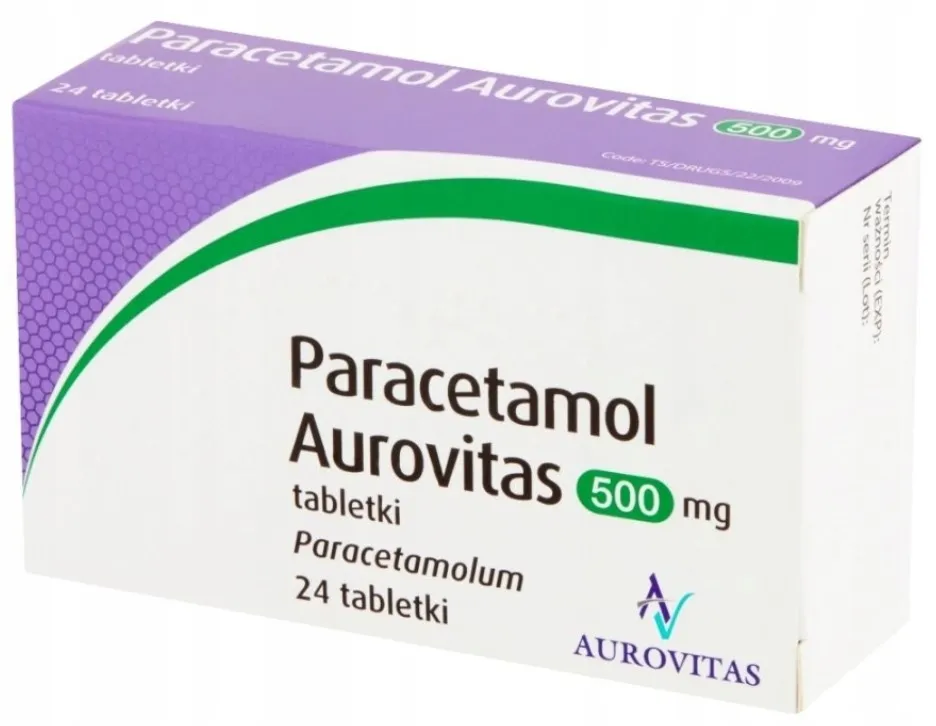
Table of Contents
Package leaflet: Information for the user
Paracetamol Aurovitas, 500 mg, tablets
Paracetamolum
Please read all of this leaflet carefully before taking this medicine because it contains important information for you.
This medicine should always be taken exactly as described in this patient leaflet or as directed by your doctor, pharmacist, or nurse.
- Keep this leaflet. You may need to read it again.
- If you need advice or additional information, please consult your pharmacist.
- If you experience any side effects, including any possible side effects not listed in this leaflet, inform your doctor or pharmacist. See section 4.
- If there is no improvement after 3 days, or if you feel worse, consult your doctor.
Contents of the leaflet:
- What Paracetamol Aurovitas is and what it is used for
- Important information before taking Paracetamol Aurovitas
- How to take Paracetamol Aurovitas
- Possible side effects
- How to store Paracetamol Aurovitas
- Contents of the pack and other information
1. What Paracetamol Aurovitas is and what it is used for
The active substance in Paracetamol Aurovitas is paracetamol, which belongs to a group of medicines known as analgesics (painkillers).
Paracetamol Aurovitas is used to relieve pain and reduce fever. The tablets may relieve mild to moderate pain and/or fever (e.g. headache and toothache).
Paracetamol Aurovitas tablets may be used by adults and adolescents, but are not suitable for use in children under 10 years of age.
2. Important information before taking Paracetamol Aurovitas
When not to take Paracetamol Aurovitas
- if you are allergic to paracetamol or to any of the other ingredients of this medicine (listed in section 6).
Warnings and precautions
Before taking Paracetamol Aurovitas, talk to your doctor or pharmacist:
- if you have kidney or liver disease (including Gilbert’s syndrome or acute hepatitis),
- if you have a deficiency of an enzyme called glucose-6-phosphate dehydrogenase,
- if you have haemolytic anaemia (abnormal breakdown of red blood cells),
- if you regularly consume large amounts of alcohol. Never take more than 2000 mg of paracetamol per day,
- if you have asthma and are sensitive to acetylsalicylic acid,
- in case of dehydration or prolonged malnutrition.
If you are taking any antiepileptic medicines, consult your doctor before taking paracetamol, as paracetamol taken at the same time as antiepileptic drugs may reduce their effectiveness and increase the risk of liver damage, especially when high doses of paracetamol are used.
If you have high fever, symptoms of secondary infection, or persistent symptoms for more than 3 days, consult your doctor or pharmacist.
Headaches caused by overuse of painkillers should not be treated by increasing the dose. In such cases, pain relief should only be used after consulting a doctor.
Do not take more paracetamol than recommended in section 3 “How to take Paracetamol Aurovitas”. Always avoid taking this medicine together with other medicines containing paracetamol, such as cold and flu remedies, because high doses may lead to liver damage. Do not take more than one medicine containing paracetamol at the same time without consulting your doctor.
While taking Paracetamol Aurovitas, inform your doctor immediately if:
You have severe medical conditions, including severe kidney impairment, sepsis (when bacteria and their toxins circulate in the blood, leading to organ damage), malnutrition, chronic alcoholism, or if you are also taking flucloxacillin (an antibiotic).
Cases of a serious condition called metabolic acidosis (an abnormality in blood and body fluids) have been reported in patients taking paracetamol regularly over a long period or taking paracetamol together with flucloxacillin. Symptoms of metabolic acidosis may include: severe breathing difficulties, including rapid deep breathing, drowsiness, nausea, and vomiting.
Paracetamol Aurovitas and other medicines
Tell your doctor or pharmacist if you are taking, have recently taken, or might take any other medicines.
Do not take Paracetamol Aurovitas in combination with other medicines containing paracetamol.
Talk to your doctor before starting paracetamol if you are taking any of the following medicines:
- metoclopramide or domperidone (used to treat nausea and vomiting),
- cholestyramine (a cholesterol-lowering medicine),
- warfarin and other coumarins (blood-thinning medicines), especially if you plan to take paracetamol daily for a prolonged period,
- salicylamide (a painkiller),
- probenecid (used in gout),
- isoniazid or rifampicin (used to treat tuberculosis),
- lamotrigine or phenytoin (antiepileptic medicines),
- barbiturates or carbamazepine (a group of medicines causing relaxation and drowsiness),
- St John’s wort (an antidepressant herb),
- chloramphenicol (an antibiotic),
- zidovudine (a medicine used to treat AIDS),
- flucloxacillin (an antibiotic), due to the serious risk of blood and fluid abnormalities (called metabolic acidosis), which requires urgent treatment (see section 2).
If you know you will be undergoing laboratory tests (such as blood tests, urine analysis, allergy testing, etc.), you should inform your doctor that you are taking this medicine, as paracetamol may affect the results of these tests.
Paracetamol Aurovitas with food, drink and alcohol
Avoid drinking alcohol while taking Paracetamol Aurovitas.
Pregnancy, breastfeeding and fertility
Pregnancy
Paracetamol may be used during pregnancy if necessary. Use the lowest possible dose that relieves pain and/or fever, for the shortest possible time. Contact your doctor if pain and/or fever do not improve, or if you need to take the medicine more frequently.
Breastfeeding
Paracetamol passes into breast milk, but only in small amounts. At recommended doses, paracetamol may be used short-term by breastfeeding women.
Fertility
No harmful effects on fertility are known with normal use of paracetamol.
If you are pregnant, breastfeeding, think you may be pregnant, or are planning to have a baby, you should consult your doctor or pharmacist before taking this medicine.
Driving and using machines
Paracetamol Aurovitas is unlikely to affect your ability to drive or use machines.
Paracetamol Aurovitas contains sodium
This medicine contains less than 1 mmol (23 mg) of sodium per tablet, which means essentially "sodium-free".
3. How to use Paracetamol Aurovitas
Dosage
This medicine should always be used exactly as described in this patient information leaflet or as advised by your doctor or pharmacist. If in doubt, consult your doctor or pharmacist.
Recommended dosage:
Adults, elderly, and individuals aged 16 years and older (with body weight above 55 kg):
Take one to two 500 mg Paracetamol Aurovitas tablets at a time, up to 4 times daily.
Do not exceed a daily dose of paracetamol greater than 6 tablets (3000 mg).
Children aged 10–15 years (with body weight 40–55 kg):
Take one 500 mg Paracetamol Aurovitas tablet at a time, up to 4 times daily.
Do not exceed a daily dose of paracetamol greater than 4 tablets (2000 mg).
This medicine should not be used in children under 10 years of age.
The interval between doses must be at least 4 hours, and no more than 4 doses should be taken per day.
The tablet should be swallowed whole with a large amount of water.
Paracetamol Aurovitas tablets are not suitable for children under 10 years of age.
- The interval between consecutive doses should be at least 4 hours.
- Do not use in combination with other medicines containing paracetamol.
- Do not exceed the recommended daily dose.
- Paracetamol Aurovitas tablets contain a score line to facilitate dosing in children.
- If pain persists for more than 5 days, or fever lasts longer than 3 days, or symptoms worsen or new symptoms appear, discontinue treatment and consult a doctor.
The effective daily dose should not exceed 60 mg/kg body weight per day (up to 2 g/day) in the following cases:
- Adults with body weight below 50 kg,
- Mild or moderate hepatic impairment, Gilbert's syndrome (familial non-haemolytic jaundice),
- Dehydration,
- Chronic malnutrition.
Follow the instructions provided unless your doctor has advised otherwise.
If you feel the effect of Paracetamol Aurovitas is too strong or too weak, consult your doctor or pharmacist.
Method of administration:
Swallow the tablet with a glass of water.
Overdose of Paracetamol Aurovitas
SEEK MEDICAL ADVICE IMMEDIATELY IN CASE OF OVERDOSE, EVEN IF THE PATIENT FEELS WELL, due to the risk of delayed, severe liver damage. Symptoms of paracetamol overdose include nausea, vomiting, and reduced thirst. Loss of consciousness usually does not occur.
Missed dose of Paracetamol Aurovitas
Do not take a double dose to make up for a missed dose. If you miss a dose, skip it and take the next dose at the usual time.
If you have any further doubts about the use of this medicine, consult your doctor or pharmacist.
4. Possible adverse reactions
Like all medicines, Paracetamol Aurovitas may cause adverse reactions, although not everyone experiences them.
The possible adverse reactions listed below are as follows:
Uncommon adverse reactions (may affect up to 1 in 1,000 people):
- Certain blood disorders, including agranulocytosis, thrombocytopenia, thrombocytopenic purpura, haemolytic anaemia, leukopenia, platelet disorders (coagulation disorders), and stem cell disorders (disorders of blood-forming cells in the bone marrow).
- Allergic reactions.
- Depression, confusion, and hallucinations.
- Seizures and headaches.
- Visual disturbances.
- Oedema (abnormal accumulation of fluid under the skin).
- Abdominal pain, gastrointestinal bleeding, diarrhoea, nausea, vomiting.
- Liver function disorders, liver failure, jaundice (with symptoms such as yellowing of the skin and eyes), liver cirrhosis (liver cell necrosis).
- Rash, itching, sweating, urticaria, red skin spots, angioedema with symptoms such as swelling of the face, lips, throat, or tongue.
- Dizziness, general malaise, fever, sedation, drug interactions.
- Overdose and poisoning.
Very rare adverse reactions (may affect up to 1 in 10,000 people):
- Pancytopenia (reduced blood cell count).
- Allergic reactions (treatment should be discontinued in such cases), including angioedema, breathing difficulties, sweating, nausea, hypotension, shock, and anaphylaxis.
- Low blood sugar levels.
- Hepatotoxicity (liver damage caused by chemicals).
- Cloudy urine and kidney disorders.
- Bronchospasm (difficulty breathing) in patients with aspirin hypersensitivity and other nonsteroidal anti-inflammatory drugs.
- Haematuria (blood in urine).
- Urinary incontinence (inability to pass urine).
Unknown frequency (cannot be estimated from the available data):
- A serious condition that may cause the blood to become more acidic (so-called metabolic acidosis), in patients with severe illness taking paracetamol (see section 2).
- Acute generalised exanthematous pustulosis (drug-induced rash characterised by numerous small, mainly non-vesicular, sterile pustules).
- Severe rash or skin peeling.
- Stevens-Johnson syndrome (a severe, life-threatening skin disease).
- Skin swelling, blisters, or rash caused by taking paracetamol.
After discontinuing the medicine, these symptoms should resolve. If any of the adverse reactions worsen, inform your doctor or pharmacist.
Reporting of adverse reactions
If any adverse reactions occur, including any not listed in this leaflet, tell your doctor or pharmacist. Adverse reactions can be reported directly to the Department of Monitoring of Adverse Drug Reactions at the Office for Registration of Medicinal Products, Medical Devices and Biocidal Products, Al. Jerozolimskie 181C, 02-222 Warsaw, Tel: +48 22 49 21 301, Fax: +48 22 49 21 309, website: https://smz.ezdrowie.gov.pl
Adverse reactions can also be reported to the marketing authorisation holder.
Reporting adverse reactions helps to provide more information on the safety of the medicine.
5. How to store Paracetamol Aurovitas
Keep this medicine out of sight and reach of children.
Do not use this medicine after the expiry date stated on the blister, carton, and bottle
after: EXP. The expiry date refers to the last day of the stated month.
No special storage instructions apply.
Medicines must not be disposed of via wastewater or household waste. Ask your
pharmacist how to dispose of medicines no longer required. This will help protect
the environment.
6. Contents of the pack and other information
What Paracetamol Aurovitas contains
- The active substance is paracetamol. Each tablet contains 500 mg of paracetamol.
- The other ingredients are: maize pregelatinised starch, colloidal anhydrous silica, low-viscosity hydroxypropylcellulose, sodium carboxymethyl starch (type A), talc, magnesium stearate.
What Paracetamol Aurovitas looks like and contents of the pack
Tablet.
White or almost white, uncoated, round tablets, embossed with the letters "A" and "8" on one side, with a break line between them, and smooth on the other side. The tablet can be divided into equal doses.
Paracetamol Aurovitas is available in blister packs containing 10, 12, 16, 20, 24, 30, 32, 40, 50, 60, 90, 100, 120 and 540 tablets.
Not all pack sizes may be marketed.
Marketing Authorisation Holder and Importer
Marketing Authorisation Holder:
Aurovitas Pharma Polska Sp. z o.o.
ul. Sokratesa 13D, lok. 27
01-909 Warsaw
e-mail: [email protected]
Manufacturer/Importer:
APL Swift Services (Malta) Limited
HF26, Hal Far Industrial Estate, Hal Far
Birzebbugia, BBG 3000
Malta
Generis Farmacêutica, S.A.
Rua João de Deus 19
2700-487 Amadora
Portugal
This medicinal product is authorised in the European Economic Area countries under the following names:
Belgium: Paracetamol AB 500 mg/ 1000 mg tablets
Czech Republic: Paracetamol Aurovitas
Italy: Paracetamolo Aurobindo Italia
Netherlands: Paracetamol Sanias 500 mg/ 1000 mg, tablets
Poland: Paracetamol Aurovitas
Portugal: Paracetamol Aurobindo 500 mg/ 1000 mg