Papaverine hydrochloride wzf
Poland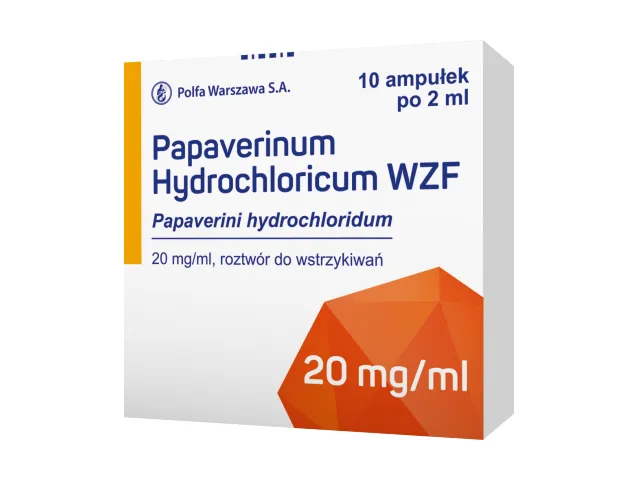
Table of Contents
- Package leaflet: Information for the patient
- 1. What Papaverinum hydrochloricum WZF is and what it is used for
- 2. Important information before using the medicine Papaverinum hydrochloricum WZF
- 3. How to use Papaverinum hydrochloricum WZF
- 4. Possible adverse reactions
- 5. How to store Papaverinum hydrochloricum WZF
- 6. Contents of the packaging and other information
Package leaflet: Information for the patient
PAPAVERINUM HYDROCHLORICUM WZF, 20 mg/ml, solution for injection
Papaverini hydrochloridum
Please read all of this leaflet carefully before using the medicine, because it contains
important information for the patient.
- Keep this leaflet, so that you can read it again if necessary.
- If you have any questions, please consult your doctor or pharmacist.
- This medicine has been prescribed for a specific individual. Do not pass it on to others. The medicine may harm another person, even if their symptoms are the same.
- If the patient experiences any adverse reactions, including any not listed in this leaflet, inform the doctor or pharmacist. See section 4.
Table of contents of the leaflet
- What Papaverinum hydrochloricum WZF is and what it is used for
- Important information before using Papaverinum hydrochloricum WZF
- How to use Papaverinum hydrochloricum WZF
- Possible side effects
- How to store Papaverinum hydrochloricum WZF
- Contents of the pack and other information
1. What Papaverinum hydrochloricum WZF is and what it is used for
Papaverine belongs to the group of isoquinoline alkaloids derived from opium. It relaxes smooth muscles by direct action on their cells. Papaverine has no analgesic effect and does not lead to dependence.
The medicine is used in spastic conditions (spasms) of smooth muscles:
- gastrointestinal tract – biliary colic, spastic conditions of the biliary tract, intestinal colic;
- urinary tract – renal colic, painful urge to urinate.
2. Important information before using the medicine Papaverinum hydrochloricum WZF
When not to use Papaverinum hydrochloricum WZF
- if the patient is allergic to papaverine or any of the other ingredients of this medicine (listed in section 6);
- if the patient has conduction disorders in the heart muscle.
Warnings and precautions
Before starting treatment with Papaverinum hydrochloricum WZF, consult a doctor, especially if the patient:
- has glaucoma,
- has liver function disorders,
- has angina pectoris,
- has recently suffered a myocardial infarction.
Children
Due to lack of adequate clinical data, Papaverinum hydrochloricum WZF should not be used in children.
Papaverinum hydrochloricum WZF and other medicines
Inform the doctor about all medicines currently used or recently taken, as well as any medicines the patient intends to use.
Papaverine reduces the effect of levodopa (a medicine used in Parkinson's disease).
Pregnancy and breastfeeding
If the patient is pregnant or breastfeeding, suspects she might be pregnant, or is planning to have a child, she should consult a doctor or pharmacist before using this medicine.
The medicine contains benzyl alcohol – see section below "Papaverinum hydrochloricum WZF contains benzyl alcohol and sodium."
The doctor will decide whether the medicine can be used.
Driving and operating machinery
Exercise caution, as the medicine may cause dizziness or drowsiness.
Papaverinum hydrochloricum WZF contains benzyl alcohol and sodium
The medicine contains 10 mg of benzyl alcohol in each ml of solution. The medicine contains 20 mg of benzyl alcohol in each ampoule (2 ml solution).
Benzyl alcohol may cause allergic reactions.
Administration of benzyl alcohol to young children is associated with risk of severe adverse effects, including respiratory disorders (so-called "gasping syndrome"). Papaverinum hydrochloricum WZF should not be used in children (see also section 3).
Pregnant or breastfeeding women, and patients with liver or kidney disease, should consult a doctor before using this medicine, as large amounts of benzyl alcohol may accumulate in their bodies and cause adverse effects (so-called metabolic acidosis).
The medicine contains less than 1 mmol (23 mg) of sodium per ampoule (2 ml), meaning the medicine is considered "sodium-free".
3. How to use Papaverinum hydrochloricum WZF
This medicine should always be used as directed by the physician. In case of doubt, consult a
physician or pharmacist.
Adults
Administer intramuscularly or subcutaneously, without dilution:
40 mg to 120 mg (2 ml to 6 ml, i.e. 1 to 3 ampoules). If necessary, the dose may be repeated after
3 hours, up to a maximum of 4 times per day.
Children
Papaverinum hydrochloricum WZF should not be used in children.
Instructions for opening the ampoule
Before opening the ampoule, ensure that the entire solution is in the lower part of the ampoule.
Gently shake the ampoule or tap it with a finger to help the solution flow down.
Each ampoule has a coloured dot (see Figure 1) indicating the score mark located beneath it.
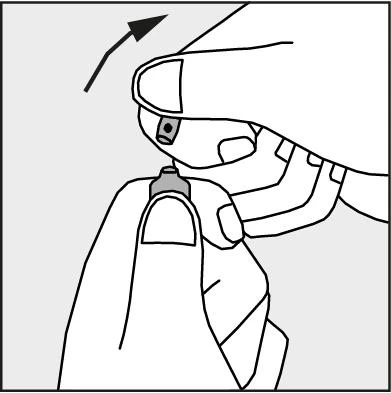
- To open the ampoule, hold it vertically with both hands, with the coloured dot facing towards you – see Figure 2. Hold the upper part of the ampoule so that the thumb is positioned above the coloured dot.
- Press in the direction of the arrow shown in Figure 3.
Ampoules are intended for single use only and should be opened immediately before use. Any unused
medicinal product or waste material should be disposed of in accordance with applicable regulations.
Figure 1.

Figure 2.

Figure 3.
Overdose of Papaverinum hydrochloricum WZF
Excessive lowering of arterial blood pressure, blurred or double vision, and cardiac arrhythmias may occur.
Treatment: the physician will administer symptomatic treatment.
In case of overdose, seek immediate medical advice from a physician or pharmacist.
Missed dose of Papaverinum hydrochloricum WZF
If a dose is missed, take the next dose at the scheduled time. Do not take a double dose to make up for
a missed dose.
In case of any further doubts concerning the use of this medicine, consult a physician or pharmacist.
4. Possible adverse reactions
Like all medicines, this medicine can cause adverse reactions, although not everyone experiences them.
Facial flushing, headache and dizziness, abdominal discomfort, constipation, diarrhoea, malaise, loss of appetite, nausea, vomiting, excessive sweating, drowsiness, hypotension, respiratory disturbances, pain at the injection site, eosinophilia, increased liver function tests.
If symptoms such as jaundice or liver-related pain occur, discontinue the medicine and contact a doctor immediately.
Reporting of adverse reactions
If any adverse reactions occur, including any adverse reactions not listed in this leaflet, inform a doctor or pharmacist. Adverse reactions can be reported directly to the Department of Monitoring Adverse Drug Reactions of the Office for Registration of Medicinal Products, Medical Devices and Biocidal Products
Al. Jerozolimskie 181C
02-222 Warsaw
Phone: +48 22 49 21 301
Fax: +48 22 49 21 309
Website: https://smz.ezdrowie.gov.pl
Adverse reactions can also be reported to the marketing authorization holder.
Reporting adverse reactions helps to provide more information on the safety of the medicine.
5. How to store Papaverinum hydrochloricum WZF
Store below 25 °C. Keep ampoules in the outer packaging to protect from light. Do not freeze.
Keep this medicine out of the sight and reach of children.
Do not use this medicine after the expiry date stated on the label and carton. The expiry date refers to the last day of the stated month.
The label marking EXP indicates the expiry date, and LOT indicates the batch number.
Medicines must not be disposed of via wastewater or household waste. Ask your pharmacist how to dispose of medicines no longer required. These measures will help protect the environment.
6. Contents of the packaging and other information
What Papaverinum hydrochloricum WZF contains
- The active substance is papaverine hydrochloride. Each ml of solution contains 20 mg of papaverine hydrochloride.
- Other ingredients: disodium edetate, benzyl alcohol, water for injections.
What Papaverinum hydrochloricum WZF looks like and contents of the pack
Papaverinum hydrochloricum WZF is a clear, colourless or slightly yellowish liquid.
10 ampoules with a capacity of 2 ml in a cardboard box.
Marketing Authorisation Holder and Manufacturer
POLPHARMA Pharmaceutical Works S.A.
Pelplińska Street 19, 83-200 Starogard Gdanski, Poland
tel. +48 22 364 61 01