Panzol
Poland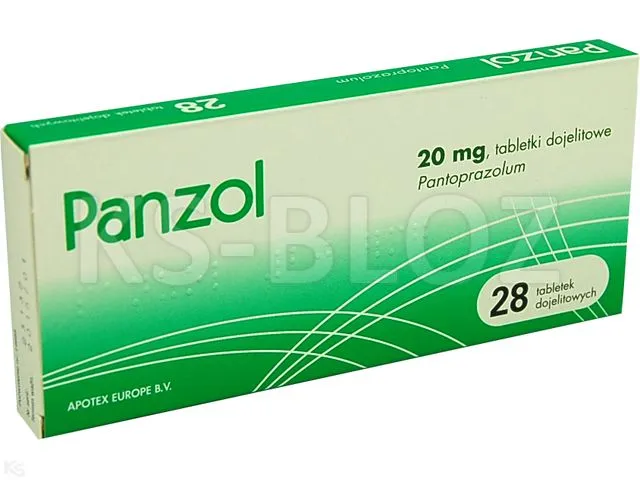
Table of Contents
Package leaflet: Information for the patient
Panzol, 40 mg, enteric-coated tablets
Pantoprazole
Please read all of this leaflet carefully before taking this medicine, as it contains
important information for the patient.
- Keep this leaflet, as you may need to read it again.
- If you have any further questions, please consult your doctor or pharmacist.
- This medicine has been prescribed for a specific individual. Do not pass it on to others. It may harm other people, even if their symptoms are the same.
- If you experience any side effects, including any not listed in this leaflet, tell your doctor or pharmacist. See section 4.
Leaflet contents:
- What Panzol is and what it is used for
- Important information before taking Panzol
- How to take Panzol
- Possible side effects
- How to store Panzol
- Contents of the package and other information
1. What Panzol is and what it is used for
Panzol contains the active substance pantoprazole. Panzol is a selective "proton pump inhibitor," a medicine that reduces the secretion of acid in the stomach. It is used in the treatment of stomach and intestinal disorders related to hydrochloric acid secretion.
Panzol is used in adults and adolescents aged 12 years and older for:
- Treatment of reflux esophagitis. This is inflammation of the esophagus (the tube connecting the throat to the stomach), associated with the backflow of hydrochloric acid from the stomach.
Panzol is used in adults for:
- Helicobacter pylori infection in patients with gastric and/or duodenal ulcer, in combination with two antibiotics (eradication therapy), to eliminate the bacteria and prevent ulcer recurrence.
- Gastric and/or duodenal ulcer disease.
- Zollinger-Ellison syndrome and other conditions associated with excessive hydrochloric acid secretion.
2. Important information before using Panzol
When not to use Panzol
- if the patient has a known allergy to pantoprazole, soy lecithin, or any of the other ingredients of this medicine (listed in section 6);
- if the patient has a known allergy to medicines containing other proton pump inhibitors.
Warnings and precautions
Before starting treatment with Panzol, consult your doctor or pharmacist.
- In case of severe liver function disorders. Inform your doctor if you have ever had liver problems. Your doctor may recommend more frequent monitoring of liver enzyme activity, especially if long-term treatment with Panzol is required. If liver enzyme activity increases, treatment with this medicine should be discontinued.
- If the patient has vitamin B deficiency or risk factors indicating possible reduced vitamin B levels and is receiving long-term treatment with pantoprazole. As with all medicines that reduce (inhibit) gastric acid secretion, pantoprazole may lead to reduced absorption of vitamin B12. Contact your doctor if you notice any of the following symptoms, which may indicate low vitamin B12 levels:
- Extreme fatigue or lack of energy
- Tingling and burning sensations
- Sore or red tongue, oral ulcers
- Muscle weakness
- Blurred vision
- Memory problems, confusion, depression
- If the patient is taking HIV protease inhibitors such as atazanavir (used in the treatment of HIV infection).
- Taking a proton pump inhibitor such as Panzol, particularly for more than one year, may slightly increase the risk of fractures of the hip, wrist, or spine. Inform your doctor if the patient has osteoporosis (reduced bone density) or risk factors for developing osteoporosis (e.g. if taking steroids).
- If the patient has been taking pantoprazole for more than three months, magnesium levels in the blood may decrease. Symptoms of low magnesium levels may include fatigue, involuntary muscle contractions, disorientation, seizures, dizziness, or rapid heartbeat. If any of these symptoms occur, inform your doctor immediately. Low magnesium levels may also lead to reduced potassium and calcium levels in the blood. Your doctor may recommend regular blood tests to monitor magnesium levels.
- If the patient has previously experienced a skin reaction after taking a medicine similar to Panzol that reduces gastric acid secretion.
- If the patient develops a skin rash, especially in areas exposed to sunlight, inform your doctor as soon as possible, as discontinuation of Panzol may be necessary. Also report any other adverse reactions such as joint pain.
- Serious skin reactions have been reported with pantoprazole treatment, including Stevens-Johnson syndrome, toxic epidermal necrolysis, drug reaction with eosinophilia and systemic symptoms (DRESS), and erythema multiforme. Discontinue pantoprazole and contact your doctor immediately if any symptoms associated with these serious skin reactions occur, as described in section 4.
- If the patient is scheduled for a blood test to measure chromogranin A levels.
Immediately inform your doctor before starting or during treatment with Panzol if any of the following symptoms occur, as they may indicate another, more serious condition:
- Unintentional weight loss;
- Recurrent vomiting;
- Vomiting blood, which may look like dark coffee grounds;
- Blood in stool, black or tarry stools;
- Difficulty swallowing or pain when swallowing;
- Pallor and weakness (anaemia);
- Chest pain;
- Abdominal pain;
- Severe and/or persistent diarrhoea, because use of Panzol is associated with a slightly increased risk of infectious diarrhoea.
Your doctor may decide that further investigations are necessary to exclude an underlying tumour, as treatment with pantoprazole may alleviate symptoms of tumour-related disease and delay diagnosis. If symptoms persist despite treatment, further investigations should be considered.
If Panzol is taken for a prolonged period (over 1 year), the patient will likely remain under regular medical supervision. In such cases, report any new or unexpected symptoms and the circumstances of their occurrence during every visit to the doctor.
Children and adolescents
Panzol is not recommended for use in children and adolescents under 12 years of age, as its efficacy and safety have not been established in this age group.
Panzol and other medicines
Tell your doctor or pharmacist about all medicines the patient is currently taking or has recently taken, as well as any medicines the patient plans to take.
Panzol may affect the effectiveness of other medicines, so inform your doctor if the patient is taking:
- ketoconazole, itraconazole, posaconazole (used to treat fungal infections), or erlotinib (used to treat certain types of cancer), as Panzol may impair the proper action of these and other medicines;
- warfarin and phenprocoumon, which affect blood clotting. Additional monitoring may be required;
- medicines used to treat HIV infection, such as atazanavir;
- methotrexate (used to treat autoimmune diseases or certain cancers) – when methotrexate is used, your doctor may temporarily discontinue Panzol, as pantoprazole may increase methotrexate blood levels;
- fluvoxamine (used to treat depression and other psychiatric disorders) – if the patient is taking fluvoxamine, your doctor may recommend reducing the dose;
- rifampicin (used to treat infections);
- St John's wort (Hypericum perforatum) (used to treat mild depression).
Consult your doctor before starting pantoprazole if a urine test for THC (tetrahydrocannabinol) is planned.
Pregnancy and breastfeeding
There is insufficient data on the use of pantoprazole in pregnant women. It has been shown that the drug passes into breast milk.
If the patient is pregnant or breastfeeding, suspects she may be pregnant, or is planning to have a child, she should consult her doctor or pharmacist before using this medicine.
The medicine may be used if the doctor determines that the benefit to the mother outweighs the potential risk to the unborn child or infant.
Driving and operating machinery
Panzol has no effect or negligible effect on the ability to drive and operate machinery. However, patients experiencing adverse effects such as dizziness or visual disturbances should not drive or operate machinery.
Panzol contains maltitol. If the patient has previously been diagnosed with intolerance to certain sugars, the patient should consult a doctor before taking this medicine.
Panzol contains soy lecithin. This medicine should not be used in patients with hypersensitivity to peanuts or soy.
Panzol contains sodium.
The medicine contains less than 1 mmol (23 mg) of sodium per tablet, meaning the medicine is considered "sodium-free".
3. How to use Panzol
This medicine should always be taken as instructed by your doctor or pharmacist. If you have any doubts,
you should consult your doctor or pharmacist.
Method of administration
Take the medicine 1 hour before a meal, without chewing or dividing the tablet. Swallow the tablet whole
with water.
Recommended dosage:
Adults and adolescents aged 12 years and above:
For the treatment of reflux oesophagitis.
The usual dose is one tablet per day. Your doctor may recommend increasing the dose to
2 tablets per day. The treatment period for reflux oesophagitis usually lasts 4 to 8 weeks.
Your doctor will decide how long you should take the medicine.
Adults:
For the treatment of infection with the bacterium called Helicobacter pylori, in patients with duodenal
and (or) gastric ulcers, in combination with two antibiotics (eradication therapy).
One tablet twice daily plus two antibiotic tablets: amoxicillin, clarithromycin or
metronidazole (or tinidazole), each taken twice daily together with a pantoprazole tablet.
The first pantoprazole tablet should be taken 1 hour before breakfast, and the second pantoprazole
tablet 1 hour before dinner. You must follow the instructions given by your doctor and
read the patient leaflets included in the antibiotic packaging. Treatment is usually given
for a period of one to two weeks.
For the treatment of gastric and (or) duodenal ulcers.
The usual dose is one tablet per day. After consultation with your doctor, the dose may
be doubled. Your doctor will decide how long you should take the medicine. The treatment period for
gastric ulcers usually lasts from 4 to 8 weeks. The treatment period for duodenal ulcers
usually lasts from 2 to 4 weeks.
For long-term treatment of Zollinger-Ellison syndrome and other conditions
associated with excessive hydrochloric acid secretion.
The usual initial dose is usually two tablets per day.
Both tablets should be taken 1 hour before meals. Later, the dosage may be adjusted appropriately
by your doctor, depending on the amount of hydrochloric acid secreted in the stomach.
If more than two tablets per day are prescribed, they should be taken twice daily.
If your doctor prescribes a daily dose greater than four tablets, you will be clearly informed
when to stop taking the medicine.
Patients with impaired kidney function
In case of kidney disease, do not take Panzol for the eradication of Helicobacter pylori.
Patients with impaired liver function
In severe liver disease, do not take more than one 20 mg pantoprazole tablet per day (for this purpose,
tablets containing 20 mg pantoprazole are available).
In moderate or severe liver disease, do not take Panzol for the eradication of Helicobacter pylori.
Use in children and adolescents
The tablets are not recommended for use in children under 12 years of age.
Taking more Panzol than recommended
Consult your doctor or pharmacist. Symptoms of overdose are not known.
Missing a dose of Panzol
Do not take a double dose to make up for a missed dose. Take the next scheduled dose
at the usual time.
Stopping Panzol treatment
Do not stop taking the tablets without first consulting your doctor or pharmacist.
If you have any doubts about using this medicine, consult your doctor or pharmacist.
4. Possible adverse reactions
Like all medicines, this medicine can cause adverse reactions, although not everyone will experience them.
If any of the following adverse reactions occur, you should
immediately inform your doctor or contact the nearest hospital providing emergency care:
- Severe allergic reactions (rare - occurring in less than 1 in 1,000 people): swelling of the tongue and/or throat, difficulty swallowing, hives (a rash resembling nettle burns), breathing difficulties, angioedema (Quincke's oedema / angio-oedema), severe dizziness with rapid heartbeat and excessive sweating.
- Severe skin reactions (frequency unknown - frequency cannot be determined from available data): one or more of the following symptoms may be observed - formation of skin blisters and sudden worsening of general condition, erosions (with slight bleeding) of the eyes, nose, mouth/oral cavity or genital organs, or skin hypersensitivity/rash, particularly in areas of skin exposed to light/sunlight. Joint pain or flu-like symptoms, fever, swelling of lymph nodes (e.g. under the arm) may also occur, and blood tests may show changes in certain white blood cells or liver enzymes.
- Reddish, flat, target-shaped or circular spots on the trunk, often with central blisters, peeling skin, ulceration of the mouth, throat, nose, genital organs and eyes. These serious skin rashes may be preceded by fever and flu-like symptoms (Stevens-Johnson syndrome, toxic epidermal necrolysis).
- Widespread rash, high body temperature and swollen lymph nodes (DRESS syndrome or drug hypersensitivity syndrome).
- Other severe reactions (frequency unknown): yellowing of the skin and eyes (severe liver cell damage, jaundice) or fever; rash and kidney problems manifested by their enlargement, sometimes with pain during urination and pain in the lower back (severe kidney inflammation), which may lead to kidney failure.
Other adverse reactions occurring:
- Common (occurring in less than 1 in 10 people): benign gastric polyps.
- Uncommon (occurring in less than 1 in 100 people): headache; dizziness; diarrhoea; nausea, vomiting; feeling of fullness in the abdomen and bloating with passing wind (flatulence); constipation; dryness of the mouth; pain and discomfort in the abdomen; skin rash, erythema, skin eruptions; itching of the skin; weakness, exhaustion or general malaise; sleep disturbances; fractures of the hip, wrist or spine.
- Rare (occurring in less than 1 in 1,000 people): disturbances or complete loss of taste sensation; visual disturbances such as blurred vision; urticaria; joint pain; muscle pain; changes in body weight; elevated body temperature; high fever, swelling of limbs (peripheral oedema); allergic reactions; depression, breast enlargement in men.
- Very rare (less than 1 in 10,000 treated people): disturbances of orientation.
- Frequency unknown (cannot be determined from available data): hallucinations, confusional state (particularly in patients who have previously experienced such symptoms); sensations of tingling, pricking, burning or numbness, rash possibly accompanied by joint pain, inflammation of the large intestine causing persistent watery diarrhoea.
Adverse reactions identified by blood tests occurring:
- Uncommon (from 1 to 10 in 1,000 treated people): increased liver enzyme activity.
- Rare (from 1 to 10 in 10,000 treated people): increased bilirubin levels; increased blood lipid levels; associated with high fever, sudden decrease in circulating granulocytes - white blood cells.
- Very rare (less than 1 in 10,000 treated patients): decreased platelet count, which may cause more frequent bleeding and bruising; decreased white blood cell count, which may predispose to more frequent infections; concurrent, abnormal decrease in red blood cells, white blood cells and platelets.
- Frequency unknown (cannot be determined from available data): decreased blood sodium, magnesium, calcium or potassium levels (see section 2).
Reporting of adverse reactions
If any adverse reactions occur, including any adverse reactions not listed
in this leaflet, you should inform your doctor or pharmacist. Adverse reactions can be reported
directly to the Department of Monitoring Adverse Drug Reactions of the Office for Registration of Medicinal Products, Medical Devices and Biocidal Products,
Al. Jerozolimskie 181C, PL-02 222 Warsaw, tel.: + 48 22 49 21 301, fax: + 48 22 49 21 309,
website: https://smz.ezdrowie.gov.pl
Adverse reactions can also be reported to the responsible entity in Poland. By reporting
adverse reactions, additional information on the safety of the medicine can be collected.
5. How to store the medicine Panzol
Keep the medicine out of sight and reach of children.
Do not use Panzol after the expiry date stated on the outer carton and
blister pack following the words "Expiry date:" ("EXP:"). The expiry date refers to the last day of the stated month.
No special storage precautions are required for this medicinal product.
Medicines must not be disposed of via wastewater or household waste. Ask your pharmacist how to dispose of medicines no longer required. These measures will help protect the environment.
6. Contents of the packaging and other information
What Panzol contains
The active substance is pantoprazole. Each enteric-coated tablet contains 40 mg of pantoprazole (as
pantoprazole sodium hemihydrate).
The other ingredients are:
Tablet core:
Maltitol (E 965), crospovidone type B, sodium carboxymethylcellulose, sodium carbonate (E 500), calcium stearate.
Tablet coating:
Polyvinyl alcohol, talc (E 553b), titanium dioxide (E 171), macrogol 3350, soy lecithin,
yellow iron oxide (E 172), sodium carbonate (E 500), copolymer (1:1) of methacrylic acid and ethyl acrylate, triethyl citrate (E 1505).
What Panzol looks like and contents of the pack
Yellow, oval enteric-coated tablets.
Panzol is available in packs containing 28 tablets.
Marketing Authorisation Holder and Manufacturer
Marketing Authorisation Holder:
Aurovitas Pharma Polska Sp. z o.o.
ul. Sokratesa 13D lok.27
01-909 Warszawa
Poland
Manufacturers:
Sofarimex – Indústria Química e Farmacêutica, S.A.
Av. das Indústrias, Alto de Colaride, Agualva
2735-213 Cacém
Portugal
Delorbis Pharmaceuticals Ltd.
17 Athinon Street, Ergates Industrial Area, Ergates,
2643 Lefkosia
Cyprus
This medicinal product is authorised in the Member States of the European Economic Area under the following names:
Netherlands: Pantoprazol 40 mg Auro maagsapresistente tabletten
United Kingdom: Pantoprazole 40 mg gastro-resistant tablets