Pantopraz 20 mg
Poland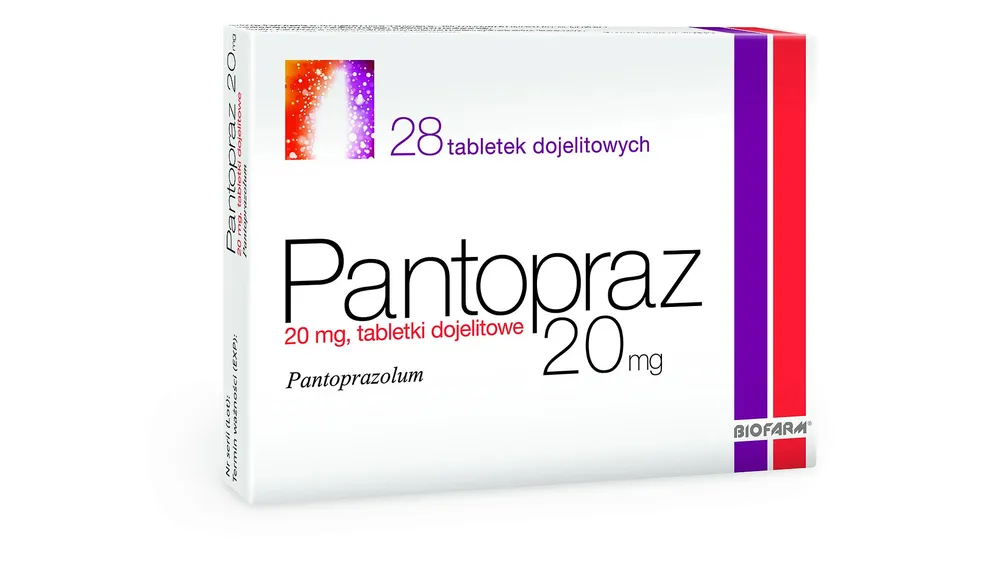
Table of Contents
Package leaflet: Information for the user
Pantopraz 20 mg
20 mg, enteric-coated tablets
Pantoprazolum
Please read the entire leaflet carefully before using the medicine, as it contains
important information for the patient.
- Keep this leaflet for future reference.
- If you have any questions, consult your doctor or pharmacist.
- This medicine has been prescribed for a specific individual. Do not pass it on to others. The medicine may harm someone else, even if their symptoms are similar.
- If you experience any adverse reactions, including any not listed in this leaflet, inform your doctor or pharmacist. See section 4.
Leaflet contents
- What Pantopraz 20 mg is and what it is used for
- Important information before taking Pantopraz 20 mg
- How to take Pantopraz 20 mg
- Possible side effects
- How to store Pantopraz 20 mg
- Contents of the pack and other information
1. What Pantopraz 20 mg is and what it is used for
Pantopraz 20 mg is a selective "proton pump inhibitor," a medicine that reduces
the secretion of hydrochloric acid in the stomach. It is used in the treatment of stomach and intestinal disorders related
to hydrochloric acid secretion.
Pantopraz 20 mg is indicated for:
Adults and adolescents aged 12 years and above:
- Treatment of symptoms (e.g., heartburn, acid regurgitation, pain on swallowing) associated with gastroesophageal reflux disease (GERD) caused by backflow of hydrochloric acid from the stomach.
- Long-term treatment of reflux esophagitis (inflammatory condition of the esophagus accompanied by backflow of gastric acid) and prevention of its recurrence.
Adults:
- Prevention of duodenal and/or gastric ulcers caused by non-steroidal anti-inflammatory drugs (NSAIDs, e.g. ibuprofen) in patients at risk who require continuous NSAID therapy.
2. Important information before using Pantopraz 20 mg
When not to use Pantopraz 20 mg
- if the patient is allergic to pantoprazole or any of the other ingredients of this medicine (listed in section 6),
- if the patient has previously experienced an allergic reaction to medicines containing other proton pump inhibitors.
Warnings and precautions
Before starting treatment with Pantopraz 20 mg, consult a doctor:
- if the patient has severe liver function disorders. The patient should inform the doctor if they have ever had liver problems. The doctor may recommend more frequent monitoring of liver enzyme activity, especially during long-term treatment with Pantopraz 20 mg. If liver enzyme activity increases, the medicine should be discontinued.
- if the patient is required to take non-steroidal anti-inflammatory drugs (NSAIDs) continuously while also taking Pantopraz 20 mg, due to an increased risk of gastrointestinal complications. The level of risk will be assessed based on individual risk factors such as age (65 years or older), history of gastric or duodenal ulcers, or gastrointestinal bleeding.
- if the patient has vitamin B deficiency or risk factors indicating possible reduced vitamin B levels, and is undergoing long-term treatment with pantoprazole. Like all medicines that reduce (inhibit) gastric acid secretion, pantoprazole may lead to reduced absorption of vitamin B(_{12}).
- if the patient is taking atazanavir (used in the treatment of HIV infection) concomitantly with pantoprazole, they should seek detailed advice from their doctor.
- if the patient has previously experienced a skin reaction due to treatment with a medicine similar to Pantopraz 20 mg that reduces gastric acid secretion.
- if the patient is scheduled for a specific blood test (chromogranin A levels).
- if the patient has been taking pantoprazole for more than three months, there may be a reduction in blood magnesium levels. Symptoms of low magnesium levels may include fatigue, involuntary muscle contractions, confusion, seizures, dizziness, or rapid heartbeat. If any of these symptoms occur, the patient should inform their doctor immediately. Low magnesium levels may also lead to reduced potassium and calcium levels in the blood. The doctor may recommend regular blood tests to monitor magnesium levels.
If the patient develops a skin rash, especially in areas exposed to sunlight, they should inform their doctor as soon as possible, as discontinuation of Pantopraz 20 mg may be necessary. The patient should also report any other adverse effects, such as joint pain.
If any of the following symptoms occur, the patient should inform their doctor immediately:
- unintentional weight loss;
- recurrent vomiting;
- difficulty swallowing;
- vomiting blood;
- pallor and weakness (anaemia);
- blood in the stool;
- severe and/or persistent diarrhoea, as treatment with Pantopraz 20 mg is associated with a slightly increased risk of infectious diarrhoea.
The doctor may decide that further investigations are necessary to exclude an underlying tumour, as treatment with pantoprazole may alleviate symptoms of tumour-related disease and delay diagnosis. If symptoms persist despite treatment, further investigations should be considered.
If Pantopraz 20 mg is taken for a prolonged period (over 1 year), the patient will likely remain under continuous medical supervision. In such cases, any new or unexpected symptoms and their circumstances should be reported during every doctor’s visit.
Taking proton pump inhibitors such as Pantopraz 20 mg, particularly for periods longer than one year, may slightly increase the risk of fractures of the hip, wrist, or spine. The patient should inform their doctor if they have been diagnosed with osteoporosis or are taking corticosteroids (which may increase the risk of osteoporosis) – see also section 4.
Children
Pantopraz 20 mg is not recommended for children under 12 years of age due to insufficient data on its use in this age group.
Pantopraz 20 mg and other medicines
Inform the doctor or pharmacist about all medicines currently or recently taken, as well as any medicines the patient plans to take.
Remember to inform any healthcare provider prescribing a new medicine that the patient is being treated with Pantopraz 20 mg.
Pantopraz 20 mg may affect the effectiveness of other medicines. Therefore, inform the doctor if the patient is taking:
- medicines such as ketoconazole, itraconazole, or posaconazole (used to treat fungal infections), or erlotinib (used in certain types of cancer), as Pantopraz 20 mg may impair the proper function of these and other medicines,
- warfarin or phenprocoumon, which affect blood clotting. Additional monitoring may be required.
- atazanavir (used in the treatment of HIV infection).
Pantopraz 20 mg with food and drink
Enteric-coated tablets should be taken whole, without chewing or crushing, one hour before meals, with water.
Pregnancy, breastfeeding, and fertility
If the patient is pregnant, breastfeeding, suspects she may be pregnant, or is planning to become pregnant, she should consult her doctor or pharmacist before using this medicine.
Experience with the use of this medicine in pregnant women is limited.
It has been shown that the active substance passes into breast milk.
The medicine may be used in pregnant women, in women who may be pregnant, or in breastfeeding women only if the doctor considers that the benefit of treatment outweighs the potential risk to the unborn child or infant.
Driving and operating machinery
Patients should not drive or operate machinery if they experience adverse effects such as dizziness or visual disturbances.
Pantopraz 20 mg contains lactose (a sugar found in milk).
If the patient has previously been diagnosed with an intolerance to certain sugars, they should consult their doctor before taking this medicine.
3. How to use Pantopraz 20 mg
This medicine should always be used exactly as directed by your doctor. If in doubt, consult your doctor or pharmacist.
When and how to take Pantopraz 20 mg
Enteric-coated tablets should be taken 1 hour before meals, whole, without chewing or crushing, with water.
Dosage
If your doctor has not prescribed otherwise, the usual dose is:
Adults and adolescents aged 12 years and older:
For treatment of symptoms (e.g. heartburn, acid regurgitation, pain when swallowing) associated with
gastroesophageal reflux disease
The usual dose is one tablet per day. This dose usually provides relief within 2–4 weeks of treatment – at the latest within the following 4 weeks. Your doctor will decide how long you should continue taking the medicine. Recurring symptoms may be managed by taking one tablet per day as needed.
For long-term treatment and prevention of relapse of reflux esophagitis
The usual dose is one tablet per day. If symptoms return, your doctor may recommend doubling the dose. In this case, one tablet per day of Pantopraz 40 mg may be used. After symptoms resolve, the dose may be reduced again to one tablet ( 20 mg ) per day.
Adults
For prevention of gastric and/or duodenal ulcers in patients who must continuously take NSAIDs
The usual dose is one tablet per day.
Special patient groups:
- In case of severe liver disease, no more than one 20 mg tablet per day should be taken.
- Children under 12 years of age. The tablets are not recommended for use in children under 12 years of age.
Taking more than the recommended dose of Pantopraz 20 mg
Symptoms of overdose are not known.
Seek immediate medical advice from your doctor or pharmacist if you have taken more than the recommended dose.
Missed dose of Pantopraz 20 mg
If you miss a dose, continue with your next scheduled dose.
Do not take a double dose to make up for a missed dose.
Stopping Pantopraz 20 mg
If you have any further questions about the use of this medicine, consult your doctor or pharmacist.
4. Possible adverse effects
Like all medicines, this medicine can cause adverse effects, although not everyone will experience them.
If any of the following adverse effects occur, you should
immediately inform your doctor or contact the nearest hospital with an emergency department:
- Severe allergic reactions (rare): swelling of the tongue and (or) throat, difficulty swallowing, urticaria (rash resembling nettle rash), breathing difficulties, allergic facial swelling (Quincke's oedema / angioedema), severe dizziness with rapid heartbeat and excessive sweating.
- Severe skin reactions (frequency unknown): formation of skin blisters and sudden deterioration in general condition, erosion (with slight bleeding) of the eyes, nose, mouth/oral cavity or genital organs (Stevens-Johnson syndrome, Lyell's syndrome, erythema multiforme) and photosensitivity.
- Other severe reactions (frequency unknown): yellowing of the skin and eyes (severe liver cell damage, jaundice) or fever, rash and kidney problems manifested by their enlargement, sometimes with pain during urination and pain in the lower back (severe kidney inflammation).
Other adverse effects occurring:
- Common (in 1 to 10 out of 100 patients treated): mild gastric polyps.
- Uncommon (in 1 to 10 out of 1,000 patients treated): headache, dizziness; diarrhoea, nausea, vomiting, feeling of fullness in the abdomen and bloating with flatulence (passing wind), constipation, dry mouth, abdominal pain and discomfort; skin rash, erythema, skin eruptions, itching of the skin; fractures of the hip, wrist or spine; weakness, exhaustion or general malaise; sleep disturbances.
- Rare (in 1 to 10 out of 10,000 patients treated): disturbances or complete loss of taste sensation; visual disturbances such as blurred vision; urticaria; joint pain, muscle pain; changes in body weight; elevated body temperature, high fever; limb swelling (peripheral oedema); allergic reactions; depression; gynaecomastia (breast enlargement in men).
- Very rare (less than 1 in 10,000 patients treated): disorientation.
- Frequency unknown (cannot be estimated from available data): hallucinations, confusion (particularly in patients who have previously experienced such symptoms); decreased sodium concentration in blood; rash possibly associated with joint pain; sensations of tingling, pricking, numbness, burning or paralysis; inflammation of the large intestine causing persistent watery diarrhoea. If a patient takes Pantopraz 20 mg for longer than three months, magnesium levels in blood may decrease, which may subsequently lead to fatigue, tetany, delirium, seizures, dizziness and ventricular arrhythmias. If any of these symptoms occur in a patient, the doctor should be informed. Low magnesium levels in blood may also cause decreased potassium and calcium levels in blood. The doctor may decide that periodic monitoring of magnesium levels in the patient's blood is necessary.
Adverse effects identified through blood tests occurring:
- Uncommon (in 1 to 10 out of 1,000 patients treated): increased liver enzyme activity.
- Rare (in 1 to 10 out of 10,000 patients treated): increased bilirubin levels; increased blood lipid levels; sudden decrease in circulating granulocytes - white blood cells, associated with high fever, which may lead to more frequent infections.
- Very rare (less than 1 in 10,000 patients treated): decreased platelet count, which may lead to more frequent bleeding and bruising; decreased white blood cell count, which may predispose to more frequent infections; concurrent abnormal decrease in red blood cells, white blood cells and platelets.
Reporting of adverse effects
If any adverse effects occur, including any adverse effects not listed
in this leaflet, you should inform your doctor or pharmacist. Adverse effects can be reported
directly to the Department for Monitoring Adverse Drug Reactions of the Office for Registration of Medicinal Products, Medical Devices and Biocidal Products
Al. Jerozolimskie 181 C
02-222 Warsaw
tel.: +48 22 49 21 301
fax: +48 22 49 21 309
e-mail: [email protected]
Adverse effects can also be reported to the marketing authorisation holder.
By reporting adverse effects, more information on the safety of the medicine can be collected.
5. How to store Pantopraz 20 mg
Keep this medicine out of the sight and reach of children.
Do not use this medicine after the expiry date stated on the packaging.
The expiry date refers to the last day of the stated month.
Store in the original packaging, at a temperature below 25°C.
Medicines must not be disposed of via wastewater or household waste. Ask your pharmacist how to dispose of medicines no longer required. This will help protect the environment.
6. Contents of the packaging and other information
What Pantopraz 20 mg contains
- The active substance is 20 mg of pantoprazole in the form of pantoprazole sodium sesquihydrate.
- Other ingredients are:
- microcrystalline cellulose, lactose monohydrate, sodium croscarmellose, colloidal anhydrous silica, magnesium stearate;
- coating Opadry II 85F32081 Yellow: partially hydrolysed polyvinyl alcohol, macrogol 3350, titanium dioxide (E 171), talc, yellow iron oxide (E 172), laccquer of quinoline yellow (E 104);
- enteric coating: methacrylic acid–ethyl acrylate copolymer (1:1) dispersion 30%, polysorbate 80, sodium lauryl sulfate, triethyl citrate, talc.
What Pantopraz 20 mg looks like and contents of the pack
Yellow, elongated tablets.
Available pack sizes:
Plastic container containing 14, 28 or 30 enteric-coated tablets in a cardboard box.
Aluminum/Aluminum foil blisters containing 14, 28, 30 or 56 enteric-coated tablets in a cardboard box.
Not all pack sizes may be marketed.
Marketing Authorisation Holder:
Biofarm Sp. z o.o.
Wałbrzyska Street 13
60-198 Poznań
Poland
Tel. +48 61 66 51 500
Manufacturer:
Biofarm Sp. z o.o.
Wałbrzyska Street 13
60-198 Poznań
Poland
Towa Pharmaceutical Europe S.L.
C/ de Sant Martí, 75-97,
Martorelles, 08107 Barcelona
Spain