Panaprex
Poland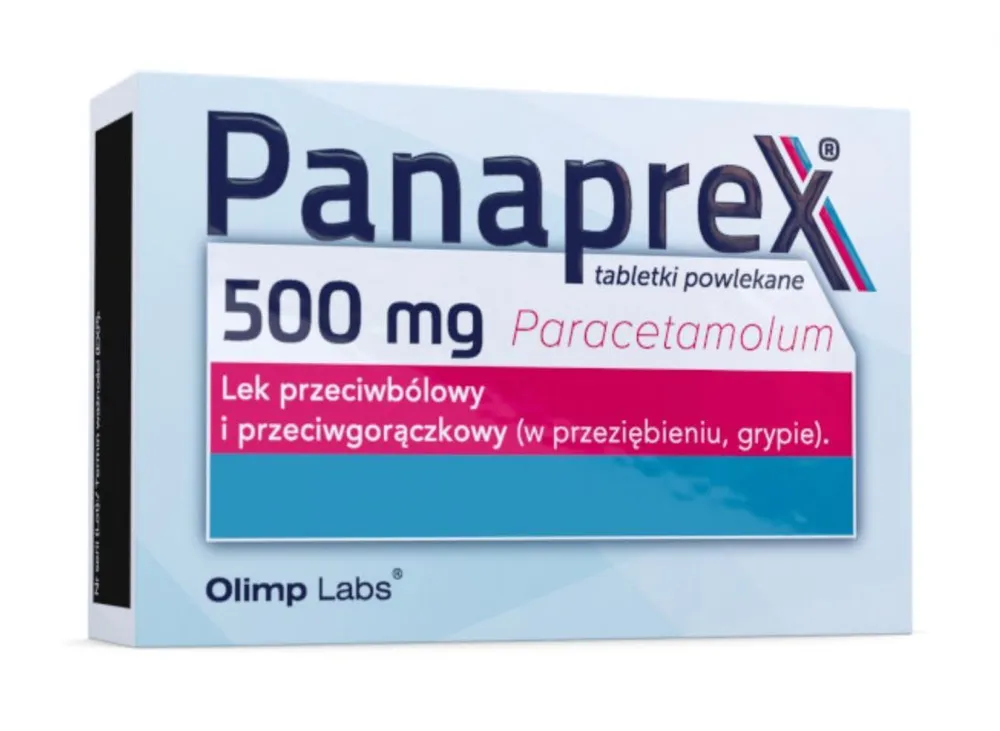
Table of Contents
Signature Not Verified
Package leaflet: information for the patient
Panaprex, 500 mg, film-coated tablets
Paracetamolum
Please read this leaflet carefully before taking the medicine, as it contains
important information for the patient.
This medicine should always be used exactly as described in this patient leaflet or as directed by a
physician or pharmacist.
- Keep this leaflet so that you can read it again if necessary.
- If you need advice or further information, please consult your pharmacist.
- If you experience any adverse reactions, including any not listed in this leaflet, inform your doctor or pharmacist. See section 4.
- If there is no improvement after 3 days of treatment, or if you feel worse, consult a doctor.
Contents of the leaflet
- What Panaprex is and what it is used for
- Important information before taking Panaprex
- How to take Panaprex
- Possible side effects
- How to store Panaprex
- Contents of the pack and other information
1. What Panaprex is and what it is used for
The active substance in Panaprex is paracetamol, which belongs to the group of analgesic and antipyretic medicines. Panaprex is indicated for the treatment of fever (in colds, influenza) and for symptomatic relief of mild to moderate pain of various origins. Panaprex provides analgesic effects in treating pain such as headaches, migraine, bone and joint pain, muscle pain, back pain, toothache, postoperative pain, painful menstruation, and sore throat.
If there is no improvement in pain or fever after 3 days of treatment, or if you feel worse, consult a doctor.
This medicine is indicated for use in adults and adolescents over 12 years of age.
2. Important information before using Panaprex
When not to use Panaprex
- if the patient is allergic to paracetamol or any of the other ingredients of this medicine (listed in section 6),
- if the patient has severe renal impairment,
- if the patient has severe hepatic impairment,
- in children under 12 years of age,
- if the patient has alcoholic liver disease.
Warnings and precautions
Before starting treatment with Panaprex, consult your doctor or pharmacist if:
- the patient has liver or kidney disease. In chronic renal failure, the doctor may recommend extending the intervals between doses of paracetamol,
- the patient is allergic to acetylsalicylic acid, as there is an increased risk of cross-allergy to paracetamol,
- the patient has glucose-6-phosphate dehydrogenase deficiency or methemoglobin reductase deficiency (rare inherited disorders).
The medicine contains paracetamol. Do not take other medicines containing paracetamol (e.g.
some medicines used to relieve cold and flu symptoms) due to the risk of overdose and potentially
life-threatening liver damage. Long-term or frequent use of this medicine is not recommended.
Do not exceed the recommended daily dose. In case of overdose, contact a doctor immediately, even
if the patient feels well.
See also section 3 "If you take more Panaprex than you should".
Alcohol should not be consumed during treatment with paracetamol due to increased risk of
hepatic toxicity.
The risk of liver damage is particularly high in fasting individuals and those who regularly consume
alcohol.
Exercise caution when using medicines that may increase hepatic metabolism of paracetamol (see
"Panaprex with other medicines").
During treatment with Panaprex, immediately inform the doctor if the patient develops severe
illnesses, including severe renal dysfunction or sepsis (when bacteria and their toxins circulate in
the blood, leading to organ damage), malnutrition, chronic alcoholism, or if the patient is also taking
flucloxacillin (an antibiotic).
In such cases, severe metabolic acidosis (a blood and body fluid disorder) has been reported in
patients taking paracetamol regularly over a prolonged period or when paracetamol is taken together
with flucloxacillin. Symptoms of metabolic acidosis may include severe breathing difficulties, including
rapid deep breathing, drowsiness, nausea, and vomiting.
After discontinuing painkillers following long-term use (especially at high doses), rebound worsening
of pain and/or increased frequency of headaches may occur, along with transient, mild symptoms
such as fatigue and weakness. These phenomena are typical for most painkillers, are usually mild
and transient, and do not require additional treatment.
Effect of paracetamol on laboratory test results:
Before undergoing laboratory tests, the patient should inform the doctor about taking a medicine
containing paracetamol, as test results for blood uric acid and blood glucose levels may be altered.
Slight and transient increases in liver enzyme levels have also been reported.
Sodium
Panaprex contains less than 1 mmol (23 mg) of sodium per tablet, per single dose, and per maximum
daily dose, meaning the medicine is considered "sodium-free".
Panaprex with other medicines
Inform your doctor or pharmacist about all medicines currently used, recently taken, or planned to
be used.
In particular, inform about the use of:
- Rifampicin (used for infections), isoniazid (used in tuberculosis treatment), antiepileptic drugs (e.g. phenytoin, carbamazepine), barbiturates (used as anticonvulsants and sedatives or hypnotics, e.g. phenobarbital) – risk of liver damage.
- MAO inhibitors (used in psychiatry and neurology, e.g. phenelzine). Concurrent use with paracetamol may increase the risk of agitation and fever.
- Prokinetic agents (promoting gastrointestinal motility, i.e. movement of food and digestive products through the gastrointestinal tract), e.g. cisapride, domperidone, metoclopramide (used to treat nausea and vomiting). These drugs accelerate paracetamol absorption.
- Drugs inhibiting gastrointestinal motility or absorption, e.g. cholestyramine (used to reduce elevated blood lipid levels), ciprofloxacin (used for infections), levodopa (used in psychiatry and neurology). These drugs delay paracetamol absorption.
- Drugs slowing down paracetamol elimination from the body, e.g. probenecid (used in gout treatment), salicylamide (used to treat fever and mild pain). These drugs increase paracetamol concentration.
- Anticoagulants of the coumarin group (e.g. warfarin). Concurrent use with paracetamol may enhance anticoagulant effects and increase the risk of bleeding.
- Zidovudine (an antiviral medicine). Concurrent use with paracetamol may enhance zidovudine's toxic effects on bone marrow.
- Non-steroidal anti-inflammatory drugs (NSAIDs, painkillers, anti-inflammatory and antipyretic medicines). Concurrent long-term use with paracetamol may increase the risk of renal dysfunction.
- Flucloxacillin (an antibiotic) due to serious risk of blood and body fluid disorders (called metabolic acidosis), which require urgent treatment (see section 2).
Taking Panaprex with food, drink and alcohol
Alcohol may increase the risk of toxic liver damage. Alcohol should not be consumed during
treatment with paracetamol.
Pregnancy and breastfeeding
If the patient is pregnant or breastfeeding, suspects she may be pregnant, or is planning to have a
child, she should consult a doctor or pharmacist before using this medicine.
Pregnancy
Panaprex may be administered to pregnant women if necessary. Use the lowest effective dose that
adequately relieves pain or reduces fever, and take the medicine for as short a duration as possible.
If pain is not relieved or fever does not subside, or if more frequent dosing becomes necessary,
consult a doctor.
Breastfeeding
After oral administration, paracetamol is excreted in small amounts into breast milk. No adverse
effects on breastfed infants have been reported. Recommended doses listed in section 3 of the
leaflet may be used during breastfeeding; however, like all medicines, Panaprex should be used
during breastfeeding at the lowest effective dose and as infrequently as possible.
Driving and operating machinery
This medicine has no effect on the ability to drive or operate machinery.
3. How to use Panaprex
This medicine should always be taken exactly as described in this patient leaflet or as directed by a doctor or pharmacist. If in doubt, consult your doctor or pharmacist.
If there is no improvement after 3 days, or if the patient feels worse, medical advice should be sought.
Recommended dose
Adults, elderly people, and adolescents over 12 years of age (with body weight above 50 kg):
Orally, 1 to 2 tablets. The dose may be repeated if necessary no more frequently than every 4 hours, up to 4 times daily. The maximum daily dose of paracetamol is 4 g (8 tablets).
Adults and adolescents over 12 years of age (with body weight 40–50 kg):
Orally, 1 tablet at a time. The dose may be repeated if necessary no more frequently than every 4 hours, up to 6 times daily. The maximum daily dose of paracetamol is 3 g (6 tablets).
Do not exceed the recommended maximum daily dose.
Use the lowest effective dose for the shortest possible duration.
Tablets should be swallowed with water.
Children
Panaprex must not be used in children under 12 years of age.
Taking more Panaprex than recommended
In case of overdose, seek immediate medical advice, even if the patient feels well. If less than 1 hour has passed since the overdose, vomiting should be induced. Immediate contact with a doctor is essential, as specialized hospital treatment may be required.
Symptoms may include: nausea, vomiting, excessive sweating, drowsiness, and general weakness. These symptoms may resolve the next day, even though liver damage may already be developing, later manifesting as upper abdominal discomfort, recurrence of nausea, and jaundice.
Other possible symptoms include tremor, restlessness, insomnia, increased blood pressure, marked tachycardia, pallor, and urinary retention. Death may occur.
If a dose of Panaprex is missed
Do not take a double dose to make up for a missed dose.
If you have any further questions about the use of this medicine, consult your doctor or pharmacist.
4. Possible adverse reactions
Like all medicines, this medicine can cause adverse reactions, although not everyone will experience them.
You should stop taking the medicine and consult a doctor if any of the following occur:
- allergic reaction (hypersensitivity), which may include symptoms such as skin rash, itching, urticaria or skin peeling, oral mucosal ulcers, sometimes accompanied by difficulty breathing or swelling of the lips, tongue, throat or face
- anaphylactic shock (a severe allergic reaction characterized, among others, by dizziness, disturbances of consciousness, increased heart rate, and drop in blood pressure)
- breathing problems, particularly if similar problems occurred previously during treatment with acetylsalicylic acid or other non-steroidal anti-inflammatory drugs
- liver function disorders.
The above adverse reactions are very rare, i.e. occurring less frequently than in 1 out of 10,000 treated patients, except for severe skin and allergic reactions (anaphylactic shock), for which frequency cannot be determined based on available data.
Other possible adverse reactions are listed below according to their frequency of occurrence.
Rare (may occur in 1 to 10 out of 10,000 treated patients):
- abdominal pain, diarrhoea, nausea, vomiting, dyspepsia (indigestion).
Very rare (may occur less frequently than in 1 out of 10,000 treated patients):
- somnolence, dizziness, headache,
- blood disorders (reduced platelet count, white blood cells and neutrophils in blood, methemoglobinemia).
Frequency unknown (cannot be estimated based on available data):
- serious condition that may cause blood acidification (so-called metabolic acidosis) in patients with severe disease taking paracetamol (see section 2).
Reporting of adverse reactions
If any adverse reactions occur, including any adverse reactions not listed in this leaflet, inform your doctor or pharmacist. Adverse reactions can be reported directly to the Department of Monitoring Adverse Drug Reactions at the Office for Registration of Medicinal Products, Medical Devices and Biocidal Products, Al. Jerozolimskie 181C, 02-222 Warsaw; tel.: +48 22 492 13 01; fax +48 22 492 13 09; website: https://smz.ezdrowie.gov.pl
Adverse reactions can also be reported to the marketing authorization holder.
Reporting adverse reactions helps to provide more information on the safety of the medicine.
5. How to store the medicine Panaprex
There are no special requirements for storage conditions of the medicine.
The medicine should be stored in a place out of sight and reach of children.
Do not use this medicine after the expiry date stated on the carton and blister (after the symbol EXP). The expiry date refers to the last day of the stated month.
Medicines must not be disposed of via the sewage system or in household waste. Ask your pharmacist how to dispose of medicines no longer required. Such measures help protect the environment.
6. Contents of the package and other information
What Panaprex contains
- The active substance is paracetamol. Each tablet contains 500 mg of paracetamol.
- The other ingredients (excipients) are: tablet core (microcrystalline cellulose, povidone K90, purified water, colloidal anhydrous silica, sodium croscarmellose, sodium stearyl fumarate), Opadry 200 White coating (polyvinyl alcohol, titanium dioxide (E 171), talc, macrogol 3350, methacrylic acid and ethyl acrylate copolymer (1:1), sodium carbonate).
What Panaprex looks like and contents of the pack
Film-coated tablet, elongated, biconvex, white or almost white.
PVC/Aluminum blister in a cardboard box.
The pack contains 12 or 50 film-coated tablets.
Not all pack sizes may be marketed.
Marketing authorisation holder and manufacturer
OLIMP Laboratories Sp. z o.o.
Pustynia 84F
39-200 Dębica
+48 14 680 32 00
{logo OLIMP Laboratories}