Panadol femina
Poland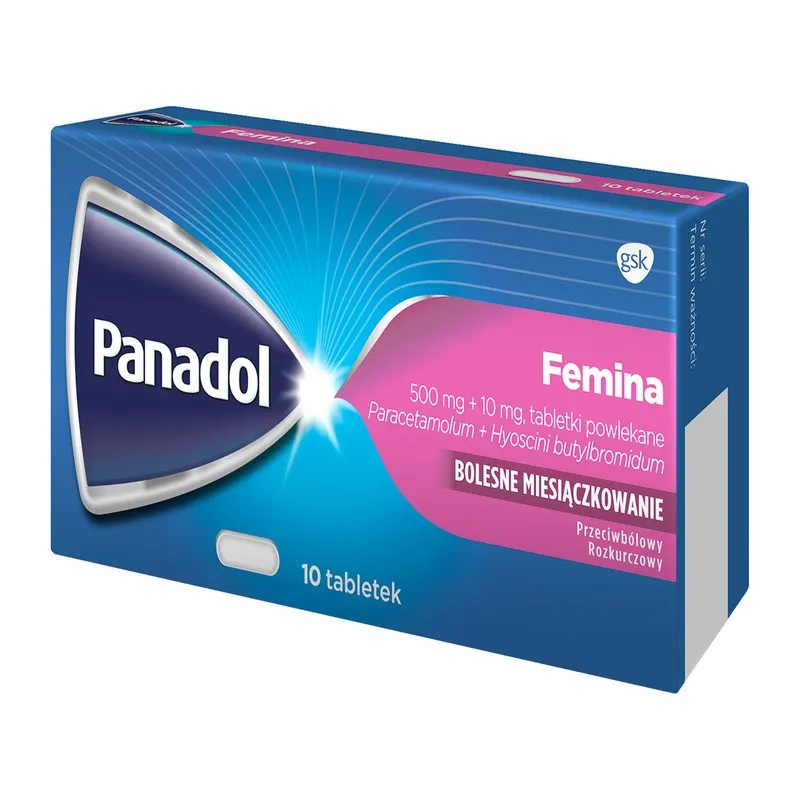
Table of Contents
Package leaflet: Information for the patient
Panadol Femina
500 mg + 10 mg, coated tablets
Paracetamolum + Hyoscini butylbromidum
This medicine contains paracetamol
Please read all of this leaflet carefully before taking this medicine, because it contains
important information for you.
This medicine should always be taken exactly as described in this patient leaflet or as
directed by your doctor or pharmacist.
- Keep this leaflet so that you can read it again if necessary.
- If you need advice or further information, please consult your pharmacist.
- If you experience any adverse reactions, including any not listed in this leaflet, tell your doctor or pharmacist. See section 4.
- If there is no improvement within 3 days, or if you feel worse, you should contact your doctor.
Contents of the leaflet
- What Panadol Femina is and what it is used for
- Important information before taking Panadol Femina
- How to take Panadol Femina
- Possible side effects
- How to store Panadol Femina
- Contents of the pack and other information
1. What Panadol Femina is and what it is used for
Panadol Femina contains paracetamol (also known as acetaminophen) and butylscopolamine bromide.
Paracetamol is used to relieve pain and reduce fever. Butylscopolamine bromide relieves spasms in the gastrointestinal tract and the urinary and genital systems.
Panadol Femina is used in adults and adolescents over 12 years of age for the prevention and treatment of symptoms associated with:
- painful menstruation (dysmenorrhoea),
- renal colic, hepatic colic,
- irritable bowel syndrome.
2. Important information before using Panadol Femina
Panadol Femina contains paracetamol.
When not to take Panadol Femina
Do not take Panadol Femina if the patient has:
- hypersensitivity to paracetamol, atropine, butylbromide of hyoscine, or to any of the other components of this medicine (listed in section 6);
- intestinal obstruction;
- colonic distension;
- severe liver failure (particularly in patients with alcoholic liver disease);
- severe renal failure;
- alcohol-related disease;
- anaemia;
- congenital deficiency of an enzyme called glucose-6-phosphate dehydrogenase (favism);
- myasthenia (muscle weakness);
- glaucoma (an eye disease involving progressive damage to the optic nerve);
- benign prostatic hyperplasia causing urinary retention;
- strictures in the gastrointestinal tract;
- cardiac arrhythmias associated with tachycardia.
Warnings and precautions
Before starting to take Panadol Femina, the patient should discuss with a doctor if any of the following conditions apply.
- Heart problems (mitral valve stenosis, coronary artery disease) or acute myocardial infarction.
- Intestinal ulcers (the medicine may reduce intestinal motility and cause constipation).
- Gastroesophageal reflux (backflow of stomach contents into the oesophagus) or other chronic disorders of smooth muscle motility in the upper gastrointestinal tract or pyloric stenosis.
- Advanced age (over 65 years), as the medicine may cause central nervous system disturbances, dry mouth, and urinary retention (particularly in men).
- Impaired liver and/or kidney function.
- The patient is fasting or regularly consumes alcohol, as this increases the risk of liver damage.
- Hypersensitivity to acetylsalicylic acid derivatives (aspirin derivatives), as cross-sensitivity to paracetamol may occur.
- Severe infection (e.g. sepsis), as this may increase the risk of metabolic acidosis. Symptoms of metabolic acidosis include: rapid, deep, and laboured breathing, nausea, vomiting, and loss of appetite. If these symptoms occur simultaneously, the patient should contact a doctor immediately (see information below).
- Use of other medicines containing paracetamol (risk of paracetamol overdose).
- The patient is taking antihistamines (medicines used for allergies and motion sickness), quinidine or disopyramide (medicines controlling heart rhythm), ipratropium, tiotropium (medicines used for respiratory disorders).
- The patient suffers from severe illnesses, including severe kidney dysfunction or sepsis (when bacteria and their toxins circulate in the blood, leading to organ damage), malnutrition, chronic alcoholism, or is taking flucloxacillin (an antibiotic). In such cases, severe illness known as metabolic acidosis (abnormality in blood and body fluids) has been reported in patients taking paracetamol regularly over a prolonged period or taking paracetamol together with flucloxacillin. Symptoms of metabolic acidosis may include: severe breathing difficulties, including rapid deep breathing, drowsiness, nausea, vomiting, and loss of appetite.
Taking an excessive dose of paracetamol may lead to severe liver damage.
Do not take this medicine if the patient is already taking other medicines containing paracetamol, used for treating: pain, fever, cold and flu symptoms, or sleep difficulties.
If the patient experiences any disturbances in visual acuity or eye pain due to increased pressure, the medicine should be discontinued and the patient should contact a doctor.
Do not drink alcohol while taking Panadol Femina.
The patient should stop taking this product and seek immediate medical advice if experiencing persistent or severe unexplained abdominal pain, with fever and blood in stool and/or feeling weak.
Keep the medicine out of sight and reach of children.
Panadol Femina and other medicines
Inform the doctor or pharmacist about all medicines currently taken or recently taken, as well as any medicines the patient plans to take.
It is not recommended to take several medicines containing paracetamol simultaneously, as this may lead to overdose.
- Paracetamol enhances the effect of anticoagulants of the coumarin group (e.g. warfarin) and indandione (phenindione). Long-term, daily use of paracetamol together with anticoagulants may increase the risk of bleeding; occasional use does not have this effect.
- Caffeine may enhance the effect of paracetamol.
- Metoclopramide (an antiemetic) accelerates, while scopolamine (used in ophthalmology to dilate the pupil) delays, the absorption of paracetamol from the gastrointestinal tract.
- Salicylamide (an anti-inflammatory, antipyretic, and analgesic) prolongs the elimination time of paracetamol.
- MAO inhibitors (medicines used to treat depression and Parkinson's disease), tricyclic antidepressants, quinidine, disopyramide (antiarrhythmic medicines), amantadine (an antiviral medicine, also used in Parkinson's disease), and butyrophenone (an antipsychotic medicine), when used together with paracetamol, may cause a state of excitation and high fever. Rifampicin (an antibiotic used to treat tuberculosis), antiepileptic medicines, sedatives, and alcohol, when taken with paracetamol, may cause liver damage.
- Paracetamol taken simultaneously with non-steroidal anti-inflammatory drugs (NSAIDs) (e.g. diclofenac, ibuprofen, acetylsalicylic acid) may worsen kidney disease in patients with renal impairment.
- Butylbromide of hyoscine, by reducing intestinal motility and gastrointestinal secretions, may decrease the absorption and therapeutic effect of other medicines taken orally at the same time.
- Medicines belonging to the group called dopamine antagonists, e.g. metoclopramide, may reduce the effect of Panadol Femina on the gastrointestinal tract.
Consult a doctor if the patient is taking:
- warfarin or other anticoagulants
- medicines used to treat depression, known as tricyclic antidepressants
- antiallergic medicines and medicines used for motion sickness, known as "antihistamines"
- medicines controlling heart rhythm
- antipsychotic medicines
- medicines usually used for breathing problems, such as tiotropium or ipratropium
- medicines used for Parkinson's disease or flu treatment
- flucloxacillin (an antibiotic), due to the serious risk of blood and body fluid disorders (called metabolic acidosis), which require urgent treatment (see section 2).
If the patient is unsure whether the above statements apply, consult a doctor or pharmacist.
Panadol Femina and alcohol
Do not drink alcohol while taking Panadol Femina.
Pregnancy and breastfeeding
If the patient is pregnant or breastfeeding, suspects she may be pregnant, or is planning to have a child, she should consult a doctor or pharmacist before using this medicine.
Do not take Panadol Femina tablets during pregnancy unless, in the doctor's opinion, the benefits outweigh the risks to the foetus. In such cases, the lowest effective dose for the shortest possible duration should be used.
Panadol Femina may be used in breastfeeding women only if, in the doctor's opinion, the benefits outweigh the risks to the infant. In such cases, the lowest effective dose and shortest treatment duration should be considered.
Driving and operating machinery
Panadol Femina may cause central nervous system effects and impair visual acuity (eye accommodation), therefore patients should not drive or operate machinery while taking this medicine.
Panadol Femina contains sorbitol
The medicinal product contains 15 mg of sorbitol per tablet.
If the patient has previously been diagnosed with intolerance to certain sugars, the patient should consult a doctor before taking the medicine.
Sorbitol is a source of fructose. If the patient (or their child) has previously been diagnosed with intolerance to certain sugars or hereditary fructose intolerance—a rare genetic disorder in which the patient's body cannot break down fructose—the patient should consult a doctor before taking the medicine or giving it to a child.
The medicine contains less than 1 mmol (23 mg) of sodium per dose, meaning the medicine is considered "sodium-free".
3. How to take Panadol Femina
This medicine should always be taken exactly as described in this patient information leaflet or as advised by your doctor or pharmacist. If in doubt, consult your doctor or pharmacist.
This medicine is for oral administration.
Do not exceed the recommended dose.
Dosage for adults and adolescents aged 12 years and over
- 1 or 2 tablets (corresponding to 500 mg or 1000 mg of paracetamol and 10 mg or 20 mg of butylscopolamine bromide).
- If necessary, take up to 3 times a day, every 8 hours.
Do not take more than 6 tablets per day (equivalent to 3000 mg paracetamol and 60 mg butylscopolamine bromide).
Maintain an interval of at least 8 hours between doses.
The maximum daily dose of paracetamol for adults is 4000 mg for short-term treatment and 2600 mg for long-term treatment.
Do not take Panadol Femina together with other medicines containing paracetamol.
Use the lowest effective dose for the shortest possible duration. Do not use for the treatment of pain caused by irritable bowel syndrome (IBS), unless IBS has been diagnosed by a doctor.
Duration of treatment
If there is no improvement after 3 days, or if symptoms worsen, consult your doctor.
Use in children under 12 years of age
Panadol Femina must not be used in children under 12 years of age.
Overdose of Panadol Femina
Symptoms of overdose
- Paracetamol overdose may cause liver damage and liver failure, which may lead to the need for liver transplantation or death. Within a few to several hours, symptoms such as nausea, vomiting, excessive sweating, drowsiness and general weakness may occur. These symptoms may resolve the next day, despite the onset of liver damage, which subsequently manifests as abdominal discomfort, recurrence of nausea and jaundice [yellowing of the skin and/or eyes].
- Oral overdose of butylscopolamine bromide may cause symptoms such as dry mouth, rapid heartbeat, mild drowsiness or transient visual disturbances.
What to do in case of overdose
If more than 8 tablets have been taken at once, seek immediate medical advice even if no symptoms are present, because prompt medical intervention is required due to the risk of liver damage.
As an emergency measure, if the patient is conscious, vomiting may be induced (preferably within the first hour after oral intake). It is advisable to administer 60 to 100 g of activated charcoal orally, preferably mixed with water.
Missed dose of Panadol Femina
Do not take a double dose to make up for a missed dose.
Continue taking the medicine as prescribed without increasing the next dose.
4. Possible adverse reactions
Like all medicines, this medicine can cause adverse reactions, although not everybody will experience them.
If the medicine is used at the recommended doses, the following adverse reactions may occur:
Very rare (occurring in no more than 1 in 10,000 people taking the medicine):
- methemoglobinemia (presence of oxidized hemoglobin in the blood), agranulocytosis (reduced number of white blood cells in the blood), thrombocytopenia (reduced number of platelets in the blood);
- anaphylactic reactions (severe allergic reactions causing breathing difficulties or dizziness), skin hypersensitivity reactions such as skin rashes, angioedema (severe allergic reaction causing swelling of the face or throat, which may make breathing or swallowing difficult), Stevens-Johnson syndrome (blisters and painful erosions on the skin, in the mouth, eyes and genital organs, fever and joint pain), toxic epidermal necrolysis, hypersensitivity, shortness of breath;
- bronchospasm in patients sensitive to aspirin or other non-steroidal anti-inflammatory drugs;
- liver function disorders;
- glaucoma, eye accommodation disorders (eyes' ability to adjust for viewing objects at varying distances);
Uncommon (occurring in no more than 1 in 100 people taking the medicine):
- dizziness;
- diarrhoea, vomiting, nausea and dry mouth;
- skin reactions, abnormal sweating, itching and dry skin;
- fatigue;
Rare (occurring in no more than 1 in 1,000 people taking the medicine):
- tachycardia (rapid heartbeat);
- erythema;
- urinary disorders;
Frequency not known (cannot be estimated from the available data):
- anaphylactic shock, anaphylactic reaction, hypersensitivity and shortness of breath;
- urticaria and rash;
- urinary retention;
- metabolic acidosis – a serious condition which may cause blood acidification in patients with severe disease taking paracetamol (see section 2).
Discontinue Panadol Femina and contact a doctor immediately if the patient experiences:
- symptoms of allergic reaction, i.e.: itching, rash, erythema, swelling of the face, tongue or throat, breathing difficulties,
- skin peeling, bruising, bleeding, oral ulcers, vomiting, stomach irritation,
- difficulty in passing urine, occurring more frequently in patients with benign prostatic hyperplasia.
Reporting of adverse reactions
If any adverse reactions occur, including any adverse reactions not listed
in the leaflet, inform a doctor, pharmacist or nurse. Adverse reactions
can be reported directly to the Department of Monitoring Adverse Drug Reactions of the Office for Registration of Medicinal Products, Medical Devices and Biocidal Products. Al. Jerozolimskie 181C, 02-222 Warsaw, tel.: + 48 22 49 21 301, fax: + 48 22 49 21 309. Website: https://smz.ezdrowie.gov.pl.
Adverse reactions can also be reported to the marketing authorization holder.
Reporting adverse reactions helps to provide more information on the safety of the medicine.
5. How to store Panadol Femina
Store below 25°C. Protect from light.
Do not use this medicine after the expiry date stated on the pack after: Expiry
date. The expiry date refers to the last day of the specified month.
Medicines must not be disposed of via wastewater or household waste. Ask your
pharmacist how to dispose of medicines no longer required. Such measures will help
protect the environment.
6. Contents of the packaging and other information
What Panadol Femina contains
The active substances in this medicine are paracetamol and butylscopolamine bromide.
Each coated tablet contains 500 mg of paracetamol and 10 mg of butylscopolamine bromide.
The other ingredients are: microcrystalline cellulose, potato starch, povidone K30, sorbitol, talc,
magnesium stearate, colloidal anhydrous silica, sodium carboxymethyl starch, hypromellose,
polyethylene glycol 6000.
What Panadol Femina looks like and contents of the pack
Panadol Femina is in the form of elongated tablets, white to cream in colour.
The unit packaging contains 10 tablets.
Marketing Authorisation Holder
Haleon Poland Sp. z o.o.
ul. Rzymowskiego 53
02-697 Warsaw
tel. 800 702 849
Manufacturer
Delpharm Poznań S.A.
ul. Grunwaldzka 189
60-322 Poznań
Detailed information about this medicine is available on the website of the Office for Registration of Medicinal Products, Medical Devices and Biocidal Products.