Pabal
Poland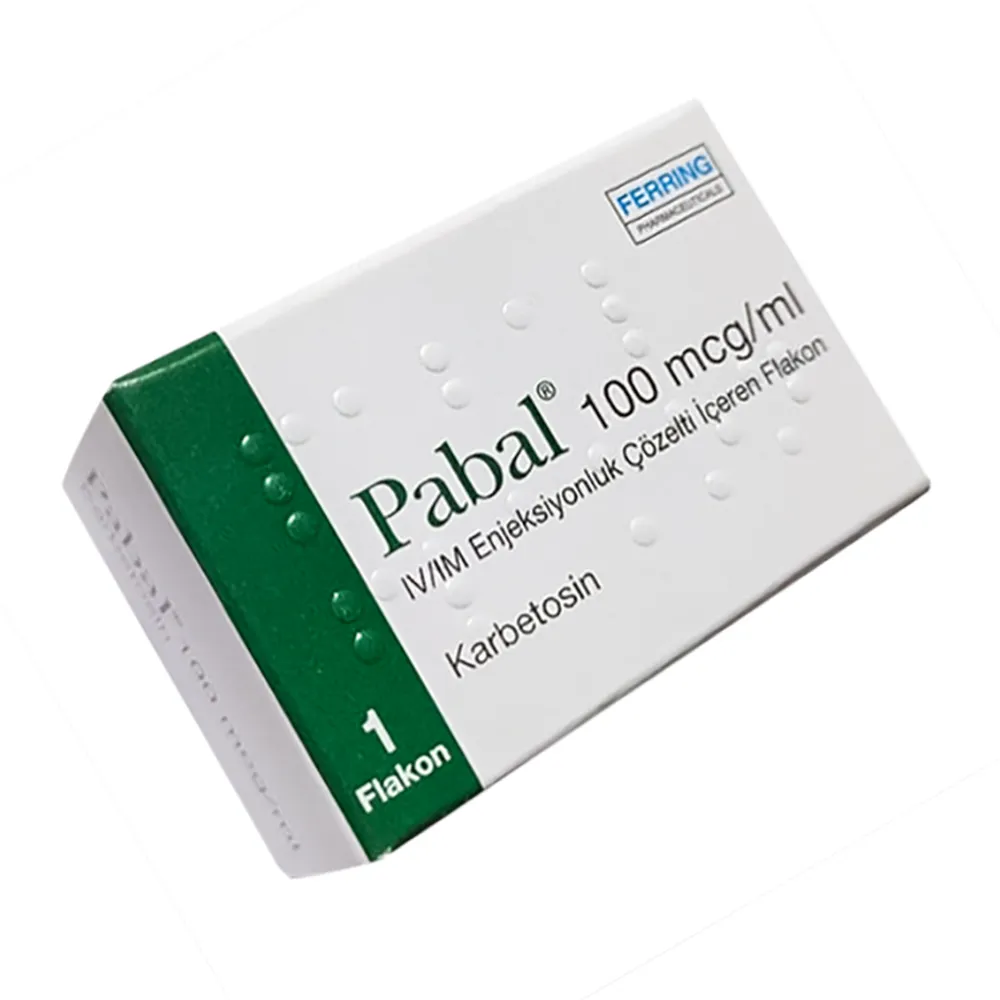
Table of Contents
Package leaflet: Information for the user
PABAL, 100 micrograms/ml, solution for injection
Carbetocinum
Please read all of this leaflet carefully before this medicine is administered, because it contains
important information for you.
- Keep this leaflet, as you may need to read it again.
- If you have any further questions, please ask your doctor, midwife or nurse.
- If you experience any side effects, including any not listed in this leaflet, please tell your doctor, midwife or nurse. See section 4.
Contents of the leaflet:
- What Pabal is and what it is used for
- Important information before the use of Pabal
- How to use Pabal
- Possible side effects
- How to store Pabal
- Contents of the pack and other information
1. What Pabal is and what it is used for
The active substance in Pabal is carbetocin. It is similar to oxytocin, a substance naturally produced
by the body to cause the uterus to contract after childbirth.
Pabal is used in women immediately after the birth of a baby.
In some women, the uterus does not contract sufficiently quickly after delivery. In such cases, there is
an increased risk of excessive bleeding. Pabal causes the uterus to contract and thereby reduces the risk of bleeding.
2. Important information before using Pabal
Pabal must not be administered before the child is born.
Before administering Pabal, inform the doctor about any health disorders the patient may have.
You should also inform the doctor about any new symptoms that appear during treatment with Pabal.
When not to use Pabal
- if the patient is pregnant,
- if the patient is in labor and the baby has not yet been delivered,
- for induction of labor,
- if the patient is allergic to carbetocin or to any of the other ingredients of this medicine (listed in section 6),
- if the patient is allergic to oxytocin (sometimes administered during or after labor as an infusion or injection),
- if the patient has liver or kidney disease,
- if the patient has severe heart disease,
- if the patient has epilepsy.
If any of the above situations apply to the patient, she must inform her doctor, midwife, or nurse.
Warnings and precautions
Before starting treatment with Pabal, discuss it with the doctor, midwife, or nurse.
- if the patient suffers from migraine headaches,
- if the patient has asthma,
- if the patient has pre-eclampsia (high blood pressure during pregnancy) or eclampsia (toxemia of pregnancy),
- if the patient has heart disease or circulatory disorders, such as high blood pressure,
- if the patient has any other health disorders.
Inform the doctor, midwife, or nurse about any of the above conditions.
Pabal may cause water retention in the body, which may lead to drowsiness, apathy, or headache.
Children and adolescents
This medicine is not intended for use in children under 12 years of age.
Experience with the use of this medicine in adolescents is limited.
Pabal with other medicines
Inform the doctor, midwife, or nurse about all medicines the patient is currently taking or has recently taken, as well as any medicines the patient plans to take.
Pregnancy and breastfeeding
Pabal must not be used during pregnancy or labor until the baby is delivered.
It has been shown that small amounts of carbetocin pass from plasma into breast milk; however, it is believed to be degraded in the infant's intestine. It is not necessary to discontinue breastfeeding after administration of Pabal.
3. How to use Pabal
Pabal is administered as an injection into a vein or into a muscle immediately after delivery of the baby. The dose is 1 vial (100 micrograms).
Use of a higher than recommended dose of Pabal
If the patient accidentally receives too much Pabal, the uterus may contract so strongly that it becomes damaged or starts to bleed heavily. The patient may also experience drowsiness, apathy, and headache caused by water retention in the body. The patient will be treated with other medicines and, possibly, by surgery.
4. Possible adverse reactions
Like all medicines, this medicine can cause adverse reactions, although not everybody gets them.
When Pabal is administered intravenously after caesarean section
Very common: may affect more than 1 in 10 people
- nausea,
- abdominal pain,
- itching of the skin,
- hot flushes (skin redness),
- feeling of warmth,
- low blood pressure,
- headache,
- tremor.
Common: may affect up to 1 in 10 people
Page 2 of 5
- vomiting,
- dizziness,
- back or chest pain,
- metallic taste in the mouth,
- anaemia,
- shortness of breath,
- chills,
- generalised pain.
Frequency not known: frequency cannot be estimated from the available data
- fast heartbeat, slow heartbeat that may lead to cardiac arrest (when the heart stops working),
- allergic reactions (including sudden, severe allergic reaction with difficulty breathing, swelling, dizziness, fast heartbeat, sweating, low blood pressure and loss of consciousness).
Adverse reactions observed with similar medicines and which may also be expected with carbethocine:
irregular heartbeat, chest pain, fainting or palpitations, which may indicate that the heart is not working properly.
Rarely, some women may experience sweating.
When Pabal is administered intramuscularly after normal delivery
Uncommon: may affect up to 1 in 100 people
- nausea,
- abdominal pain,
- vomiting,
- low blood pressure,
- anaemia,
- headache,
- dizziness,
- fast heartbeat,
- back or chest pain,
- muscle weakness,
- chills,
- fever,
- generalised pain.
Rare: may affect up to 1 in 1,000 people
- hot flushes (skin redness),
- itching of the skin,
- shortness of breath,
- tremor,
- difficulty passing urine.
Frequency not known: frequency cannot be estimated from the available data
- allergic reactions (including sudden, severe allergic reaction with difficulty breathing, swelling, dizziness, fast heartbeat, sweating, low blood pressure and loss of consciousness).
Adverse reactions observed with similar medicines and which may also be expected with carbethocine:
Page 3 of 5
slow heartbeat, irregular heartbeat, chest pain, fainting or palpitations, which may indicate that the heart is not working properly.
Reporting of adverse reactions
If any adverse reactions occur, including any adverse reactions not listed in this leaflet, inform your doctor, midwife or nurse. Adverse reactions can be reported directly to the Department of Monitoring of Adverse Drug Reactions of the Office for Registration of Medicinal Products, Medical Devices and Biocidal Products:
Aleje Jerozolimskie 181C, 02-222 Warsaw
Tel: +48 22 49 21 301
Fax: +48 22 49 21 309
e-mail: [email protected]
Adverse reactions can also be reported to the marketing authorisation holder.
Reporting adverse reactions helps to provide more information on the safety of the medicine.
5. How to store the Pabal medicine
Keep the medicine out of the sight and reach of children.
Do not use this medicine after the expiry date stated on the carton and on the label of the vial following the EXP abbreviation. The expiry date refers to the last day of the stated month.
Store the vials in the outer cardboard packaging to protect them from light.
Store below 30°C. Do not freeze.
The solution should be used immediately after opening the vial.
6. Contents of the pack and other information
What Pabal contains
- The active substance is carbetocin. 1 ml of solution contains 100 micrograms of carbetocin.
- The other ingredients are: L-methionine, 1,4-butanodioic acid, mannitol, sodium hydroxide, and water for injections.
What Pabal looks like and contents of the pack
Pabal is a clear, colourless solution for injection intended for intravenous or intramuscular administration, available in 1 ml vials.
Each pack contains 5 vials.
Pabal should only be used in well-equipped, specialist obstetric units.
Marketing Authorisation Holder and Manufacturer:
Ferring GmbH
Wittland 11
D-24109 Kiel
Germany
This medicinal product is authorised in the European Economic Area countries under the following names:
Page 4 of 5
PABAL: Austria, Belgium, Denmark, Estonia, Finland, France, Greece, the Netherlands, Ireland, Iceland, Lithuania, Luxembourg, Germany, Norway, Poland, Portugal, Slovakia, Sweden, Hungary, United Kingdom, Italy
DURATOCIN: Czech Republic
DURATOBAL: Spain
For further information, please contact the representative of the Marketing Authorisation Holder:
Ferring Pharmaceuticals Poland Sp. z o.o.
ul. Szamocka 8
01-748 Warsaw
Tel.: +48 22 246 06 80
Fax: +48 22 246 06 81
Page 5 of 5