Ozased
PolandTable of Contents
- Package leaflet: Information for the user
- 1. What OZASED is and what it is used for
- 2. Important information before using OZASED in a child
- 3. How to use OZASED
- 4. Possible adverse reactions
- 5. How to store OZASED
- 6. Contents of the package and other information
- Information intended exclusively for healthcare professionals:
Package leaflet: Information for the user
OZASED, 2 mg/ml, oral solution in a single-dose container
Midazolamum
Please read all of this leaflet carefully before using this medicine, because it contains
important information for the patient.
- Keep this leaflet, so that you can read it again if necessary.
- If you have any questions, please consult your doctor or pharmacist.
- If your child experiences any adverse reactions, including any adverse reactions not listed in this leaflet, inform your doctor or pharmacist. See section 4.
Table of contents
- What OZASED is and what it is used for
- Important information before using OZASED in children
- How to use OZASED
- Possible side effects
- How to store OZASED
- Contents of the pack and other information
1. What OZASED is and what it is used for
OZASED contains the active substance midazolam. Midazolam belongs to a group of medicines called benzodiazepines.
OZASED is used in infants, children and adolescents from 6 months to 17 years of age to induce
moderate sedation:
- before a surgical or diagnostic procedure to reduce anxiety, apprehension and agitation associated with the procedure,
- as premedication prior to anaesthesia.
2. Important information before using OZASED in a child
When not to use OZASED:
- if the child is allergic (hypersensitive) to midazolam or to any of the other ingredients of this medicine (listed in section 6),
- if the child has a neuromuscular disease causing severe muscle weakness (myasthenia gravis),
- if the child has significant breathing difficulties,
- if the child has a condition causing frequent breathing interruptions during sleep (sleep apnoea syndrome),
- if the child has severe liver disease.
Warnings and precautions
Before starting OZASED in a child, discuss with a doctor or pharmacist if:
- the child has a long-term illness (e.g. breathing problems or kidney, liver or heart disease),
- the child is in generally poor health,
- the child has had alcoholism or drug dependence,
- the child is under 6 months of age.
OZASED and other medicines
Tell the doctor or pharmacist about all medicines the child is currently taking, has recently taken, or might take, especially if the child is taking any of the following medicines:
- medicines used to treat bacterial infections (antibiotics), e.g. erythromycin, clarithromycin, telithromycin, roxithromycin,
- medicines used to treat fungal infections (antifungal medicines), e.g. ketoconazole, voriconazole, fluconazole, itraconazole and posaconazole,
- medicines used to treat stomach ulcers (anti-ulcer medicines), e.g. cimetidine and ranitidine,
- medicines used to treat epilepsy (antiepileptic medicines), e.g. phenytoin and carbamazepine,
- medicines used to treat high blood pressure (antihypertensive medicines), e.g. diltiazem and verapamil,
- medicines used to treat HIV and AIDS, e.g. saquinavir, including combination products containing ritonavir and efavirenz,
- a medicine used to prevent nausea and vomiting, e.g. aprepitant,
- a medicine used to lower blood fat levels, e.g. atorvastatin,
- antidepressants that cause drowsiness (sedating antidepressants),
- other medicines used to treat depression (antidepressants), e.g. fluvoxamine,
- medicines used to treat cystic fibrosis, e.g. ivacaftor,
- medicines used to treat urinary incontinence, e.g. propiverine,
- medicines used to treat mycobacterial infections such as tuberculosis, e.g. rifampicin,
- medicines used for anaesthesia, e.g. inhaled anaesthetics, propofol, ketamine, etomidate,
- medicines that cause sleep (hypnotics),
- medicines used for severe pain (narcotic painkillers), e.g. fentanyl,
- cough suppressants or medicines used in opioid addiction treatment (substitution therapy) containing opioids,
- medicines used to treat certain mental disorders such as psychosis (antipsychotics),
- medicines containing benzodiazepines used to treat anxiety or sleep disorders (benzodiazepines used as anxiolytics or hypnotics),
- medicines that relieve allergies (antihistamines),
- herbal medicines, e.g. St. John’s wort (Hypericum perforatum), purple coneflower (Echinacea purpurea), turmeric.
OZASED with food, drink and alcohol
Before administering sedative medicines, general guidelines regarding fasting should be followed.
The child must not drink alcohol while taking OZASED. Alcohol may increase the sedative effect of this medicine and cause significant drowsiness.
While taking OZASED, the child must not drink grapefruit juice. Grapefruit juice may enhance the sedative effect of this medicine and cause significant drowsiness.
Pregnancy and breastfeeding
Pregnancy
If the child is pregnant or if the parent/guardian suspects the child may be pregnant, medical advice should be sought before administering this medicine.
- Breastfeeding If the child is a breastfeeding mother, she should be informed that breastfeeding must be discontinued for 24 hours after administration of midazolam, as midazolam passes into breast milk in small amounts.
Driving and operating machinery
OZASED may cause drowsiness, memory problems, or affect concentration and coordination in the child. The child should not drive, ride a bicycle, or use tools or machinery until the effects of the medicine have completely worn off. For further advice, consult a doctor.
OZASED contains sodium, ethanol and gamma-dex
This medicine contains less than 1 mmol (23 mg) of sodium per vial, meaning the medicine is considered "sodium-free".
This medicine contains up to 17.4 mg of alcohol (ethanol, an ingredient with an orange flavour) in each 5 ml vial, equivalent to 3.5 mg/ml (ethanol/solution) or 0.32% w/v.
The amount of ethanol in one 5 ml vial of this medicine (17.4 mg) is equivalent to 0.2 ml of wine. The amount of ethanol in two 5 ml vials of this medicine (34.8 mg) is equivalent to 0.4 ml of wine at the maximum dose of 20 mg midazolam.
The small amount of alcohol in this medicine will not cause noticeable effects.
This medicine contains 400 mg of gamma-dex (gammadex) per vial, which corresponds, at the recommended dose, to 10 mg/kg body weight/day and is below the acceptable daily exposure. Therefore, even if OZASED is inadvertently administered at a dose of 0.5 mg/kg body weight, the amount of gamma-dex received will not exceed the acceptable daily exposure.
3. How to use OZASED
Instructions for use
OZASED should be administered orally.
OZASED will be given to the child by trained medical personnel. The medicine will be administered in a setting where equipment necessary for monitoring the child's condition and treating any adverse reactions is available.
OZASED is not intended for self-administration.
After hospital discharge, the child must be accompanied by an adult. The patient may leave the procedure room only after receiving permission from the physician.
4. Possible adverse reactions
Like all medicines, this medicine can cause adverse reactions, although not everyone will experience them.
The following adverse reactions may occur during treatment with midazolam. The frequency of occurrence has not been established. Frequency cannot be determined based on currently available data.
Nervous system disorders:
- Prolonged/excessive sedation,
- Excitation, restlessness, hostility, rage or aggression, agitation, confusion, euphoria (excessive feeling of happiness or excitement), or hallucinations (seeing and possibly hearing things that do not exist in reality);
- Drowsiness, somnolence,
- Dizziness,
- Difficulty with muscle coordination,
- Vertigo of labyrinthine origin,
- Speech disorders,
- Dry mouth,
- Excessive salivation,
- Urinary incontinence,
- Headache,
- Transient memory loss,
Immune system disorders:
- In sensitive individuals, hypersensitivity reactions and swelling may occur,
- Chest pain has been observed as a symptom of a serious allergic reaction known as Kounis syndrome.
Cardiac disorders:
- Changes in heart rate (slow or fast heartbeat).
Respiratory system disorders:
- Laryngospasm (spasm of the vocal cords causing difficulty in breathing and noisy breathing), breathing difficulties (slow breathing), wheezing,
- Noisy breathing,
- Hiccups,
Gastrointestinal disorders:
- Vomiting,
- Nausea
Eye disorders:
- Blurred vision,
- Double vision,
Skin disorders:
- Itching, skin rash with red, raised, itchy bumps (urticaria),
- Skin rash.
General disorders and administration site conditions:
- Unusual tiredness,
- Feeling of weakness.
Reporting of adverse reactions
If any adverse reactions occur in a child, including any adverse reactions not listed in this leaflet, inform a doctor or pharmacist. Adverse reactions can be reported directly to the Department of Monitoring Adverse Drug Reactions of the Office for Registration of Medicinal Products, Medical Devices and Biocidal Products
Al. Jerozolimskie 181C, 02-222 Warsaw
Tel.: + 48 22 49 21 301
Fax: + 48 22 49 21 309
Website: https://smz.ezdrowie.gov.pl
Adverse reactions can also be reported to the marketing authorization holder.
Reporting adverse reactions helps to provide more information on the safety of the medicine.
5. How to store OZASED
Keep the medicine out of the sight and reach of children.
Do not use this medicine after the expiry date stated on the vial label, individual carton or outer
packaging following "EXP". The expiry date refers to the last day of the stated month.
Store in the original packaging to protect from light. Do not store above 25°C. Do not store in a refrigerator or freeze.
6. Contents of the package and other information
What Ozased contains
- The active substance is midazolam.
- The other ingredients are: monohydrate citric acid, gamma-dex, sucralose, orange flavour (containing specifically 70-80% ethanol), sodium hydroxide (for pH adjustment), water for injections.
What Ozased looks like and contents of the pack
The Ozased package contains one amber glass type I vial with a capacity of 5 ml, one administration tube with filter, and one oral applicator, all packed together in a single cardboard box.
Ozased is available in 3 different pack sizes:
- pack with one cardboard box
- pack with 5 cardboard boxes
- pack with 10 cardboard boxes
Not all pack sizes may be marketed.
Marketing Authorisation Holder and Manufacturer
Marketing Authorisation Holder
Istituto Gentili S.r.l.
Via San Giuseppe Cottolengo 15
20143 Milan
Italy
[email protected]
Manufacturer
CIT S.r.l.
Via Primo Villa 17, 20875 Burago di Molgora (MB), Italy
This medicinal product is authorised in the European Economic Area countries under the following names:
Austria OZASED 2 mg/ml Lösung zum Einnehmen im Einzeldosisbehältnis
Belgium Ozalin 2 mg/ml solution buvable en récipient unidose /
drank in verpakking voor éénmalig gebruik /
Lösung zum Einnehmen im Einzeldosisbehältnis
Denmark Ozalin 2 mg/ml oral opløsning i enkeltdosisbeholder
Finland Ozalin 2 mg/ml oraaliliuos kerta-annospakkaus
France Ozalin 2 mg/ml solution buvable en récipient unidose
Germany Ozalin 2 mg/ml Lösung zum Einnehmen im Einzeldosisbehältnis
Greece Ozalin 2 mg/ml πόσιμο διάλυμα σε περιέκτη μίας δόσης
Ireland Ozalin 2 mg/ml oral solution in single-dose container
Italy Ozased 2 mg/ml soluzione orale in contenitore monodose
Norway Ozalin 2 mg/ml mikstur, oppløsning i endosebeholder
Poland OZASED, 2 mg/ml, roztwór doustny w pojemniku jednodawkowym
Portugal Ozalin 2 mg/ml solução oral em recipiente unidose
Spain Ozalin 2 mg/ml solución oral en envase unidosis
Netherlands Ozalin 2 mg/ml drank in verpakking voor eenmalig gebruik
Information intended exclusively for healthcare professionals:
The solution should be visually inspected before use. Do not use this medicinal product if
visible signs of solution degradation or package damage are observed. OZASED must be
administered only using a dedicated, special oral dosing device with markings in kg:
How to open the ampoule
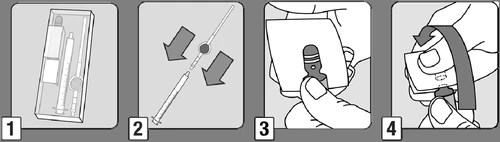
(1) Administration of the medicinal product to the patient requires the use of an ampoule, a filter tube, and
an oral dosing device.
(2) Attach the filter tube to the tip of the oral dosing device.
(3) Tap the top of the ampoule gently so that all the liquid flows down. Cover the top of the ampoule
with a gauze pad and grasp it, placing the thumb of one hand on the white dot.
(4) Firmly hold the ampoule upright with the white dot facing upwards and towards the user.
Press the top of the ampoule away from you; it will break off easily.
Preparation and administration of the solution
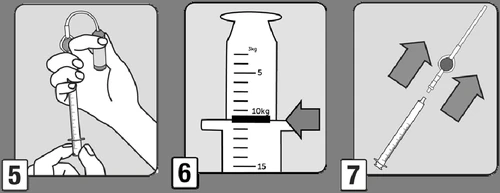
(5) Insert the filter tube into the ampoule. Before drawing up the dose and to eliminate any air from the filter tube,
it is recommended to prime the dosing device by briefly pumping (filling and emptying) the solution within the ampoule.
(6) Holding the ampoule vertically, fill the oral dosing device up to the marking corresponding to the patient's body weight in kilograms (kg). Align the marking line with the top of the collar to ensure accurate dosing.
(7) Remove the filter tube from the tip of the oral dosing device.
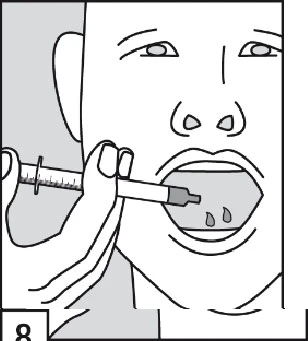

(8) Empty the contents of the oral dosing device into the patient's mouth. The solution should be swallowed immediately.

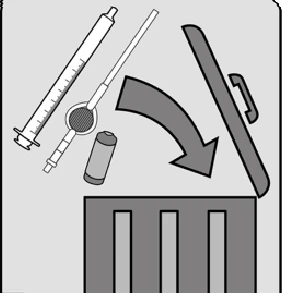
(9) After use, dispose of the ampoule, filter tube, oral dosing device, and any unused medicinal product remnants into a container designated for such purposes, in accordance with local regulations regarding controlled substances and pharmaceutical accessories.
Dosage
The dose should be adjusted according to the patient's body weight.
OZASED should be administered orally as a single dose of 0.25 mg/kg body weight in children aged 6 months and older.
The maximum dose should not exceed 20 mg midazolam (equivalent to 2 ampoules), even in children and adolescents with body weight above 80 kg.
In obese children and adolescents, the dose should be based on actual body weight and must not exceed 20 mg.
The oral dosing device has a scale in kilograms, ranging from 3 kg to 40 kg body weight, with three types of scale markings:
- Small scale mark corresponds to 1 kg, i.e. 0.25 mg midazolam,
- Medium scale mark corresponds to 5 kg, i.e. 1.25 mg midazolam,
- Large scale mark corresponds to 10 kg, i.e. 2.50 mg midazolam.
For patients with body weight above 40 kg, administration of 2 ampoules is required. The minimum dose drawn from an ampoule should correspond to the dose for 3 kg. For patients weighing 41 and 42 kg who require more than one ampoule, the dose should be drawn as less than 40 kg from the first ampoule and completed from the second ampoule; see examples below:
- For a patient weighing 41 kg, it is recommended to draw the dose for 30 kg from the first ampoule and the dose for 11 kg from the second ampoule.
- For a patient weighing 42 kg, it is recommended to draw the dose for 30 kg from the first ampoule and the dose for 12 kg from the second ampoule.
The oral dosing device and the filter tube are single-use devices intended for dose withdrawal and administration.
OZASED should be administered approximately 30 minutes before the procedure or anesthesia.
The use of OZASED is not recommended in neonates (preterm and term infants) or infants under 6 months of age.
In case of overdose, if the patient is conscious, induce vomiting as soon as possible (within one hour after midazolam administration); if the patient is unconscious, perform gastric lavage with airway protection. If gastric lavage is ineffective, administer activated charcoal to reduce absorption.
Flumazenil, a benzodiazepine antagonist, is indicated in cases of severe intoxication associated with respiratory depression or coma. This treatment must be performed under strict medical supervision and in accordance with local guidelines.
Filter tube – detailed information