Oxaliplatin kabi
Poland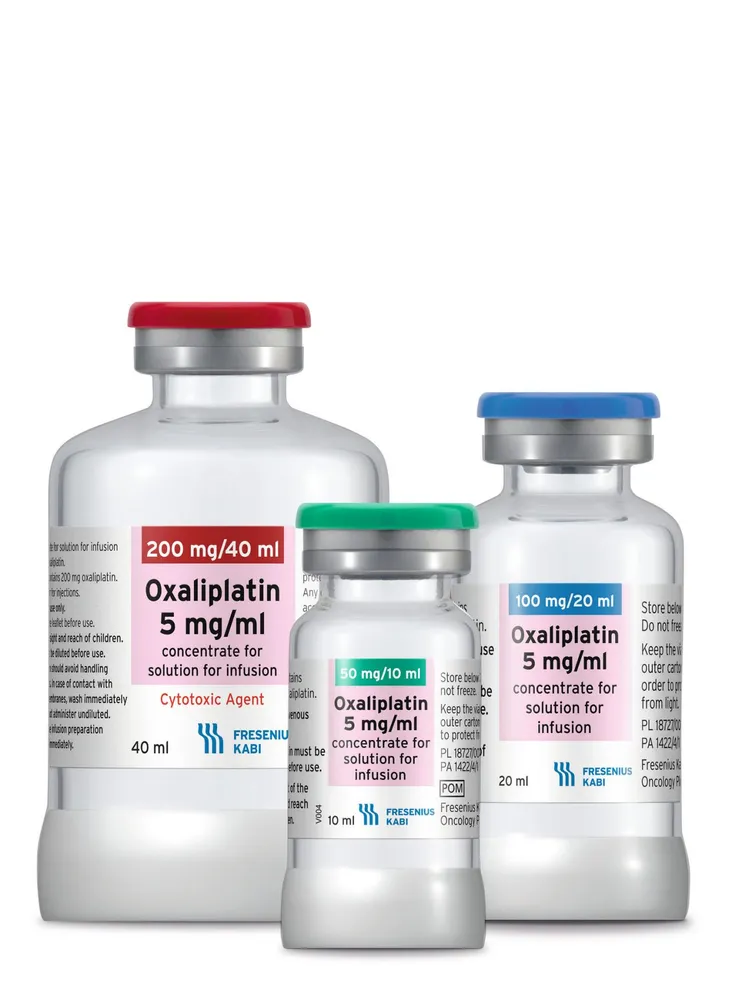
Table of Contents
- Package leaflet: Information for the user
- 1. What Oxaliplatin Kabi is and what it is used for
- 2. Important information before using Oxaliplatin Kabi
- 3. How to use Oxaliplatin Kabi
- 4. Possible adverse reactions
- 5. How to store Oxaliplatin Kabi
- 6. Contents of the pack and other information
- Information intended exclusively for medical professionals:
Package leaflet: Information for the user
Oxaliplatin Kabi, 5 mg/ml, concentrate for solution for infusion
Oxaliplatinum
Please read all of this leaflet carefully before this medicine is administered, because it contains
important information for the patient.
Keep this leaflet, as you may need to read it again.
If you have any further questions, ask your doctor, pharmacist or nurse.
- If you experience any side effects, including any not listed in this leaflet, tell your doctor, pharmacist or nurse. See section 4.
Contents of the leaflet
- What Oxaliplatin Kabi is and what it is used for
- Important information before treatment with Oxaliplatin Kabi
- How to use Oxaliplatin Kabi
- Possible side effects
- How to store Oxaliplatin Kabi
- Contents of the pack and other information
1. What Oxaliplatin Kabi is and what it is used for
The active substance in Oxaliplatin Kabi, concentrate for solution for infusion, is
oxaliplatin.
Oxaliplatin is used in the treatment of colorectal cancer (stage III colon cancer after complete resection of the primary tumour, and metastatic colon and rectal cancer). Oxaliplatin is used in combination with other anticancer medicines such as 5-fluorouracil and folinic acid.
Oxaliplatin Kabi is an antineoplastic or anticancer agent containing platinum.
2. Important information before using Oxaliplatin Kabi
When not to use Oxaliplatin Kabi:
- if the patient is allergic to oxaliplatin or any of the other ingredients of this medicine (listed in section 6);
- during breastfeeding;
- if the patient has reduced blood cell counts;
- if the patient experiences tingling and numbness in fingers and/or toes and problems performing precise movements such as buttoning clothes;
- if the patient has severe kidney function impairment.
Warnings and precautions
Before starting treatment with Oxaliplatin Kabi, consult a doctor, pharmacist, or nurse if:
the patient has ever had an allergic reaction to platinum-containing medicines such as carboplatin or cisplatin. An allergic reaction may occur during oxaliplatin infusion;
the patient has mild or moderate kidney function impairment;
the patient has liver function disorders or abnormal liver function test results;
the patient has or has had heart problems, such as electrical disturbances of the heart (so-called QT interval prolongation), irregular heartbeat, or a family history of heart disorders;
the patient has recently received or plans to receive any vaccines. During oxaliplatin treatment, "live" or "attenuated" vaccines, such as the yellow fever vaccine, should not be administered.
If any of the following conditions apply to the patient at any time, inform the doctor immediately. The doctor may decide to initiate appropriate treatment and may also reduce the dose of Oxaliplatin Kabi or delay or discontinue treatment.
if during treatment the patient experiences discomfort in the throat (especially when swallowing) and has difficulty breathing, inform the doctor;
if the patient has nerve disorders in the hands or feet, such as numbness, tingling, or reduced sensation in the hands or feet, inform the doctor;
if the patient experiences headache, mental disturbances, seizures, or visual disturbances ranging from blurred vision to loss of vision, inform the doctor;
if the patient has nausea or vomiting, inform the doctor;
if the patient has severe diarrhoea, inform the doctor;
if the patient has ulceration of the lips or oral cavity (mucositis and/or stomatitis), inform the doctor;
if the patient has diarrhoea or reduced white blood cell or platelet counts, inform the doctor. The doctor may reduce the dose of Oxaliplatin Kabi or delay administration;
if the patient has unexplained respiratory symptoms such as cough or any breathing difficulties, inform the doctor. The doctor may decide to discontinue treatment with Oxaliplatin Kabi;
if the patient experiences severe fatigue, shortness of breath, or has kidney disease and produces little or no urine (symptoms of acute kidney failure), inform the doctor;
if the patient has fever (38°C or higher) or chills, which may indicate infection, inform the doctor immediately due to the risk of developing sepsis;
if the patient has fever >38°C, inform the doctor. The doctor may check whether there is also a reduction in white blood cell count;
if the patient experiences unexpected bleeding or develops bruises (disseminated intravascular coagulation), inform the doctor, as these may be signs of clot formation in small blood vessels;
if the patient faints (loses consciousness) or has an irregular heartbeat during treatment with Oxaliplatin Kabi, inform the doctor immediately, as these may be symptoms of severe heart disorders;
if the patient experiences muscle pain, swelling, weakness, fever, or red-brown discoloration of urine, inform the doctor, as these may be symptoms of muscle damage (rhabdomyolysis), which may lead to kidney dysfunction or other complications;
if the patient experiences abdominal pain, nausea, vomiting blood or coffee-ground-like particles in vomit, or has very dark (tarry) stools, which may indicate intestinal ulcer (gastric or intestinal ulcer with possible bleeding or perforation), inform the doctor;
if the patient experiences abdominal pain, bloody diarrhoea, and nausea and/or vomiting, which may be due to reduced blood flow to the intestinal wall (intestinal ischemia), inform the doctor.
Oxaliplatin Kabi and other medicines
Inform the doctor or pharmacist about all medicines the patient is currently using, has recently used, or plans to use.
Pregnancy, breastfeeding, and fertility
Pregnancy
Pregnancy must be avoided during treatment, and effective contraceptive methods must be used. It is also recommended to continue using appropriate contraception for 15 months after completion of treatment.
Men are advised not to plan fathering a child during treatment and for up to 12 months after its completion, and to use appropriate contraceptive measures during this period.
If the patient is pregnant or planning pregnancy, it is very important to discuss this with the doctor before starting treatment.
If pregnancy occurs during treatment, inform the doctor immediately.
Breastfeeding
Breastfeeding must not be undertaken during oxaliplatin treatment.
Fertility
Oxaliplatin may have irreversible effects on fertility. Before starting treatment, men should seek advice regarding the possibility of sperm preservation.
Female patients planning pregnancy after completion of oxaliplatin treatment are advised to consult a genetics clinic.
Before taking any medicine, consult a doctor or pharmacist.
Driving and operating machinery
Oxaliplatin treatment may increase the risk of dizziness, nausea, vomiting, and other neurological symptoms that may affect gait and balance.
If these symptoms occur, the patient should not drive or operate machinery.
If the patient experiences visual disturbances during treatment with Oxaliplatin Kabi, driving, operating machinery, and performing hazardous tasks should be avoided.
3. How to use Oxaliplatin Kabi
Oxaliplatin Kabi is intended for adult patients only.
For single use only.
Dosage
The oxaliplatin dose is determined based on body surface area. It is calculated according to the patient's height and body weight.
The usual dose in adult patients is 85 mg/m² body surface area.
The dose received by the patient may also depend on blood test results and whether the patient previously experienced adverse reactions related to oxaliplatin.
Method and route of administration
Oxaliplatin must be prescribed by a physician specialized in cancer treatment. The patient will be treated by medical personnel who will prepare the required oxaliplatin dose.
Oxaliplatin is administered by slow injection into one of the patient's veins (intravenous infusion) over 2 to 6 hours.
Oxaliplatin Kabi is administered at the same time as folinic acid, and before the 5-fluorouracil infusion.
Frequency of administration
The patient usually receives the medication as an intravenous infusion once every 2 weeks.
Duration of treatment
The physician will decide on the duration of treatment. Treatment lasts up to a maximum of 6 months when oxaliplatin is used following complete tumor removal.
Overdose of Oxaliplatin Kabi
Since this medication is administered by medical personnel, it is highly unlikely that the patient will receive too low or too high a dose. In case of overdose, adverse reactions may become more severe.
The physician may initiate appropriate treatment for adverse reactions.
If there are any further doubts regarding the use of this medication, please consult your doctor, pharmacist, or nurse.
4. Possible adverse reactions
Like all medicines, this medicine can cause adverse reactions, although not everyone will experience them.
If any adverse reactions occur, it is important to inform your doctor before the next treatment cycle.
The adverse reactions listed below may occur.
Contact your doctor immediately if any of the following symptoms occur:
- signs of allergy or anaphylactic reaction with sudden onset symptoms such as rash, itching or hives, difficulty swallowing, swelling of the face, lips, tongue or other body parts, shortness of breath, wheezing or difficulty breathing, extreme exhaustion (the patient may feel like fainting); in most cases, these symptoms occur during or immediately after infusion, but delayed allergic reactions have also been observed several hours or even days after infusion;
- unusual bruising, bleeding or signs of infection such as sore throat and high fever;
- persistent or severe diarrhoea, or vomiting;
- presence of blood or dark brown particles (like coffee grounds) in vomit;
- inflammation of the mouth and (or) mucositis (pain or sores in the lips or mouth);
- respiratory symptoms such as dry or wet cough, difficulty breathing, crackling sounds, shortness of breath and wheezing, which may indicate a severe lung disease potentially leading to death;
- a group of symptoms including: headache, changes in mental status, seizures and vision disturbances ranging from blurred vision to loss of vision (symptoms of reversible posterior leukoencephalopathy syndrome, a rare neurological disorder);
- stroke symptoms (including sudden severe headache, confusion, vision problems in one or both eyes, numbness or weakness of the face, arm or leg, usually on one side, facial drooping, difficulty walking, dizziness, loss of balance and speech problems);
- extreme exhaustion with decreased red blood cells and shortness of breath (haemolytic anaemia), occurring with or without decreased platelet count, unusual bruising (thrombocytopenia), and kidney disease where the patient passes little or no urine (symptoms of haemolytic-uremic syndrome).
Other known adverse reactions of oxaliplatin include:
Very common (may affect more than 1 in 10 patients):
- Oxaliplatin Kabi affects nerves (peripheral neuropathy). The patient may experience tingling and (or) numbness in fingers and toes, around the mouth or in the throat, sometimes accompanied by muscle cramps. This adverse reaction is often triggered when the patient is exposed to cold, e.g. opening a refrigerator or holding a cold drink. The patient may also have difficulty performing precise movements, such as
buttoning buttons. Although in most cases these symptoms resolve completely, peripheral neuropathy symptoms may persist after completion of treatment.
In some patients, a sensation similar to an "electric current" running along the arms or chest may occur when bending the neck; - Oxaliplatin Kabi may occasionally cause unpleasant sensations in the throat, especially during swallowing, and a feeling of breathlessness. These sensations, if they occur, usually appear during or within a few hours after infusion and may be triggered by exposure to low temperatures. They are unpleasant but short-lived and resolve without requiring any treatment. Your doctor may decide to adjust treatment if necessary;
- Oxaliplatin Kabi may cause diarrhoea, mild nausea and vomiting. Your doctor will administer an antiemetic, which is usually given before treatment and may also be taken after completion of the treatment cycle;
- Oxaliplatin Kabi causes transient reduction in blood cell counts. A decrease in red blood cells may lead to anaemia, a decrease in platelets may cause unusual bleeding or bruising, and a decrease in white blood cells may increase susceptibility to infections. Before starting treatment and before each subsequent cycle, your doctor will order blood tests to check whether you have sufficient blood cell counts;
- discomfort at or around the infusion site during infusion;
- fever, chills, mild or moderate fatigue, body aches;
- changes in body weight, decreased or loss of appetite, taste disturbances, constipation;
- headache, back pain;
- swelling of nerves leading to muscles, neck stiffness, unusual sensation of the tongue which may affect speech, inflammation of the mouth, mucositis (sores on lips or in the mouth);
- abdominal pain;
- abnormal bleeding, including nosebleeds;
- cough, difficulty breathing;
- allergic reactions, skin rash which may be red and itchy, mild hair loss (alopecia);
- changes in blood test results, including those indicating abnormal liver function.
Common (may affect less than 1 in 10 patients):
- infection due to decreased white blood cell count;
- severe blood infection together with decreased white blood cell count (neutropenic sepsis), which may lead to death;
- decrease in white blood cells with fever >38.3°C or prolonged fever >38°C lasting more than one hour (febrile neutropenia);
- indigestion and heartburn, hiccup, facial flushing, dizziness;
- excessive sweating and nail disorders, skin peeling;
- chest pain;
- lung disorders and cough;
- bone and joint pain;
- pain during urination and kidney changes, changes in frequency of urination, dehydration;
- presence of blood in urine or stool, blood vessel swelling, blood clot in the lungs;
- high blood pressure;
- depression, insomnia;
- conjunctivitis, vision disturbances;
- decreased blood calcium levels;
- falls.
Uncommon (may affect less than 1 in 100 patients):
- severe blood infection (sepsis), which may lead to death;
- intestinal obstruction or swelling;
- restlessness.
Rare (may affect less than 1 in 1,000 patients):
- hearing loss;
- lung scarring and thickening with breathing difficulties, sometimes leading to death (interstitial lung disease);
- transient, short-term vision loss;
- unexpected bleeding or bruising due to blood clots forming in small blood vessels (disseminated intravascular coagulation) – a condition that may lead to death.
Very rare (less than 1 in 10,000 patients):
- presence of blood or dark brown particles (like coffee grounds) in vomit;
- kidney disease where the patient passes little or no urine (symptoms of acute kidney failure);
- vascular liver disease.
Frequency not known (frequency cannot be estimated from available data):
- allergic vasculitis (inflammation of blood vessels);
- autoimmune reaction causing reduction in all blood cells (autoimmune pancytopenia), pancytopenia;
- severe blood infection with low blood pressure (septic shock), which may lead to death;
- seizures (uncontrolled body shaking);
- laryngospasm causing breathing difficulties;
- extreme exhaustion with decreased red blood cells and shortness of breath (haemolytic anaemia), with or without decreased platelet count, and kidney disease with reduced urine output or anuria (symptoms of haemolytic-uremic syndrome), which may lead to death;
- abnormal heart rhythm (QT interval prolongation), detectable on electrocardiogram (ECG) – a condition that may lead to death;
- muscle pain and swelling with weakness, fever or red-brown discoloration of urine (symptoms of muscle damage called rhabdomyolysis) – a condition that may lead to death;
- abdominal pain, nausea, vomiting blood or presence of dark brown particles resembling coffee grounds in vomit, or very dark (tarry) stools (symptoms of stomach or intestinal ulceration, with possible bleeding or perforation) – a condition that may lead to death;
- reduced blood flow to the intestine (intestinal ischaemia) – a condition that may lead to death;
- risk of developing new tumours. Cases of leukaemia – a type of blood cancer – have been reported in patients treated with oxaliplatin in combination with certain other medicines. You should consult your doctor regarding the potential risk of developing this type of tumour during treatment with oxaliplatin and certain other medicines;
- myocardial infarction (heart attack), angina pectoris (chest pain or discomfort);
- oesophagitis (inflammatory condition of the oesophageal mucosa, i.e. the connection between the mouth and stomach – resulting in pain and difficulty swallowing);
- non-cancerous abnormal nodules in the liver (focal nodular hyperplasia).
Reporting of adverse reactions
If any adverse symptoms occur, including any adverse reactions not listed in this leaflet, inform your doctor, pharmacist or nurse. Adverse reactions can be reported directly to the Department of Monitoring Adverse Drug Reactions of the Office for Registration of Medicinal Products, Medical Devices and Biocidal Products
Al. Jerozolimskie 181C
02-222 Warsaw
Phone: +48 22 49 21 301
Fax: +48 22 49 21 309
Website: https://smz.ezdrowie.gov.pl
Adverse reactions can also be reported to the marketing authorisation holder.
Reporting adverse reactions helps provide more information on the safety of this medicine.
5. How to store Oxaliplatin Kabi
Keep the medicine out of the sight and reach of children.
Do not use this medicine after the expiry date stated on the label and carton after "EXP". The expiry date refers to the last day of the stated month.
Store the vial in its outer packaging to protect it from light. Store below 25°C. Do not freeze.
Do not use this medicine if the solution is not clear or if visible particles are present.
Medicines must not be disposed of via wastewater or household waste. Ask your pharmacist how to dispose of medicines no longer required. Such measures help protect the environment.
6. Contents of the pack and other information
What Oxaliplatin Kabi contains:
- The active substance is oxaliplatin. 1 ml of concentrate for solution for infusion contains 5 mg of oxaliplatin. 10 ml of concentrate for solution for infusion contains 50 mg of oxaliplatin. 20 ml of concentrate for solution for infusion contains 100 mg of oxaliplatin. 40 ml of concentrate for solution for infusion contains 200 mg of oxaliplatin.
- The other ingredient is: water for injections.
What Oxaliplatin Kabi looks like and contents of the pack
This medicine is a concentrate for solution for infusion. It is a clear, colourless solution,
without visible solid particles.
Each vial contains 50 mg, 100 mg or 200 mg of oxaliplatin. 10 ml, 20 ml or 40 ml of concentrate
is contained in a vial (made of colourless type I glass) with a stopper made of chlorobutyl or
bromobutyl rubber, sealed with an aluminium cap and a plastic flip-off cap. Each vial may be
packaged in a foil pouch and a plastic container.
Vials are contained in a cardboard box.
Not all pack sizes may be marketed.
Marketing Authorisation Holder
Fresenius Kabi Polska Sp. z o.o.
Al. Jerozolimskie 134
02-305 Warsaw
Poland
Manufacturer
Fresenius Kabi Deutschland GmbH
Pfingstweide 53
61169 Friedberg
Germany
For further information, please contact the Marketing Authorisation Holder:
Fresenius Kabi Polska Sp. z o.o.
Al. Jerozolimskie 134
02-305 Warsaw
Poland
Tel.: +48 22 345 67 89
This medicinal product is authorised in the European Economic Area and the United Kingdom (Northern Ireland) under the following names:
Czech Republic Oxaliplatin Kabi
Denmark Oxaliplatin ”Fresenius Kabi”, koncentrat til infusionsvæske, opløsning
Spain Oxaliplatino Kabi 5 mg/ml concentrado para solución para perfusión EFG
Netherlands Oxaliplatine Fresenius Kabi 5 mg/ml concentraat voor oplossing voor infusie
Ireland Oxaliplatin 5 mg/ml concentrate for solution for infusion
Germany Oxaliplatin Kabi 5 mg/ml Konzentrat zur Herstellung einer Infusionslösung
Norway Oxaliplatin Fresenius Kabi 5 mg/ml konsentrat til infusjonsvæske
Poland Oxaliplatin Kabi
Portugal Oxaliplatina Kabi 5 mg/ml concentrado para solução para perfusão
Slovakia Oxaliplatin Kabi 5 mg/ml infúzny koncentrát
Hungary Oxaliplatin Kabi 5 mg/ml koncentrátum oldatos infúzióhoz
Italy Oxaliplatino Kabi
United Kingdom Oxaliplatin 5 mg/ml concentrate for solution for infusion
(Northern Ireland)
Information intended exclusively for medical professionals:
SPECIAL PRECAUTIONS FOR DISPOSAL
AND PREPARATION OF THE MEDICINAL PRODUCT FOR ADMINISTRATION
As with other potentially toxic substances, special precautions should be taken during handling and preparation of oxaliplatin solutions.
Handling Instructions
The handling of cytotoxic medicinal products by healthcare personnel requires special precautions to ensure the safety of the personnel preparing the product and their environment.
Preparation of injectable cytotoxic solutions must be performed by trained, specialized personnel with knowledge of the drugs used, under conditions ensuring product integrity, environmental protection, and particularly protection of the personnel preparing the product, in accordance with hospital policy. Preparation must take place exclusively in a designated area. Smoking, eating, or drinking in this area is prohibited.
Personnel preparing cytotoxic drugs must be equipped with appropriate personal protective equipment, including long-sleeved gowns, protective masks, protective head covers, safety goggles, sterile disposable gloves, protective coverings for the work area, containers, and waste bags.
Caution should be exercised when handling bodily excretions or vomit.
Pregnant women should be warned to avoid contact with cytotoxic drugs.
Damaged packaging should be handled with the same caution as contaminated waste. Contaminated waste must be incinerated after being placed in appropriately labeled, rigid containers. See section "Disposal of residues" below.
In case of contact of oxaliplatin concentrate or infusion solution with skin, the affected area should be immediately and thoroughly rinsed with water.
In case of contact of oxaliplatin concentrate or infusion solution with mucous membranes, the affected area should be immediately and thoroughly rinsed with water.
Special precautions for administration of the medicinal product
- DO NOT use administration equipment containing aluminum.
- DO NOT administer undiluted solutions.
- Dilute only with 5% glucose infusion solution. DO NOT dilute the infusion solution with sodium chloride solution or solutions containing chlorides.
- DO NOT mix with other medicinal products in the same infusion bag and DO NOT administer simultaneously through the same infusion set.
- DO NOT mix with medicinal products or solutions of alkaline pH, particularly 5-fluorouracil, folinic acid products containing tromethamine as an excipient, and tromethamine salts of other active substances. Alkaline medicinal products or solutions negatively affect the stability of oxaliplatin.
Instructions for use with folinic acid (FA) (as calcium folinate or disodium folinate)
Oxaliplatin at a dose of 85 mg/m² body surface area administered as an intravenous infusion in 250 ml to 500 ml of 5% glucose solution should be given concurrently with a folinic acid (FA) infusion in 5% glucose solution over 2 to 6 hours, using a Y-connector placed immediately before the infusion site. The two medicinal products should not be mixed in the same infusion bag. Folinic acid must not contain tromethamine as an excipient and must be diluted only with isotonic 5% glucose solution; alkaline solutions, sodium chloride solution, or solutions containing chlorides must never be used for dilution.
Instructions for use with 5-fluorouracil (5-FU)
Oxaliplatin must always be administered before fluoropyrimidines, e.g., 5-fluorouracil. After administration of oxaliplatin, the infusion set should be flushed before administering 5-fluorouracil.
For additional information on medicinal products used concomitantly with oxaliplatin, refer to the relevant sections of the Product Characteristics.
USE ONLY the recommended solvents (see below).
Any concentrate showing signs of precipitation should not be used and must be disposed of in accordance with legal requirements for disposal of hazardous waste (see below).
Concentrate for solution for infusion
The solution should be inspected visually before use. Only clear solutions free from particulate matter should be used. The medicinal product is intended for single use only. Any unused portions of the solution must be discarded.
Dilution of the infusion solution for intravenous administration
Withdraw the required amount of concentrate from the vial(s), then dilute with 250 ml to 500 ml of 5% glucose solution to achieve an oxaliplatin concentration between 0.2 mg/ml and 0.7 mg/ml. The concentration range in which physicochemical stability of oxaliplatin has been demonstrated is from 0.2 mg/ml to 2.0 mg/ml.
Administer by intravenous infusion.
After dilution in 5% glucose solution, chemical and physical stability of the solution has been demonstrated for 24 hours when stored at room temperature (15°C to 25°C) and under refrigerated conditions (2°C to 8°C).
From a microbiological point of view, the infusion solution should be used immediately. If the medicinal product is not used immediately, the user is responsible for the storage time and conditions prior to use. Storage should not normally exceed 24 hours at 2°C to 8°C, unless the solution has been diluted under controlled and validated aseptic conditions.
The solution should be inspected visually before use. Only clear solutions free from particulate matter should be used.
The medicinal product is intended for single use only. Any unused portions of the solution must be discarded.
NEVER use sodium chloride solution or solutions containing chlorides for dilution.
Compatibility of the oxaliplatin infusion solution has been tested using infusion sets made of PVC.
Infusion
Administration of oxaliplatin does not require prior aggressive hydration of the patient.
Oxaliplatin diluted in 250 ml to 500 ml of 5% glucose solution to achieve a concentration of not less than 0.2 mg/ml must be administered intravenously over 2 to 6 hours via a peripheral or central vein.
When oxaliplatin is administered together with 5-fluorouracil, the oxaliplatin infusion must precede the administration of 5-fluorouracil.
Disposal of residues
Any unused remnants of the medicinal product or waste materials must be disposed of in accordance with local regulations.