Oxaliplatin ebewe
Poland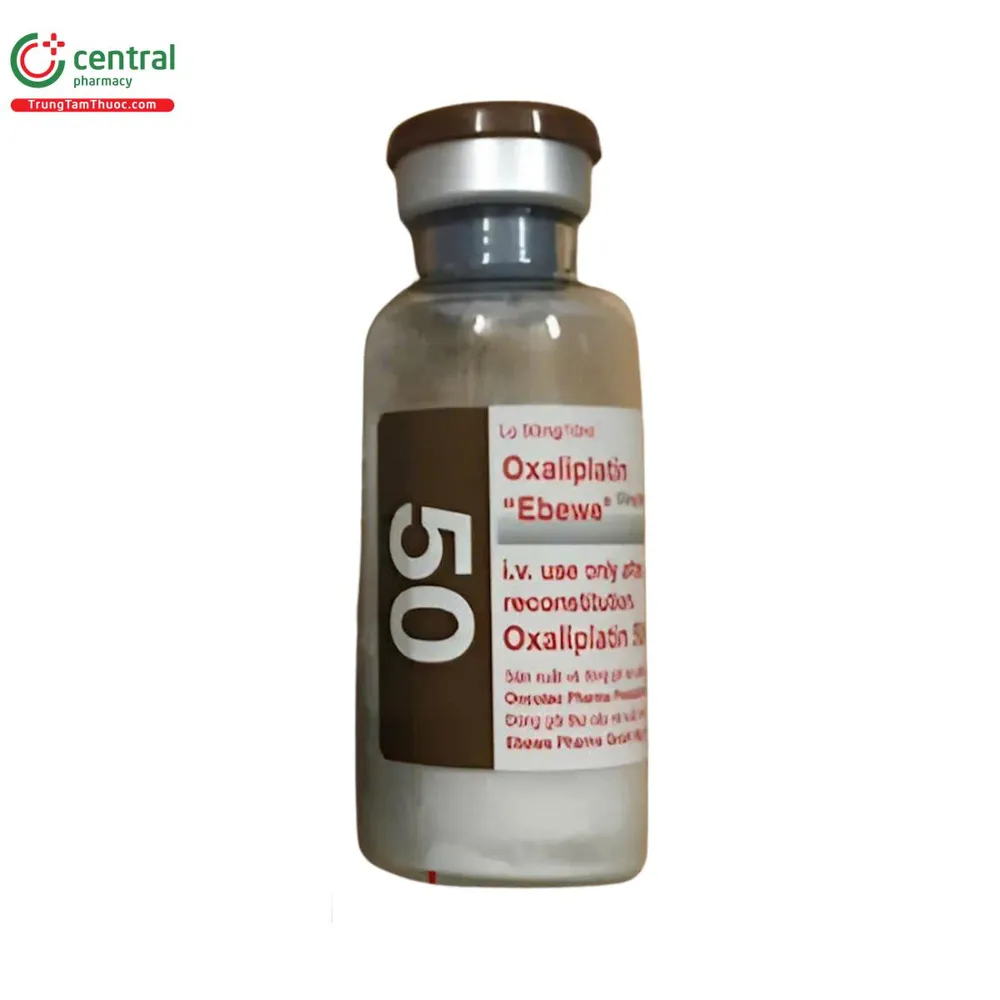
Table of Contents
- Package leaflet: Information for the user
- 1. What Oxaliplatin-Ebewe is and what it is used for
- 2. Important information before using Oxaliplatin-Ebewe
- 3. How to use Oxaliplatin-Ebewe
- 4. Possible adverse reactions
- 5. How to store Oxaliplatin-Ebewe
- 6. Contents of the pack and other information
- Information intended exclusively for medical professionals
Package leaflet: Information for the user
Oxaliplatin-Ebewe, 5 mg/ml, concentrate for solution for infusion
Oxaliplatinum
Please read all of this leaflet carefully before use, as it contains important information for the patient.
Keep this leaflet for future reference.
If you have any questions, please consult your doctor or nurse.
If you experience any adverse reactions, including any adverse reactions not listed in this leaflet, inform your doctor or nurse immediately. See section 4.
Leaflet contents:
- What Oxaliplatin-Ebewe is and what it is used for
- Important information before using Oxaliplatin-Ebewe
- How to use Oxaliplatin-Ebewe
- Possible side effects
- How to store Oxaliplatin-Ebewe
- Contents of the pack and other information
1. What Oxaliplatin-Ebewe is and what it is used for
Oxaliplatin-Ebewe is an anticancer medicine. It contains the active substance oxaliplatin.
Oxaliplatin-Ebewe is used in the treatment of colorectal cancer after surgical removal of the tumour or in the treatment of metastatic cancer.
Oxaliplatin-Ebewe is used in combination with other anticancer medicines:
5-fluorouracil (5-FU) and folinic acid (FA).
2. Important information before using Oxaliplatin-Ebewe
When not to use Oxaliplatin-Ebewe
if the patient has a hypersensitivity to oxaliplatin
if the patient is breastfeeding
if, prior to starting treatment, the patient's blood shows reduced blood cell counts
if, prior to starting treatment, the patient experiences tingling and numbness in fingers and (or)
toes, interfering with performing precise movements, such as buttoning buttons
if the patient has severe kidney function impairment.
Warnings and precautions
Before receiving Oxaliplatin-Ebewe, discuss with your doctor if:
the patient has previously experienced an allergic reaction to platinum-containing medicines (such as
carboplatin, cisplatin), as allergic reactions may also occur during oxaliplatin infusion.
the patient has mild or moderate kidney function impairment.
the patient has any liver function disorders or abnormal liver function test results during treatment.
the patient has or has had heart problems in the past, such as abnormal electrocardiogram (ECG) findings (so-called QT prolongation), irregular heartbeat, or family history of heart disorders.
if the patient has recently received or plans to receive any vaccinations. During oxaliplatin treatment, live or attenuated vaccines, such as the yellow fever vaccine, should not be administered.
Oxaliplatin-Ebewe and other medicines
Inform your doctor about all medicines currently or recently taken, as well as any medicines the patient plans to use.
Pregnancy, breastfeeding, and effects on fertility
Pregnancy
Pregnancy is not recommended during oxaliplatin treatment, and effective contraception methods should be used. Female patients should use appropriate contraception methods during treatment and for 9 months after completion of treatment.
Men should not father a child during treatment and for 6 months after its completion and should use appropriate contraceptive methods during this period.
If a patient is pregnant or planning pregnancy, it is essential to discuss this with the doctor before receiving the medicine.
If a patient becomes pregnant during treatment, she must immediately inform her doctor.
Breastfeeding
Breastfeeding is not permitted during oxaliplatin treatment.
Fertility
Oxaliplatin may cause infertility, which may be irreversible. Before starting treatment, men should seek advice regarding the possibility of sperm storage.
After completion of oxaliplatin treatment, female patients planning pregnancy are advised to consult a genetics specialist.
Before taking any medicine, consult a doctor or pharmacist.
Driving and operating machinery
Oxaliplatin treatment may increase the risk of dizziness, nausea, vomiting, and other neurological symptoms affecting mobility and balance. If such symptoms occur, patients should not drive or operate machinery. If vision disturbances occur during treatment with Oxaliplatin-Ebewe, patients should not drive, operate machinery, or perform potentially hazardous activities.
3. How to use Oxaliplatin-Ebewe
The medicine is administered by medical personnel. You must not use it yourself.
Oxaliplatin-Ebewe is intended for adults only.
Dosage
The dose of Oxaliplatin-Ebewe is determined by the physician based on the patient's body surface area, calculated from height and weight.
The usual dose in adults (including elderly patients) is 85 mg/m^2 of body surface area. The administered dose may also depend on blood test results and the occurrence of adverse reactions after previous administration of Oxaliplatin-Ebewe.
Method and route of administration
Oxaliplatin-Ebewe is prescribed by an oncologist.
Treatment is supervised by a specialist who determines the appropriate dose for the patient.
Oxaliplatin-Ebewe is administered intravenously as a slow infusion lasting from 2 to 6 hours. If the patient experiences discomfort or pain at the injection site, medical personnel must be informed immediately.
Oxaliplatin-Ebewe is administered to the patient at the same time as folinic acid, but before the infusion of 5-fluorouracil.
Frequency of administration
The infusion is usually given once every 2 weeks.
Duration of treatment
The duration of treatment is determined by the physician.
If the medicine is administered following complete resection of the tumour, treatment lasts up to a maximum of 6 months.
Administration of a higher than recommended dose of Oxaliplatin-Ebewe
Since the medicine is administered by medical personnel, administration of too high or too low a dose is unlikely.
In case of overdose, adverse reactions may be intensified. In such a case, the physician will provide appropriate treatment.
Missed dose of Oxaliplatin-Ebewe
The physician decides when the patient should receive the medicine. If there is any doubt whether a dose has been missed, consult the physician as soon as possible.
If you have any further questions about the use of this medicine, consult your doctor or pharmacist.
4. Possible adverse reactions
Like all medicines, this medicine can cause adverse reactions, although not everyone experiences them.
If the patient experiences any adverse reaction, it is important to inform the
physician before starting the next treatment cycle.
The physician should be informed immediately if the patient experiences any of the
following symptoms:
tingling and (or) numbness of fingers, hands, feet, the oral cavity or throat, sometimes accompanied
by muscle cramps, which may also cause difficulty in performing precise movements, such as
buttoning buttons (symptoms of peripheral neuropathy) (very common)
symptoms of an allergic or anaphylactic reaction with sudden onset symptoms such as skin rash,
itching or hives, difficulty swallowing, swelling of the face, lips, tongue or other body parts,
shortness of breath, wheezing or breathing difficulties, extreme fatigue (feeling faint). In most
cases, symptoms occurred during or immediately after the infusion, but delayed allergic reactions
have also been observed, occurring hours or even days after infusion (very common)
unusual bruising, bleeding or signs of infection such as sore throat and high fever (due to reduced
platelet count or white blood cell count) (very common)
persistent or severe diarrhoea or vomiting (very common)
unexplained respiratory symptoms such as dry cough, breathing difficulties or crackling sounds in
the airways (very common)
inflammation of the mouth/mucositis (sores on lips or ulceration of the oral cavity) (very common)
presence of blood or dark brown particles resembling coffee grounds in vomit (symptoms of
gastrointestinal bleeding) (common)
a combination of symptoms such as headache, mental disturbances, seizures and vision disorders
(from blurred vision to loss of vision) – symptoms of a rare neurological disorder, so-called
reversible posterior leukoencephalopathy syndrome (rare)
extreme fatigue associated only with reduced red blood cell count and breathlessness
(haemolytic anaemia) (rare), or combined with reduced platelet count, abnormal bruising
(thrombocytopenia) (rare), and kidney disease, in which the patient passes little or no urine
(haemolytic-uraemic syndrome) (frequency unknown)
Other known adverse reactions of Oxaliplatin-Ebewe
Very common (may affect more than 1 in 10 people)
Tingling sensation and electric shock-like feeling running along arms or torso, triggered by neck
flexion
Occasionally, the medicine may cause an unpleasant sensation in the throat, especially during
swallowing, felt as breathlessness. This reaction usually occurs during or within a few hours after
infusion and may be triggered by cold. Although unpleasant, it is short-lived and usually resolves
without requiring treatment. The physician may decide to modify the treatment regimen.
Diarrhoea, mild nausea and vomiting. Before treatment, the physician usually prescribes an
antiemetic, which may be continued after administration of the medicine.
Periodic reduction in blood cell counts. A decrease in red blood cells may cause paleness of the
skin, weakness and breathlessness (anaemia). Before starting treatment and before each
subsequent cycle, the physician will check whether the patient's blood contains an adequate
number of blood cells
Discomfort at or near the site of infusion during the infusion
Fever, chills, fatigue, loss of strength/weakness, pain
Changes in body weight, decreased or loss of appetite, taste disturbances, constipation
Headache, back pain
Swelling of nerves, neck stiffness, abnormal sensation of the tongue with possible speech
disturbances
Stomach pain
Abnormal bleeding, including nosebleeds
Cough, breathing difficulties
Allergic reactions, skin rash which may be red and itchy, mild hair loss (alopecia)
Changes in blood test results, including tests detecting abnormal liver function
Skin disorders
High glucose (sugar) levels in blood, which may cause intense thirst, dry mouth or frequent need
to urinate
Low potassium levels in blood, which may cause irregular heartbeat and may manifest as muscle
cramps, muscle weakness or fatigue
High sodium levels in blood, which may cause confusion, muscle twitching or irregular heartbeat
Common (may affect less than 1 in 10 people):
Infection due to reduced white blood cell count
Severe blood infection, accompanied by reduced white blood cell count (sepsis with neutropenia) –
a condition which may lead to death
Indigestion and heartburn, sudden skin flushing, hiccups and dizziness
Excessive sweating and nail disorders, skin peeling
Chest pain
Cold and upper respiratory tract infection
Joint pain and bone pain
Pain during urination and changes in kidney function, changes in frequency of urination,
dehydration
Presence of blood in urine and stool
High blood pressure
Depression, sleep disturbances
Conjunctivitis, vision disorders
Dizziness
Nerve inflammation leading to muscle spasms/cramps and loss of certain reflexes
Neck stiffness, photophobia and headache
Blood clot, usually in the leg, causing pain, swelling or redness
Blood clot in the lungs, causing chest pain and breathlessness
Weight loss
Rash
Reduced calcium levels in blood
Uncommon (may affect less than 1 in 100 people):
Severe blood infection (sepsis), which may lead to death
Nervousness
Hearing disorders (ototoxicity)
Weakened or blocked movement of food through the intestines
Disturbances in acid-base balance in the body
Rare (may affect less than 1 in 1,000 people):
Reduced platelet count due to an allergic reaction, associated with bruising and abnormal
bleeding (immune-mediated thrombocytopenia)
Reduced red blood cell count due to their destruction
Speech disorders
Periodic reduction in visual acuity, visual field disturbances, transient short-term loss of vision,
optic neuritis
Deafness (hearing loss)
Fibrosis and thickening of lung tissue with breathing difficulties, sometimes leading to death
(interstitial lung disease)
Inflammation of the intestines causing pain or diarrhoea, including severe bacterial infection
(caused by Clostridium difficile)
Pancreatitis
Unexpected bleeding or bruising due to formation of multiple clots in small blood vessels
(disseminated intravascular coagulation), which may lead to death
Very rare (may affect less than 1 in 10,000 people):
Liver vascular disorders
Kidney function disorders, kidney disease in which the patient passes little or no urine (symptoms
of acute kidney failure)
Frequency not known (cannot be estimated from available data):
Seizures (uncontrolled body shaking)
Severe blood infection with low blood pressure (septic shock), which may lead to death
Throat spasm causing breathing difficulties
Allergic vasculitis
Autoimmune reaction causing reduced production of all blood cell lines (autoimmune-mediated
pancytopenia)
Irregular heartbeat (QT interval prolongation) visible on electrocardiogram (ECG), which may lead
to death
Muscle pain and swelling combined with weakness, fever or reddish-brown discoloration of urine
(symptoms of muscle damage called rhabdomyolysis), which may lead to death
Abdominal pain, nausea, vomiting blood or coffee-ground-like vomit, or dark stool (tarry stools) –
symptoms of gastric or intestinal ulcer with possible bleeding or perforation, which may lead to
death
Reduced blood flow to the intestines (intestinal ischaemia), which may lead to death
non-neoplastic, abnormal liver nodules (focal nodular hyperplasia)
Reporting of adverse reactions
If any adverse reactions occur, including any adverse reactions not listed in this leaflet, the patient
should inform the physician, pharmacist or nurse. Adverse reactions can be reported directly to
the Department of Monitoring Adverse Drug Reactions of the Office for Registration of Medicinal
Products, Medical Devices and Biocidal Products: Al. Jerozolimskie 181C, 02-222 Warsaw
tel.: + 48 22 49 21 301, fax: + 48 22 49 21 309, website: https://smz.ezdrowie.gov.pl
Adverse reactions can also be reported to the marketing authorization holder.
Reporting adverse reactions helps to provide more information on the safety of the medicine.
5. How to store Oxaliplatin-Ebewe
Keep this medicine out of the sight and reach of children.
Avoid contact of Oxaliplatin-Ebewe with eyes or skin. In case of accidental
spillage, inform a doctor or nurse immediately.
Before dilution, the medicine should be stored in its original outer packaging to protect it from light. Do not freeze.
Do not store above 25°C.
Do not use this medicine after the expiry date stated on the carton and on the label after EXP.
The expiry date refers to the last day of the stated month.
After completion of the infusion, Oxaliplatin-Ebewe will be carefully removed by a doctor or nurse.
6. Contents of the pack and other information
What Oxaliplatin-Ebewe contains
The active substance is oxaliplatin.
The other ingredient is water for injections.
What Oxaliplatin-Ebewe looks like and contents of the pack
Oxaliplatin-Ebewe is a clear, colourless solution free from visible particles.
1 ml of solution contains 5 mg of active substance – oxaliplatin.
The medicine is a concentrate for solution for infusion.
10 ml concentrate for solution for infusion contains 50 mg oxaliplatin.
20 ml concentrate for solution for infusion contains 100 mg oxaliplatin.
30 ml concentrate for solution for infusion contains 150 mg oxaliplatin.
40 ml concentrate for solution for infusion contains 200 mg oxaliplatin.
50 ml concentrate for solution for infusion contains 250 mg oxaliplatin.
Pack sizes:
1, 5 or 10 vials of 10 ml
1 vial of 20 ml
1 vial of 30 ml
1 vial of 40 ml
1 vial of 50 ml
The vial may be placed in a protective plastic container („OncoSafe” or „Sleeving”). „Onco-Safe” and „Sleeving” do not come into contact with the medicine and provide additional protection during transport, thereby increasing safety for medical and pharmaceutical personnel.
Not all pack sizes may be marketed.
Marketing Authorisation Holder and Manufacturer
Marketing Authorisation Holder
EBEWE Pharma Ges.m.b.H. Nfg. KG
Mondseestrasse 11
A-4866 Unterach, Austria
tel. + 48 22 209 70 00
Manufacturer
EBEWE Pharma Ges.m.b.H. Nfg. KG
Mondseestrasse 11
A-4866 Unterach, Austria
Salutas Pharma GmbH
Otto-von-Guericke-Allee 1
D-39179 Barleben, Germany
Fareva Unterach GmbH
Mondseestraße 11
4866 Unterach, Austria
Austria Oxaliplatin Ebewe 5 mg/ml Concentrate for Solution for Infusion
Bulgaria Oxaliplatin Ebewe 5mg/ml concentrate for solution for infusion
Denmark Oxaliplatin "Sandoz"
Norway Oxaliplatin Sandoz 5 mg/ml concentrate for infusion solution, solution
Slovenia Oksaliplatin Sandoz 5 mg/ml concentrate for infusion solution
Sweden Oxaliplatin Sandoz 5 mg/ml concentrate for infusion solution, solution
Italy Oxaliplatino Sandoz
United Kingdom Oxaliplatin 5 mg/ml Concentrate for Solution for Infusion
(Ireland Northern)
Information intended exclusively for medical professionals
Special precautions regarding removal and preparation of the medicinal product for
administration
As with other potentially toxic substances, care must be taken when handling and preparing oxaliplatin solutions.
Instructions for use
Handling this cytotoxic medicinal product by nursing and medical staff requires all possible precautionary measures to ensure protection for the person handling the product and their environment.
Solutions of cytotoxic medicinal products intended for injection or infusion must be prepared by appropriately trained, specialized personnel with knowledge of the medicinal products used, under conditions ensuring product sterility, environmental protection, and especially the safety of personnel handling the drugs, in accordance with hospital regulations. This requires preparation of a dedicated area. Smoking, eating, or drinking must not be allowed in the designated area.
Personnel must be equipped with appropriate protective equipment, in particular long-sleeved gowns, protective masks, caps, protective goggles, sterile disposable gloves, protective shields for workstations, and containers and collection bags for waste.
Care must be taken when handling excreta and vomit.
Pregnant women should be warned against contact with cytotoxic agents.
All damaged containers must be handled with the same precautions and treated as contaminated waste. Contaminated waste should be incinerated in appropriately labeled, rigid containers. Disposal – see below.
In case of contact of concentrated oxaliplatin or infusion solution with the skin, the contaminated area should be immediately and thoroughly washed with water.
In case of contact of concentrated oxaliplatin or infusion solution with mucous membranes, the contaminated area should be immediately and thoroughly rinsed with water.
Special precautions regarding administration of the medicinal product
- DO NOT use injection equipment containing aluminium.
- DO NOT administer undiluted concentrate.
- Only 5% glucose infusion solution may be used as a diluent. DO NOT dilute with solutions containing sodium chloride or chlorides.
- DO NOT mix with any other medicinal products in the same infusion bag or administer simultaneously through the same infusion line.
- DO NOT mix with alkaline medicinal products or solutions, especially 5-fluorouracil preparations, folinic acid containing tromethamine as an excipient, or tromethamine salts of other medicinal products. Alkaline medicinal products or solutions adversely affect the stability of oxaliplatin.
Instructions for use with folinic acid (in the form of calcium or disodium salt)
Oxaliplatin at a dose of 85 mg/m² administered as an intravenous infusion, diluted in 250 to 500 ml of 5% glucose infusion solution, may be given simultaneously with an intravenous infusion of folinic acid diluted in 5% glucose solution. The infusion lasts from 2 to 6 hours and is administered via a Y-connector placed immediately before the injection site. These two medicinal products must not be mixed in the same infusion bag. Folinic acid must not contain tromethamine as an excipient and may be diluted only with isotonic 5% glucose infusion solution.
Alkaline solutions, sodium chloride, or other solutions containing chloride ions must never be used.
Instructions for use with 5-fluorouracil
Oxaliplatin must always be administered before fluoropyrimidines (i.e. 5-fluorouracil).
After administration of oxaliplatin, the intravenous line must be flushed before administering 5-fluorouracil.
Additional information on medicinal products used in combination with oxaliplatin – see the respective product characteristics.
Concentrate for solution for infusion
Inspect before use. Only clear, particle-free solutions should be used.
The medicinal product is intended for single use only. Any unused concentrate must be discarded.
Dilution prior to infusion
Withdraw the appropriate volume of concentrate from the vial(s) and dilute in 250 to 500 ml of 5% glucose infusion solution to achieve an oxaliplatin concentration of not less than 0.2 mg/ml.
Administer by intravenous infusion.
From a microbiological standpoint, the product should be used immediately.
If not used immediately, the user is responsible for storage time and conditions. Storage must not exceed 24 hours at 2 to 8°C, unless dilution was performed under controlled and validated aseptic conditions.
It has been demonstrated that solutions diluted with 5% glucose to concentrations of 0.2 mg/ml and 2.0 mg/ml maintain chemical and physical stability for 48 hours at 2 to 8°C and for 6 hours at 20 to 25°C.
Inspect the solution before use. Only clear, particle-free solutions should be used.
The medicinal product is intended for single use only. Any unused infusion solution must be discarded (see section "Disposal" below).
NEVER use sodium chloride solution for dilution.
Infusion
Administration of oxaliplatin does not require prior hydration of the patient.
Oxaliplatin diluted in 250 to 500 ml of 5% glucose infusion solution to achieve a concentration of not less than 0.2 mg/ml must be administered by intravenous infusion over 2 to 6 hours via a peripheral vein or central venous access. When oxaliplatin is administered with 5-fluorouracil, the following sequence must be followed: oxaliplatin infusion must be administered first, followed by 5-fluorouracil.
Disposal
Any remaining medicinal product, as well as all materials used for dilution and administration of the solution, must be destroyed in accordance with standard hospital procedures for cytotoxic drugs, taking due account of current regulations on disposal of hazardous waste.
Administration
FOR INTRAVENOUS USE IN ADULTS ONLY
The recommended dose of oxaliplatin in adjuvant treatment is 85 mg/m² administered intravenously every 2 weeks for 12 cycles (6 months).
The recommended dose of oxaliplatin in the treatment of metastatic colorectal cancer is 85 mg/m² administered intravenously every 2 weeks until disease progression or unacceptable toxicity occurs.
The administered dose should be adjusted according to the patient's tolerance to the drug (see section 4.4 of the Product Characteristics).
Oxaliplatin must always be administered before fluoropyrimidines, i.e. 5-fluorouracil.
Oxaliplatin is administered as an intravenous infusion lasting from 2 to 6 hours, prepared in 250 to 500 ml of 5% glucose infusion solution at a concentration of 50 mg/ml, to achieve a final concentration between 0.2 mg/ml and 0.7 mg/ml. A concentration of 0.7 mg/ml is the highest used in clinical practice for an oxaliplatin dose of 85 mg/m².
Shelf life
Medicinal product ready for sale: 2 years
Stability after dilution
From a microbiological standpoint, the product should be used immediately. If not used immediately, the user is responsible for storage time and conditions. Storage must not exceed 24 hours at 2 to 8°C, unless dilution was performed under controlled and validated aseptic conditions.
It has been demonstrated that solutions diluted with 5% glucose to concentrations of 0.2 mg/ml and 2.0 mg/ml maintain chemical and physical stability for 48 hours at 2 to 8°C and for 6 hours at 20 to 25°C.
Special precautions during storage
Store the vial in the outer packaging to protect from light.
Do not freeze.
Do not store above 25°C.