Otrivin ipra max
Poland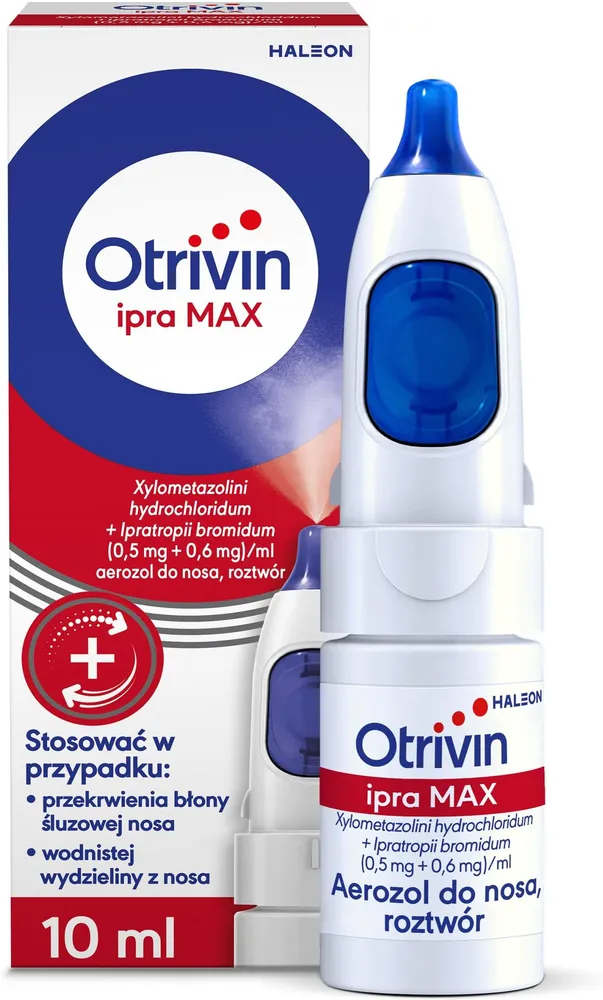
Table of Contents
Patient Information Leaflet
Warning! Keep this leaflet! The packaging information in a foreign language.
Otrivin ipra MAX (Otrivin TOTAL)
(0.5 mg + 0.6 mg)/ml, nasal spray, solution
Xylometazolini hydrochloridum + Ipratropii bromidum
Otrivin ipra MAX and Otrivin TOTAL are different brand names for the same medicine.
Please read this leaflet carefully before using the medicine, as it contains important information for the patient.
This medicine should always be used exactly as described in this patient leaflet or as directed by a doctor or pharmacist.
- Keep this leaflet for future reference.
- If advice or further information is needed, consult a pharmacist.
- If the patient experiences any adverse reactions, including those not listed in this leaflet, inform a doctor or pharmacist. See section 4.
- If there is no improvement after 7 days, or if symptoms worsen, consult a doctor.
Table of contents:
- What Otrivin ipra MAX is and what it is used for
- Important information before using Otrivin ipra MAX
- How to use Otrivin ipra MAX
- Possible side effects
- How to store Otrivin ipra MAX
- Contents of the pack and other information
1. What Otrivin ipra MAX is and what it is used for
Otrivin ipra MAX is a combination medicine containing two different active substances. One of the active substances reduces nasal discharge, while the other reduces nasal mucosal congestion.
Otrivin ipra MAX is used to treat nasal mucosal congestion with watery nasal discharge (runny nose) associated with the common cold.
2. Important information before using Otrivin ipra MAX
When not to use Otrivin ipra MAX
- In children under 18 years of age due to lack of sufficient data on safety and efficacy.
- If the patient is allergic to xylometazoline hydrochloride or ipratropium bromide, or to any of the other ingredients of this medicine (listed in section 6).
- If the patient is allergic to atropine or substances similar to atropine, such as hyoscine or scopolamine.
- If the patient has undergone surgical removal of the pituitary gland via the nasal route.
- If the patient has had brain surgery performed through the nose or oral cavity.
- If the patient has glaucoma (increased pressure in the eye).
- If the patient has very dry nasal mucosa (atrophic rhinitis or rhinitis sicca).
Warnings and precautions
In patients hypersensitive to nasal decongestants, Otrivin ipra MAX may cause insomnia, dizziness, tremor, irregular heartbeat, or elevated blood pressure. If these symptoms occur and are troublesome, consult a doctor.
Before starting treatment with Otrivin ipra MAX, discuss with your doctor or pharmacist if the patient has:
- heart disease (e.g. long QT syndrome)
- high blood pressure
- diabetes
- hyperthyroidism
- difficulty in urinating and/or benign prostatic hyperplasia
- narrow-angle glaucoma
- tendency to nosebleeds
- intestinal obstruction (paralytic ileus)
- cystic fibrosis
- a benign adrenal gland tumour producing large amounts of adrenaline and noradrenaline (pheochromocytoma), or particular sensitivity to adrenaline or noradrenaline.
Immediate-type hypersensitivity reactions (allergic reactions) may occur. Symptoms may include: itchy, red rash with skin inflammation (urticaria), difficulty breathing or speaking, difficulty swallowing due to swelling of the lips, face or throat. These symptoms may occur individually or together as a severe allergic reaction. If this occurs, STOP using Otrivin ipra MAX immediately (see section 4).
Do not use Otrivin ipra MAX for longer than 7 consecutive days. If symptoms persist, consult a doctor. Prolonged or excessive use of the medicine may cause recurrence or worsening of nasal congestion and swelling of the nasal mucosa.
Avoid spraying Otrivin ipra MAX near the eyes. If the medicine gets into the eyes, rinse them thoroughly with cold water. Transient blurred vision, eye irritation, pain, and redness may occur. In such cases, consult a doctor. Narrow-angle glaucoma may also be exacerbated.
Children and adolescents
Use of Otrivin ipra MAX is not recommended in children and adolescents under 18 years of age due to lack of adequate data on safety and efficacy.
Otrivin ipra MAX and other medicines
Inform your doctor or pharmacist about all medicines you are currently taking, have recently taken, or plan to take. Particular attention should be paid to:
- monoamine oxidase inhibitors (used in the treatment of depression). If the patient is currently taking such medicines or has taken them within the last two weeks, a significant increase in blood pressure may occur,
- tricyclic and tetracyclic antidepressants. If the patient is currently taking such medicines or has taken them within the last two weeks, a significant increase in blood pressure may occur,
- medicines used for motion sickness (medicines containing anticholinergic substances),
- medicines used for gastrointestinal disorders (especially those reducing intestinal peristalsis) (medicines containing anticholinergic substances),
- medicines used in respiratory disorders (beta-2 adrenergic receptor agonists), such as asthma or chronic obstructive pulmonary disease (COPD), as they may exacerbate narrow-angle glaucoma in patients with a history of this condition.
If the patient is taking any of the above-mentioned medicines, they should consult a doctor before using Otrivin ipra MAX.
Pregnancy and breastfeeding
Otrivin ipra MAX should not be used during pregnancy unless advised by a doctor.
Otrivin ipra MAX should not be used during breastfeeding unless the doctor decides that the benefits of using the medicine outweigh the potential risks to the infant.
If the patient is pregnant or breastfeeding, suspects she may be pregnant, or is planning to become pregnant, she should consult a doctor or pharmacist before using this medicine.
Driving and using machines
During treatment with Otrivin ipra MAX, visual disturbances (including blurred vision and dilated pupils), dizziness, and fatigue have been reported. If such symptoms occur, avoid driving, operating machinery, or performing other activities where these symptoms could pose a risk to the patient or others.
3. How to use Otrivin ipra MAX
This medicine should always be used exactly as described in this patient leaflet or as advised by your doctor or pharmacist. If in doubt, consult your doctor or pharmacist.
Recommended dose:
Adults: one spray into each nostril, up to 3 times daily, for no longer than 7 days. At least a 6-hour interval should be maintained between doses. Do not exceed 3 applications into each nostril per day.
Do not exceed the recommended dosage. To treat symptoms, use the medicine at the lowest possible frequency and for the shortest duration necessary to achieve the desired effect.
Duration of treatment:
Do not use this medicine for longer than 7 days.
If symptoms improve, it is recommended to discontinue treatment even if it has lasted less than 7 days, in order to minimize the risk of adverse effects.
If there is no improvement after 7 days, or if the patient feels worse, consult a doctor.
If you feel that the effect of Otrivin ipra MAX is too strong or too weak, consult your doctor or pharmacist.
Instructions for use:
Remove the protective cap.
Before first use:
Prime the pump by pressing the dispenser 5 times. After priming, the pump is ready for daily regular use throughout the treatment period.
- Blow your nose.
- Hold the bottle upright. Place your thumb on the dispenser located on the side of the pump.
- Remain in an upright position to prevent dripping. Insert the short tip into the nostril.
- Press the dispenser while gently inhaling through the nose. Repeat steps 2 to 4 when administering the medicine into the other nostril.
- After each use, clean and dry the tip.
- Replace the protective cap until a characteristic click is heard.
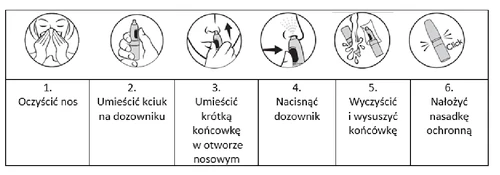
If no spray is released when pressing the dispenser on the side of the pump, or if the medicine has not been used for more than 7 days, re-prime the pump by pressing the dispenser twice.
If an incomplete dose is administered, do not repeat the application.
The medicine container should be used by only one person to avoid possible infections.
Avoid spraying Otrivin ipra MAX into or near the eyes.
The effect of the medicine occurs within 5–15 minutes.
Overdose of Otrivin ipra MAX
If more medicine is taken than recommended, contact your doctor or go to a hospital emergency department for risk assessment. It is advisable to bring the leaflet, bottle, or packaging with you. This is particularly important in the case of children, who are likely more susceptible to adverse effects than adults.
Symptoms of overdose include severe dizziness, excessive sweating, significantly lowered body temperature, headache, slow heart rate, rapid heart rate, breathing disturbances, coma, seizures, arterial hypertension (high blood pressure), followed possibly by hypotension (low blood pressure).
Other symptoms may include dry mouth, visual disturbances, and hallucinations.
Missed dose of Otrivin ipra MAX
Do not use a double dose to make up for a missed dose.
4. Possible adverse reactions
Like all medicines, this medicine can cause adverse reactions, although not everybody will experience them.
You should STOP using the medicine and contact a doctor immediately if any of the following symptoms occur:
- palpitations and accelerated heart rate (occurs in fewer than 1 in 100 people),
- symptoms of an allergic reaction such as difficulty breathing, speaking or swallowing; swelling of the face, lips, tongue or throat; severe itching of the skin with red rash or lumps (frequency unknown, cannot be estimated based on available data),
- disturbances in vision (including blurred vision, worsening of glaucoma or increased eye pressure), seeing rainbow-coloured rings around a source of bright light and (or) eye pain (frequency unknown, cannot be estimated based on available data).
The most commonly occurring adverse reactions are nosebleeds and dryness of the nasal mucosa.
Many of the reported adverse symptoms are also symptoms of the common cold.
Very common adverse reactions (may occur in more than 1 in 10 people):
- Nosebleeds.
Common adverse reactions (may occur in fewer than 1 in 10 people):
- Sensation of discomfort in the nose, nasal mucosal congestion, dryness of the nasal mucosa, nasal pain
- Dryness of the oral mucosa, dryness or irritation of the throat
- Taste disturbances, headache, dizziness, local burning sensation
- Nausea.
Uncommon (may occur in fewer than 1 in 100 people):
- Nasal ulceration, sneezing, sore throat, cough, hoarseness
- Stomach upset
- Altered sense of smell, tremor
- Discomfort, fatigue
- Insomnia
- Eye irritation, dry eyes, eye swelling, eye redness
- Palpitations, increased heart rate
Rare (may occur in fewer than 1 in 1,000 people):
- Rhinitis (runny nose).
Very rare (may occur in fewer than 1 in 10,000 people):
- Reactions to the medicine such as: swelling, rash, itching
- Visual disturbances.
Frequency unknown (cannot be estimated based on available data):
- Urticaria (hives)
- Sensation of discomfort in the nasal area
- Difficulty swallowing
- Sensation of discomfort in the chest, increased thirst
- Sudden spasm of the throat muscles, swelling of the throat
- Irregular heartbeat
- Visual disturbances including blurred vision, dilated pupils, increased intraocular pressure, glaucoma, blurred vision, seeing rainbow-coloured halos around a light source, eye pain
- Difficulty emptying the bladder.
To minimize the risk of adverse reactions, it is recommended to discontinue use of Otrivin ipra MAX as soon as symptoms subside.
Reporting of adverse reactions
If any adverse reactions occur, including any adverse reactions not listed in this leaflet, inform your doctor or pharmacist. Adverse reactions can be reported directly to the Department for Monitoring Adverse Drug Reactions of the Office for Registration of Medicinal Products, Medical Devices and Biocidal Products, Al. Jerozolimskie 181C, 02-222 Warsaw, tel.: +48 22 49 21 301, fax: +48 22 49 21 309, website: https://smz.ezdrowie.gov.pl.
Reporting adverse reactions helps to provide more information on the safety of the medicine.
5. How to store Otrivin ipra MAX
Keep the medicine out of sight and reach of children.
Do not use this medicine after the expiry date stated on the packaging. The expiry date refers to the last day of the stated month. After opening, the medicine remains stable until the end of the expiry period.
Store below 25°C.
Medicines must not be disposed of via the sewage system or household waste. Ask your pharmacist how to dispose of medicines no longer required. Such measures will help protect the environment.
6. Contents of the pack and other information
What Otrivin ipra MAX contains
The active substances in this medicine are xylometazoline hydrochloride and ipratropium bromide.
1 ml of the medicine contains 0.5 mg of xylometazoline hydrochloride and 0.6 mg of ipratropium bromide.
1 dose of the medicine contains 70 micrograms of xylometazoline hydrochloride and 84 micrograms of ipratropium bromide.
The other ingredients of the medicine are: disodium edetate, glycerol 85%, purified water, sodium hydroxide, and hydrochloric acid concentrated (for pH adjustment).
What Otrivin ipra MAX looks like and contents of the pack
Otrivin ipra MAX is a clear solution.
The bottle contains approximately 70 doses of aerosol.
Otrivin ipra MAX is available as 10 ml of nasal solution in a bottle with a metered-dose pump spray, packaged in a cardboard box.
For more detailed information, please contact the responsible party or the parallel importer.
Marketing Authorisation Holder in Latvia, country of export:
Haleon Hungary Kft.
1124 Budapest
Csörsz utca 43
Hungary
Manufacturer:
GlaxoSmithKline Consumer Healthcare GmbH & Co. KG
Barthstraße 4
80339 Munich
Germany
Haleon Germany GmbH
Barthstraße 4
80339 Munich
Germany
Haleon Denmark ApS
Delta Park 37
2665 Vallensbæk Strand
Denmark
Parallel Importer:
InPharm Sp. z o.o.
ul. Strumykowa 28/11
03-138 Warsaw
Poland
Relabelled and/or repackaged by:
InPharm Sp. z o.o. Services sp. k.
ul. Chełmżyńska 249
04-458 Warsaw
Poland
Marketing Authorisation Number in Latvia, country of export: 08-0334
Parallel Import Licence Number: 384/24
This medicine is authorised for sale in the European Economic Area and in the United Kingdom (Northern Ireland) under the following names:
Austria Otrivin Duo 0.5 mg/ml + 0.6 mg/ml Nasenspray, Lösung
Belgium Otrivine Duo 0.5mg/ml + 0.6mg/ml solution pour pulvérisation nasale
Cyprus Otrivin Advance (0.5mg/ml + 0.6mg/ml) nasal spray solution
Czech Republic Otrivin Rhinostop
Denmark Otrivin Comp næsespray, opløsning
Estonia Otrivin Total
Greece Otrivin Advance 0.5mg/ml + 0.6mg/ml Ρινικό εκνέφωμα, διάλυμα
Spain Rhinovín Duo 0.5 mg/ml + 0.6 mg/ml solución para pulverización nasal
Finland Otrivin Comp 0.5mg/ml + 0.6mg/ml nenäsumute, liuos
Hungary Otrivin Komplex 0.5mg/ml + 0.6 mg/ml oldatos orrspray
Ireland Otrivine Extra Dual Relief 0.5mg/ml + 0.6mg/ml Nasal Spray
Iceland Otrivin Comp 0.5mg/ml + 0.6mg/ml nefúði lausn
Italy RINAZINA DOPPIA AZIONE 0.5 mg/ml + 0.6 mg/ml spray nasale, soluzione
Lithuania OtriDuo 0.5 mg/0.6 mg/ml nosies purškalas, tirpalas
Luxembourg Otrivine Duo 0.5mg/ml + 0.6mg/ml solution pour pulvérisation nasale
Latvia Otrivin Total 0.5 mg/ml + 0.6 mg/ml deguna aerosols, šķīdums
Malta Otrivine Extra Dual Relief 0.5mg/ml + 0.6mg/ml Nasal Spray
Netherlands Otrivin Duo Xylometazoline hydrochloride & Ipratropium bromide, 0.5/0.6 mg/ml, neusspray, oplossing
Norway Otrivin Comp 0.5mg/ml + 0.6mg/ml nesespray, oppløsning
Poland Otrivin ipra MAX
Portugal Vibrocil ActilongDuo 0.5mg/ml + 0.6mg/ml soluçao para pulverizaçao nasal
Romania Vibrocil Duo 0.5mg/ml + 0.6mg/ml spray nazal, solutie
Sweden Otrivin Comp 0.5mg/ml + 0.6 mg/ml nässpray lösning
Slovenia Otrivin Duo 0.5 mg/0.6 mg v 1 ml pršilo za nos, raztopina
Slovakia Otrivin Complete
United Kingdom (Northern Ireland) Otrivine Extra Dual Relief 0.5mg/ml + 0.6mg/ml Nasal Spray