Ostolek
Poland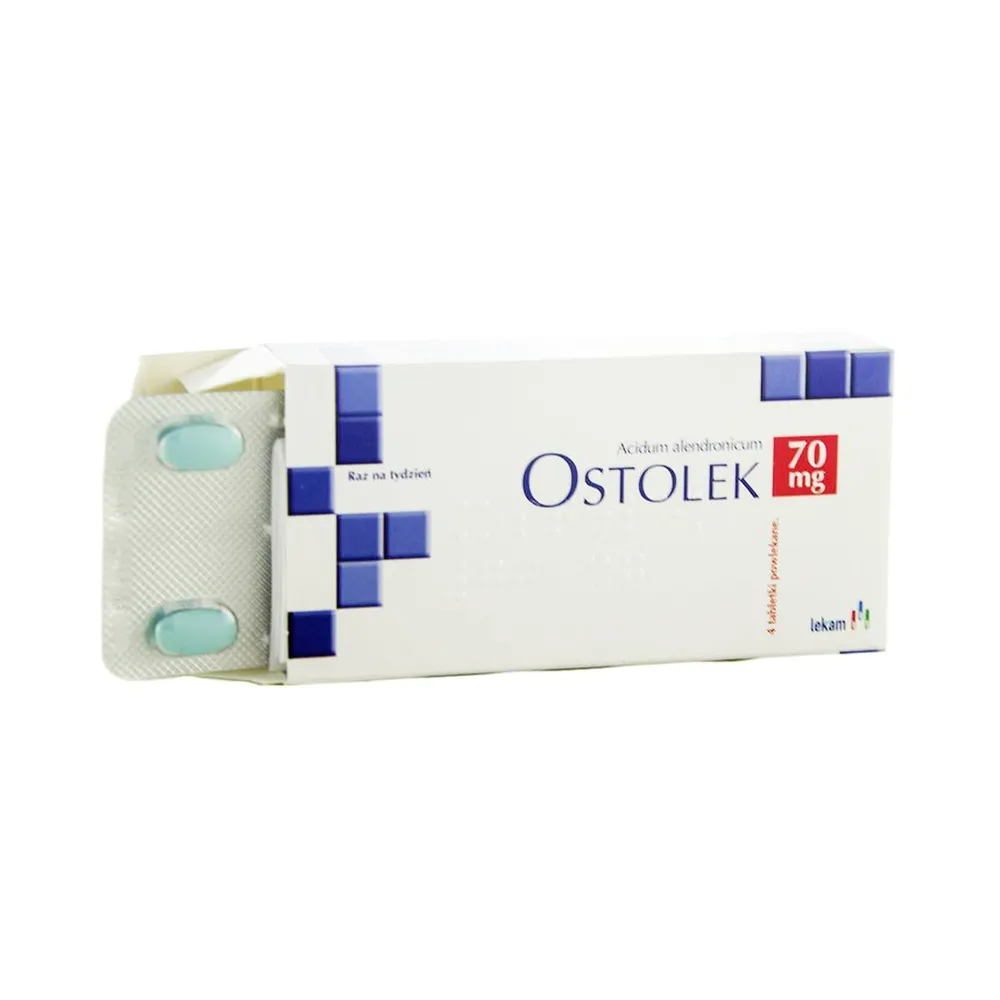
Table of Contents
OSTOLEK, 70 mg, film-coated tablets
Package leaflet: Information for the patient
Ostolek, 70 mg, film-coated tablets
(Alendronic acid)
[logo of the marketing authorisation holder]
Please read all of this leaflet carefully before you start taking this medicine, because it contains important information for you.
- Keep this leaflet. You may need to read it again.
- If you have any further questions, ask your doctor or pharmacist.
- This medicine has been prescribed for you only. Do not pass it on to others. It may harm someone else even if their symptoms are the same as yours.
- If you experience any side effects, including any not listed in this leaflet, tell your doctor or pharmacist. See section 4.
Contents of the leaflet:
- What Ostolek is and what it is used for
- What you need to know before you take Ostolek
- How to take Ostolek
- Possible side effects
- How to store Ostolek
- Contents of the pack and other information
1. What Ostolek is and what it is used for
What Ostolek is
Ostolek is a film-coated tablet containing the active substance alendronic acid (commonly known as alendronate). It belongs to a group of non-hormonal medicines called bisphosphonates. It helps prevent bone mass loss in postmenopausal women and supports bone rebuilding.
What Ostolek is used for
Ostolek is used in the treatment of osteoporosis in postmenopausal women to reduce the risk of vertebral and hip fractures.
Ostolek reduces the risk of spinal and hip fractures in women and spinal fractures in men.
What is osteoporosis?
Osteoporosis is a disease characterized by weakened bones: bones become thinner. It is common in women after menopause. During menopause, the ovaries reduce production of the female hormone estrogen, which plays an important role in maintaining healthy bone function. As a result, bone density decreases and bones become weaker. The earlier menopause occurs in a woman, the higher the risk of osteoporosis.
Osteoporosis begins without symptoms. If left untreated, it may lead to fractures. Although fractures usually cause severe pain, spinal fractures may not cause pain, which means they may go unnoticed until a reduction in height occurs. Fractures typically occur in the hip, spine, or wrist bones and may cause not only pain but also lead to problems such as stooped posture, kyphosis ("dowager's hump"), and loss of mobility.
How can osteoporosis be treated?
While being treated with Ostolek, your doctor may recommend lifestyle changes beneficial for your health, such as:
- Stopping smoking: smoking can contribute to increased bone loss and thus increase the risk of fractures.
- Physical exercise: bones, like muscles, need appropriate exercise to stay strong and healthy. Before starting any exercise programme, consult your doctor.
- Proper diet: your doctor may advise on dietary habits and whether you need to supplement your diet with certain nutrients (especially calcium and vitamin D).
2. Important information before using Ostolek
When not to use Ostolek
- if the patient is allergic (hypersensitive) to alendronic acid or any of the other ingredients of this medicine (listed in section 6),
- if the patient has an oesophageal disorder (such as oesophageal stricture, difficulty in swallowing),
- if the patient is unable to maintain an upright position (standing or sitting) for at least 30 minutes,
- if the patient has low blood calcium levels.
You should contact your doctor, even if any of the warnings below relate to conditions that occurred in the past.
Warnings and precautions
Before starting treatment with Ostolek, discuss this with your doctor or pharmacist.
It is important to inform your doctor:
- if you have or have had kidney problems,
- if you have indigestion,
- if the patient has been diagnosed with Barrett's oesophagus (a condition involving changes in the cells lining the lower part of the oesophagus),
- if cancer has been diagnosed,
- if the patient has been informed of having low blood calcium levels,
- if the patient is undergoing chemotherapy or radiotherapy,
- if the patient is taking angiogenesis inhibitors (such as bevacizumab or thalidomide),
- if the patient is taking glucocorticoids,
- if the patient has poor dental health, gum disease, planned tooth extraction, or does not receive routine dental care,
- if the patient smokes or has smoked (as this may increase the risk of dental problems).
Before starting treatment with Ostolek, it may be advisable to schedule a dental check-up.
During treatment with Ostolek, maintaining good oral hygiene is important. During treatment, regular dental check-ups should be attended. You should also consult your doctor or dentist if any problems related to the mouth or teeth occur, such as pain, swelling, or loose teeth.
Irritation, inflammation, or ulceration of the oesophagus (the tube connecting the mouth to the stomach) may occur, often accompanied by symptoms such as chest pain, heartburn, difficulty swallowing, or pain when swallowing, especially if the patient does not drink a full glass of water and (or) lies down within 30 minutes after taking Ostolek. These adverse effects may worsen if the patient continues taking Ostolek after these symptoms appear.
Children and adolescents
Ostolek must not be used in children and adolescents under 18 years of age.
Ostolek and other medicines
Tell your doctor or pharmacist about all medicines the patient is currently taking, has recently taken, or plans to take.
Calcium supplements, antacids, and certain oral medicines may reduce the absorption of Ostolek if taken at the same time. Therefore, it is important to follow the instructions given in section 3, "How to take Ostolek".
Some medicines used to treat rheumatic diseases or chronic pain, called non-steroidal anti-inflammatory drugs (NSAIDs), including acetylsalicylic acid and ibuprofen, may cause gastrointestinal problems. Therefore, caution should be exercised when these medicines are taken together with Ostolek.
Ostolek with food and drink
Food and beverages (including mineral water) taken at the same time may reduce the effectiveness of Ostolek. Therefore, it is essential to strictly follow the instructions provided in section 3, "How to take Ostolek".
Pregnancy and breastfeeding
Before taking any medicine, consult your doctor.
Ostolek must not be used in pregnant women.
Ostolek must not be used in women who are breastfeeding.
Driving and using machines
Ostolek is unlikely to affect the ability to drive or operate machinery.
However, some of the reported adverse reactions after taking Ostolek may affect the ability to drive and operate machinery. Individual responses to Ostolek may vary (see section 4).
Important information about certain ingredients of Ostolek
Alendronate has a strong local irritant effect and may damage the mucosa of the upper gastrointestinal tract. To reduce the risk of such complications, Ostolek has a special protective coating. This coating prevents direct contact of the active substance with the mucosa of the oral cavity, throat, and oesophagus. At the same time, the protective coating dissolves quickly in the stomach – thus it does not delay tablet disintegration or release of the active substance.
Ostolek contains lactose. If the patient has previously been diagnosed with an intolerance to certain sugars, the patient should consult their doctor before taking this medicine.
3. How to use Ostolek
This medicine should always be taken exactly as prescribed by your doctor. If in doubt, consult your
doctor or pharmacist.
Take one 70 mg coated tablet once weekly.
To fully benefit from the therapeutic effect of Ostolek, it is essential to strictly follow the
instructions below.
It is of crucial importance to adhere to the instructions given in points 2), 3), 4), and 5). These
guidelines help ensure the medicine reaches the stomach quickly and reduce the risk of
esophageal irritation.
Instructions for taking Ostolek
- Choose one convenient day of the week. Each week, on the chosen day, take one tablet of Ostolek.
- After getting up in the morning and before eating, drinking anything, or taking any other
medication, swallow the Ostolek tablet with a full glass of water (not less than 200 ml).
Do not take the tablet with:
- mineral water (still or sparkling);
- coffee or tea;
- fruit juices or milk.
Do not chew, crush, or suck the Ostolek tablet to avoid releasing the medicine in the mouth.
3) Do not lie down – remain in an upright position (sitting, standing, or walking) for at least 30 minutes
after swallowing the tablet. Do not lie down until after you have eaten your first meal of the day.
4) Do not take Ostolek while lying down; do not take it immediately before going to bed or before getting up from bed.
5) If you experience difficulty or pain when swallowing, chest pain, or develop or worsen heartburn, stop taking Ostolek and contact your doctor immediately.
6) At least 30 minutes must pass between swallowing the Ostolek tablet and eating the first meal,
drinking any liquid, or taking any other medication, including antacids, calcium supplements, and vitamins.
Ostolek works effectively only on an empty stomach.
Taking more Ostolek than recommended
If you accidentally take more tablets than prescribed, drink a full glass of milk and contact your doctor immediately. Do not induce vomiting and do not lie down.
Missing a dose of Ostolek
If you miss a dose, take one tablet the following morning. Do not take two tablets on the same day. Resume taking one tablet once weekly according to your regular schedule.
Stopping Ostolek
It is very important to take Ostolek for the duration prescribed by your doctor. The optimal duration of treatment with Ostolek is unknown; therefore, you should periodically discuss with your doctor whether continued use of Ostolek is still necessary.
If you have any further questions about using this medicine, consult your doctor or pharmacist.
4. Possible adverse reactions
Like any medicine, this medicine may cause adverse reactions, although not everyone experiences them.
You should contact your doctor immediately if any of the following adverse reactions occur, as they may be serious and require immediate medical attention:
Common (may occur in up to 1 in 10 people):
- heartburn; difficulty swallowing; pain when swallowing; oesophageal ulceration causing chest pain.
Rare (may occur in up to 1 in 1000 people):
- allergic reactions such as urticaria; swelling of the face, lips, tongue and (or) throat, possibly causing difficulty breathing and swallowing; severe skin reactions.
- jaw problems associated with delayed healing and local infection, usually following tooth extraction.
- atypical femoral fractures, particularly in patients receiving long-term treatment for osteoporosis. You should consult your doctor if you experience pain, weakness or discomfort in the hip, thigh or groin area, as this may be an early sign indicating a possible femoral fracture.
- severe bone, muscle and (or) joint pain.
Other adverse reactions
Very common (may occur in more than 1 in 10 people):
- severe bone, muscle and (or) joint pain.
Common (may occur in up to 1 in 10 people):
- joint swelling,
- abdominal pain, stomach discomfort or belching after meals; constipation; flatulence; feeling of fullness and bloating after eating; diarrhoea,
- hair loss, itching,
- headache, dizziness,
- fatigue, swelling of the upper or lower limbs.
Uncommon (may occur in up to 1 in 100 people):
- nausea, vomiting;
- irritation or inflammation of the oesophagus or stomach,
- black or tarry stools,
- visual disturbances, eye pain and redness,
- skin rash, skin redness,
- transient flu-like symptoms such as muscle pain, general malaise, sometimes with fever at the beginning of treatment,
- taste disturbances.
Rare (may occur in up to 1 in 1000 people):
- symptoms of decreased blood calcium levels, including muscle cramps and (or) tingling sensations in fingers or around the mouth,
- gastric or peptic ulcers (sometimes severe or with bleeding),
- oesophageal stricture,
- photosensitivity rash,
- oral ulceration, if tablets are chewed or crushed.
Reporting of adverse reactions
If any adverse symptoms occur, including any adverse symptoms not listed in this leaflet, inform your doctor or pharmacist. Adverse reactions can be reported directly to the Department for Monitoring Adverse Drug Reactions of the Office for Registration of Medicinal Products, Medical Devices and Biocidal Products:
Al. Jerozolimskie 181C,
02-222 Warsaw,
Phone: 22 49-21-301,
Fax: 22 49-21-309,
Website: https://smz.ezdrowie.gov.pl
Adverse reactions can also be reported to the marketing authorisation holder.
Reporting adverse reactions helps provide more information on the safety of this medicine.
5. How to store Ostolek
Store below 25°C.
Keep out of sight and reach of children.
Do not use this medicine after the expiry date stated on the packaging. The expiry date refers to the last day of the stated month.
Medicines should not be disposed of via wastewater or household waste. Ask your pharmacist how to dispose of medicines no longer in use. This will help protect the environment.
6. Contents of the packaging and other information
What Ostolek contains
The active substance is sodium alendronate trihydrate. Each tablet contains 70 mg of alendronic acid in the form of sodium alendronate trihydrate.
Other components are:
Tablet core: microcrystalline cellulose, monohydrate lactose, magnesium stearate, crospovidone, sodium hydrogen carbonate,
Coating: talc, polyvinyl alcohol, hydrolyzed, macrogol 3000, titanium dioxide, indigo carmine, quinoline yellow lake.
What Ostolek looks like and contents of the pack
Ostolek is available as blue, coated tablets, elongated in shape, without spots or damage.
The tablets are packed in blisters made of PVC/PVDC/Aluminum or OPA/Aluminum/PVC/Aluminum, which are placed in a cardboard box. The unit packaging contains 4 or 12 coated tablets.
Marketing Authorization Holder and Manufacturer
LEK-AM Sp. z o.o. Pharmaceutical Company
Ostrzykowizna 14A
05-170 Zakroczym
Phone (+48) (22) 785 27 60
Fax (+48) (22) 785 27 60 ext. 106