Osteogenon
Poland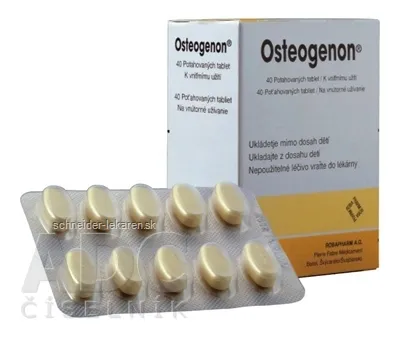
Table of Contents
Package leaflet: Information for the patient
Osteogenon, 830 mg, coated tablets
ossein-hydroxyapatite complex
Please read all of this leaflet carefully before taking this medicine, because it contains
important information for the patient.
- Keep this leaflet, so that you can read it again if necessary.
- If you have any further questions, please consult your doctor or pharmacist.
- This medicine has been prescribed for a specific individual. Do not pass it on to others. It may harm them even if their symptoms are the same.
- If you experience any adverse reactions, including any not listed in this leaflet, inform your doctor or pharmacist. See section 4.
Contents of the leaflet
- What Osteogenon is and what it is used for
- Important information before taking Osteogenon
- How to take Osteogenon
- Possible side effects
- How to store Osteogenon
- Contents of the package and other information
1. What Osteogenon is and what it is used for
The active substance in Osteogenon is ossein-hydroxyapatite complex.
Osteogenon belongs to the group of medicines classified under "alimentary tract and metabolism".
It is used in osteoporosis of various origins (in elderly individuals, post-menopausal osteoporosis, steroid-induced osteoporosis), in regulating calcium-phosphate balance during pregnancy and breastfeeding, and as an adjunctive treatment in bone fractures.
2. Important information before using Osteogenon
When not to use Osteogenon
if the patient is allergic to the active substances or to any of the other ingredients of this
medicine (listed in section 6),
if the patient has hypercalcemia, hypercalciuria, calcium kidney stones, or tissue calcification,
if the patient has severe renal insufficiency,
if the patient is on dialysis,
in children under 6 years of age.
Warnings and precautions
Before starting treatment with Osteogenon, discuss this with your doctor or pharmacist.
Contact your doctor if:
- the patient is taking vitamin D at the same time; the doctor will regularly monitor calcium levels in blood and urine,
- the patient is taking the medicine for a long time and/or has impaired kidney function, because persistent high calcium levels in blood (hypercalcemia) may lead to calcium deposits in soft tissues (such as the kidneys) and irreversible renal failure (kidneys unable to function properly),
- the patient is simultaneously taking high doses of calcium and products or foods containing alkaline substances (such as acid-neutralizing antacids (e.g. sodium bicarbonate)), as there is a risk of developing the so-called milk-alkali syndrome (characterized by excessive calcium levels in blood (hypercalcemia), increased blood pH (alkalosis), and impaired kidney function),
- the patient is over 65 years of age and is taking thiazide diuretics (medicines used to treat arterial hypertension) or cardiac glycosides (medicines used to treat cardiac arrhythmias).
The doctor will regularly monitor calcium and phosphate levels in the patient's blood and urine. If
these levels are elevated, the doctor will adjust the dose of Osteogenon accordingly.
If the patient has previously suffered from kidney stones, preventive dietary measures should be followed, the dosage of Osteogenon should be observed, dietary calcium intake adjusted, and vitamin D supplementation avoided. In case of doubt, consult your doctor.
Children and adolescents
Do not use this medicine in children under 6 years of age.
Osteogenon with other medicines
Tell your doctor or pharmacist about all medicines the patient is currently taking or has recently taken, and any medicines the patient plans to take:
- thiazide diuretics (used to treat arterial hypertension) – because they may increase calcium levels in blood,
- cardiac glycosides (medicines used to treat cardiac arrhythmias) – because they may contribute to the occurrence of toxic adverse effects,
- certain antibiotics (tetracyclines), iron- or zinc-containing medicines, bisphosphonates (medicines used to treat bone weakening), quinolones, strontium (a medicine used to treat severe osteoporosis), thyroid hormones (medicines used to treat thyroid disorders), or estramustine (a medicine used to treat certain cancers), because Osteogenon may reduce the absorption of these medicines. A minimum interval of 2 hours should be maintained between administration of these medicines and Osteogenon,
- glucocorticoids (medicines with anti-allergic and anti-inflammatory effects) – because they may reduce calcium absorption,
- integrase inhibitors (dolutegravir, bictegravir, elvitegravir – medicines used to treat HIV infection), because Osteogenon may reduce their gastrointestinal absorption. Calcium may be administered simultaneously with integrase inhibitors if taken with food. If an integrase inhibitor is taken on an empty stomach, it should be administered 2 hours before or 6 hours after calcium salt administration,
- fluoride (used to prevent dental caries) – as a precaution, maintain a minimum interval of at least 2 hours between administration of Osteogenon and fluoride.
Pregnancy, breastfeeding, and fertility
If the patient is pregnant or breastfeeding, suspects she may be pregnant, or is planning to have a
child, she should consult her doctor or pharmacist before using this medicine.
Osteogenon may be used during pregnancy if clinically indicated.
Osteogenon may be used during breastfeeding.
Driving and operating machinery
There are no available data on the effects of Osteogenon on the ability to drive vehicles
and operate machinery.
3. How to use Osteogenon
This medicine should always be used as directed by the physician. In case of doubts, consult your
doctor or pharmacist.
Dosage
Osteoporosis: 2 to 4 tablets twice daily
Other indications: 1 or 2 tablets per day
Method of administration
The tablets should be swallowed with a small amount of water; it is best to take them with meals.
This medicine is intended for adults.
Use of a higher than recommended dose of Osteogenon
Excessive doses of Osteogenon may cause the following symptoms: excessive thirst,
increased urine production, nausea, vomiting, dehydration, high blood pressure,
circulatory disturbances, constipation, loss of appetite, irregular or abnormal heart function,
weakness, increased calcium concentration in the kidneys and kidney stones, bone pain or psychiatric
disturbances.
Severe hypercalcemia (excessively high calcium levels in the blood) may lead to coma and death. If
the patient suspects calcium overdose, they should immediately contact their doctor or
pharmacist.
Furthermore, prolonged high calcium levels in the blood may lead to calcium deposits in soft
tissues (such as the kidneys) and irreversible kidney failure (the kidneys' inability to function properly).
Consult your doctor or pharmacist.
Missed dose of Osteogenon
Do not take a double dose to make up for a missed dose.
If you have any further doubts regarding the use of this medicine, consult your doctor or pharmacist.
4. Possible adverse reactions
Like all medicines, this medicine can cause adverse reactions, although not everyone will experience them.
The adverse reactions listed below occur with unknown frequency (frequency cannot be determined
from available data):
- increased calcium levels in blood and/or urine (hypercalcaemia and hypercalciuria) in case of long-term treatment and/or administration of high doses of the medicine;
- abdominal pain, constipation, nausea, vomiting;
- skin itching (pruritus), rash.
Reporting of adverse reactions
If any adverse reactions occur, including any adverse reactions not listed in this leaflet, inform your doctor or pharmacist. Adverse reactions can be reported directly to the Department of Monitoring Adverse Drug Reactions of the Office for Registration of Medicinal Products, Medical Devices and Biocidal Products, Al. Jerozolimskie 181C, 02-222 Warsaw, phone: 22 49-21-301, fax: 22 49-21-309, website: https://smz.ezdrowie.gov.pl
Adverse reactions can also be reported to the responsible entity.
Reporting adverse reactions helps to provide more information on the safety of the medicine.
5. How to store the medicine Osteogenon
Keep the medicine out of the sight and reach of children.
Store below 25 °C.
Do not use the medicine after the expiry date stated on the packaging.
The expiry date refers to the last day of the stated month.
Medicines must not be disposed of via wastewater or household waste. Ask your pharmacist how to dispose of medicines no longer required. Such measures help protect the environment.
6. Contents of the pack and other information
What Osteogenon contains
- The active substance is ossein-hydroxyapatite complex (830 mg), including 444 mg hydroxyapatite, corresponding to 178 mg or 4.44 mmol of calcium in one coated tablet.
- Other ingredients are: core: potato starch, microcrystalline cellulose, magnesium stearate, colloidal anhydrous silica; coating: hypromellose, talc, macrogol 6000, iron oxide yellow (E 172), titanium dioxide (E 171).
What Osteogenon looks like and contents of the pack
The coated tablets are uniformly light yellow, elongated, and biconvex.
Osteogenon is available in packs containing 40 coated tablets.
Marketing Authorisation Holder
Pierre Fabre Medicament Polska Sp. z o.o.
ul. Belwederska 20/22
00-762 Warsaw
Poland
Manufacturer
Pierre Fabre Medicament Production site Progipharm
Rue du Lycée
45500 Gien
France
For further information, please contact the local representative of the Marketing Authorisation Holder:
Pierre Fabre Medicament Polska Sp. z o.o.
ul. Belwederska 20/22
00-762 Warsaw
Poland
Tel.: 22 559 63 00