Osagrand
Poland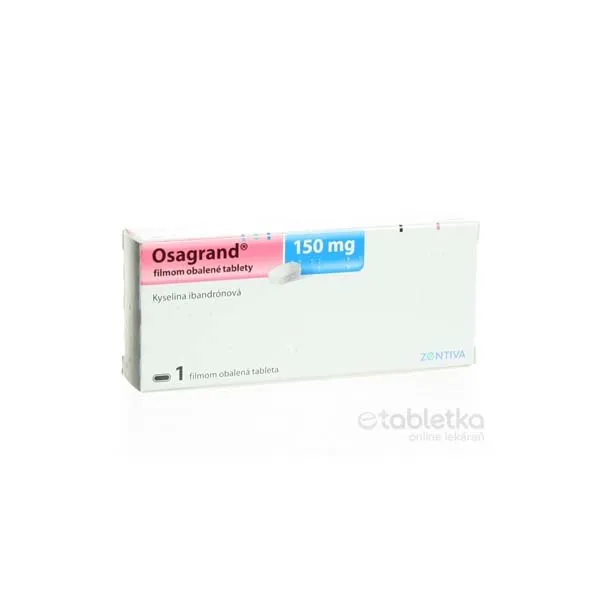
Table of Contents
Package leaflet: Information for the patient
Osagrand, 150 mg, film-coated tablets
Acidum ibandronicum
Please read this leaflet carefully before taking this medicine, as it contains
important information for you.
- Keep this leaflet as you may need to read it again.
- If you have any further questions, please ask your doctor, pharmacist or nurse.
- This medicine has been prescribed for you personally. Do not pass it on to others. It may harm them, even if their symptoms are the same as yours.
- If you experience any adverse effects, including any not listed in this leaflet, tell your doctor, pharmacist or nurse. See section 4.
Leaflet contents
- What Osagrand is and what it is used for
- Important information before taking Osagrand
- How to take Osagrand
- Possible side effects
- How to store Osagrand
- Contents of the pack and other information
1. What Osagrand is and what it is used for
Osagrand belongs to a group of medicines called bisphosphonates. It contains the active substance – ibandronic acid.
Osagrand can reverse bone tissue loss by inhibiting bone loss and increasing bone mass in most women taking this medicine, even if they are not able to notice or feel this difference.
Osagrand may help reduce the likelihood of bone fractures.
Reduction in fracture rate has been demonstrated for vertebral fractures, but not for fractures of the femoral neck.
Osagrand has been prescribed for the treatment of postmenopausal osteoporosis due to an increased risk of fractures. Osteoporosis is a disease characterized by reduced bone density and weakened bones, which commonly occurs in women after menopause. During menopause, the ovaries stop producing the female hormone estrogen, which plays a key role in maintaining normal bone structure.
The earlier menopause occurs in a woman, the greater her risk of osteoporosis-related fractures. Other factors that may increase the risk of fractures include:
- inadequate intake of calcium and vitamin D in the diet;
- smoking or excessive alcohol consumption;
- lack of physical activity (walking) or other weight-bearing exercises;
- family history of osteoporosis.
A healthy lifestyle will also help you achieve the maximum benefit from treatment. This means:
- following a balanced diet rich in calcium and vitamin D,
- walking or engaging in other weight-bearing exercises,
- not smoking and limiting excessive alcohol consumption.
2. Important information before using Osagrand
When not to use Osagrand
- If the patient is allergic to ibandronic acid or any of the other ingredients of this medicine (listed in section 6).
- If the patient has problems with the oesophagus, such as narrowing of the oesophagus or difficulty swallowing.
- If the patient cannot remain standing or sitting in an upright position for at least one hour (60 minutes).
- If the patient currently has or has previously had low levels of calcium in the blood. In such cases, consult a doctor.
Warnings and precautions
A rare adverse effect called osteonecrosis of the jaw and (or) mandible (damage to the jaw and (or) mandible bones) has been reported very rarely following the marketing of Osagrand in patients treated with this medicine for osteoporosis. Osteonecrosis of the jaw and (or) mandible may also occur after stopping treatment.
It is important to take preventive measures against the development of osteonecrosis of the jaw and (or) mandible, as it may be a painful and difficult-to-treat condition. To reduce the risk of developing osteonecrosis of the jaw and (or) mandible, appropriate precautions should be taken.
In patients receiving long-term ibandronate treatment, atypical fractures of long bones, such as the forearm (ulna) and tibia, have also been reported. These fractures occur following minimal trauma or even without trauma, and some patients may experience pain at the fracture site before a complete fracture occurs.
Before starting treatment, the patient should inform the doctor or nurse (healthcare professional):
- if she has any oral or dental conditions, such as poor dental health, gum disease, or planned tooth extraction;
- if she does not receive routine dental care or has not had regular dental check-ups for a long time;
- if she smokes (this may increase the risk of dental problems);
- if she has previously been treated with a bisphosphonate (used in the treatment or prevention of bone diseases);
- if she is taking corticosteroids (e.g. prednisolone or dexamethasone);
- if she has a diagnosis of cancer.
The doctor may recommend a dental examination before starting Osagrand treatment.
During treatment, proper oral hygiene (including regular tooth brushing) should be maintained, and routine dental check-ups should be attended. If dentures are worn, they should be properly fitted. During dental treatment or prior to dental procedures (e.g. tooth extraction), the patient should inform her treating doctor and inform the dentist that she is taking Osagrand.
If any symptoms occur in the mouth or teeth, such as loose teeth, pain or swelling, non-healing ulcers or discharge, the patient should immediately contact her treating doctor and dentist, as these may be signs of osteonecrosis of the jaw and (or) mandible.
Special caution should be exercised in certain patients when using Osagrand. Before starting Osagrand, discuss with your doctor:
- If there are any disturbances in mineral metabolism (such as vitamin D deficiency).
- If the kidneys are not functioning properly.
- If there are any problems with swallowing or digestion.
After taking Osagrand, irritation, inflammation or ulceration of the oesophagus may occur, often accompanied by symptoms such as acute chest pain, severe pain after swallowing food or drink, and/or severe nausea or vomiting, particularly if the patient did not drink a full glass of plain water and/or lay down within one hour after taking Osagrand. If such symptoms occur, stop taking Osagrand immediately and contact a doctor without delay (see section 3).
Children and adolescents
Do not use Osagrand in children and adolescents under 18 years of age.
Osagrand and other medicines
Tell your doctor or pharmacist about any other medicines the patient is currently taking, has recently taken, or plans to take, especially:
- Calcium, magnesium, iron or aluminium-containing supplements, as they may affect the action of Osagrand.
- Acetylsalicylic acid and other non-steroidal anti-inflammatory drugs (NSAIDs) (including: ibuprofen, sodium diclofenac and naproxen), which may irritate the stomach and intestines. Osagrand may have a similar effect. Therefore, particular caution is required when taking painkillers or anti-inflammatory medicines during Osagrand treatment.
After swallowing the Osagrand tablet taken once a month, do not take any other medicines for 1 hour, including antacids, calcium supplements or vitamins.
Osagrand with food, drink and alcohol
Do not take Osagrand with food. Osagrand taken with food is less effective.
Water may be consumed, but no other drinks should be taken. After taking the medicine, wait 1 hour before eating food or drinking any other beverages (see section 3 "How to take Osagrand").
Pregnancy, breastfeeding and fertility
Osagrand is intended for postmenopausal women and must not be used by women of childbearing age.
Do not use Osagrand if the patient is pregnant or breastfeeding.
Consult a doctor or pharmacist before taking this medicine.
Driving and using machines
Driving and operating machinery are permitted, as Osagrand is considered to have no or negligible influence on the ability to drive and operate machinery.
Osagrand contains lactose.
If the patient has previously been diagnosed with an intolerance to certain sugars, she should consult her doctor before taking this medicine.
3. How to take Osagrand
This medicine should always be taken exactly as directed by the doctor. If in doubt, consult your doctor or pharmacist.
The usual dose of Osagrand is one tablet once a month.
Taking the tablet once a month
It is important to carefully follow the instructions below. These instructions are designed to ensure that the Osagrand tablet reaches the stomach quickly, thereby reducing the likelihood of causing irritation.
- Take one Osagrand 150 mg tablet once a month.
- Choose a specific day of the month that will be easy to remember. The day for taking the Osagrand tablet may be the same date each month (e.g., the first of every month) or the same day of the week (e.g., the first Sunday of every month). Choose a day that best fits the patient's routine.
- The Osagrand tablet should be taken at least 6 hours after consuming any food or drink, except water.
- The Osagrand tablet should be taken:
- in the morning after getting up from bed, and
- before eating or drinking anything ("on an empty stomach").
- Swallow the tablet whole with a full glass of water (at least 180 ml). Do not take the tablet with water high in calcium, fruit juice, or any other beverage. If there is concern that tap water may be high in calcium (so-called hard water), it is recommended to use bottled water low in mineral salts.
- Swallow the tablet whole – do not chew, crush, or allow it to dissolve in the mouth.
- For the next hour (60 minutes) after taking the tablet:
- do not lie down; if an upright position (standing or sitting) is not maintained, part of the medicine may flow back into the oesophagus,
- do not eat anything,
- do not drink anything (except water, if needed),
- do not take any other medicines.
- After one hour has passed, you may take your first meal and drink of the day. After eating, you may lie down and take other medicines, if necessary.
Continuation of Osagrand treatment
It is important to take Osagrand every month for as long as your doctor recommends.
The need for continuing treatment with Osagrand should be reviewed with your doctor after 5 years of use.
Taking more than the recommended dose of Osagrand
If you accidentally take more than one tablet, drink a full glass of milk
and contact your doctor immediately.
Do not induce vomiting and do not lie down – this may cause irritation of the oesophagus by Osagrand.
Missing a dose of Osagrand
- If you forget to take the tablet in the morning on the scheduled day, do not take the tablet later on the same day. In this case, check when the next scheduled dose is due:
- If the next scheduled dose is due in only 1 to 7 days…
Never take two Osagrand tablets within the same week. Wait until the next scheduled dose day, take the tablet as planned, and then resume taking tablets on the previously scheduled dates marked on the calendar.
- If you forgot to take the tablet on the scheduled day and the next scheduled dose is due more than 7 days later… Take one tablet in the morning on the next day (after the day when you remember the missed dose), then return to taking tablets on the previously scheduled dates marked on the calendar.
4. Possible adverse reactions
Like any medicine, this medicine can cause adverse reactions, although not everyone experiences them.
You should immediately inform a nurse or doctor if any of the following serious adverse reactions occur,
as immediate medical assistance may be required:
Not common (may occur in fewer than 1 in 100 people):
- severe chest pain, severe pain after swallowing food or drink, severe nausea or vomiting, difficulty swallowing. A severe inflammatory condition of the oesophagus may occur, as well as ulceration or narrowing of the oesophagus.
- symptoms of low blood calcium levels (hypocalcaemia), including muscle spasms or cramps and (or) tingling sensations in fingers or around the mouth.
Rare (may occur in fewer than 1 in 1,000 people):
- itching, swelling of the face, lips, tongue and throat, with difficulty breathing.
- persistent eye pain and inflammation.
- new pain, weakness or discomfort in the groin, hip or thigh area. These may be early signs indicating a possible risk of atypical femoral fractures.
Very rare (may occur in fewer than 1 in 10,000 people):
- pain or ulceration in the mouth or jaw. Early signs of serious jaw problems may occur (osteonecrosis [dead bone tissue] of the jaw).
- If the patient experiences ear pain, ear discharge and (or) ear infection, this should be reported to the doctor. These may be symptoms of damage to the bone tissue in the ear.
- serious, potentially life-threatening allergic reactions.
- severe skin reactions.
Other possible adverse reactions
Common (may occur in fewer than 1 in 10 people):
- headache
- heartburn, discomfort during swallowing, stomach pain (which may be due to inflammation of the stomach) or abdominal pain, indigestion, nausea, diarrhoea (loose stools).
- muscle cramps, joint and limb stiffness.
- flu-like symptoms including fever, chills and shivering, discomfort, fatigue, bone pain, and aching muscles and joints. Speak to a nurse or doctor if any of these symptoms become troublesome or last longer than a few days.
- rash.
Not common (may occur in fewer than 1 in 100 people):
- dizziness.
- bloating (passing gas, feeling bloated).
- back pain.
- feeling tired and exhausted.
- asthma attacks.
Rare (may occur in fewer than 1 in 1,000 people):
- duodenitis (inflammation of the first part of the small intestine) causing abdominal pain.
- urticaria.
Reporting of adverse reactions
If any adverse reactions occur, including any not listed in this leaflet, inform your doctor or pharmacist. Adverse reactions can be reported directly to the Department of Monitoring Adverse Drug Reactions at the Office for Registration of Medicinal Products, Medical Devices and Biocidal Products, Al. Jerozolimskie 181C, 02-222 Warsaw, Poland.
Tel.: +48 22 49 21 301, fax: +48 22 49 21 309, website: https://smz.ezdrowie.gov.pl.
Adverse reactions can also be reported to the responsible entity or its representative in Poland.
Reporting adverse reactions helps to provide more information on the safety of the medicine.
5. How to store Osagrand
Keep this medicine out of the sight and reach of children.
There are no special requirements regarding storage conditions for this medicinal product.
Do not use this medicine after the expiry date stated on the outer box following:
"EXP". The expiry date refers to the last day of the specified month.
Medicines must not be disposed of via wastewater or household waste. Ask your pharmacist how to dispose of medicines no longer required. Such measures help protect the environment.
6. Contents of the pack and other information
What Osagrand contains
- The active substance is ibandronic acid. One tablet contains 150 mg of ibandronic acid (as ibandronate sodium monohydrate).
- The other components are: in the tablet core: Ludipress (lactose, povidone K-30, crospovidone type A), magnesium stearate; in the tablet coating: Opadry II 85F18422 White (polyethylene glycol 3350, titanium dioxide (E 171), talc, and polyvinyl alcohol).
What Osagrand looks like and contents of the pack
Osagrand is a white, elongated, biconvex coated tablet with dimensions of approximately 14.1 x 7.0 mm.
Pack sizes: 1, 3 or 6 coated tablets in blisters made of OPA/Aluminium/PVC/Aluminium, packed in a cardboard box.
Not all pack sizes may be marketed.
Marketing Authorisation Holder and Manufacturer
Zentiva k.s., U kabelovny 130, 102 37 Prague 10, Dolní Měcholupy, Czech Republic
This medicinal product is authorised for sale in the Member States of the European Economic Area under the following names:
Slovakia, Romania: Osagrand 150 mg
Czech Republic, Poland: Osagrand
For further information about this medicinal product, please contact the representative of the Marketing Authorisation Holder in Poland:
Zentiva Polska Sp. z o.o.
ul. Bonifraterska 17
00-203 Warsaw
tel.: +48 22 375 92 00