Orungal
Poland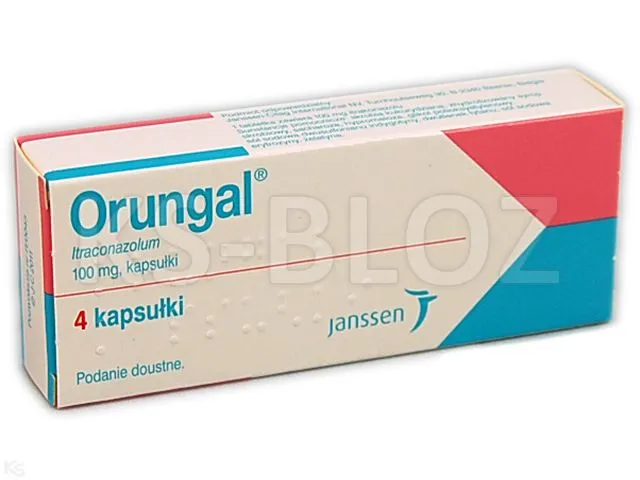
Table of Contents
Patient Information Leaflet
Orungal, 100 mg, capsules
Itraconazolum
Please read the entire leaflet carefully before taking this medicine, as it contains
important information for the patient.
- Keep this leaflet for future reference.
- If you have any questions, please consult your doctor, pharmacist, or nurse.
- This medicine has been prescribed for a specific individual. Do not share it with others. This medicine may harm others, even if their symptoms are identical.
- If you experience any adverse reactions, including any not listed in this leaflet, inform your doctor, pharmacist, or nurse. See section 4.
Table of Contents
- What is Orungal and what is it used for
- Important information before taking Orungal
- How to take Orungal
- Possible side effects
- How to store Orungal
- Contents of the pack and other information
1. What is Orungal and what is it used for
Orungal contains, as the active substance, itraconazole, which belongs to the group of triazole derivatives and is a broad-spectrum antifungal agent.
Orungal is indicated for the treatment of:
- Genital infections: vaginal and vulval candidiasis;
- Skin, mucous membrane, or eye infections: dermatophytosis, pityriasis versicolor, oral candidiasis, fungal keratitis;
- Onychomycosis caused by dermatophytes and (or) yeasts;
- Systemic fungal infections (fungal infections of various organs and tissues): systemic aspergillosis and systemic candidiasis, cryptococcosis, including cryptococcal meningitis, in patients with cryptococcosis and impaired immunity, as well as in all patients with central nervous system cryptococcosis (Orungal is indicated only when first-line treatment is ineffective), histoplasmosis, blastomycosis, sporotrichosis (including lymphocutaneous/cutaneous and extracutaneous), paracoccidioidomycosis, and chromoblastomycosis.
2. Important information before using Orungal capsules
When not to use Orungal capsules
- If the patient is allergic (hypersensitive) to any of the ingredients of this medicine (listed in section 6).
- If the patient has or has had heart function disorders such as congestive heart failure, except when treating life-threatening infections or other severe infections. Symptoms of congestive heart failure include: shortness of breath, unexpected weight gain, swelling of the limbs or abdomen, severe fatigue, or waking up at night due to breathlessness.
- If the patient is pregnant, suspects she may be pregnant, or may become pregnant. (See section 2 "Pregnancy and breastfeeding").
Do not use Orungal capsules if any of the above situations apply to the patient.
If in doubt, consult a doctor or pharmacist before using this medicine.
Before starting treatment with Orungal capsules, inform your doctor if you are taking
any other medicines.
Medicines that must not be taken with Orungal
Do not use Orungal capsules if the patient is taking certain medicines (and also do not
take them within 2 weeks after stopping Orungal).
Examples of these medicines include:
Medicines used for heart, blood or circulation problems
- aliskiren, eplerenone, lercanidipine or nisoldipine (used for high blood pressure)
- bepridil, ivabradine or ranolazine (used for angina pectoris – chest pain)
- dabigatran or ticagrelor (used for blood clots)
- disopyramide, dofetilide, dronedarone or quinidine (used for heart rhythm disorders)
- finerenone (used to treat kidney dysfunction in patients with type 2 diabetes)
- lomitapide, lovastatin or simvastatin (used to lower cholesterol levels)
- sildenafil, when used to treat pulmonary hypertension (high blood pressure in the blood vessels of the lungs)
Medicines used for stomach problems or constipation
- cisapride (used for stomach disorders)
- domperidone (used for nausea and vomiting)
- naloxegol (used for constipation caused by opioid pain medicines)
Medicines used for headaches, sleep disorders or mental health problems
- dihydroergotamine or ergotamine (ergot alkaloids used for migraine headaches)
- midazolam (taken orally) or triazolam (used to calm or help sleep)
- lurasidone, pimozide, quetiapine or sertindole (used for schizophrenia, bipolar disorder or other mental health problems)
Medicines used for urinary problems
- darifenacin (used for urinary incontinence)
- fesoterodine or solifenacin (used for bladder inflammation) – in patients with certain kidney or liver function disorders
Medicines used for allergies
- astemizole, mizolastine or terfenadine (used for allergies)
Medicines used for erectile dysfunction and premature ejaculation
- avanafil (used for erectile dysfunction)
- dapoxetine (used for premature ejaculation)
- vardenafil (used for erectile dysfunction), in men over 75 years of age
Other medicines containing:
- colchicine (used to treat gout) – in patients with kidney or liver function disorders
- ergometrine (ergonovine) or methylergometrine (methylergonovine) – ergot alkaloids used after childbirth
- eliglustat (used for Gaucher disease), when used in patients who cannot metabolize certain drugs
- halofantrine (used for malaria)
- irinotecan (used to treat cancer)
- isavuconazole (used for fungal infections)
- ombitasvir, paritaprevir, ritonavir with or without dasabuvir (used to treat hepatitis C)
- venetoclax (used for chronic lymphocytic leukemia), when starting venetoclax treatment or increasing the dose at the beginning of therapy
- voclosporin (used to treat kidney diseases associated with lupus)
Do not use Orungal capsules if any of the above situations apply to the patient.
If in doubt, consult a doctor before using Orungal capsules.
Remember not to take any of the above medicines for 2 weeks after
stopping Orungal capsules.
This is not a complete list, so inform your doctor if you are taking or planning
to take any of these medicines or any other medicines.
Warnings and precautions
If any of the situations described below apply to the patient, discuss them with a doctor or pharmacist before
starting treatment with Orungal.
- The patient has kidney disease. Dose adjustment of this medicine may be necessary.
- The patient has liver disease. Dose adjustment of this medicine may be necessary. The doctor may recommend monitoring liver function in patients receiving Orungal, as this medicine very rarely may cause severe liver damage.
- The patient has heart disease.
- The patient previously had an allergic reaction to another antifungal medicine.
- The patient has a weakened immune system, e.g., due to neutropenia, AIDS, or organ transplantation. Dose adjustment of this medicine may be necessary.
- The patient is taking other medicines.
If the patient experiences any of the symptoms listed below during treatment with Orungal, inform the doctor immediately.
- Symptoms suggesting hepatitis: loss of appetite, nausea, vomiting, fatigue, abdominal pain, yellowing of the skin or eyes, pale stools or dark urine
- stop taking the medicine and contact a doctor immediately.
- Symptoms of congestive heart failure: shortness of breath, unexplained weight gain, leg swelling, unusual fatigue, waking up at night due to breathlessness – stop taking the medicine and contact a doctor immediately.
- Symptoms of a severe allergic reaction: rash, itching, hives, difficulty breathing and/or facial swelling – stop taking the medicine and contact a doctor immediately.
- Photosensitivity (hypersensitivity to light).
- Severe skin reactions, such as generalized rash with skin peeling and blisters in the mouth, eyes or genital area, or rash with small blisters or bullae – stop taking the medicine and contact a doctor immediately.
- Symptoms of neuropathy (nerve damage), such as: tingling, sensory disturbances, reduced sensation, weakness in limbs, headache, dizziness – stop taking the medicine and contact a doctor immediately.
- Symptoms of hearing loss.
- Blurred or double vision, ringing in the ears, urinary incontinence or frequent urination.
Orungal capsules and other medicines
Inform your doctor about all medicines currently or recently taken,
as well as any medicines the patient plans to take.
Medicines that must not be taken
There are medicines that must not be taken during treatment with Orungal. These are listed
above in the section "Medicines that must not be taken with Orungal".
Some medicines are not recommended to be used with Orungal capsules.
The doctor may decide which medicines the patient should not take at the same time or
within 2 weeks after stopping Orungal.
Examples of these medicines include:
Medicines used for heart, blood or circulation problems
- apixaban, edoxaban, rivaroxaban or vorapaxar (used for blood clots)
- atorvastatin (used to lower cholesterol levels)
- felodipine (used for high blood pressure)
- riociguat or tadalafil, when used to treat pulmonary hypertension (high blood pressure in the blood vessels of the lungs)
Medicines used for epilepsy, headaches or mental health problems
- phenytoin, carbamazepine or phenobarbital (used for epilepsy)
- eletriptan (used for migraine headaches)
- St. John’s wort (Hypericum perforatum) (a herbal medicine used for mental health problems)
Medicines used for urinary problems
- tamsulosin (used for urinary incontinence in men)
- tolterodine (used for bladder inflammation)
Medicines used for cancer treatment
- axitinib, bosutinib, cabazitaxel, cabozantinib, ceritinib, cobimetinib, crizotinib, dabrafenib, dasatinib, docetaxel, entrectinib, glasdegib, ibrutinib, lapatinib, nilotinib, olaparib, pazopanib, regorafenib, sunitinib, talazoparib, trabectedin, trastuzumab, emtansine, venetoclax (when the patient is on a stable dose of venetoclax for chronic lymphocytic leukemia or at any time during treatment for acute myeloid leukemia), or vinca alkaloids (such as vinflunine, vinorelbine)
Medicines used for tuberculosis
- bedaquiline, isoniazid, rifabutin or rifampicin (antituberculosis medicines)
Medicines used for human immunodeficiency virus (HIV) infection or hepatitis
- efavirenz or nevirapine (used for HIV/AIDS)
- elbasvir/grazoprevir, tenofovir alafenamide fumarate (TAF), tenofovir disoproxil fumarate (TDF) (used for HIV infection or hepatitis)
Medicines used after organ transplantation
- everolimus, rapamycin (also known as sirolimus), temsirolimus
Medicines used for benign prostatic hyperplasia
- alfuzosin, silodosin
Medicines used for inflammatory conditions, lung diseases or allergies
- ciclesonide (used for inflammatory conditions, asthma and allergies)
- ebastine (used for allergies)
- salmeterol (used to treat asthma or chronic obstructive pulmonary disease – COPD)
Medicines used for erectile dysfunction and premature ejaculation
- tadalafil or vardenafil (used for erectile dysfunction in men aged 75 years or younger)
Other medicines containing:
- colchicine (used for gout)
- fentanyl (a painkiller)
- lumacaftor/ivacaftor (used for cystic fibrosis)
Remember not to take any of the above medicines for 2 weeks after
stopping Orungal capsules.
This is not a complete list, so inform your doctor if the patient is taking or planning
to take any of these medicines or any other medicines.
Caution is required when using Orungal with certain other medicines.
The risk of adverse effects may be higher, and the dose of Orungal or the other medicine may need to be adjusted.
Examples of such medicines:
Medicines used for heart, blood or circulation problems
- bosentan, when used to treat pulmonary hypertension (high blood pressure in the blood vessels of the lungs)
- calcium channel blockers, such as dihydropyridines: amlodipine, isradipine, nifedipine, nimodipine, diltiazem or verapamil (used for high blood pressure)
- cilostazol (used for circulation problems)
- "coumarins", such as warfarin (used for blood clots)
- digoxin (used for atrial fibrillation)
- nadolol (used for pulmonary hypertension or angina pectoris)
Medicines used for stomach problems or diarrhea
- aprepitant or netupitant (for nausea and vomiting during cancer treatment)
- loperamide (used for diarrhea)
- medicines that neutralize gastric acid, such as aluminum, calcium, magnesium or sodium bicarbonate; H2-receptor antagonists such as cimetidine, ranitidine, and proton pump inhibitors such as: lansoprazole, omeprazole, rabeprazole (used to treat symptoms of gastric hyperacidity)
Medicines used for sleep problems or mental health problems
- alprazolam, brotizolam, buspirone or midazolam (administered intravenously) (used for anxiety or to help sleep)
- zopiclone (a sleeping medicine)
- reboxetine or venlafaxine (used to treat depression and anxiety)
- aripiprazole, cariprazine, haloperidol or risperidone (used for schizophrenia, bipolar disorder or other mental health problems)
- galantamine (used for Alzheimer's disease)
- guanfacine (used for ADHD)
Medicines used for urinary problems
- imidafenacin, fesoterodine, oxybutynin, solifenacin (used for bladder inflammation)
Medicines used for cancer treatment
- bortezomib, brentuximab vedotin, busulfan, erlotinib, gefitinib, idelalisib, imatinib, nintedanib, panobinostat, pemigatinib, ponatinib, ruxolitinib, sonidegib or oral tretinoin
Medicines used for infections
- ciprofloxacin, clarithromycin or erythromycin (used for bacterial infections)
- delamanid (used for tuberculosis)
- artemether-lumefantrine or quinine (used for malaria)
- praziquantel (used to treat parasitic worms – flukes and tapeworms)
Medicines used for human immunodeficiency virus (HIV) infection or hepatitis
- cobicistat, boosted elvitegravir, maraviroc, ritonavir, darunavir boosted with ritonavir, fosamprenavir boosted with ritonavir, indinavir or saquinavir (used to treat HIV infection)
- glecaprevir/pibrentasvir (used for hepatitis)
Medicines used after organ transplantation
- cyclosporine or tacrolimus
Medicines used for benign prostatic hyperplasia
- dutasteride
Medicines used for lung diseases, allergies or inflammatory conditions
- bilastine or rupatadine (used for allergies)
- methylprednisolone or dexamethasone (oral or injectable medicines used for asthma, allergies or inflammatory conditions)
- budesonide or fluticasone (used to treat asthma, allergies)
Medicines used for erectile dysfunction and premature ejaculation
- sildenafil (used for erectile dysfunction)
Medicines used for pain
- alfentanil, buprenorphine, oxycodone or sufentanil (used for pain treatment)
- meloxicam (used for joint inflammation and pain)
Other medicines containing:
- alitretinoin (taken orally) (used to treat eczema)
- cabergoline (used for Parkinson's disease)
- cannabis-based products, including medicines (used, for example, to treat nausea and vomiting or muscle spasms in patients with multiple sclerosis)
- cinacalcet (used for hyperparathyroidism)
- dienogest or ulipristal (contraceptives)
- eliglustat (used for Gaucher disease, when used in patients who cannot metabolize certain drugs)
- ivacaftor (used for cystic fibrosis)
- methadone (used for opioid addiction)
- repaglinide or saxagliptin (used for diabetes)
This is not a complete list, so inform your doctor if the patient is taking or planning
to take any of these medicines or any other medicines.
Medicines affecting itraconazole absorption
Medicines that reduce gastric acid may impair the absorption of itraconazole released from Orungal capsules. Therefore, antacids can be taken at least 1 hour before or at least 2 hours after taking Orungal. For the same reason, if the patient is taking medicines that reduce gastric acid secretion, Orungal should be taken with a cola-type drink (non-diet).
If in doubt, consult a doctor or pharmacist.
Pregnancy and breastfeeding
If the patient is pregnant or breastfeeding, suspects she may be pregnant, or plans to become pregnant, she should consult a doctor before using this medicine.
Pregnancy
Orungal should not be used during pregnancy, except in life-threatening situations where, in the doctor’s opinion, the expected benefits outweigh the possible risks to the fetus.
If a woman is of childbearing age and may become pregnant, she should speak with her doctor.
- She should use effective contraceptive methods to ensure she does not become pregnant during treatment with this medicine.
- Effective contraception should be continued until the next menstrual period after stopping Orungal, as Orungal remains in the body for some time after discontinuation.
Breastfeeding
Itraconazole passes into human milk in very small amounts. The doctor will decide whether the expected benefits of using Orungal during breastfeeding outweigh the risks to the infant. In case of any doubts, the patient should not breastfeed.
Driving and operating machinery
Orungal may occasionally cause dizziness, blurred or double vision, or hearing loss. If the patient experiences these symptoms, do not drive or operate machinery or tools.
Orungal contains sucrose
If the patient has previously been diagnosed with an intolerance to certain sugars, the patient should consult a doctor before taking this medicine.
3. How to take Orungal
This medicine should always be taken as directed by the physician. In case of doubt, consult
your doctor or pharmacist.
How to take Orungal capsules
Orungal should be taken immediately after a full meal. The capsules must be swallowed whole.
Dosage for adults
| Genital infections | ||
| Indication | Dosage | Duration of use |
| Vaginal and vulval candidiasis | 200 mg twice daily or 200 mg once daily | 1 day or 3 days |
| Skin, mucous membrane or eye infections | ||||
| Indication | Dosage | Duration of treatment | ||
| Skin mycosis | 200 mg once daily or 100 mg once daily | 7 days or 15 days | ||
| Infections in areas with increased stratum corneum thickness, such as tinea of the soles of the feet and palms | 200 mg twice daily or 100 mg once daily | 7 days or 30 days | ||
| Pityriasis versicolor | 200 mg once daily | 7 days | ||
| Oral candidiasis | 100 mg once daily | 15 days | ||
| In some immunocompromised patients (e.g. patients with neutropenia, AIDS or after organ transplantation), the physician may recommend doubling the dose. | ||||
| Fungal keratitis | 200 mg once daily | 21 days The duration of treatment depends on the patient's response to therapy | ||
Onychomycosis caused by dermatophytes and (or) yeasts
Intermittent treatment
Consists of taking two capsules twice daily (200 mg twice daily) for one week. For treatment of fingernail onychomycosis, two cycles are used. For treatment of toenail onychomycosis, three cycles are used. The treatment periods (cycles) are separated by a three-week break during which the drug is not taken. The response to treatment becomes evident after completion of therapy and regrowth of the nails.
| Nail fungus location | Week 1. | Week 2. | Week 3. | Week 4. | Week 5. | Week 6. | Week 7. | Week 8. | Week 9. | |
| Fingernails or toenails or both | Cycle 1. | Break from itraconazole intake | Cycle 2. | Break from itraconazole intake | Cycle 3. | |||||
| Fingernails only | Cycle 1. | Break from itraconazole intake | Cycle 2. | |||||||
| Continuous treatment | ||||||||||
| Nail fungus location | Dosage | Duration of use | ||||||||
| Toenails only or both toenails and fingernails | 200 mg once daily | 3 months | ||||||||
Elimination of itraconazole from the skin and nails is slower than from plasma. Optimal treatment outcomes in terms of clinical symptoms and mycological test results are achieved within 2 to 4 weeks after completion of treatment for skin infections and within 6 to 9 months after completion of treatment for nail infections.
| Systemic fungal infections | |||
| Indication | Dosage | Mean duration of treatment1 | Notes |
| Aspergillosis | 200 mg once daily | 2 to 5 months | The physician may increase the dose to 200 mg twice daily if lesions are deep or disseminated |
| Candidosis | 100 to 200 mg once daily | 3 weeks to 7 months | The physician may increase the dose to 200 mg twice daily if lesions are deep or disseminated |
| Cryptococcosis (without meningitis) | 200 mg once daily | 2 months to 1 year | |
| Cryptococcal meningitis | 200 mg twice daily | 2 months to 1 year | |
| Histoplasmosis | from 200 mg once daily to 200 mg twice daily | 8 months | |
| Blastomycosis | from 100 mg once daily to 200 mg twice daily | 6 months | |
| Lymphocutaneous and cutaneous sporotrichosis | 100 mg or 200 mg once daily (single lesions) or 200 mg twice daily (extensive lesions) | 3 to 6 months | |
| Extracutaneous sporotrichosis | 200 mg twice daily | 12 months | |
| Paracoccidioidomycosis | 100 mg once daily | 6 months | Lack of data on the efficacy of Orungal capsules in the treatment of paracoccidioidomycosis in AIDS patients |
| Chromoblastomycosis | 200 to 400 mg once daily | 6 months | |
| 1 The physician will adjust the duration of treatment according to the patient's response to therapy | |||
Use in children
Orungal may be used in children only if the doctor decides that the expected benefits outweigh the potential risks.
Use of a higher than recommended dose of Orungal
If a higher than recommended dose of Orungal is used, contact your doctor as soon as possible.
Missed dose of Orungal
Do not use a double dose to make up for a missed dose.
Discontinuation of Orungal treatment
Continue taking Orungal for as long as your doctor recommends. Do not stop treatment on your own, even if the patient feels improvement.
If you have any further questions regarding the use of this medicine, consult your doctor, pharmacist, or nurse.
4. Possible adverse reactions
Like all medicines, this medicine can cause adverse reactions, although not everybody gets them.
In clinical trials involving 8499 patients receiving Orungal medicine,
adverse reactions occurred in at least 1 out of 100 patients, such as: headache, nausea,
and abdominal pain.
During these clinical trials, the following adverse reactions occurred less frequently than in 1 out of 100 patients receiving Orungal:
nasal mucosal inflammation, sinusitis, upper respiratory tract infections, low white blood cell count, hypersensitivity, taste disturbances, hypogeusia, paraesthesia (sensory disturbances, tingling, numbness, burning sensation of the skin), tinnitus, constipation, diarrhoea, dyspepsia, flatulence, vomiting, abnormal liver function, high blood bilirubin levels, itching, rash, urticaria, polyuria, erectile dysfunction, menstrual disorders, and oedema.
Adverse reactions identified for the first time after marketing of all pharmaceutical forms of Orungal are listed below.
Very rare adverse reactions (may occur in less than 1 in 10,000 patients):
- serum sickness-like syndrome (a type of systemic allergic reaction), angioedema (swelling usually affecting the face or throat, possibly causing breathing difficulties), anaphylactic reaction (allergic reaction);
- tremor;
- hypertriglyceridaemia (high blood triglyceride levels);
- visual disturbances (including double and blurred vision);
- transient or permanent hearing loss;
- congestive heart failure (including symptoms such as shortness of breath, unexpected weight gain, swelling of limbs or abdomen, severe fatigue, or waking up at night with breathlessness);
- decreased heart rate;
- dyspnoea;
- pancreatitis;
- severe hepatotoxicity (severe liver damage, including several cases of death due to acute liver failure);
- severe, exfoliative skin reactions (toxic epidermal necrolysis [Lyell's syndrome], Stevens-Johnson syndrome, erythema multiforme, exfoliative dermatitis), acute generalised exanthematous pustulosis, leukocytoclastic vasculitis (inflammation of small skin vessels), alopecia, photosensitivity;
- increased blood levels of creatine phosphokinase enzyme;
- symptoms of elevated levels of a hormone called “aldosterone” (such as high blood pressure or low blood potassium levels), despite normal or low blood aldosterone levels.
Additional adverse reactions in children and adolescents
In clinical trials of Orungal in children and adolescents (aged 1 to 17 years), the following adverse reactions were observed more frequently than in 1 out of 100 patients: headache, vomiting, abdominal pain, diarrhoea, liver function abnormalities, hypotension, nausea, and urticaria.
Reporting of adverse reactions
If any adverse reactions occur, including any not listed in this leaflet, tell your doctor, pharmacist, or nurse. Adverse reactions can be reported directly to the Department of Monitoring of Adverse Drug Reactions of the Office for Registration of Medicinal Products, Medical Devices and Biocidal Products
Al. Jerozolimskie 181C
02-222 Warsaw
Tel.: + 48 22 49 21 301
Fax: + 48 22 49 21 309
Website: https://smz.ezdrowie.gov.pl
Adverse reactions can also be reported to the marketing authorisation holder.
Reporting adverse reactions helps provide more information on the safety of the medicine.
5. How to store Orungal
Keep this medicine out of sight and reach of children.
Store below 30°C.
Do not use this medicine after the expiry date stated on the outer packaging and blister after "EXP". The expiry date refers to the last day of the stated month.
Medicines must not be disposed of via wastewater or household waste. Ask your pharmacist how to dispose of medicines no longer required. This will help protect the environment.
6. Contents of the pack and other information
What Orungal contains
- The active substance is itraconazole. Each capsule contains 100 mg of itraconazole.
- The other ingredients are: sugar spheres 25-30 mesh (corn starch, hydrolysed starch syrup, sucrose), hypromellose, polyethylene glycol, indigotine sodium salt (E 132), titanium dioxide (E 171), gelatin, erythrosine sodium salt (E 127).
What Orungal looks like and contents of the pack
Orungal is a capsule composed of a blue and a pink part.
Pack contents: 4, 15 or 28 capsules in a cardboard box.
Not all pack sizes may be marketed.
Marketing Authorisation Holder:
Janssen-Cilag International NV
Turnhoutseweg 30
B-2340 Beerse
Belgium
Manufacturer:
Janssen-Cilag SpA
Via C. Janssen
04010 Borgo San Michele, Latina
Italy
For further information about this medicinal product, please contact the local representative of the Marketing Authorisation Holder:
Janssen-Cilag Polska Sp. z o.o.
ul. Iłżecka 24
02-135 Warsaw
Poland
Tel. +48 22 237 60 00