Ortanol max
Poland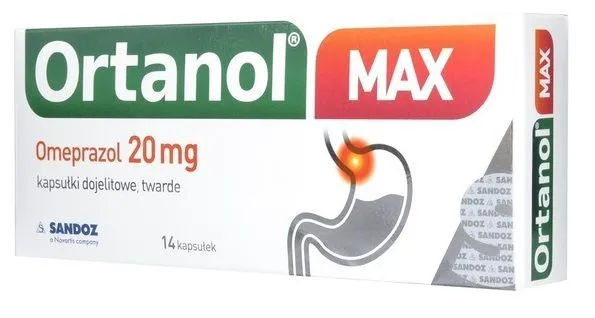
Table of Contents
PACKAGE LEAFLET: INFORMATION FOR THE USER
Warning! Keep the leaflet, information on the immediate packaging in a foreign language!
Ortanol MAX (Omeprazol Sandoz Farmacéutica)
20 mg, gastro-resistant capsules, hard
Omeprazolum
Ortanol MAX and Omeprazol Sandoz Farmacéutica are different names for the same medicinal product.
Please read the leaflet carefully before using the medicine, as it contains
important information for the patient.
This medicine should always be taken exactly as described in the patient leaflet or according to the instructions of the doctor or pharmacist.
- Keep this leaflet so that you can read it again if necessary.
- If you need advice or further information, please consult your doctor or pharmacist.
- If you experience any adverse reactions, including any possible side effects not listed in this leaflet, inform your doctor or pharmacist. See section 4.
- If there is no improvement after 14 days, or if your symptoms worsen, contact your doctor.
Leaflet contents:
- What Ortanol MAX is and what it is used for
- Important information before taking Ortanol MAX
- How to take Ortanol MAX
- Possible side effects
- How to store Ortanol MAX
- Contents of the pack and other information
1. What Ortanol MAX is and what it is used for
Ortanol MAX is a medicine in the form of hard gastro-resistant capsules containing the active substance called omeprazole. It belongs to a group of medicines known as "proton pump inhibitors". These medicines work by reducing the amount of hydrochloric acid produced in the stomach.
Ortanol MAX is used in adults for the short-term treatment of symptoms of gastro-oesophageal reflux disease (i.e. heartburn and regurgitation of acidic stomach contents – acid reflux).
Reflux refers to the backflow of acidic stomach contents into the oesophagus (the part of the digestive tract connecting the throat to the stomach), which may lead to inflammation and associated pain. This may cause symptoms such as a burning sensation in the chest rising up to the throat (heartburn) and a sour taste in the mouth (due to regurgitation of acidic contents). To relieve symptoms, it may be necessary to take the capsules for 2 or 3 consecutive days.
2. Important information before using Ortanol MAX
When not to use Ortanol MAX
Do not use Ortanol MAX if the patient is allergic (hypersensitive) to omeprazole or to any of the other
ingredients of this medicine (listed in section 6).
Do not use Ortanol MAX if the patient is allergic to medicines containing other proton pump inhibitors (e.g.
pantoprazole, lansoprazole, rabeprazole, esomeprazole).
Do not use Ortanol MAX if the patient is taking a medicine containing nelfinavir (used in the treatment of HIV infection).
If in doubt, consult a doctor or pharmacist before starting to take Ortanol MAX.
Warnings and precautions
Do not take Ortanol MAX for longer than 14 days without consulting a doctor.
If symptoms do not improve or worsen, seek medical advice immediately.
Ortanol MAX may mask symptoms of other diseases. Therefore, if any of the following symptoms or conditions occur before or during treatment, consult a doctor without delay:
unexplained weight loss and difficulty swallowing;
stomach pain or indigestion;
vomiting, including vomiting blood;
black stools (also with blood);
severe or persistent diarrhoea, as use of omeprazole may be associated with a small risk of infectious diarrhoea;
a previously diagnosed gastric ulcer or prior gastrointestinal surgery;
continuous symptomatic treatment of indigestion or heartburn for 4 or more weeks;
persistent indigestion or heartburn lasting 4 or more weeks;
jaundice or severe liver disease;
age over 55 years and new onset of symptoms or recent change in existing symptoms.
Before starting treatment with Ortanol MAX, consult a doctor if the patient has ever experienced a skin reaction while taking a medicine similar to Ortanol MAX that reduces gastric acid secretion.
If the patient develops a skin rash, especially in areas exposed to sunlight, inform the doctor as soon as possible, as discontinuation of Ortanol MAX may be necessary. Also report any other adverse reactions such as joint pain.
While taking omeprazole, kidney inflammation may occur. Symptoms may include reduced urine volume or presence of blood in urine and/or allergic reactions such as fever, rash, and joint stiffness. The patient should report such symptoms to their doctor.
Before taking Ortanol MAX, inform the doctor about any planned specific blood test (measurement of chromogranin A levels).
Do not take Ortanol MAX preventively.
Ortanol MAX and other medicines
Inform the doctor or pharmacist about all medicines currently or recently taken, as well as any medicines the patient plans to take. This is important because Ortanol MAX may affect the action of certain other medicines, and some other medicines may affect the action of Ortanol MAX.
Do not take Ortanol MAX if taking a medicine containing nelfinavir (used in the treatment of HIV infection).
The patient should consult a doctor or pharmacist if taking clopidogrel (used to prevent blood clots).
Inform the doctor or pharmacist if the patient is taking any of the following medicines:
ketoconazole, itraconazole, posaconazole or voriconazole (used to treat fungal infections);
digoxin (used to treat heart disorders);
diazepam (used to treat anxiety, reduce muscle tension, or treat epilepsy);
phenytoin (used to treat epilepsy); if the patient is taking phenytoin, the doctor will monitor the patient's condition when starting and stopping treatment with Ortanol MAX;
medicines used to reduce blood clotting, such as warfarin or other vitamin K antagonists; the doctor will monitor the patient's condition when starting and stopping treatment with Ortanol MAX;
rifampicin (used to treat tuberculosis);
atazanavir or saquinavir (used to treat HIV infection);
tacrolimus (used, among others, after organ transplantation);
St John's wort (Hypericum perforatum) (used to treat mild depression);
cilostazol (used to treat intermittent claudication);
clarithromycin (an antibiotic);
erlotinib (used to treat certain cancers);
methotrexate (used, e.g., in the treatment of cancer or rheumatoid diseases).
Ortanol MAX with food and drink
Ortanol MAX capsules may be taken with food or on an empty stomach.
Pregnancy and breastfeeding
If the patient is pregnant or breastfeeding, suspects she may be pregnant, or is planning to have a child, she should consult a doctor or pharmacist before using this medicine.
The doctor will decide whether the patient may take Ortanol MAX during this period.
Driving and operating machinery
Ortanol MAX does not affect the ability to drive or operate tools and machinery.
However, adverse effects such as dizziness and visual disturbances may occur (see section 4). If these occur, do not drive or operate machinery.
Ortanol MAX contains sucrose and sodium
If the patient has been previously diagnosed with intolerance to certain sugars, consult a doctor before taking this medicine.
The medicine contains less than 1 mmol (23 mg) of sodium per capsule; therefore, this medicine is considered "sodium-free".
3. How to take Ortanol MAX
This medicine should always be taken exactly as described in the patient information leaflet or as directed by your doctor or pharmacist. If in doubt, consult your doctor or pharmacist.
Typically, one capsule of Ortanol MAX (20 mg) should be taken once daily for 14 days. If symptoms do not resolve after this time, consult your doctor.
To relieve symptoms, it may be necessary to take the capsules for 2 or 3 consecutive days.
Instructions for taking the medicine
It is recommended to take the capsules in the morning.
The capsules may be taken with food or on an empty stomach.
Swallow the capsules whole with half a glass of water. Do not chew or crush them, as they contain pellets of the active substance, omeprazole. The coating of the pellets protects the medicine from degradation by stomach acid and enables absorption in the intestine. It is important that the pellets remain undamaged.
What to do if you have difficulty swallowing the capsule
If the patient has difficulty swallowing the capsule:
- Open the capsule and either swallow the contents with half a glass of water, or pour the contents into a glass of still water, any acidic fruit juice (e.g. apple, orange, or pineapple juice), or mix with apple puree.
- Always mix the preparation immediately before drinking (the mixture will not be clear). Then drink the mixture immediately after preparation or within 30 minutes.
- To ensure the patient receives the full dose, fill the glass containing any remaining pellets halfway with water, stir, and drink. Do not use milk or carbonated water. The pellets contain the medicine—do not chew or crush them.
If you take more Ortanol MAX than you should
If you take more Ortanol MAX than recommended, contact your doctor or pharmacist immediately.
If you forget to take Ortanol MAX
If the patient forgets to take a dose, they should take it as soon as they remember. However, if it is almost time for the next dose, the missed dose should be skipped. Do not take a double dose to make up for a missed dose.
If you have any further questions about the use of this medicine, consult your doctor or pharmacist.
4. Possible adverse reactions
Like any medicinal product, this medicine can cause adverse reactions, although not everybody experiences them.
If you notice any of the following rare but serious adverse reactions, stop taking Ortanol MAX and contact your doctor immediately:
sudden wheezing, swelling of the lips, tongue or throat, rash, fainting or difficulty swallowing (severe allergic reaction);
skin redness with formation of blisters or peeling. Large blisters and bleeding around the lips, eyes, mouth, nose and genital organs may also occur. This may be Stevens-Johnson syndrome or toxic epidermal necrolysis.
yellowing of the skin, dark urine and feeling of fatigue, which may indicate liver function disorders.
Adverse reactions may occur with the following frequency:
| Very common: | may occur in more than 1 in 10 people |
| Common: | may occur in 1 to 10 in 100 people |
| Uncommon: | may occur in 1 to 10 in 1,000 people |
| Rare: | may occur in 1 to 10 in 10,000 people |
| Very rare: | may occur in less than 1 in 10,000 people |
| Frequency not known: | cannot be estimated from the available data |
Common adverse effects
headaches
gastrointestinal symptoms: diarrhoea, stomach pain, constipation, bloating with gas release
nausea, vomiting
mild gastric polyps
Uncommon adverse effects
swelling of feet and ankles
sleep disturbances (insomnia)
dizziness, tingling and pricking sensations, drowsiness
sensation of spinning (dizziness)
changes in liver function test results
skin rash, nodular rash (urticaria), and itching
general malaise and lack of energy
Rare adverse effects
blood-related problems, such as reduced number of white blood cells or platelets, which may lead to weakness, easy bruising, or increased susceptibility to infections
allergic reactions, sometimes severe, including swelling of lips, tongue, and throat, fever, wheezing
low blood sodium levels, which may cause weakness, vomiting, and muscle cramps
feeling of agitation, confusion, or depression
taste disturbances
vision disturbances (e.g. blurred vision)
sudden breathlessness (bronchospasm)
dry mouth
inflammation of the mucous membrane of the mouth
fungal infections (e.g. candidiasis), which may appear on the gums
liver function disorders, including jaundice with yellowing of the skin, dark urine, and feeling of weakness
hair loss (alopecia)
skin rash due to exposure to sunlight
joint or muscle pain
severe kidney function disorders (interstitial nephritis)
increased sweating
Very rare adverse effects
blood count abnormalities, including agranulocytosis (lack of white blood cells)
aggression
seeing, feeling, or hearing things that are not real (hallucinations)
severe liver function disorders leading to liver failure and encephalopathy
sudden onset of severe skin rash or blisters, or skin peeling. These symptoms may be accompanied by high fever and joint pain (erythema multiforme, Stevens-Johnson syndrome, toxic epidermal necrolysis)
muscle weakness
breast enlargement in men
Adverse effects with unknown frequency
reduced blood magnesium levels (hypomagnesaemia), which may also occur together with reduced potassium and/or calcium levels
microscopic colitis (which may present with watery diarrhoea, cramping abdominal pain, bloating)
rash associated with joint pain
In very rare cases, the medicine Ortanol MAX may affect the number of white blood cells, leading to immunodeficiency. If a patient develops an infection with fever accompanied by a serious deterioration in general condition, or fever with signs of local infection (such as neck, throat or oral cavity pain, or difficulty urinating), medical advice should be sought as soon as possible to rule out, based on blood test results, a possible deficiency of white blood cells (agranulocytosis). It is important that the patient informs the physician about the medication being taken.
Patients should not be alarmed by the list of adverse effects mentioned above. It is possible that none of these effects will occur.
Reporting of adverse effects
If any adverse effects occur, including any not listed in this leaflet, patients should inform their doctor, pharmacist, or nurse. Adverse effects can also be reported directly to the Department of Monitoring Adverse Drug Reactions, Office for Registration of Medicinal Products, Medical Devices and Biocidal Products: Al. Jerozolimskie 181C, 02-222 Warsaw
tel.: +48 22 49 21 301 / fax: +48 22 49 21 309
website: https://smz.ezdrowie.gov.pl
Reporting adverse effects helps to provide more information on the safety of the medicine.
5. How to store Ortanol MAX
Keep this medicine out of sight and reach of children.
Do not use this medicine after the expiry date stated on the packaging. The expiry date refers to the last day of the stated month.
Store below 25°C. Keep in the original packaging to protect from moisture.
Medicines must not be disposed of via wastewater or household waste. Ask your pharmacist how to dispose of medicines no longer in use. This will help protect the environment.
6. Contents of the pack and other information
What Ortanol MAX contains
The active substance is omeprazole.
Each hard enteric capsule contains 20 mg of omeprazole.
The other ingredients are:
Granules: sucrose, pellets (corn starch, sucrose), magnesium hydroxide, sodium lauryl sulfate, disodium phosphate, mannitol, hypromellose (2910), sodium carboxymethyl starch (type A), polyethylene glycol 6000, talc, polysorbate 80, titanium dioxide (E 171), methacrylic acid and ethyl acrylate copolymer (1:1), 30% dispersion
Coating: gelatin, indigo carmine FD&C Blue 2 (E 132), titanium dioxide (E 171).
What Ortanol MAX looks like and contents of the pack
Hard gelatin capsules of size "4", with a blue cap and white body, containing spherical granules of white to cream colour.
The medicine is available in PVC/PE/PVDC/Al blisters, packed in a cardboard box.
Pack sizes contain 14 capsules.
For more detailed information, please contact the marketing authorisation holder or the parallel importer.
Marketing Authorisation Holder in Spain, country of export:
Sandoz Farmacéutica, S.A.
Centro Empresarial Parque Norte
Edificio Roble
C/ Serrano Galvache, 56
28033 Madrid
Spain
Manufacturer:
LICONSA, S.A.
Avda. Miralcampo, nº 7,
Polígono Industrial Miralcampo
Azuqueca de Henares, (Guadalajara)
Spain
Parallel Importer:
Medezin Sp. z o.o.
ul. Zbąszyńska 3
91-342 Łódź
Poland
Repackaged in:
Medezin Sp. z o.o.
ul. Zbąszyńska 3
91-342 Łódź
Poland
Spain (country of export) Marketing Authorisation Numbers: 651300.2
673261.8
Parallel Import Authorisation Number: 203/19