Oralair 100 ir & 300 ir
Poland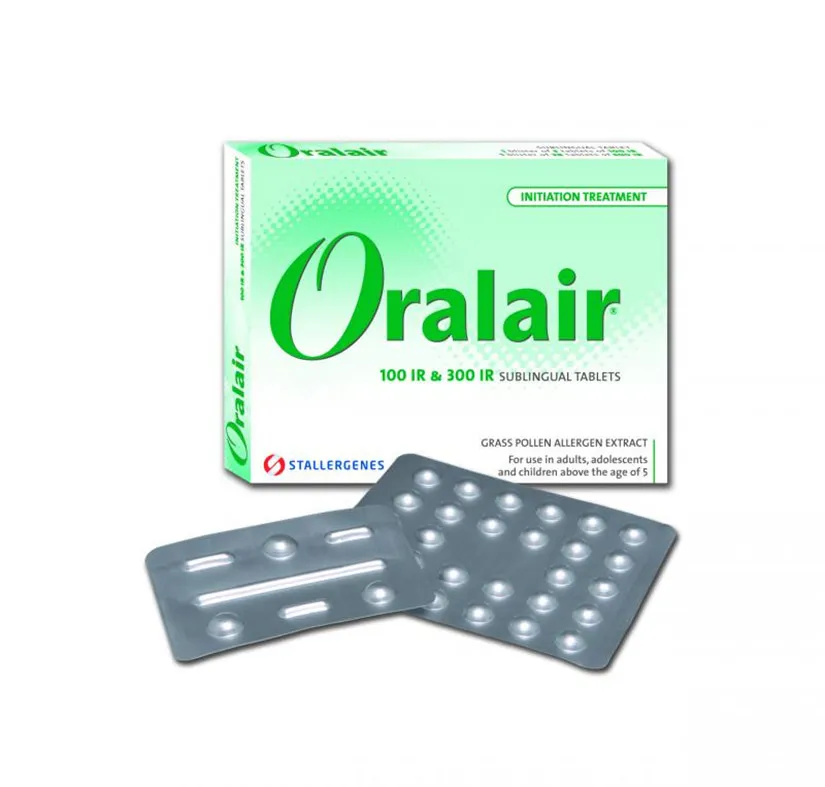
Table of Contents
Package leaflet: Information for the user
ORALAIR 100 IR & 300 IR, 100 IR / 300 IR, sublingual tablets
For use in adults, adolescents and children aged above 5 years.
Allergen extract from pollens of the following grasses:
Orchard grass ( Dactylis glomerata L.), Sweet vernal grass ( Anthoxanthum odoratum L.), Perennial
ryegrass ( Lolium perenne L.), Meadow grass ( Poa pratensis L.) and Timothy grass ( Phleum
pratense L.)
Please read the entire leaflet carefully before taking the medicine, as it contains important
information for the patient.
- Keep this leaflet for future reference.
- Consult your doctor or pharmacist if you have any further questions.
- This medicine has been prescribed for a specific individual. Do not pass it on to others. It may harm other people, even if their symptoms are the same.
- If any of the adverse reactions worsen or if any adverse reactions occur, including those not listed in this leaflet, inform your doctor or pharmacist. See section 4.
Contents of the leaflet:
- What ORALAIR is and what it is used for
- What you need to know before taking ORALAIR
- How to take ORALAIR
- Possible side effects
- How to store ORALAIR
- Contents of the pack and other information
1. What ORALAIR is and what it is used for
ORALAIR contains an allergen extract. Treatment with ORALAIR aims to increase immunological tolerance to grass pollens and thereby reduce allergic symptoms.
ORALAIR is used for the treatment of allergy (sensitization) to grass pollens, which is characterized by rhinitis (sneezing, runny or itchy nose, nasal congestion), with or without conjunctivitis (itchy, watery eyes) in adults, adolescents and children aged 5 years and older.
Before starting treatment, a suitably trained and experienced physician in the management of allergic diseases will diagnose the allergy (sensitization) using an appropriate skin test and/or blood test.
2. Important information before using ORALAIR
When not to use ORALAIR
- if the patient is allergic to any of the other ingredients of this medicine (listed in section 6);
- if the patient suffers from severe and/or unstable asthma, or if there has been a severe asthma exacerbation within the last 3 months;
- if, according to the physician's assessment, the patient's forced expiratory volume in one second (FEV1) is below 80%;
- in patients with diseases affecting the immune system, patients taking medications that suppress immunity, or patients with malignant disease;
- in patients with oral ulcers or infections of the mouth. The physician may recommend delaying the start of treatment or interrupting it until the oral lesions have healed completely.
- Women who are pregnant should not start treatment with ORALAIR.
Warnings and precautions
Before starting treatment with ORALAIR, discuss the following with your doctor:
- Occurrence of severe allergic symptoms such as difficulty swallowing or breathing, voice changes, hypotension (low blood pressure), or a sensation of a lump in the throat. Treatment must be discontinued and medical advice sought immediately.
- Previous severe allergic reaction to a medicine containing allergen extracts.
- Marked worsening of asthma symptoms. Treatment must be discontinued and medical advice sought immediately.
- Coexisting cardiovascular diseases.
- Use of beta-blockers (a class of drugs commonly prescribed for heart conditions and high blood pressure, but also present in certain eye drops and ointments).
- Treatment of depression with tricyclic antidepressants or monoamine oxidase inhibitors (MAOIs), or treatment of Parkinson’s disease with catechol-O-methyltransferase (COMT) inhibitors.
- Patients scheduled for oral surgery or tooth extraction should discontinue treatment with ORALAIR until complete healing has occurred.
- Patients suffering from persistent acid reflux or difficulty swallowing should consult their doctor.
- Patients with autoimmune diseases in remission should discuss with their doctor:
- any recent illnesses;
- presence of any immune system disorders in the patient or their family;
- if allergic symptoms have recently worsened.
- If the patient is using asthma control medications and/or symptom-relieving drugs, do not discontinue them without consulting a doctor, as this may lead to worsening of asthma symptoms.
- If the patient has asthma and a respiratory tract infection, initiation of treatment with ORALAIR should be postponed until the infection has resolved.
- During treatment, mild or moderate local allergic reactions may occur. In case of significantly pronounced allergic reactions, consult a doctor to determine whether anti-allergic medications such as antihistamines should be used.
Children and adolescents
ORALAIR is indicated for the treatment of grass pollen allergy, characterized by rhinitis with or without conjunctivitis, in adults, adolescents, and children aged 5 years and older.
ORALAIR is not indicated for use in children under 5 years of age.
Other medicines and ORALAIR
Inform your doctor or pharmacist about all medicines currently used, recently used, or planned for use, including those available without a prescription.
In particular, inform your doctor if you are taking certain antidepressants (tricyclic antidepressants and monoamine oxidase inhibitors (MAOIs)).
Patients taking other anti-allergic medications such as antihistamines, asthma medications, corticosteroids, or drugs blocking immunoglobulin E (IgE), e.g. omalizumab, should discuss continued use with their doctor. Discontinuation of these anti-allergic medications may lead to further adverse reactions during ORALAIR treatment.
Symptomatic treatment (e.g. antihistamines and/or intranasal corticosteroids) may be used during ORALAIR therapy.
Inform your doctor or pharmacist before using ORALAIR if the patient is taking beta-adrenergic receptor blockers (i.e. a group of drugs commonly prescribed for heart conditions and hypertension, as well as present in certain eye drops or ointments), as they may reduce the effectiveness of adrenaline used in treating severe systemic reactions.
ORALAIR with food and drink
Do not eat or drink for 5 minutes after taking this medicine.
Pregnancy and breastfeeding
Pregnancy
If you are pregnant, suspect you may be pregnant, plan to become pregnant, or are considering using this medicine during pregnancy, consult your doctor or pharmacist before using ORALAIR.
There is no experience with the use of ORALAIR during pregnancy. Therefore, immunotherapy should not be initiated if the patient is pregnant. If pregnancy occurs during treatment with this medicine, discuss with your doctor whether treatment should be continued.
Breastfeeding
During breastfeeding, consult your doctor or pharmacist before using this medicine.
Immunotherapy should not be initiated during breastfeeding.
There is no experience with the use of ORALAIR during breastfeeding. No effect on breastfed infants is expected during treatment. If the patient intends to breastfeed while on treatment, she should consult her doctor on whether continuing treatment is advisable.
Driving and operating machinery
No effects of ORALAIR on the ability to drive or operate machinery have been observed.
ORALAIR contains lactose
If the patient has been diagnosed with an intolerance to certain sugars, they should consult their doctor before using this medicine.
ORALAIR contains sodium
The medicine contains less than 1 mmol (23 mg) of sodium per tablet; therefore, the medicine is considered "sodium-free".
3. How to use ORALAIR
This medicine should always be used exactly as prescribed by your doctor. If in doubt, consult your doctor or pharmacist.
ORALAIR is prescribed by doctors who are appropriately trained and experienced in the treatment of allergies (hypersensitivity). When prescribed for children, it must be prescribed by a doctor experienced in treating pediatric patients.
It is recommended that the first tablet be taken under medical supervision. This allows the patient to discuss possible adverse reactions (side effects) with the doctor.
Dosing
Treatment consists of an initial phase (including dose escalation over 3 days) and a maintenance phase.
Initial treatment
Treatment with ORALAIR should be initiated as follows:
| Day 1 | 1 tablet 100 IR |
| Day 2 | 2 tablets 100 IR simultaneously |
| Day 3 | 1 tablet 300 IR |
IR (Reactivity Index) expresses activity.
ORALAIR 100 IR is intended for use only during the dose escalation phase and is not intended for use in maintenance treatment.
Maintenance treatment
The dose is 300 IR (one tablet) per day until the end of the pollen season.
Method of administration
It is recommended that the first dose of ORALAIR be taken under medical supervision. Medical supervision should be maintained for at least 30 minutes after taking the first dose. This precaution is taken to monitor for possible reactions to the medication and to allow discussion with the physician regarding potential adverse effects.
The tablet should be placed under the tongue until completely dissolved (at least 1 minute), then swallowed. On the second day of treatment, two 100 IR tablets should be placed simultaneously under the tongue and swallowed after approximately 1 minute. It is recommended to take the tablet during the day on an empty stomach. For the next 5 minutes, the patient should not consume any food or drink.
Duration of treatment
Treatment should be started approximately 4 months before the expected pollen season and should continue until the end of the pollen season.
There is no experience with the use of ORALAIR in patients over 65 years of age.
Use in children and adolescents
There is no experience with the use of ORALAIR in children under 5 years of age.
There is no experience with use in children for longer than one pollen season.
Dosage in children and adolescents above the age of 5 is the same as in adults.
Overdose of ORALAIR
If a dose of ORALAIR greater than recommended is taken, allergic symptoms may occur, including local reactions in the mouth and throat. In case of severe symptoms, contact your physician immediately.
Missed dose of ORALAIR
Do not take a double dose to make up for a missed dose.
If treatment with ORALAIR is interrupted for less than one week, treatment may be resumed with the same dose as the last one taken.
If treatment is interrupted for longer than 7 days, consult your physician regarding how to continue therapy.
Discontinuation of ORALAIR
If the treatment cycle with ORALAIR is interrupted, the continued benefits of treatment may be lost.
If you have any further questions about the use of this medicine, consult your physician or pharmacist.
4. Possible adverse reactions
Like all medicines, this medicine can cause adverse reactions, although not everyone will experience them.
Patients receiving ORALAIR are exposed to substances which may cause local site reactions and/or symptoms that may affect the whole body. Reactions at the application site (such as itching in the mouth and throat irritation) may be expected. These reactions usually occur at the beginning of therapy, are temporary, and generally decrease over time.
Treatment with ORALAIR must be discontinued and immediate contact with a doctor or hospital visit must be sought if any of the following symptoms occur:
- Sudden swelling of the face, lips, throat or skin
- Difficulty swallowing
- Difficulty breathing
- Voice changes
- Hypotension (low blood pressure)
- Sensation of throat fullness (resembling swelling)
- Urticaria (hives) and skin itching
Treatment should only be resumed on the advice of a doctor.
Other possible adverse reactions include:
Very common (affects more than 1 in 10 patients):
- Mouth itching
- Throat irritation
- Headache
Common (affects less than 1 in 10 patients):
- Eye inflammation, eye itching or tearing
- Ear itching
- Rhinitis (nasal congestion, runny nose, nasal itching, sneezing, nasal discomfort), sinus congestion
- Swelling or itching of lips or tongue, tongue pain
- Oral cavity disorders (such as dryness, tingling, numbness, inflammation, pain, blisters or swelling)
- Throat disorders (such as dryness, discomfort, pain, blisters or swelling), hoarseness, difficulty swallowing, stomatitis, rhinopharyngitis
- Asthma, breathing difficulties
- Cough
- Chest discomfort
- Heartburn, stomach upset, abdominal pain, diarrhoea, vomiting, nausea
- Persistent skin condition characterized by dryness, redness and itching, urticaria, pruritus
Uncommon (affects less than 1 in 100 patients):
- Eye swelling, eye redness, dry eyes
- Ear inflammation, dizziness, ear discomfort
- Oral or tongue ulceration, palate swelling, gingivitis or cheilitis or glossitis
- Salivary gland enlargement, excessive salivation
- Taste disturbances, burping
- Throat tightness, throat numbness, sensation of a foreign body in the throat
- Wheezing
- Allergic reaction with facial and throat swelling, hypersensitivity
- Lymph node enlargement
- Rash, acne, eczema, skin damage due to scratching
- Depression, fatigue, somnolence
- Influenza-like symptoms
Rare (affects less than 1 in 1000 patients):
- Facial swelling, redness
- Restlessness
- Increase in eosinophil count
Frequency not known (cannot be estimated from available data):
Esophagitis has additionally been reported.
The number of adverse reactions reported by adults who used ORALAIR during three consecutive grass pollen seasons in a clinical trial decreased in the second and third years of treatment.
Adverse reactions in children and adolescents
In children and adolescents receiving ORALAIR, the following adverse reactions occurred more frequently than in adults: cough, pharyngitis, lip swelling (very common), oral allergy syndrome, cheilitis, sensation of lumps in the throat, glossitis, ear disorders (common).
Additionally, in children and adolescents, the following adverse reactions have also been reported: bronchitis, tonsillitis (common), chest pain (uncommon).
Other adverse reactions observed during use of the medicine in adults, adolescents and children (post-marketing experience, frequency not known):
Worsening of asthma, systemic allergic reactions.
Reporting of adverse reactions
If any adverse reactions occur, including any adverse reactions not listed in this leaflet, inform your doctor or pharmacist.
Adverse reactions can be reported directly to:
Department of Monitoring of Adverse Drug Reactions
Office for Registration of Medicinal Products, Medical Devices
and Biocidal Products
Al. Jerozolimskie 181C, 02-222 Warsaw
Tel: +48 22 49 21 301
Fax: +48 22 49 21 309
Website: https://smz.ezdrowie.gov.pl
Adverse reactions can also be reported to the marketing authorization holder.
Reporting adverse reactions helps provide more information on the safety of the medicine.
5. How to store ORALAIR
Keep the medicine out of the sight and reach of children.
Do not use this medicine after the expiry date stated on the cardboard box after "Expiry date (EXP)" and on the blister after "EXP". The expiry date refers to the last day of the specified month.
No special precautions regarding storage temperature are required for this medicinal product.
Store in the original packaging to protect from moisture.
Medicines must not be disposed of via wastewater or household waste. Ask your pharmacist how to dispose of medicines no longer required. Such measures will help protect the environment.
6. Contents of the pack and other information
What ORALAIR contains
The active substance in this medicinal product is an allergen extract from the pollen of the following grasses: Orchard grass (Dactylis glomerata L.), Sweet vernal grass (Anthoxanthum odoratum L.), Perennial ryegrass (Lolium perenne L.), Meadow bluegrass (Poa pratensis L.) and Timothy grass (Phleum pratense L.). Each sublingual tablet contains 100 IR or 300 IR.
IR (index of reactivity) is a measure of biological activity and is determined in sensitized patients based on skin testing.
The other ingredients are: mannitol (E421), microcrystalline cellulose, sodium croscarmellose, anhydrous colloidal silica, magnesium stearate and lactose monohydrate.
What ORALAIR looks like and contents of the pack
The 100 IR tablets are slightly speckled, white to beige in colour, with the imprint "100" embossed on both sides.
The 300 IR tablets are slightly speckled, white to beige in colour, with the imprint "300" embossed on both sides.
One small blister containing 3 sublingual tablets of 100 IR and one blister containing 28 sublingual tablets of 300 IR.
The tablets are supplied in blisters (Alu/Alu) made of film (polyamide/aluminium/PCW). The blister cavities are numbered.
Pack size: 31 sublingual tablets.
Marketing Authorisation Holder and Manufacturer
STALLERGENES
6 rue Alexis de Tocqueville
92160 ANTONY
France
Tel. +33 (0) 1 55 59 20 00
Fax +33 (0) 1 55 59 21 68
This medicinal product is authorised in the European Economic Area under the following names:
Austria Oralair 100 IR + 300 IR Sublingualtabletten
Belgium, Estonia, Germany, Ireland, Italy, Latvia, Luxembourg, Malta, Netherlands, Poland, Portugal, Romania, Slovakia Oralair 100 IR & 300 IR
Bulgaria, Czech Republic ORALAIR 100 IR & 300 IR
Croatia Oralair 100 IR i 300 IR sublingvalne tablete
Denmark, Finland, Sweden, Norway Aitgrys
France Oralair 100 IR & 300 IR, comprimé sublingual
Hungary Oralair 100 IR és 300 IR nyelvatti tabletta
Lithuania ORALAIR 100 IR & 300 IR poliežuvinés tabletés
Slovenia Oralair 100 IR in 300 IR podjezične tablete
Spain ORALAIR INICIO 100 IR/300 IR comprimidos sublinguales