Optiray 320
Poland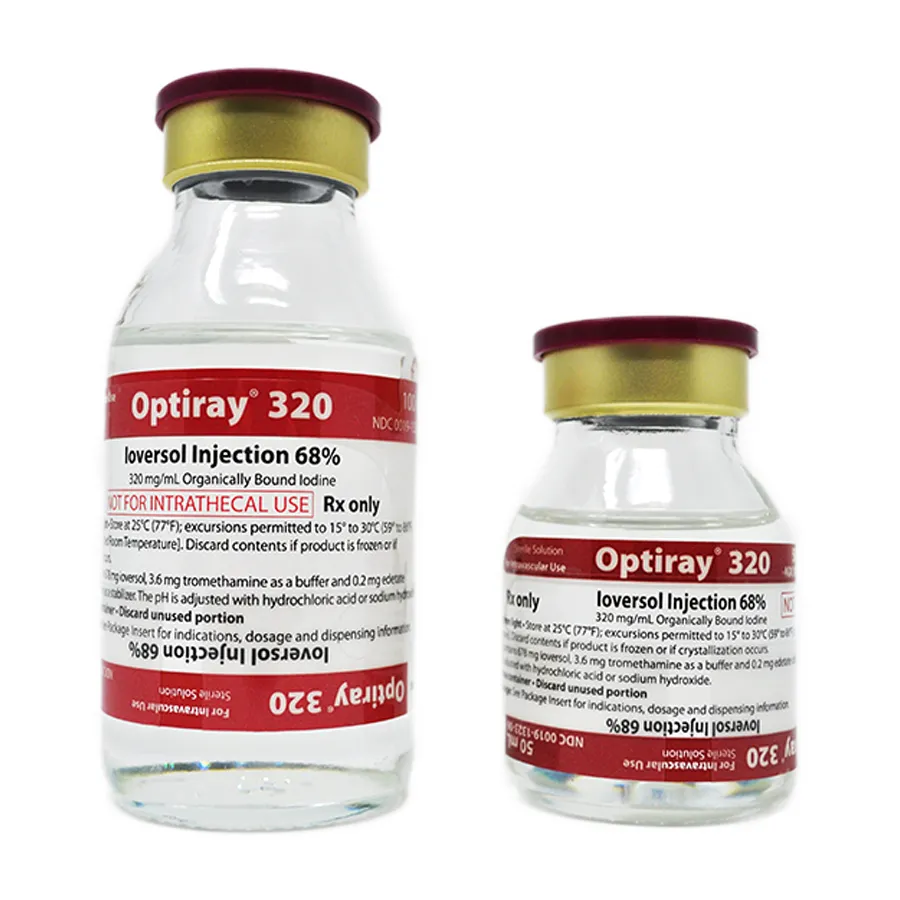
Table of Contents
Package leaflet: Information for the user
Optiray 320 injection and infusion solution, 678 mg/ml
( Ioversol )
Please read all of this leaflet carefully before being given the medicine, because it contains
important information for the patient.
- Keep this leaflet, as you may need to read it again.
- Ask your doctor or pharmacist if you have any further questions.
- If you experience any side effects, including any possible side effects not listed in this leaflet, tell your doctor or pharmacist.
Contents of the leaflet
- What Optiray is and what it is used for
- What you need to know before being given Optiray
- How to use Optiray
- Possible side effects
- How to store Optiray
- Contents of the pack and other information
1. What Optiray is and what it is used for
Optiray is used in adults for various radiological examinations, including:
- imaging of blood vessels, both arteries and veins
- kidneys
- computed tomography (CT)
Optiray is a contrast medium containing iodine. Iodine blocks X-rays,
allowing visualization of blood vessels and internal organs through which blood flows.
2. Important information before using Optiray
When not to use Optiray:
- if the patient has a hypersensitivity to iodinated contrast media or to any of the other components of this medicine (listed in section 6).
- if the patient has hyperthyroidism
Warnings and precautions
Before starting treatment with Optiray, consult a doctor if the patient has:
- asthma or previous allergic reactions such as nausea, vomiting, low blood pressure, skin symptoms
- heart failure, hypertension, circulatory disorders or stroke, or if the patient is elderly
- diabetes
- kidney or liver disease
- brain disorders
- bone marrow disorders, such as certain blood cancers called paraproteinemia or multiple myeloma
- certain abnormalities of red blood cells called sickle cell anemia
- an adrenal gland tumour affecting blood pressure, called a phaeochromocytoma
- elevated levels of the amino acid homocysteine due to a metabolic disorder
- recent cholecystography with an iodinated contrast agent
- planned thyroid examination using an iodine-containing substance – this should be postponed, as Optiray may interfere with test results for up to 16 days.
Severe skin adverse reactions have been reported in patients receiving Optiray, such as
eosinophilia and systemic symptoms (DRESS), Stevens-Johnson syndrome (SJS), toxic epidermal
necrolysis (Lyell's syndrome or TEN), and acute generalized exanthematous pustulosis (AGEP),
which may be life-threatening.
Transient brain dysfunction, known as encephalopathy, may occur during or shortly after the
imaging procedure. The doctor should be informed immediately if any symptoms related to this
condition, described in section 4, are observed.
Children and adolescents under 18 years of age
Optiray 320 is not recommended for use in this age group.
In case of exposure of a child to Optiray (direct exposure or neonates whose mothers received an iodinated contrast agent during pregnancy), thyroid function should be assessed after birth and in all children under 3 years of age within one month of exposure.
Optiray and other medicines
Inform your doctor or radiologist about all medicines currently used, recently used, or planned to be used.
The following medicines may interact with Optiray or Optiray may affect them:
- metformin: a medicine used to treat diabetes. The doctor will assess kidney function before and after administration of Optiray. Depending on the level of kidney function, the doctor may consider discontinuing metformin from 48 hours before the procedure. Metformin should not be restarted for at least 48 hours after the procedure and only if kidney function has returned to its previous level.
- interleukins: medicines used in the treatment of certain tumours
- certain medicines that increase blood pressure due to vasoconstriction – Optiray should never be administered concurrently with these drugs to avoid the risk of neurological complications.
- general anaesthetics – increased frequency of adverse reactions has been reported.
- diuretics: medicines that increase urine production and lower blood pressure – dehydration caused by diuretics may increase the risk of acute kidney injury following administration of iodinated contrast agents.
Optiray with food and drink
Consult your doctor. In patients with existing kidney disease, fluid intake should not be restricted, as this may further impair kidney function.
Pregnancy and breastfeeding
- Pregnancy Inform your doctor if you are pregnant or suspect you may be pregnant. Optiray will be given to pregnant patients only if absolutely necessary, as it may harm the unborn child.
- Breastfeeding Breastfeeding should be discontinued for one day after injection, due to insufficient data on safety. Consult your doctor or radiologist.
Driving and operating machinery
Driving or operating machinery is not recommended for 1 hour after
injection.
Additionally, symptoms such as dizziness, drowsiness, fatigue, and visual disturbances have been observed. If such symptoms occur, the patient should not engage in any activities requiring concentration and quick reaction.
Optiray contains sodium.
The medicine contains less than 1 mmol (23 mg) of sodium per dose, meaning the medicine is considered "sodium-free".
3. How to use Optiray
Examinations using Optiray will be performed exclusively by a physician or radiology specialist,
who will also determine the dosage.
Optiray is injected into a blood vessel and distributed throughout the body via the bloodstream.
Before administration, the medication is warmed to body temperature and then injected once or
multiple times during the radiological examination.
The dose depends on the type of examination and other factors such as the patient's condition and age.
The lowest dose that enables acquisition of images of adequate quality will be used.
Use of a higher than recommended dose of Optiray
Overdose is potentially dangerous and may affect respiration, heart, and the circulatory system.
The physician or radiology specialist should be informed immediately if the patient experiences
any such symptoms after receiving Optiray.
If you have any further questions regarding the use of this medicine, consult your physician or radiology specialist.
4. Possible adverse reactions
Like all medicines, this medicine can cause adverse reactions, although not everyone will experience them.
Adverse reactions associated with Optiray are generally independent of the administered dose. In most cases, they are mild or moderate and very rarely severe or life-threatening.
Contact a doctor immediately if any of the following symptoms of severe adverse reactions occur:
- cardiac arrest or respiratory arrest
- coronary vessel spasm or blood clots
- stroke, cyanosis of the lips, fainting
- memory loss
- speech disorders
- sudden movements
- temporary blindness
- acute kidney failure
- skin rash, redness or blisters, which may progress to life-threatening skin reactions, including extensive skin peeling (toxic epidermal necrolysis) or a drug reaction causing rash, fever, internal organ inflammation, hematologic abnormalities and systemic illness (DRESS)
- symptoms of allergic reactions such as anaphylactic shock, constricted airways, laryngeal or throat swelling, tongue swelling, breathing difficulties, cough, sneezing, redness and/or swelling of the face and eyes, itching, rash and hives
Adverse reactions may occur with the following frequencies:
Very common – affects more than 1 in 10 users
- sensation of warmth
Common – affects 1 to 10 in 100 users
- pain
- nausea
Uncommon – affects 1 to 10 in 1,000 users
- hives
- skin redness, itching
- dizziness
- headache
- taste disturbances
- sensory disturbances such as pricking, tingling
- vomiting
- sneezing
- high blood pressure
Rare – affects 1 to 10 in 10,000 users
- fainting
- dizziness
- blurred vision
- pulsating heartbeat
- low blood pressure
- sudden facial flushing
- laryngeal spasm
- swelling and narrowing of the airways, including throat tightness, wheezing
- breathing difficulties
- nasal inflammation causing sneezing and nasal congestion
- cough, throat irritation
- dry mouth
- rash
- urinary urgency
- facial swelling, including eyes
- chills
- uncontrollable trembling
- sensation of cold
Very rare – affects fewer than 1 in 10,000 users
- severe allergic reaction
- disorientation, restlessness, nervousness
- loss of consciousness, numbness
- paralysis
- drowsiness
- stupor
- voice disturbances
- speech disorders
- reduced sensitivity to touch or sensation
- allergic conjunctivitis causing eye redness, tearing and itching
- ringing or buzzing in the ears
- irregular heartbeat, slow pulse
- chest pain
- changes in heart activity measured by ECG
- disease impairing blood flow to the brain
- high blood pressure
- phlebitis, blood vessel dilation
- fluid accumulation in the lungs
- sore throat
- low blood oxygen levels
- abdominal pain
- salivary gland inflammation, tongue swelling
- difficulty swallowing, increased salivation
- usually painful, severe swelling of deep skin layers, mainly in the face
- increased sweating
- muscle cramps
- acute kidney failure or abnormal kidney function
- urinary incontinence, blood in urine, reduced urine output
- tissue swelling due to fluid accumulation
- injection site reactions, including pain, redness, bleeding or tissue necrosis
- malaise, fatigue, somnolence
Unknown frequency – cannot be estimated from available data
- severe allergic reaction with shock
- transient hypothyroidism
- seizures
- transient brain dysfunction (encephalopathy) which may cause disorientation, hallucinations, visual disturbances, blindness, seizures, loss of coordination, hemiplegia, speech problems and loss of consciousness
- movement disorder
- memory loss
- temporary blindness
- cardiac arrest, life-threatening irregular heartbeat
- extra heartbeats
- coronary artery spasm, rapid heartbeat
- bluish skin discoloration (cyanosis) due to low blood oxygen levels
- shock
- blood clot or vessel spasm
- pallor
- respiratory arrest, asthma, constricted airways
- reduced ability to produce voice via vocal organs
- diarrhea
- severe reaction involving skin, blood and internal organs (drug reaction with eosinophilia and systemic symptoms, also known as DRESS or drug hypersensitivity syndrome)
- red, scaly, widespread rash with subcutaneous nodules and blisters, accompanied by fever at the beginning of treatment (acute generalized exanthematous pustulosis)
- red spots (macules or papules)
- life-threatening reaction with flu-like symptoms and painful rash/blisters on the skin, mouth, eyes and genitals (Stevens-Johnson syndrome/toxic epidermal necrolysis)
- absence of urine, painful or difficult urination
- hypothyroidism in newborns
- fever
Reporting of adverse reactions
If any adverse reactions occur, including any not listed in this leaflet, inform your doctor or pharmacist. Adverse reactions can be reported directly to the Department of Monitoring Adverse Reactions of Medicinal Products, Office for Registration of Medicinal Products, Medical Devices and Biocidal Products, Al. Jerozolimskie 181C, 02-222 Warsaw, Tel: +48 22 49 21 301, Fax: +48 22 49 21 309
Website: https://smz.ezdrowie.gov.pl
Adverse reactions can also be reported to the marketing authorization holder. Reporting adverse reactions helps to provide more information on the safety of the medicine.
5. How to store Optiray
Keep this medicine out of the sight and reach of children.
Do not use this medicine after the expiry date stated on the label. The expiry date refers to the last day of the stated month.
Store containers in the outer packaging to protect from light. Protect from X-ray radiation. Do not store at temperatures above 30°C. Optiray 320 may be stored for one month at 37°C in a warming cabinet designed for storing contrast media, with adequate air circulation provided.
Do not use this medicine if discolouration or particulate matter is observed.
6. Contents of the pack and other information
What Optiray contains:
- The active substance is ioversol. One millilitre of Optiray 320 contains 678 mg of ioversol, corresponding to 320 mg of organically bound iodine.
- The other ingredients are: sodium calcium edetate (stabilizer), trometamol and trometamol hydrochloride (buffer), and water for injections. Sodium hydroxide and/or hydrochloric acid may be used to adjust the pH to a level of 6.0 to 7.4.
What Optiray looks like and contents of the pack
Optiray 320 is packed in:
- colourless vials with a capacity of 20 ml, equipped with bromobutyl rubber closures and aluminium caps. The carton contains 10 vials.
- colourless bottles with a capacity of 50, 75, 100 or 200 ml, equipped with bromobutyl rubber closures and aluminium caps. The carton contains the following quantities of bottles: 50 ml – 10 or 25 bottles; 100 ml – 10 or 12 bottles; 75 ml or 200 ml – 10 bottles.
- colourless bottles with a capacity of 500 ml, equipped with bromobutyl rubber closures and aluminium caps. The carton contains 5, 6 or 10 bottles.
Optiray 320 is also supplied in pre-filled hand-held syringes and syringes for use with a pressure injector, made of polypropylene. The syringe nozzle and plunger are made of natural rubber.
- Pre-filled hand-held syringes: 50 ml. The carton contains 10 syringes.
- Syringes for use with a pressure injector: 50, 100 or 125 ml. The carton contains 10 syringes.
Not all pack sizes and carton configurations may be marketed in all countries.
Marketing Authorisation Holder and Manufacturer:
- Address of the Marketing Authorisation Holder
Guerbet BP 57400
95943 Roissy CDG Cedex
France
For further information about this medicinal product, please contact the representative of the Marketing Authorisation Holder: Guerbet Poland Sp. z o.o., tel. (22) 6684110.
- Manufacturer
Guerbet
BP 57400
95943 Roissy CDG Cedex
France
Manufacturing site: 16-24 rue Jean Chaptal, 93600 Aulnay sous Bois, France
Instructions for use of hand-held syringes
Pre-filled syringe
Assembly and inspection
Note: The outer surface of the syringe is not sterile.
The contents of the syringe and the surfaces under the blue cap and the reinforcing ribs of the plunger are sterile and therefore must be handled with care during assembly.

Remove the syringe from the base and check for any leakage around the blue cap and on the outside of the plunger. Do not use the syringe if leakage is observed.
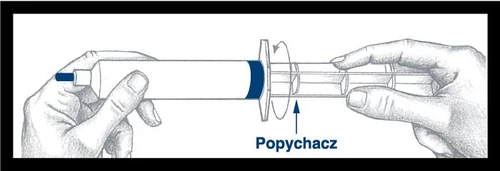
After inserting the pusher into the syringe plunger, it is important to turn the pusher an additional half turn so that the blue plunger rotates freely.
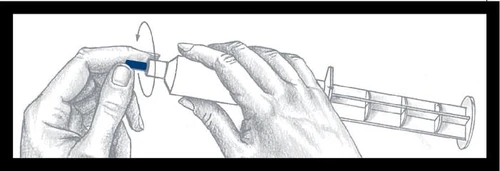
Before using the syringe, unscrew and discard the blue cap. The surface under the cap is sterile; care must be taken not to touch it during subsequent steps. The syringe is now ready for attachment of a needle or infusion tubing. After use, dispose of the syringe and any unused portion of the medicinal product.
Instructions for use of syringes for use with a pressure injector
Pre-filled syringe
Assembly and inspection
Note: The outer surface of the syringe is not sterile.
The contents of the syringe and the surfaces under the blue cap and the reinforcing ribs of the plunger are sterile and therefore must be handled with care during assembly.

Remove the syringe from the base and check for any leakage around the blue cap and on the outside of the plunger. Do not use the syringe if leakage is observed. Place the syringe into the pressure housing.

To remove the blue cap, press it down and twist to remove, then discard. The surface under the cap is sterile. Handle with care during subsequent steps.

Next, remove the cap from the dust-protective shield of the Luer connector by rotating it to break the visible security feature. Discard the cap.
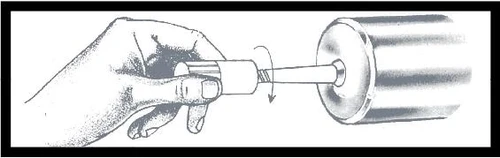
Screw the Luer connector onto the syringe, holding it by the dust-protective shield and tightening it fully. Remove and discard the dust-protective shield immediately before connecting the sterile tubing of the connector.
After use, dispose of the syringe and any unused portion of the medicinal product.