Ophtesic
Poland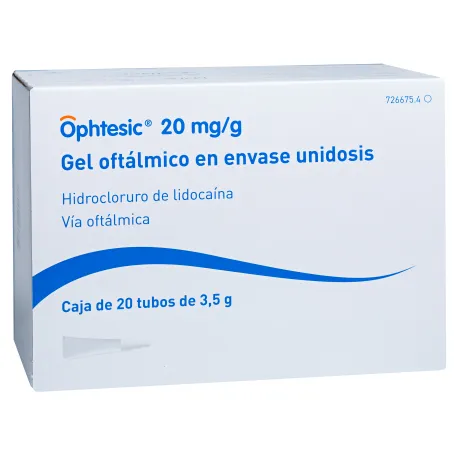
Table of Contents
Patient Information Leaflet
OPHTESIC, 20 mg/g, ophthalmic gel in single-dose container
Lidocaine hydrochloride
Please read this leaflet carefully before using the medicine, as it contains
important information for the patient.
- Keep this leaflet for future reference.
- If you have any questions, please consult your doctor.
- This medicine has been prescribed for a specific individual. Do not share it with others. This medicine may harm other people, even if their symptoms are the same.
- If you experience any adverse reactions, including any not listed in this leaflet, inform your doctor. See section 4.
Leaflet Contents
- What OPHTESIC is and what it is used for
- Important information before using OPHTESIC
- How to use OPHTESIC
- Possible side effects
- How to store OPHTESIC
- Contents of the pack and other information
1. What OPHTESIC is and what it is used for
OPHTESIC is an anaesthetic ophthalmic gel used during ophthalmic procedures.
OPHTESIC is used to induce temporary loss of sensation in the eye before and
during certain types of procedures performed by a doctor.
OPHTESIC should begin to work within 5 minutes after administration by a doctor.
2. Information before using OPHTESIC
When not to use OPHTESIC:
- If the patient is allergic to lidocaine or to any of the other ingredients of this medicine (listed in section 6).
Warnings and precautions
- For ophthalmic use only.
- Prolonged use of this type of local anaesthetic in the eye may lead to corneal clouding.
- OPHTESIC, 20 mg/g, eye gel in a single-dose container is intended for single use only and should be discarded immediately after use. The use of OPHTESIC should be discussed with a doctor prior to starting treatment.
OPHTESIC and other medicines
Tell your doctor about any medicines the patient is currently taking, has recently taken, or plans to take.
Pregnancy, breastfeeding
If the patient is pregnant or breastfeeding, suspects she may be pregnant, or is planning to have a baby, she should consult a doctor before using this medicine.
Driving and using machines
Blurred vision may occur for a period of time immediately after applying OPHTESIC. During this time, the patient should not drive or operate machinery until this effect has resolved.
3. How to use OPHTESIC
The doctor will apply the OPHTESIC medication to the patient's eye(s) prior to an ophthalmic procedure.
Dosage
The doctor should cover the surface of the eye(s) and adnexa with gel for 5 minutes before the procedure.
The recommended dose is 1 gram spread over the surface of the eye. This dose is usually sufficient to
achieve initial anaesthesia. Depending on the size of the eye or duration of the procedure, additional
amounts may be used.
1 gram corresponds approximately to one third of a tube.
The doctor should not use more than one tube per eye or per procedure.
The gel may be reapplied to maintain the anaesthetic effect.
Method of administration
The doctor should perform the following steps:
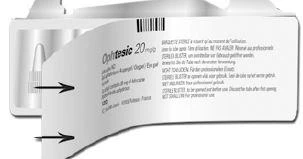
- Peel off the paper cover, then remove the tube and tip from the sterile blister. Check their integrity.
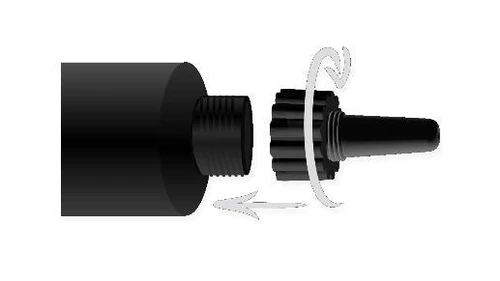
- Assemble both parts by screwing the tip onto the thread of the tube, then turn clockwise to pierce the aluminium sealing membrane.
- Holding the tube upside down, gently squeeze its side to release the gel and cover the surface of the eye and adnexa.
- The gel must remain in place for 3 to 5 minutes before it is rinsed off. Do not touch the eye or eyelid with the tip.
- After use, dispose of the tube and blister.
4. Possible adverse reactions
Like all medicines, this medicine can cause adverse reactions, although not everybody will experience them.
The following adverse reactions have been reported with unknown frequency:
- conjunctival hyperaemia
- corneal epithelial changes
- eye burning sensation
- punctate keratitis
- corneal oedema
- headache
Reporting of adverse reactions
If any adverse reactions occur, including any adverse reactions not listed
in this leaflet, inform your doctor.
Adverse reactions can be reported directly to the Department of Monitoring of Adverse Drug Reactions, Office for Registration of Medicinal Products, Medical Devices and Biocidal Products
Al. Jerozolimskie 181C
02-222 Warsaw
Tel.: + 48 22 49 21 301
Fax: + 48 22 49 21 309
https://smz.ezdrowie.gov.pl
Adverse reactions can also be reported to the marketing authorization holder.
Reporting adverse reactions helps provide more information on the safety of this medicine.
5. How to store OPHTESIC
Keep the medicine out of the sight and reach of children.
Do not use the medicine after the expiry date stated on the tube and carton after "Expiry date". The expiry date refers to the last day of the stated month.
Do not store above 25°C.
The product is intended for single use and must be discarded immediately after use.
Do not dispose of medicines via wastewater or household waste. Ask your pharmacist how to dispose of medicines you no longer require. Proper disposal helps protect the environment.
6. Contents of the pack and other information
What OPHTESIC contains
- The active substance is lidocaine: 1 gram of gel contains 20 mg of lidocaine hydrochloride (anhydrous).
- The other ingredients are: hypromellose type 2910, sodium hydroxide (E524) (for pH adjustment), hydrochloric acid (E507) (for pH adjustment), and water for injections.
What OPHTESIC looks like and contents of the pack
OPHTESIC is a clear, colourless gel supplied in a 3.5 g tube within a cardboard carton.
The pack contains 1, 20 or 100 tubes.
Not all pack sizes may be marketed.
Marketing Authorisation Holder and Manufacturer
Marketing Authorisation Holder
Laboratoires Doliage Developpement (LDD)
34, rue Jean Jaurès
92800 Puteaux
France
Tel: + 33 (0)1 42 91 39 19
Manufacturer
MERIBEL PHARMA KARLSKOGA AB
Bjökbornsvägen 5 – Box 140
691 33 Karlskoga
Sweden
Ar2i S.A. Analyses recherches et innovation instrumentale
Immeuble Le Carnot
20 Avenue Edouard Herriot
92350 Le Plessis-Robinson
France
19 November 2025