Ondansetron kabi 2 mg/ml solution for injection
Poland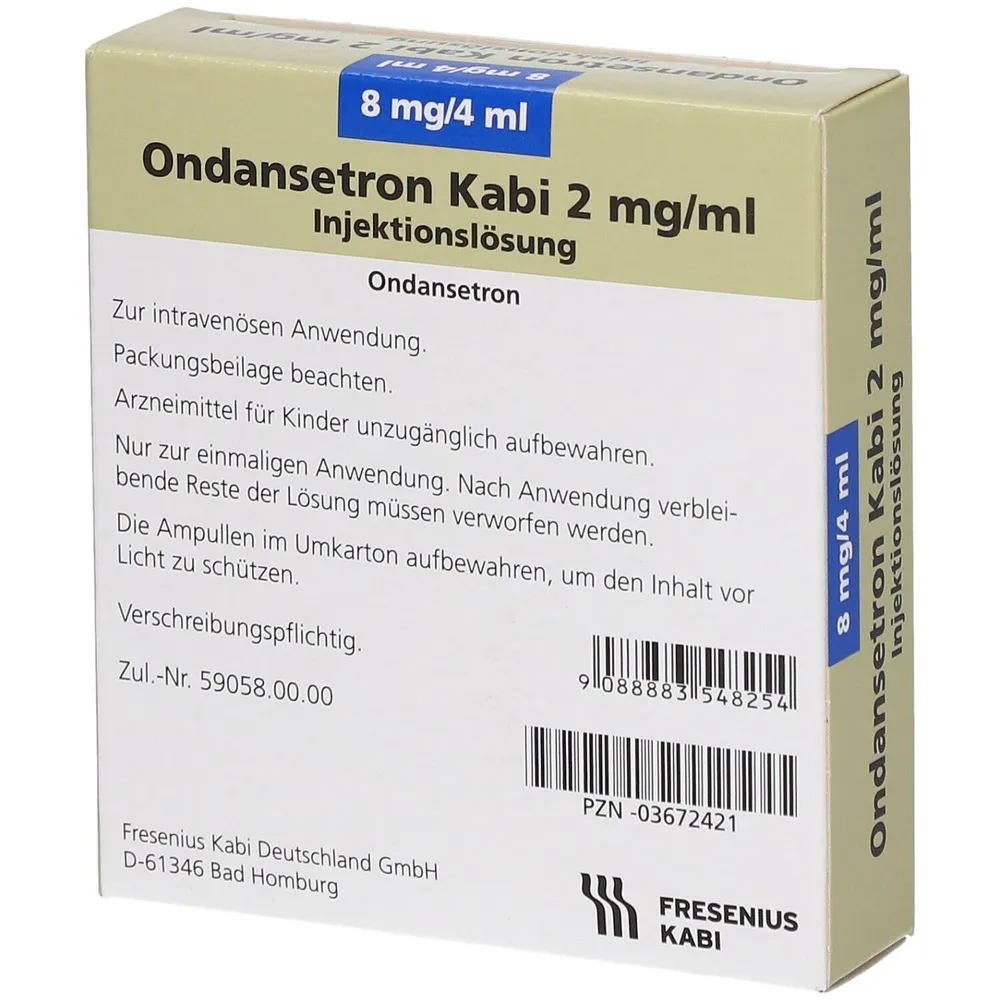
Table of Contents
- Package leaflet: Information for the patient
- 1. What Ondansetron Kabi is and what it is used for
- 2. Important information before using Ondansetron Kabi
- 3. How to use Ondansetron Kabi
- 4. Possible adverse reactions
- 5. How to store Ondansetron Kabi
- 6. Contents of the pack and other information
- Information intended exclusively for medical professionals:
Package leaflet: Information for the patient
Ondansetron Kabi 2 mg/ml solution for injection
Ondansetronum
Please read all of this leaflet carefully before using the medicine, because it contains
important information for the patient.
Keep this leaflet, as you may need to read it again.
If you have any questions, please consult your doctor, nurse or pharmacist.
This medicine has been prescribed for a specific individual. Do not pass it on to others. The medicine may harm another person, even if their symptoms are the same.
If the patient experiences any adverse effects, including any not listed in this leaflet, inform the doctor, pharmacist or nurse. See section 4.
Contents of the leaflet
- What Ondansetron Kabi is and what it is used for
- Important information before using Ondansetron Kabi
- How to use Ondansetron Kabi
- Possible side effects
- How to store Ondansetron Kabi
- Contents of the pack and other information
1. What Ondansetron Kabi is and what it is used for
Ondansetron Kabi belongs to a group of medicines called antiemetics. Certain types of anticancer drug therapy (chemotherapy) or radiotherapy may cause nausea and vomiting. Nausea and vomiting may also occur after surgical procedures. Ondansetron Kabi helps prevent and reduce these symptoms.
2. Important information before using Ondansetron Kabi
When not to use Ondansetron Kabi:
- if the patient is allergic to ondansetron or to any other medicine in the group of serotonin 5-HT receptor antagonists (i.e. granisetron or dolasetron) or to any of the other ingredients of this medicine (listed in section 6);
- if the patient is receiving apomorphine (a medicine used in Parkinson's disease).
Warnings and precautions
Talk to your doctor or pharmacist before using Ondansetron Kabi if:
- the patient has had hypersensitivity reactions to other anti-nausea and anti-vomiting medicines (such as granisetron or palonosetron);
- the patient has intestinal obstruction or severe constipation. Ondansetron may inhibit intestinal peristalsis;
- the patient has liver function disorders;
- the patient has undergone tonsillectomy;
- the patient has ever had heart problems, including irregular heartbeat (cardiac arrhythmias). Ondansetron causes a dose-dependent prolongation of the QT interval (an ECG segment indicating delayed cardiac repolarization, with risk of life-threatening arrhythmias);
- the patient has disturbances in blood levels of electrolytes such as potassium, sodium, or magnesium.
Ondansetron Kabi with other medicines
Tell your doctor, nurse, or pharmacist about all medicines the patient is currently taking or has recently taken, as well as any medicines the patient plans to take, including those available without a prescription.
If the patient is taking tramadol (a painkiller): ondansetron may reduce the analgesic effect of tramadol.
In patients treated with phenytoin, carbamazepine (a medicine used in epilepsy), or rifampicin (an antibiotic used to treat tuberculosis): the blood concentration of ondansetron may be reduced.
If the patient is taking cardiotoxic medicines (e.g. anthracyclines, antineoplastic antibiotics such as doxorubicin, daunorubicin, or trastuzumab – an antineoplastic medicine), antibiotics (e.g. erythromycin), antifungal medicines (e.g. ketoconazole), antiarrhythmics (e.g. amiodarone), and beta-blockers (medicines that reduce heart rate, such as atenolol or timolol): using ondansetron together with other medicines that prolong the QT interval may lead to additional QT prolongation, thereby increasing the risk of cardiac arrhythmias.
If the patient is taking other serotonergic medicines, such as selective serotonin reuptake inhibitors (SSRIs) or serotonin-norepinephrine reuptake inhibitors (SNRIs), such as sertraline or duloxetine (antidepressants): there have been reports of serotonin syndrome (e.g. agitation, increased heart rate and elevated blood pressure, tremor, and hyperreflexia) occurring in patients following concomitant use of ondansetron with other serotonergic medicines.
If the patient is taking apomorphine (a medicine used in the treatment of Parkinson's disease): apomorphine must not be used together with ondansetron, as cases of hypotension (low blood pressure) and loss of consciousness have been reported when both medicines were used simultaneously.
Pregnancy and breastfeeding
Ondansetron Kabi should not be used during the first trimester of pregnancy. This is because Ondansetron Kabi may slightly increase the risk of cleft lip and/or cleft palate [an opening or fissure in the upper lip and/or palate]. If the patient is pregnant, suspects she may be pregnant, or plans to become pregnant, she should consult her doctor or pharmacist before using Ondansetron Kabi.
If the patient is a woman of childbearing potential, effective contraception may be advised.
Ondansetron passes into human milk. Therefore, it is recommended that mothers taking ondansetron should NOT breastfeed.
Consult your doctor before using this medicine.
Driving and operating machinery
Ondansetron does not affect the ability to drive or operate machinery.
Ondansetron Kabi contains sodium
This medicine contains less than 1 mmol (23 mg) of sodium per ampoule, meaning the medicine is considered "sodium-free".
3. How to use Ondansetron Kabi
Method of administration
Ondansetron Kabi is administered by intravenous injection (into a vein) or, after dilution, by intravenous infusion (over a longer period). The medicine is usually given by a doctor or nurse.
Dosage
Adults (under 75 years of age)
The doctor will decide the appropriate dose of ondansetron for the patient.
The dose varies depending on the type of treatment the patient is receiving (chemotherapy or surgery), liver function, and the method of administration: injection or infusion.
In the case of chemotherapy or radiotherapy, the usual dose of ondansetron is 8 to 32 mg per day. Single doses must not exceed 16 mg.
For the treatment of postoperative nausea and vomiting, a single dose of 4 mg of ondansetron is usually used. To prevent postoperative nausea and vomiting, a single dose of 4 mg of ondansetron is usually used.
Children aged 6 months and older and adolescents
For chemotherapy, a single intravenous dose of 5 mg/m² body surface area is usually given immediately before treatment. The intravenous dose must not exceed 8 mg of ondansetron.
Children aged 1 month and older and adolescents
For the treatment of postoperative nausea and vomiting, a dose of 0.1 mg of ondansetron per kilogram of body weight is usually given. The maximum dose is 4 mg of ondansetron by intravenous injection.
For the prevention of postoperative nausea and vomiting, a dose of 0.1 mg of ondansetron per kilogram of body weight is usually given. The maximum dose is 4 mg of ondansetron by intravenous injection. The dose should be administered immediately before surgery.
Dose adjustment
Elderly patients
In the case of chemotherapy, the initial dose for patients aged 75 years or older should not exceed 8 mg.
Patients with impaired liver function
In patients with impaired liver function, the total daily dose should not exceed 8 mg of ondansetron.
Patients with impaired kidney function or impaired metabolism of sparteine and (or) debrisoquine
There is no need to adjust the daily dose, frequency, or route of administration of the medicine.
Duration of treatment
The doctor will decide how long ondansetron should be used.
After intravenous administration, ondansetron may be continued orally as tablets or rectal suppositories for up to 5 days.
Use of a higher than recommended dose of Ondansetron Kabi
There is limited data regarding ondansetron overdose. Overdose increases the frequency of occurrence of adverse reactions listed in section 4. In several patients, the following symptoms have been observed after overdose: visual disturbances, severe constipation, low blood pressure, heart rhythm disturbances, and fainting. In all cases, symptoms completely resolved.
Ondansetron Kabi will be administered to an adult or child by a doctor or nurse, so it is unlikely that an adult or child will receive too high a dose.
If it is believed that an adult or child has received too high a dose or a dose has been missed, inform the doctor or nurse.
There is no specific antidote for ondansetron; therefore, in case of overdose, only symptomatic treatment can be used.
If a patient notices any of the above symptoms, they should inform their doctor.
4. Possible adverse reactions
Like all medicines, this medicine can cause adverse reactions, although not everybody will experience them.
If any of the following adverse reactions occur, inform your doctor or nurse immediately:
Not common (may occur in fewer than 1 in 100 patients):
chest pain, slow or irregular heartbeat.
Rare (may occur in fewer than 1 in 1000 patients):
immediate hypersensitivity reactions, such as itchy rash, swelling of the eyelids, face,
lips, mouth and tongue.
Frequency unknown (frequency cannot be estimated from the available data):
myocardial ischaemia.
Symptoms include:
sudden chest pain
or
chest tightness.
Other adverse reactions include:
Very common (may occur in more than 1 in 10 patients):
headache.
Common (may occur in fewer than 1 in 10 patients):
constipation;
feeling of warmth or sudden flushing;
irritation and redness at the site of administration.
Not common (may occur in fewer than 1 in 100 patients):
low blood pressure, which may lead to fainting or dizziness;
seizures;
unusual body movements or tremors;
hiccups;
effects on liver function test results.
Rare (may occur in fewer than 1 in 1000 patients):
dizziness or feeling of emptiness in the head;
blurred vision;
heart rhythm disorders (sometimes leading to sudden loss of consciousness).
Very rare (may occur in fewer than 1 in 10,000 patients):
temporary loss of vision (usually lasting no longer than 20 minutes);
skin rash, e.g. red spots or lumps under the skin (urticaria) appearing all over the body, which may develop into large blisters.
Additional adverse reactions in children and adolescents
Adverse reactions observed in children and adolescents were comparable to those occurring in adults.
Reporting of adverse reactions
If any adverse reactions occur, including any possible adverse reactions not listed in this leaflet, consult your doctor, pharmacist or nurse.
Adverse reactions can be reported directly to the Department of Monitoring Adverse Drug Reactions of the Office for Registration of Medicinal Products, Medical Devices and Biocidal Products
Al. Jerozolimskie 181C
02-222 Warsaw
Phone: +48 22 49 21 301
Fax: +48 22 49 21 309
Website: https://smz.ezdrowie.gov.pl
Adverse reactions may also be reported to the marketing authorization holder.
Reporting adverse reactions helps to provide more information on the safety of the medicine.
5. How to store Ondansetron Kabi
Keep the medicine out of the sight and reach of children.
Do not use this medicine after the expiry date stated on the ampoule and outer carton: EXP.
The expiry date refers to the last day of the specified month.
Store ampoules in the outer packaging to protect from light.
Medicines should not be disposed of via wastewater or household waste. Ask your pharmacist
how to dispose of medicines no longer required. This will help protect the environment.
6. Contents of the pack and other information
What Ondansetron Kabi contains
The active substance is ondansetron.
One 2 ml ampoule contains 4 mg of ondansetron.
One 4 ml ampoule contains 8 mg of ondansetron.
There are 2 mg of ondansetron per millilitre, in the form of ondansetron dihydrochloride dihydrate.
Other ingredients: sodium chloride, disodium citrate dihydrate, citric acid monohydrate, and water for injections.
What Ondansetron Kabi looks like and contents of the pack
Ondansetron Kabi is a clear, colourless solution in clear glass ampoules containing 2 ml or 4 ml of solution for injection.
Pack contains: 1, 5 or 10 ampoules.
Not all pack sizes may be marketed.
Marketing Authorisation Holder:
Fresenius Kabi Deutschland GmbH
D-61346 Bad Homburg v.d.H
Germany
Manufacturer:
Labesfal - Laboratórios Almiro, S.A.
Zona Industrial do Lagedo
3465 - 157 Santiago de Besteiros
Portugal
For further information, contact the local representative of the Marketing Authorisation Holder:
Fresenius Kabi Polska Sp. z o.o.
Al. Jerozolimskie 134
02-305 Warsaw
Tel.: +48 22 345 67 89
This medicinal product is authorised for marketing in the European Economic Area countries under the following names:
Belgium: Ondansetron Fresenius Kabi 2 mg/ml Injektionslösung/oplossing voor injectie/ solution injectable
Czech Republic: Ondansetron Kabi
Germany: Ondasetron Kabi 2 mg/ml Injektionslösung
Denmark: Ondansetron “Fresenius Kabi”, injektionsvæske, opløsning
Greece: Ondansetron/Kabi 2 mg/ml Evέσιμο διάλυμα
Spain: Ondansetron Fresenius Kabi 2 mg/ml inyectable
Finland: Ondansetron Fresenius Kabi 2 mg/ml injektioneste, liuos
Hungary: Ondansetron Kabi 2 mg/ml oldatos injekció
Ireland: Ondansetron Kabi 2 mg/ml solution for injection
Italy: Ondansetron Kabi
Netherlands: Ondansetron Kabi 2 mg/ml oplossing voor injectie
Norway: Ondansetron Fresenius Kabi 2 mg/ml injeksjonsvæske, oppløsning
Poland: Ondansetron Kabi 2 mg/ml roztwór do wstrzykiwań
Sweden: Ondansetron Fresenius Kabi 2 mg/ml injektionsvätska, lösning
Slovakia: ONDANSETRON KABI 2 mg/ml, injekčný roztok
United Kingdom: Ondansetron Kabi 2 mg/ml solution for injection
Information intended exclusively for medical professionals:
Single doses exceeding 16 mg must not be administered due to the risk of dose-dependent QT interval prolongation (see sections 4.2, 4.4, 4.8, and 5.1 of the Summary of Product Characteristics).
Use only clear and colorless solution.
For single use only. Any unused portions or waste material must be disposed of in accordance with local regulations.
Use immediately after opening the ampoule.
Ondansetron Kabi may be diluted with the following infusion solutions:
sodium chloride solution 9 mg/ml (0.9% w/v)
glucose solution 50 mg/ml (5% w/v)
mannitol solution 100 mg/ml (10% w/v)
Ringer's lactate solution
Chemical and physical stability of the solution has been demonstrated for 48 hours at 25°C when mixed with the above-mentioned infusion solutions. If compatibility with other infusion solutions is not established, Ondansetron Kabi should be administered separately.
The diluted solution should be protected from light.